
A kettlebell swing looks simple: stand, hike the bell, drive the hips, and let it float. The hard part is learning which muscles create the movement and which ones should stay quiet. If you squat the bell up or pull it with your arms, you lose the power of the exercise and put your position at risk.
To learn how to do a kettlebell swing, focus on a strong hip hinge, a long spine, and an explosive hip drive. The swing is not an arm raise or a deep squat. Your hips generate the force while your hands guide the bell and your core keeps you connected.
That combination makes the swing useful for building strength and cardiovascular fitness in a short, demanding session. It also explains why coaching matters, especially when you are starting out. Before you chase heavier bells or faster sets, understand what the movement gives you and why it earns a place in a practical training routine.
Why Should You Add the Kettlebell Swing to Your Routine?
The kettlebell swing earns its place because it does a lot of work in very little time. You are training your hips to produce force, your trunk to stay stable, and your lungs to keep up with repeated effort. That combination makes the swing useful whether your goal is practical strength, better conditioning, or a workout that fits into a packed NYC schedule.
ACE Fitness reports that kettlebell training can improve both strength and cardiovascular fitness when used effectively. The swing is also widely recognized as a quick, full-body workout because it connects the lower body and upper body through one explosive movement. It is not a shortcut around training. It is a simple tool that demands timing, control, and consistent effort.
Explore kettlebell classes in NYC
Build strength where it matters
The swing is driven by hip extension, so the glutes and hamstrings do the heavy lifting. Your core works to keep the torso organized, while your shoulders and arms guide the bell rather than muscling it overhead. This teaches your body to produce force from the hips and transfer it through a stable midsection. That pattern carries over to lifting, sprinting, jumping, and everyday tasks that require you to brace and move with purpose.
The grip gets work too. Holding and controlling the bell through repeated sets challenges the forearms, especially as fatigue builds. Stronger hands and forearms can make other pulling and carrying movements feel more secure. The result is not just a muscle burn. It is better coordination between your lower body, trunk, and hands.
Raise your conditioning without wasting time
A set of swings can quickly raise your heart rate because large muscle groups are working together at speed. You do not need a complicated circuit or a room full of machines. A few focused rounds, with rest you can control, can deliver a demanding conditioning session. That efficiency matters when you have limited time but still want training with substance.
Start with a weight you can move cleanly. The benefits come from crisp repetitions, not from forcing a heavier bell or chasing exhaustion. Learn how to do a kettlebell swing with a strong hinge, steady breathing, and a powerful hip drive. Once those pieces are in place, the exercise becomes a reliable part of your routine instead of a random cardio finisher.
For beginners, coaching can make the learning curve shorter. A trainer can help you feel the difference between a hip-driven swing and an arm-heavy lift, then build the volume gradually. That is the Grind House approach: real training, clear instruction, and no fluff.
What Muscles Does a Kettlebell Swing Work?
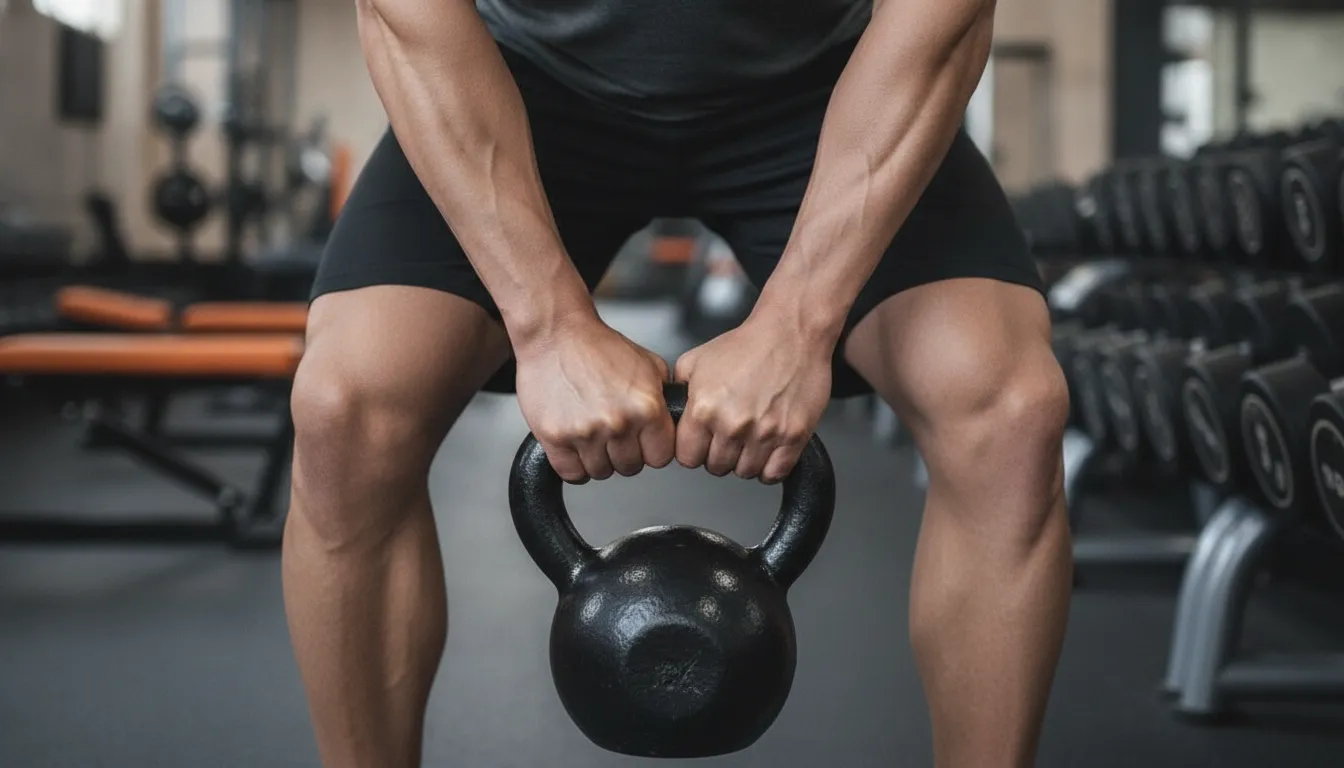
The kettlebell swing is driven by your hips, not by your arms. Its main workload lands on the posterior chain, the group of muscles along the back side of your body. That includes the hamstrings, gluteus maximus, and adductor magnus. Together, these muscles create the force for closed-chain hip extension as you snap from the hinged position to a tall standing position. ACE Fitness identifies these muscles as the prime movers of the two-handed swing.
Hamstrings and glutes create the drive
Your hamstrings lengthen as the kettlebell travels behind you, then help extend the hips as you send it forward. The gluteus maximus finishes that extension by powering the strong, upright position at the top. This is why a well-executed swing feels like a powerful hinge rather than a front-shoulder raise. The adductor magnus also contributes to hip extension, giving the movement more support than the mirror muscles alone suggest.
The hamstrings are not just involved in theory. A study indexed by PubMed found that the kettlebell swing specifically targets the semitendinosus, one of the hamstring muscles. You should feel effort through the back of the thighs and glutes, especially when the bell gets heavier or the interval lasts longer. You should not feel a sharp pull behind the knee or strain in the lower back. Those sensations are reasons to stop and review your setup and hinge mechanics.
Your grip and trunk still have a job
The swing is a lower-body exercise, but your upper body has to connect the bell to the hips. The forearm flexors, including the brachioradialis and flexor digitorum, establish the grip needed to keep control of the handle. Hold firmly without crushing the handle or letting the wrists fold. Your abdominals and upper back then brace the torso while the hips produce the movement. The kettlebell should float from the force of your hip drive, not travel upward because your shoulders are pulling it.
That muscle balance is the point: strong hips create the motion, while the trunk and grip keep it organized. Learning how to do a kettlebell swing means learning to coordinate those parts instead of chasing the feeling of an arm workout.
Here’s How to Do a Kettlebell Swing the Right Way
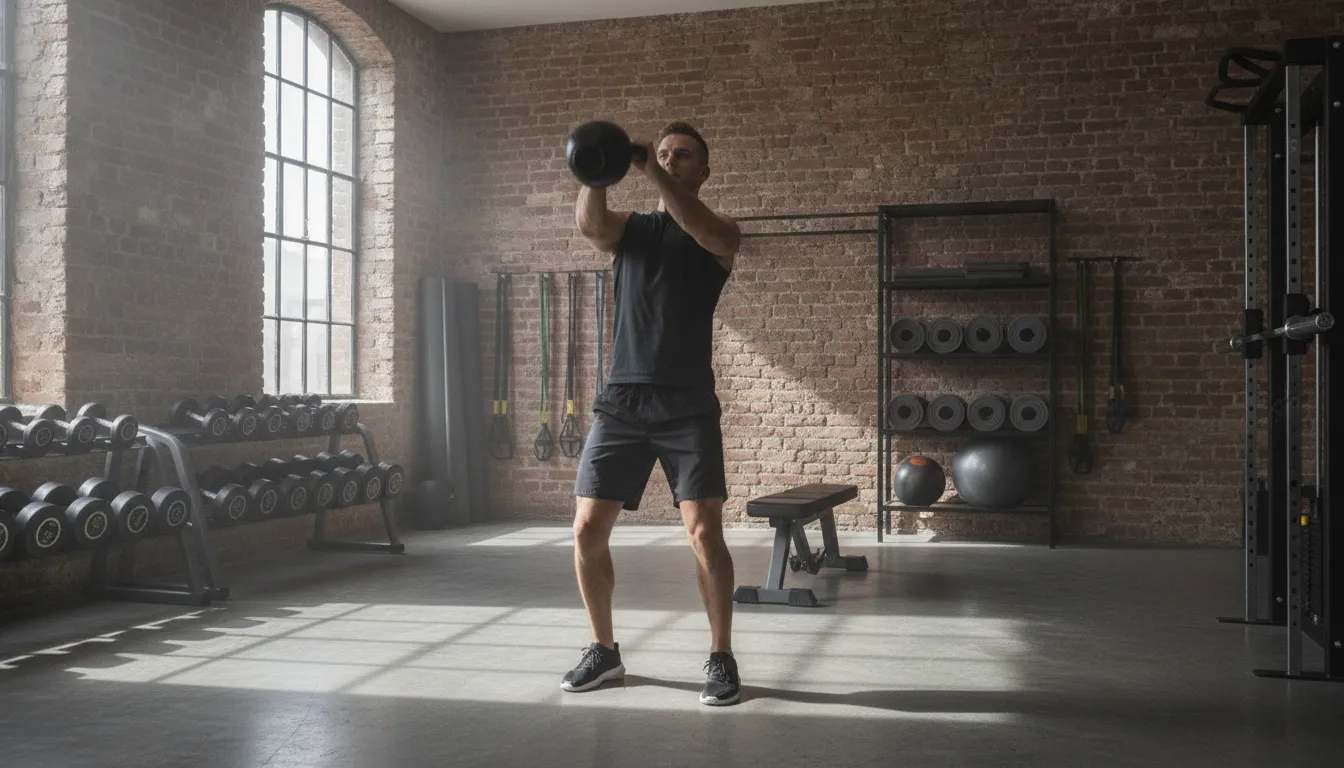
- Choose your setup. Place the kettlebell on the floor a foot or two in front of you. Stand behind it with your feet parallel, about shoulder-width apart, and keep your toes pointed mostly forward. Start with a weight you can control without losing your position. A swing is dynamic, so clear the area around you and make sure the floor is stable.
- Build a strong standing position. Before you touch the bell, stand tall with your ribs stacked over your pelvis, shoulders relaxed, and eyes looking straight ahead. Brace your midsection as if you are preparing for a light bump. Keep your arms loose. The power will come from your hips, not from curling the kettlebell with your shoulders.
- Hinge down to grip the horns. Push your hips back while allowing a small bend in your knees. Reach forward and take the kettlebell by both horns, with your palms facing inward. This is a hip hinge, not a squat. The hips travel back, the shins stay relatively vertical, and the kettlebell remains under your chest. The American Council on Exercise describes the traditional two-handed swing as a hip hinge performed with parallel feet, rather than a squat: ACE swing technique guidance.
- Pack your back and start the hike. Keep your spine long and straight from your head through your tailbone. Do not round your lower back or crane your neck. Pull the bell slightly back toward your legs, as if hiking a football, while keeping your shoulders higher than your hips. Your forearms should connect to your inner thighs without collapsing your chest. Correct form keeps the movement centered at the hips with minimal knee movement, as ACE explains in its hip hinge and spine guidance.
- Drive the floor away. From the hinged position, snap your hips forward and squeeze your glutes. Think of extending your hips aggressively, not lifting the bell with your arms. Your legs straighten as your hips finish forward. The kettlebell should float because of that hip drive. Keep your arms long and let your hands guide the bell rather than pulling it upward.
- Control the top position. At the top, the kettlebell should reach roughly chest height. Your body should form one tall line: feet planted, knees straight but not locked hard, glutes engaged, ribs controlled, and shoulders down. Do not lean backward to chase extra height. Your forearms and hands maintain control through the horns, and grip strength matters because the forearm flexors help establish that grip.
- Let the bell fall and reload the hinge. As the kettlebell begins to descend, wait for it to come back toward your body. Then guide it between your legs by sending your hips back again. Do not squat underneath it or let the bell drop straight down. Keep the spine long, the neck neutral, and the bell close enough that your shoulders do not get pulled forward.
- Repeat with the same rhythm. Continue the cycle of hike, hip drive, float, and hinge. Each repetition should look controlled and similar to the last. Stop the set if your back rounds, your knees start doing most of the work, your grip slips, or you have to muscle the bell to chest height. Put the kettlebell down by guiding it forward from the hinge, then stand up only after it is safely on the floor. When learning, practice a few crisp repetitions at a time and have a qualified coach check your hinge before adding speed or load.
What Kettlebell Swing Mistakes Are You Making?
A kettlebell swing should feel powerful, controlled, and driven by your hips. If your lower back, shoulders, or forearms are doing all the work, your form needs a reset. This is a dynamic exercise, so small errors become more noticeable as the bell gains speed. ACE Fitness notes that proper form is essential for reducing injury risk during kettlebell swings. Slow the movement down, identify the leak, and rebuild the pattern before adding load.
Rounding your back
A rounded back usually means you are losing tension as the bell travels between your legs. Keep your spine long and straight, brace your midsection, and send your hips back instead of folding through your lower spine. Think of your torso as one strong unit. Your head and neck should stay in line with your spine, rather than looking up to create momentum.
Turning the swing into a squat
The swing is primarily a hip hinge, not a squat. In a squat, your knees bend deeply and your body drops down. In a swing, your hips travel back while your shins stay relatively vertical, then your hips snap forward to create the drive. ACE describes the original two-handed swing as a hip-hinge pattern with minimal knee movement. If your thighs are burning more than your glutes and hamstrings, practice pushing your hips farther behind you.
| Hip Hinge Swing | Squat Mistake |
|---|---|
| Hips travel back as the torso folds forward | Knees bend deeply as the body drops down |
| Shins stay relatively vertical | Shins move forward toward the toes |
| Glutes and hamstrings do the work | Thighs and knees take over the effort |
| Bell floats from explosive hip drive | Bell is lifted by the arms and shoulders |
Leading with the arms instead of the hips
Your arms connect you to the kettlebell, but they should not lift it. When your shoulders initiate the movement, the swing becomes a front raise and quickly drains your upper body. Let the hips create the force, then allow the bell to float forward. Keep your arms relaxed and straight, with your shoulders packed rather than shrugged. If the bell stops floating, the answer is usually better hip drive, not harder pulling.
Swinging the bell too high
A standard two-handed swing does not require the kettlebell to travel overhead. Aim for roughly chest height, or wherever the bell naturally floats while your body remains stacked. Going higher often encourages you to lean back, overextend your spine, or turn the movement into a shoulder exercise. Stop the bell with control and let it fall back into the next hinge.
Gripping too hard
A crushing grip creates unnecessary tension in your hands, forearms, and shoulders. Hold the handle securely, but keep your grip firm enough to control the bell without squeezing as if you are trying to bend it. The forearm flexors help establish grip strength, but relaxed control supports better timing and endurance. If your grip fails first, reduce the weight, shorten the set, and focus on clean repetitions.
Fix one mistake at a time. A lighter kettlebell and a clear hip-hinge pattern will build more useful strength than forcing sloppy reps.
Read ACE Fitness’ technique guidance for the two-handed kettlebell swing.
How Much Weight, Sets, and Reps Should Beginners Use?
The best starting point is a kettlebell that lets you practice the pattern without turning every rep into a max-effort lift. For many beginners, that means choosing a lighter bell than their ego expects. You should be able to hike the bell back, snap the hips forward, and control the descent while keeping your spine long. If your shoulders take over, your back rounds, or the bell pulls you off balance, go lighter.
Test the weight with a small set of five swings. The bell should feel challenging, but you should still have several clean reps in reserve. A coach can also help you choose an appropriate load based on your strength, training history, and movement quality. If you are brand new to the exercise, personal training in Williamsburg gives you a focused setting to learn the hinge before adding volume.
Keep the first sessions simple. Try 5 sets of 10 two-handed swings, resting for 45 to 60 seconds between sets. If that feels too demanding, use 5 sets of 5. If every rep stays crisp and your breathing settles during the rest periods, build gradually toward 6 to 8 sets of 10. Stop the set when the movement changes. More repetitions are not useful if the hips stop driving the bell and the lower back starts compensating.
Warm up before the first set
Because the swing is dynamic, do not treat the first set as your warm-up. Mayo Clinic guidance recommends starting with a dynamic warm-up and ending with a cool-down. Spend five to eight minutes moving through bodyweight hinges, glute bridges, walking lunges, and light mobility. Then rehearse the hike and hip snap with an unweighted hinge or a very light bell.
Build conditioning without rushing form
Once your technique is reliable, short intervals make swings an efficient part of a busy workout. A simple option is 10 swings at the top of each minute for 10 minutes, using a weight you can control throughout. Mayo Clinic highlights a kettlebell circuit that can fit into a 20-minute workout, but efficiency does not mean skipping preparation or forcing speed. End with an easy cool-down and note how your back, grip, and breathing feel later that day.
For hands-on coaching and a structured progression, explore kettlebell classes in NYC at Grind House in Williamsburg and Flatiron.
Build your swing with coaching at a Grind House kettlebell class.
Frequently Asked Questions
How do I know if I am doing kettlebell swings correctly?
You should feel the movement in your glutes and hamstrings, not in your lower back or shoulders. Your spine stays long, the bell travels between your legs, and your hips drive it forward. The swing is a hip hinge, not a deep squat, with only modest knee movement. Film a few reps from the side or ask a qualified coach to check your position. ACE describes the same long-spine, hip-driven pattern for a technically sound swing. Source
Does the kettlebell swing really work?
Yes, when you use a weight you can control and maintain clean form. The swing trains powerful hip extension while challenging your cardiovascular system, so it can build strength and conditioning in the same session. It is a full-body movement, but it is not a substitute for every type of strength training. Treat it as one useful tool in a balanced program.
How long should a beginner do kettlebell swings?
Start with short sets and stop while every repetition still looks the same. A practical first session might use 5 to 10 controlled reps, followed by enough rest to recover, for several rounds. Keep the total work brief while you learn the hinge. Warm up dynamically first, as Mayo Clinic recommends for kettlebell training, then build volume gradually. Source
What are common mistakes when doing kettlebell swings?
The most common errors are squatting the bell, lifting it with your arms, rounding your back, and letting your knees collapse inward. Reset if the bell pulls you forward, your back position changes, or your breathing becomes frantic. Reduce the weight and practice the hinge without a bell until you can snap the hips forward under control. Proper form matters especially because the swing is a dynamic exercise. Source
Ready to Book Hands-On Kettlebell Coaching?
A coach can help you dial in the hip hinge, timing, and finish so each swing feels strong and controlled. When you are ready to practice with guidance, book a kettlebell class at Grind House in Williamsburg or Flatiron and get hands-on form coaching for your kettlebell swing.
Leave a Reply
You must be logged in to post a comment.