
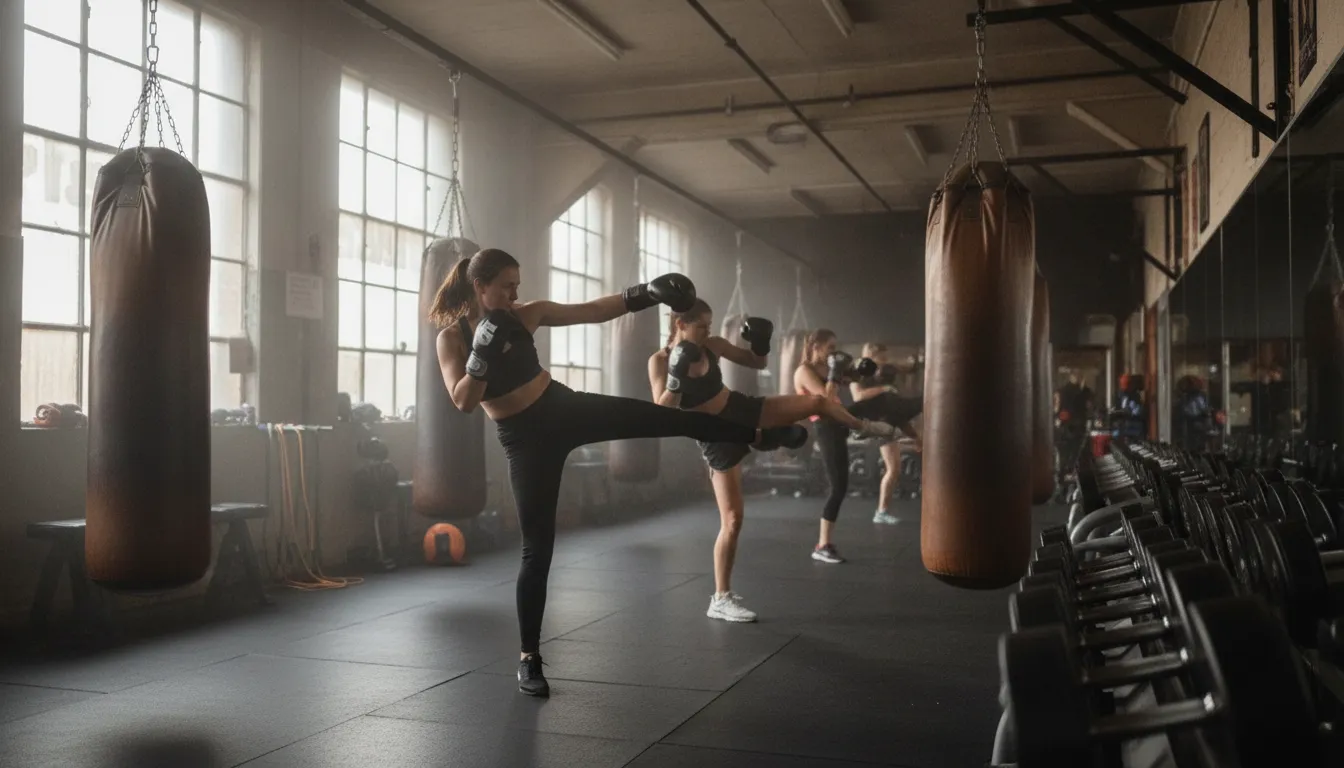
You do not need a fight record, perfect coordination, or a certain fitness level to start kickboxing. A beginner class breaks striking into simple combinations, then builds speed, conditioning, and confidence through coached repetition.
Kickboxing classes combine punches, kicks, footwork, and full-body conditioning in one structured workout. You will practice fundamentals, work through kick-and-punch combinations on pads or a heavy bag, and adjust the pace to match your experience. The result is a demanding session that trains cardio, coordination, strength, and endurance without requiring you to spar.
The workout feels energetic because every round has a purpose. You might move from technique practice to bag work, then finish with short conditioning intervals that challenge your legs and core. Knowing how the session flows makes the first step easier, so here is what you can expect from warm-up through cooldown.
Book a free class and start training at Grind House.
What Happens in a Kickboxing Class? A Typical Session, Minute by Minute
A kickboxing class is structured training, not a free-for-all of throwing punches until you are exhausted. You move through a clear sequence that prepares your body, teaches combinations, builds work capacity, and brings your heart rate down before you leave. The exact timing changes by coach and class, but most sessions follow the same practical flow.
A typical session includes:
- Warm-up and movement preparation
- Punch-and-kick combinations on bags or pads
- Focused heavy-bag rounds and technique drills
- Short conditioning intervals
- Cooldown, breathing, and mobility work
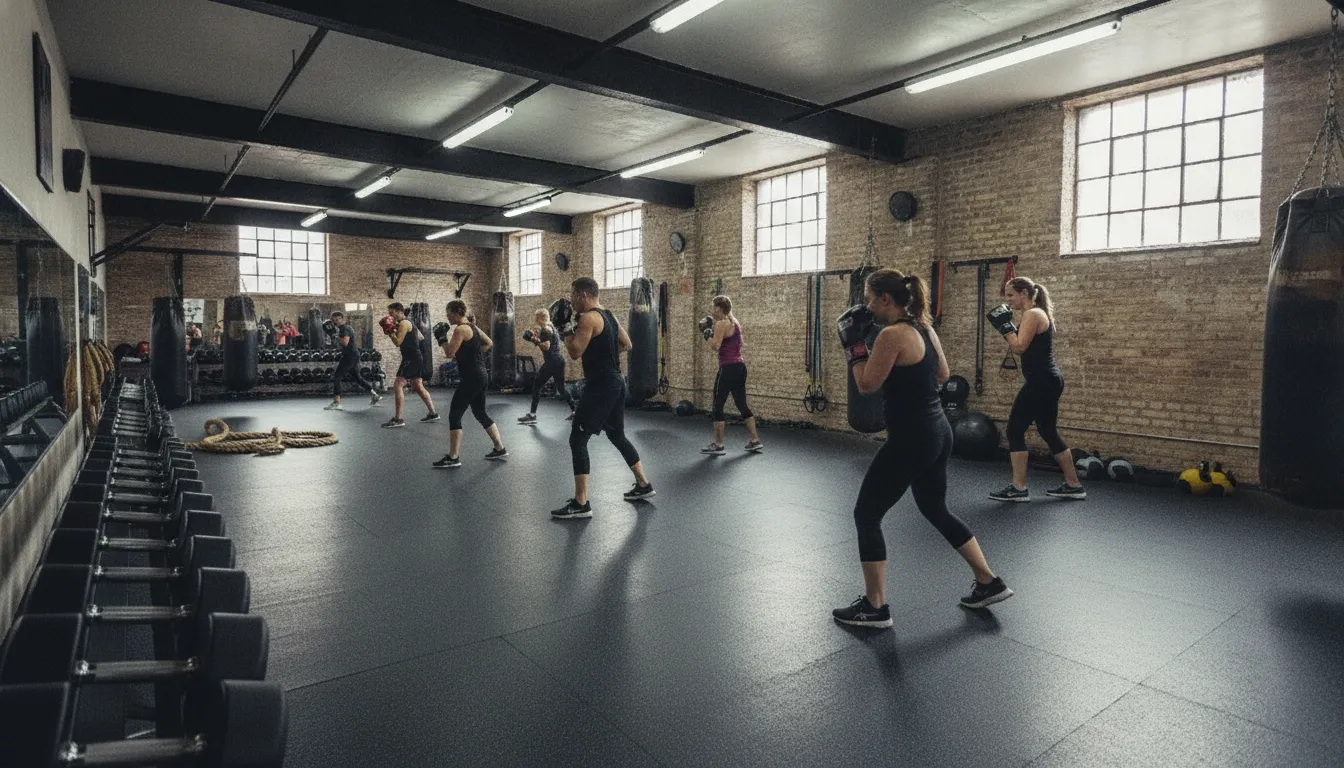
Minutes 0 to 10: Warm up and find your stance
The first few minutes get you moving before the intensity rises. Expect light footwork, changes in direction, dynamic mobility, and simple punches or defensive movements. Your coach may review stance, guard position, balance, and how to turn your hips. This is where you learn the room and settle into the rhythm of the class.
Minutes 10 to 30: Build combinations on bags or pads
Once you are warm, the coach introduces a combination one piece at a time. You might work a jab and cross, add a hook, then finish with a front kick or roundhouse. The goal is not to memorize a long sequence immediately. It is to keep your hands up, return to a stable stance, and connect each movement with control.
Rounds usually alternate between work and brief recovery. Depending on the class setup, you may strike a heavy bag, work with a partner holding pads, or shadowbox while the coach watches your form. The pace is scalable. Beginners can reduce power, shorten their range of motion, or take an extra breath while they learn. More experienced members can increase speed without sacrificing technique.
Minutes 30 to 45: Bag work and conditioning
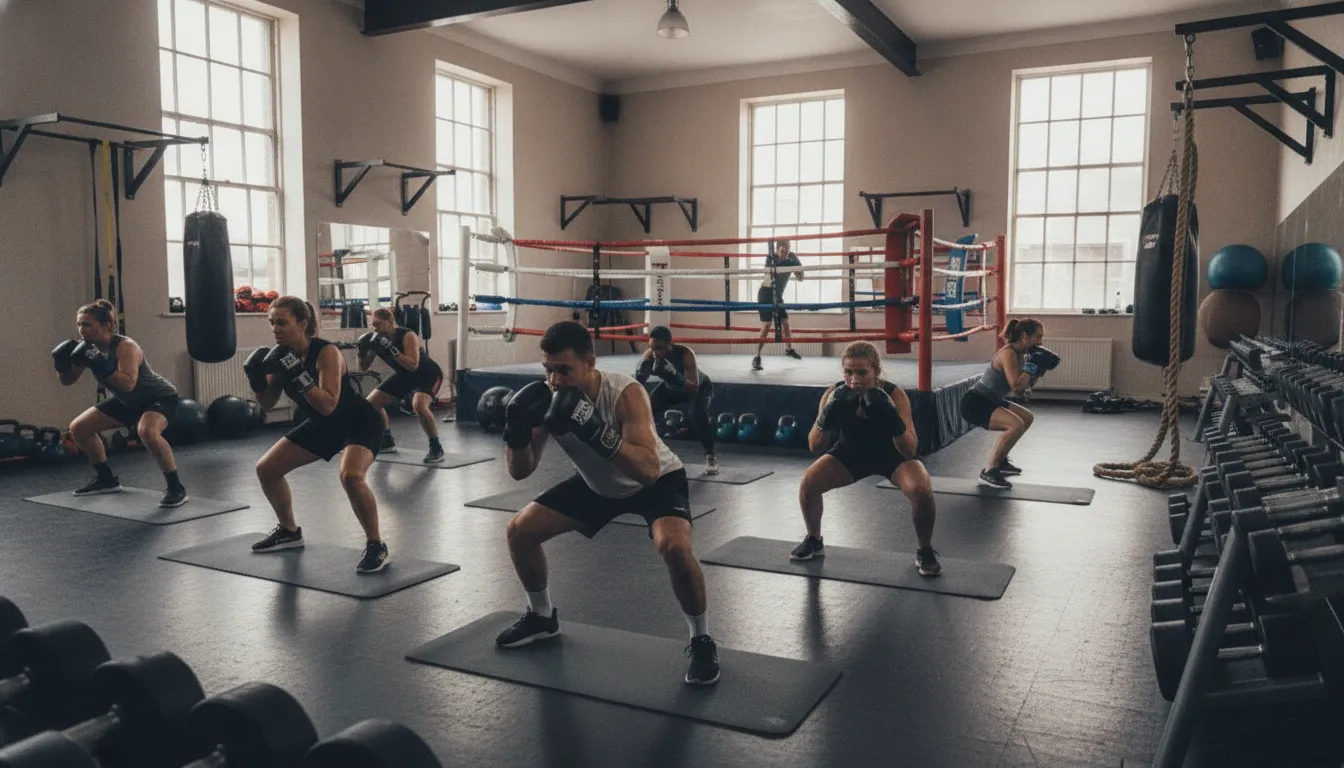
The middle of class is where the workout becomes demanding. You may repeat combinations for several rounds, then add bodyweight movements such as squats, mountain climbers, or controlled core work between rounds. Kickboxing can challenge cardiovascular fitness, strength, and endurance, which is why Mayo Clinic describes it as a strong full-body workout. You should feel challenged, but you should still be able to listen to coaching and move safely.
Minutes 45 to 60: Cool down and reset
The final phase brings the pace down gradually. Light movement, slower combinations, breathing, and stretches help you transition out of the hard rounds. Leave with enough energy to recover well, especially if this is your first class. You do not need a fighter’s background or peak conditioning to begin. Show up ready to learn, work at the right level, and build from there.
The Punches and Kicks You Learn First: Core Kickboxing Combos
Kickboxing starts with a small set of movements that become more useful as your timing improves. The jab sets distance, the cross adds power, and the hook changes the angle. On the lower half, the front kick helps you manage space while the roundhouse teaches you to turn your hip through the target. You do not need to throw everything hard on day one. Clean technique, balanced feet, and a steady return to your stance come first.
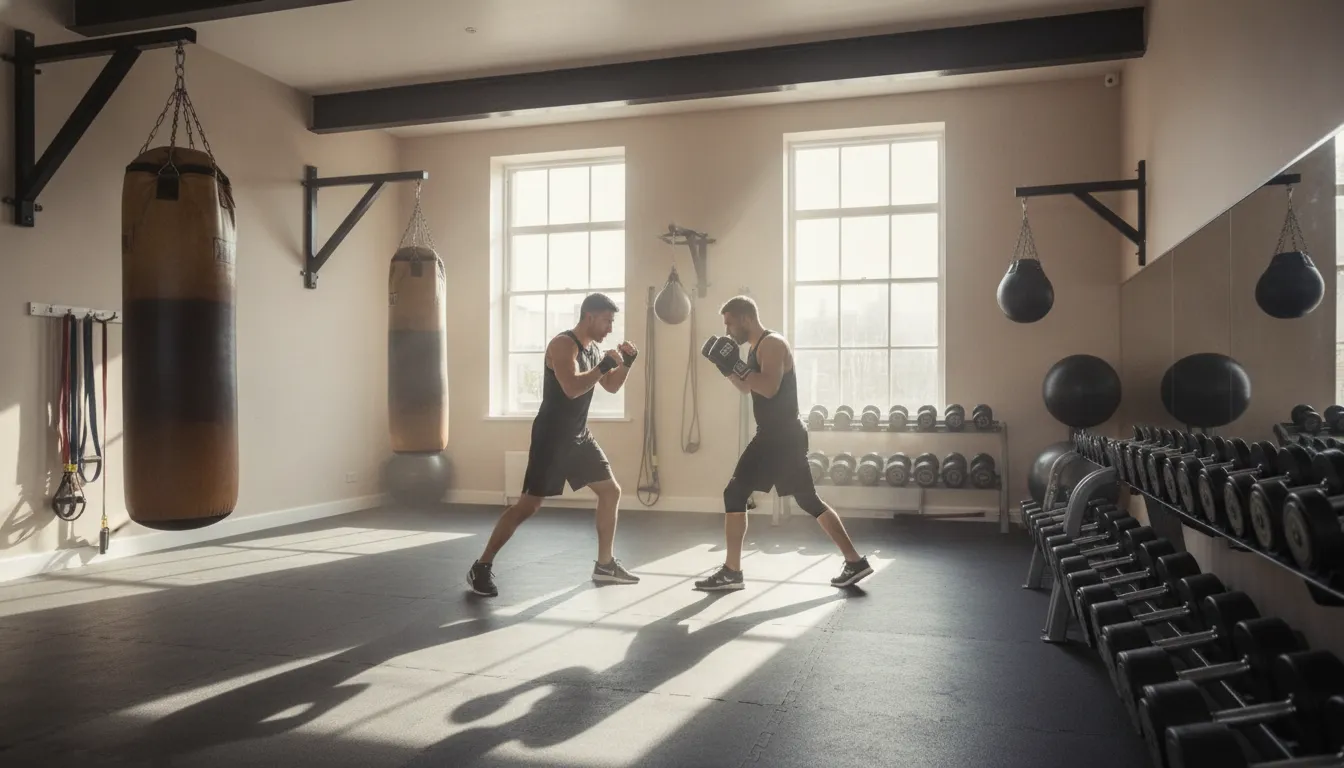
A coach will usually build combinations in layers, giving you time to understand each piece before adding speed. Use this process during class and on the heavy bag, where you can focus on control instead of chasing a number of punches.
- Start in a balanced stance. Keep your feet roughly shoulder-width apart, with your lead foot slightly forward and your hands protecting your face. Stay light enough to move, but do not bounce so much that you lose your base. Every combination should finish with you ready to defend or move.
- Learn the jab and cross. The jab travels straight from the lead hand and returns quickly. The cross follows from the rear hand as your rear hip and shoulder rotate into the punch. Begin with jab-cross, then pause and reset. Think straight lines, relaxed shoulders, and a full exhale rather than maximum force.
- Add the hook without swinging wide. From the same stance, bring the lead elbow up around shoulder height and rotate your lead foot and hip together. Practice jab-cross-hook slowly. The hook should arrive from your rotation, not from a big looping arm movement. Return your hand to your cheek after each punch.
- Introduce the front kick. Lift the knee first, extend the lower leg toward the target, and retract before placing the foot down. Keep your torso controlled and your hands up. Add it after the punches as jab-cross-front kick. The goal is to create space while staying stable, not to lean back dramatically.
- Build toward a roundhouse. Turn the supporting foot, rotate the hip, and let the shin travel around the target. Your coach may have you strike a pad or bag while learning the angle. Try jab-cross-hook-roundhouse at half speed, then reset. Quality beats speed, especially while your balance and breathing are still developing.
- Connect the rhythm and finish safely. Once each movement feels familiar, link two or three combinations, such as jab-cross, jab-cross-hook, and jab-cross-front kick. Keep the intensity conversational at first, breathe through the work, and return to your guard after the final kick. As coordination improves, your coach can add defensive movement, footwork, and faster rounds.
These basics give every later combination a dependable foundation. You are not memorizing choreography for its own sake. You are learning how to move with purpose, stay composed under effort, and make each strike return to a position that keeps you ready for the next one.
Kickboxing Classes Deliver Cardio, Strength, and Serious Calorie Burn
Kickboxing classes train more than your ability to throw a hard punch. Every round asks your heart, lungs, legs, shoulders, and core to work together. You move, strike, reset, and move again, creating the kind of full-body demand that makes a session feel purposeful from the first warm-up through the final round.
That combination matters because cardio and strength are not separate goals in a well-coached class. Punches require repeated upper-body power and control. Kicks challenge the hips, glutes, and legs. Footwork keeps your heart rate elevated while your trunk stabilizes each combination. The result is real conditioning, not a circuit built around random exercises.
Why does kickboxing improve both cardio and power?
A kickboxing round naturally alternates between effort and active recovery. Fast combinations raise your breathing rate, while technical work gives you a chance to regain control without becoming passive. Over time, that repeated change of pace can build aerobic capacity and anaerobic fitness, the ability to produce hard efforts when your muscles are already under pressure.
A study indexed by the National Library of Medicine found significant improvements in upper-body muscle power, aerobic power, anaerobic fitness, flexibility, speed, and agility after kickboxing training, with reported results at p < 0.05. Those findings do not mean one class produces a dramatic transformation. They do show why consistent practice can develop several useful performance qualities at once.
The strength benefit comes from repetition and leverage rather than simply lifting heavier weight. A cross recruits the shoulders and trunk. A controlled roundhouse demands balance, hip rotation, and lower-body drive. Defensive movement and stance work keep smaller stabilizing muscles involved. If you also want dedicated resistance work, pair classes with strength training so your overall routine covers both skill-based conditioning and progressive loading.
How does the workout support heart health?
Kickboxing is a practical way to accumulate moderate-to-vigorous movement because the class gives you a clear reason to keep moving. The CDC recommends at least 150 minutes of moderate physical activity per week and notes that reaching that level can lower the risk of heart disease and stroke. Your exact intensity depends on your pace, fitness level, and the coach’s programming. So treat that guideline as a weekly framework rather than a promise about a single class.
Mayo Clinic describes kickboxing as a great workout for cardiovascular health, strength, and endurance. The calorie burn is a useful side effect of that effort, but it should not be the only scorecard. Better stamina, sharper coordination, stronger movement, and the confidence to finish another round are results you can carry into every other workout.
Start at a pace that lets you keep your technique clean. Add speed and power as your conditioning improves. That is how kickboxing classes become sustainable training instead of a one-time test of how much discomfort you can tolerate.
What Beginners Should Expect in Their First Kickboxing Class
Walking into your first class should feel challenging, not confusing. You do not need a background in martial arts, perfect coordination, or a fighter’s conditioning level. All-levels kickboxing classes are coached so beginners can learn the basics, work at an appropriate pace, and build confidence one round at a time.
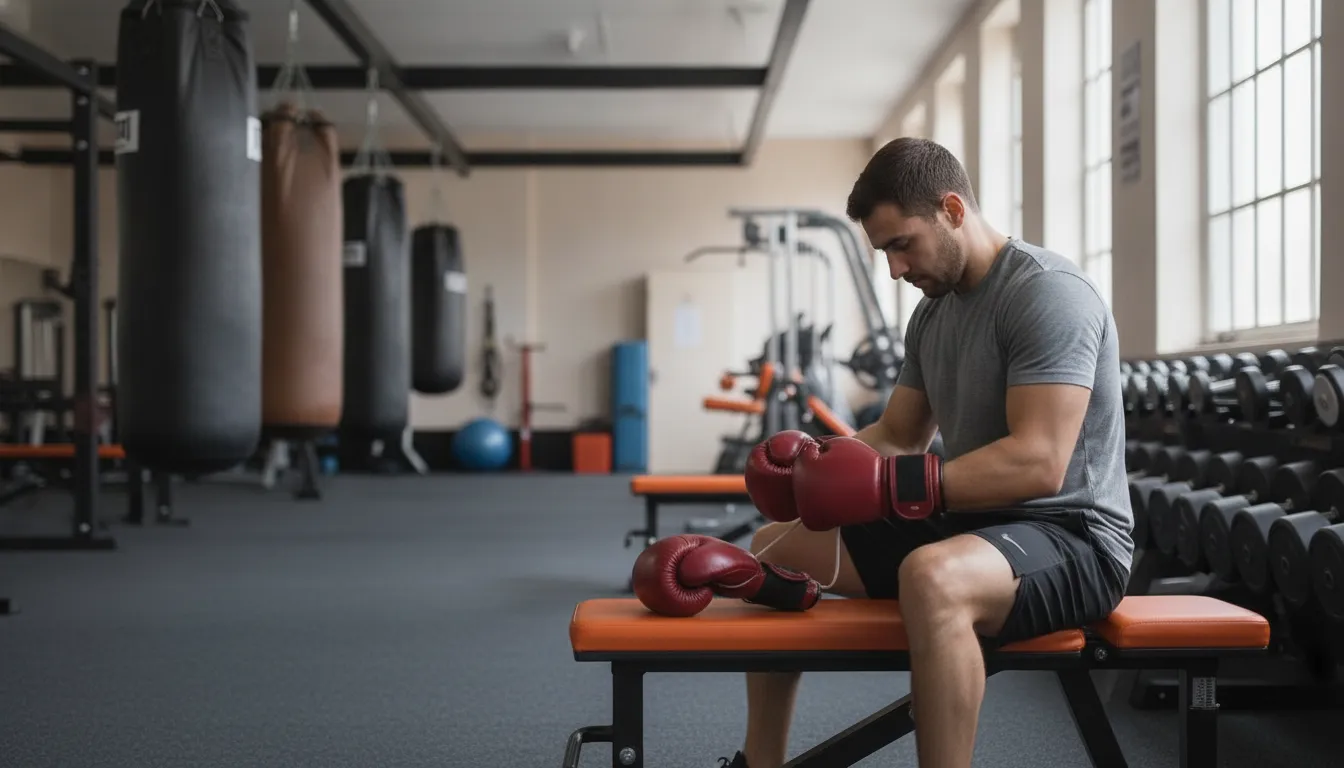
Start with the equipment. You will typically use hand wraps beneath boxing gloves to support your wrists and protect your knuckles. Athletic shoes with a stable sole are usually appropriate, and many gyms provide loaner gloves, wraps, or other essentials for first-timers. Ask the front desk or coach what is included before class, then arrive a few minutes early to get fitted and learn how to wrap your hands. Wear comfortable clothing that lets you move freely and bring water.
How hard is a first class?
Expect a warm-up before the main work begins. You may move through light footwork, mobility drills, bodyweight exercises, and simple technique practice. The coach will then introduce punches and kicks, often in short combinations, before building them into timed rounds. Some rounds may use a heavy bag or pads, while others focus on movement, conditioning, or active recovery.
The intensity is scalable. Beginners can shorten combinations, reduce power, take a lower-impact option, or use rest periods when needed. The goal is not to match the most experienced person in the room. It is to maintain control, listen to coaching, and finish the session with enough awareness to recover well. A hard workout should not require reckless effort.
Why form matters more than force
Your first class is a technique session with a workout built around it. Keep your hands in position, rotate through the hips when instructed, return to your stance after each strike, and stay balanced before adding speed. Tell the coach about injuries or movement limitations before class. If a drill causes discomfort, modify it or choose the offered alternative. Mayo Clinic guidance recommends prioritizing form and safety, stopping for sharp, localized pain, and seeking medical attention when appropriate: Mayo Clinic kickboxing guidance.
For the best first-class experience, arrive early, introduce yourself to the coach, and say clearly that you are new. Watch the demonstration before starting, ask questions, and keep your first round controlled. You are there to learn the language of the class, not prove anything. With consistent coaching and honest effort, total beginners can settle into the rhythm quickly.
Kickboxing vs Boxing: Which Class Fits Your Goals?
Both disciplines build conditioning, coordination, and confidence, but they ask your body to solve different movement problems. Boxing keeps the toolkit focused on punches, footwork, defense, and angles. Kickboxing adds kicks and a wider striking range, so your hips, legs, and core stay involved throughout more combinations.
Neither option is automatically better. The right choice depends on what you want from training, how you like to move. And whether you prefer a tighter technical focus or more variety in each round. Use the comparison below as a starting point, then let a coach help you find the class that matches your current level.
| Training factor | Kickboxing | Boxing |
|---|---|---|
| Striking range | Uses punches, kicks, and movement across closer and longer ranges. | Centers on punches, footwork, head movement, and positioning at boxing range. |
| Kicks vs. punches | Combines punches with front kicks, round kicks, and other lower-body strikes. | Uses punches only, with combinations built around the jab, cross, hook, and uppercut. |
| Full-body involvement | Typically asks the legs, hips, shoulders, and core to work together in each combination. | Builds strong lower-body drive and trunk rotation while keeping the focus on upper-body striking. |
| Calorie burn | Can feel especially demanding because punches, kicks, stance changes, and conditioning are layered together. | Can deliver a hard cardiovascular workout through sustained rounds, footwork, bag work, and punch volume. |
| Beginner-friendliness | Approachable when techniques are taught progressively and intensity is scaled to your experience. | Approachable for beginners who want to master a smaller set of fundamentals before adding complexity. |
| Best for goals | A varied full-body challenge, improved coordination, and training that keeps you moving in multiple planes. | Sharper punching technique, boxing-specific footwork, conditioning, and focused skill development. |
Choose the class you will train consistently
If you want more lower-body work and enjoy changing between punches and kicks, kickboxing classes may be the stronger fit. If you are drawn to clean combinations, defensive movement, and the craft of punching, boxing gives you a focused path to progress. Your first choice does not have to be permanent. Trying both can show you which coaching style, pace, and movement patterns keep you engaged.
Grind House offers boxing classes for members who want that focused striking practice, and a coach can help you decide where to start. Beginners can also review our boxing for beginners guidance before class. The best workout is the one that challenges you without making you dread the next session.
How Often Should You Take Kickboxing Classes for Results?
For most people, two to three kickboxing classes per week is a strong starting cadence. It gives you enough repetition to build better technique and conditioning without turning every day into a recovery day. If you are new to training, begin with two classes, then add a third when your body is handling the workload well.
Frequency matters because each class builds on the last one. The first few sessions may feel focused on remembering combinations, finding your stance, and coordinating your hands and feet. With regular attendance, those movements become more familiar. You can spend less energy thinking about the sequence and more energy producing clean, controlled work.
What can three classes a week do?
A study of kickboxing training had participants train for about one hour, three times per week, over five weeks. The kickboxing group showed significant improvements in upper-body muscle power, aerobic power, anaerobic fitness, flexibility, speed, and agility. That does not mean every person will see identical changes on the same timeline. But it is useful evidence for a practical schedule: consistent training, repeated over several weeks, can improve more than one part of fitness at once.
Results are also easier to notice when you track the right markers. You may recover faster between rounds, keep your hands up longer, move with more control, or complete combinations without losing your balance. Changes in strength, stamina, and coordination often show up before a mirror or scale gives you a clear answer.
Why recovery belongs in the plan
More classes are not automatically better. Kickboxing asks your legs, shoulders, core, and cardiovascular system to work hard, so recovery helps you return ready to train well. Leave at least one easier day between demanding sessions when possible. On non-class days, walking, mobility work, or light strength training can keep you moving without adding another maximal effort.
Pay attention to patterns rather than one tough workout. Normal muscle fatigue is expected, while sharp or localized pain is a reason to stop and get guidance. You can also lower your pace, reduce impact, or take an active recovery round during class. Good coaching should help you adjust without making you feel like you are falling behind.
The best schedule is the one you can repeat. Two focused classes every week will take you further than an ambitious burst of five classes followed by a long break. Build the habit first, increase frequency gradually, and let steady work drive your progress.
Source: peer-reviewed kickboxing training study.
Book a free kickboxing class and put these techniques into practice.
Frequently Asked Questions
What happens in a kickboxing class for beginners?
A beginner class usually starts with a warm-up, then teaches basic punches, kicks, footwork, and combinations. You will practice technique with a coach, a bag, or a partner drill before finishing with conditioning and a cooldown. The pace can be adjusted, so your first session should focus on learning clean movement rather than matching anyone else’s speed.
Are kickboxing classes good for weight loss?
They can support weight loss by combining sustained movement, resistance from striking and bodyweight drills, and challenging intervals. Results still depend on your overall eating pattern, recovery, and consistency. Treat class as a repeatable training habit, then pair it with nutrition and sleep habits you can maintain.
Do I need to be fit to start kickboxing classes?
No. You do not need a fight background or a high fitness level to begin. A good coach offers simpler combinations, lower-impact options, and rest when you need it. Start at a manageable intensity, learn the fundamentals, and build capacity as your technique and conditioning improve.
What equipment do I need for a kickboxing class?
Wear comfortable workout clothes and supportive training shoes, and bring water. Depending on the gym, you may need hand wraps and gloves, while some facilities provide or sell them. Ask about equipment before your first session so you arrive prepared and can spend your time training instead of guessing.
Is kickboxing dangerous for beginners?
Any demanding workout carries some risk, but beginner training should emphasize controlled technique, clear space, proper warm-ups, and coach supervision. You can reduce unnecessary risk by communicating injuries or limitations, following instructions, and stopping when pain feels sharp or unusual. Contact a medical professional before starting if you have a health concern.
Ready to Try a Kickboxing Class?
A kickboxing class gives you a focused way to build technique, conditioning, and confidence while learning at a pace that works for you. If you are ready to put the combinations and training principles from this guide into practice, take the next step at Grind House. Book your free kickboxing class and experience the workout for yourself.
Leave a Reply
You must be logged in to post a comment.