
Choosing a boxing gym in NYC is less about finding the loudest brand and more about finding a training relationship you can trust. The right room should help you understand what you are doing, see how classes build from one session to the next, and keep your goals realistic. Use this guide to compare coaching, progression, schedule, and member fit before you join.
View the Grind House class schedule and explore a coached boxing option.
A boxing gym can serve very different purposes. One person wants a demanding full-body workout. Another wants to learn fundamentals, build confidence, or eventually train with more structure. Some gyms prioritize traditional boxing, while others use boxing movements as part of a broader fitness class. None of those models is automatically best. The useful question is whether the program matches the way you want to train.
How should you evaluate coaching at a boxing gym in NYC?
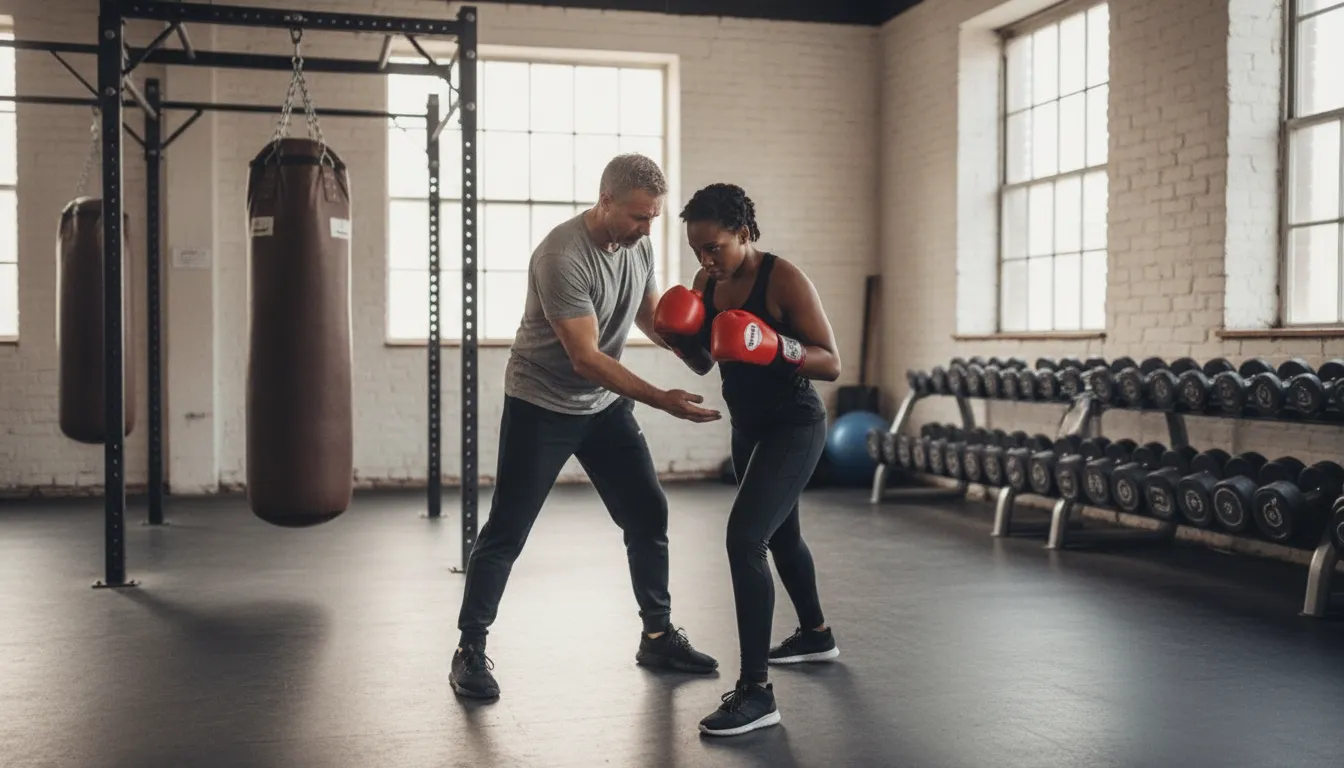
Good boxing coaching is visible in the details. A coach should be able to explain the purpose of a drill, give a clear correction, and create a safer path from unfamiliar movement to repeatable skill. During a visit, pay attention to whether the coach watches the room or simply starts a timer and leaves members to guess.
Ask how new members are introduced to stance, guard, footwork, breathing, and basic combinations. You do not need a lengthy lecture before every class, but you should understand what the coach wants you to practice and what a better repetition looks like. Useful feedback is specific enough to apply on the next round.
Also look for coaching that can scale. A well-run class can give a newer member a simpler version of a drill while offering a more challenging variation to someone with experience. That is different from treating every person as if they entered with the same ability, injury history, or goal.
Questions to ask about the coach and class
- How does the coach welcome someone with no boxing background?
- How are technique corrections delivered during a busy class?
- What happens when a member needs a lower-impact or simpler option?
- How does the program distinguish fitness boxing from skill development?
- Who can answer questions before or after the session?
At Grind House, the live Flatiron classes page describes boxing as an instructor-led class that alternates speed and power exercises for total-body conditioning. That is useful context for a shopper who wants coached fitness boxing, but it is still worth asking how a specific session is structured and how the coach supports your starting point.
What does a clear boxing class progression look like?
A strong boxing program gives each session a job and makes the next step understandable. Progression may mean moving from stance and footwork to combinations, then adding speed, conditioning, or more complex rounds. It does not require every class to be easy, but the challenge should grow from a foundation instead of replacing instruction.
Look for a difference between a class that is merely exhausting and one that helps you improve. A hard workout can be valuable, but fatigue alone does not tell you whether your guard, balance, timing, or punch path is getting better. Ask what a regular member should be able to do after several weeks of consistent attendance.
Progression can happen in several ways:
- Movement quality: You hold a stable stance and return punches with more control.
- Combination knowledge: You understand the sequence instead of reacting to random cues.
- Work capacity: You sustain effort without letting technique fall apart.
- Decision-making: You can choose when to slow down, reset, or modify a drill.
- Training consistency: You build a repeatable routine instead of chasing one dramatic session.
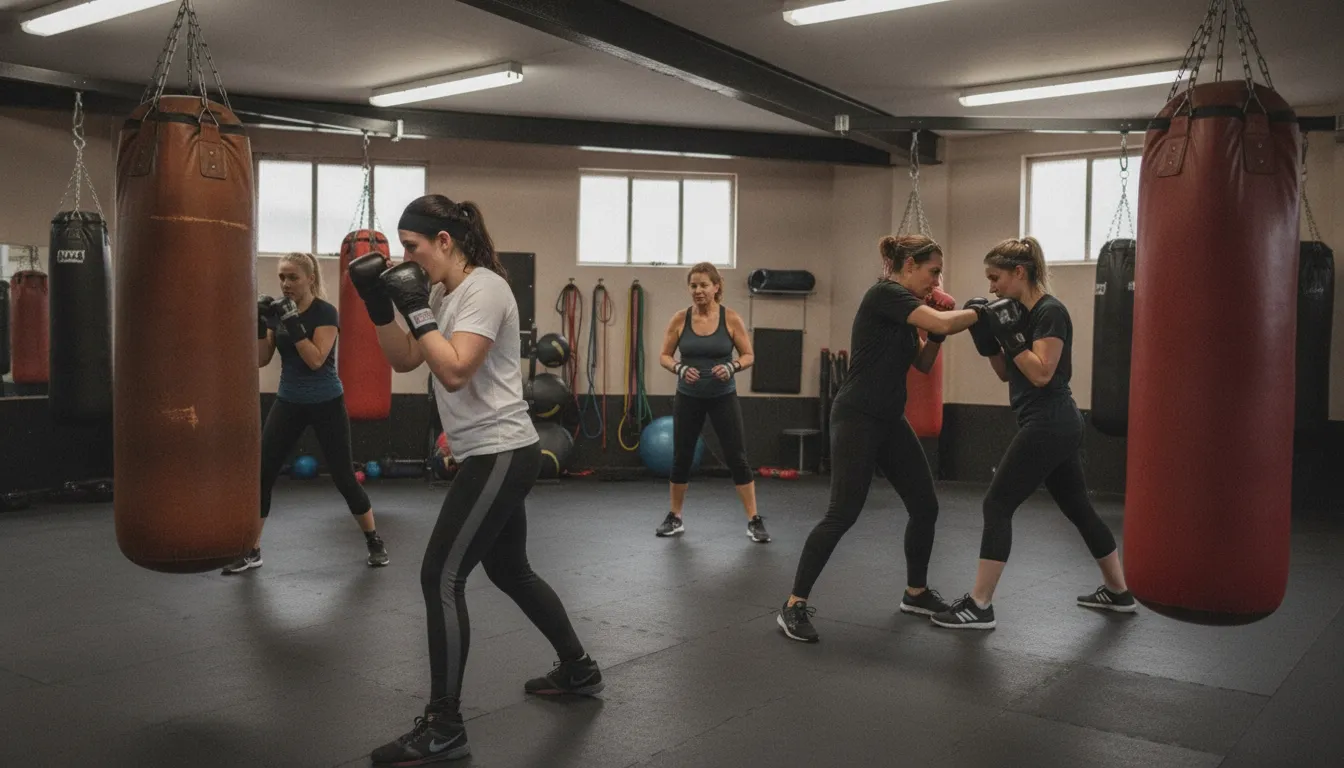
Ask whether the gym offers more than one way to train. A class schedule with boxing plus other modalities can help members build a balanced routine rather than repeating the same stimulus every day. Grind House lists boxing alongside HIIT, cycling, yoga, kettlebell, turf and tread, Pilates and barre, and cardio dance. That variety may matter if you want boxing to be part of a broader fitness plan.
Does the gym match your boxing goals?
The best boxing gym for a fitness goal may not be the best fit for someone seeking competition preparation. Before comparing facilities, write down what you want from training over the next three months. A specific goal makes it easier to ask useful questions and avoid being persuaded by a general claim that a gym is for everyone.
| Your goal | What to evaluate | Useful question |
|---|---|---|
| Full-body conditioning | Class intensity, coaching, and repeatable modifications | How does the coach keep the workout challenging without losing technique? |
| Boxing fundamentals | Instructional clarity, beginner support, and practice time | How do new members learn the foundation? |
| Skill development | Class levels, feedback, and progression between sessions | How is improvement measured beyond finishing tired? |
| Competition pathway | Advanced coaching, sparring policy, and appropriate referrals | What does the next step look like for a member who wants to compete? |
| Stress relief and confidence | Atmosphere, coach communication, and comfort with the room | Will I feel supported while I learn something difficult? |
Be precise about what you are not looking for, too. If you want non-contact fitness boxing, ask how the class handles contact and whether sparring is required. If you want traditional boxing development, ask whether the program provides enough technical attention to support that goal. The answer may lead you toward a single-format boxing gym, a broader boutique gym, or a combination of both.
Contact Grind House with questions about the boxing class format and your training goals.
Can the schedule support consistent training?
A boxing gym only helps if you can attend often enough to build momentum. Compare the actual class schedule with the windows you can protect on a normal week. An impressive timetable is not useful if every available session conflicts with work, family responsibilities, travel, or your commute.
Check the details that affect attendance:
- Are there sessions before work, after work, or on weekends?
- Can you book in advance, and what happens if a class fills?
- How much travel time is realistic after a long day?
- Is the same class available at more than one useful time?
- Can you combine boxing with another class when your goals change?
- What are the cancellation and reservation rules?
Grind House’s live contact information lists weekday hours from 5:00 AM to 10:00 PM and weekend hours from 7:00 AM to 8:00 PM. Its Flatiron class page also directs visitors to a current schedule. Treat those details as a starting point, then confirm the session you would actually attend before planning your routine.
How do you know a boxing gym is a good member fit?
Member fit is the combination of culture, communication, and expectations. You should be able to take the work seriously without feeling that you need to perform an identity before you have learned the basics. A good fit can feel demanding and welcoming at the same time.
Use a first visit to observe the room. Do members receive space and attention? Are beginners ignored, or are they given a clear way to participate? Does the coach explain the difference between effort and recklessness? Can staff answer practical questions without rushing you toward a membership decision?
Read the membership terms before joining and ask what is included in the experience. You do not need to choose based on a long amenities list. Instead, compare the things you will use repeatedly: coaching access, class reservations, equipment expectations, schedule flexibility, and the support available when your goals change.
A trial or introductory visit is most useful when you treat it as a test of your routine. Arrive with three questions, take notes after class, and notice how you feel the next day. Did you learn something specific? Could you imagine attending again next week? Did the pace challenge you without making technique impossible? Those answers are more useful than a quick impression of the lobby.
What should you ask before joining a boxing gym in NYC?
Before committing, ask for clear answers to the questions that affect your training. A transparent gym should be able to explain its class model, who the classes suit, how members progress, what equipment they need, how scheduling works, and what options exist if their goals change.
- Is the class designed for fitness, boxing skill development, competition preparation, or a mix?
- How does the coach adapt drills for beginners and experienced members?
- What does progression look like after the first few sessions?
- Do I need to bring wraps, gloves, or other equipment?
- Is contact or sparring part of the class, and is it optional?
- Which class times fit my normal week?
- Can I try a session or visit before choosing a membership?
- Who should I speak with if I need help choosing the right class?
For Grind House, the published class information is a practical place to begin. Review the boxing description, look at the schedule, and ask the team how the session fits your experience and goals. You can also read the guide to what to expect at a Grind House boxing class for a location-specific overview, then use the current schedule for the latest class options.
Find a class time that fits your routine and take the next step with Grind House.
Boxing Gym NYC FAQ
How do I choose a boxing gym in NYC?
Start with your goal, then compare coaching quality, class progression, schedule, equipment expectations, and member culture. Visit or try a session when possible. The right choice is the gym whose training model fits your routine and helps you make steady progress.
Are boxing gyms in NYC good for beginners?
Many gyms offer beginner-friendly classes, but the format varies. Ask whether the class teaches fundamentals, whether contact is required, and how coaches modify drills. A clear introduction and patient feedback matter more than a beginner label on a website.
Should I choose a boxing gym or a general fitness gym?
Choose based on the training relationship you want. A boxing-focused gym may offer more technical repetition, while a broader gym may make it easier to combine boxing with strength, conditioning, mobility, and other classes. Ask how each option supports your main goal.
What should I bring to a boxing class?
Ask the gym before your first visit because equipment policies differ. Grind House’s published boxing description says members should bring their own wraps and gloves. Wear comfortable training clothes, bring water, and confirm any equipment requirements when you book.
Is a trial visit worth it before joining?
Yes, if you use it to evaluate the actual training experience. Notice how the coach teaches, how the class progresses, whether the pace can be scaled, and whether the schedule fits your week. A trial should answer practical questions, not just create a first impression.
Leave a Reply
You must be logged in to post a comment.