Starting a workout routine does not require crushing yourself every day. The smarter move is to build a week you can repeat, combining manageable cardio, basic strength work, and enough recovery to keep showing up.
The best workout routines for beginners balance strength, cardio, and recovery around your current fitness level. Start with consistent sessions you can complete comfortably, choose activities you actually enjoy, and increase the challenge gradually. The CDC recommends building toward 150 minutes of moderate aerobic activity weekly plus muscle-strengthening work on at least two days, but some activity is better than none. CDC guidelines
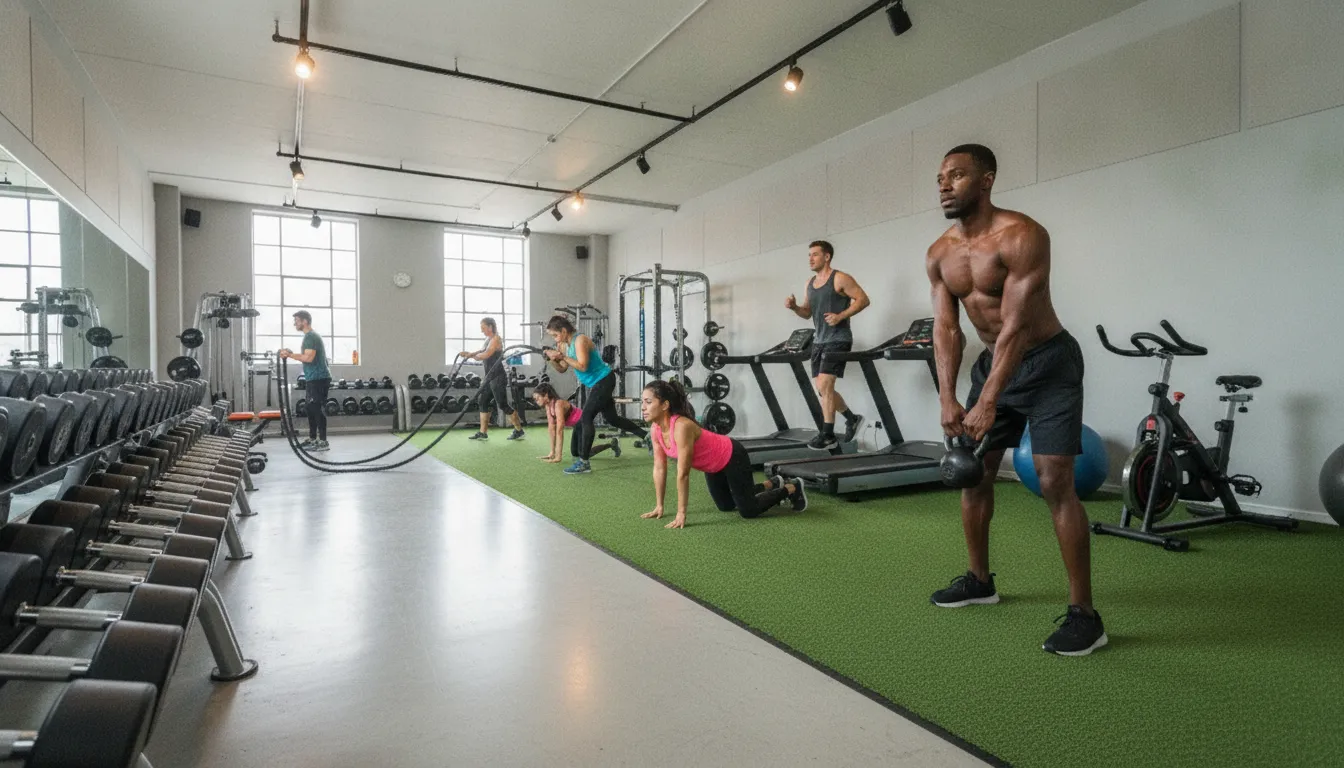
At Grind House, Cycling, Boxing, HIIT, Turf and Tread give you different ways to train while staying part of a supportive tribe. Beginners also receive a complimentary initial assessment with membership, so you can start with a clearer plan instead of guessing. Start your Grind House trial and build your routine.
First, it helps to understand what a balanced beginner week should actually include.
What Are the Best Workout Routines for Beginners?
The best beginner routine is not the hardest workout you can tolerate. It is a balanced plan that gives you regular exposure to strength training, aerobic movement, and recovery, then scales each piece to your current ability. That balance helps you build useful fitness without turning every session into a test of willpower.
A practical starting point includes at least two days of muscle-strengthening activity each week. Working the major muscle groups, alongside a gradual path toward 150 minutes of moderate-intensity aerobic activity. The Centers for Disease Control and Prevention notes that those 150 minutes can be spread across the week. Such as 30 minutes on five days, rather than completed in one exhausting session. See the CDC’s adult physical activity guidelines.
That does not mean your first week has to look perfect. If you are currently inactive, start with shorter sessions, easier resistance, or a lower-impact version of a class. Some activity is better than none, and consistency matters more than chasing maximum intensity from day one. A routine you can repeat next week will serve you better than one impressive workout followed by a long break.
Build around what you can repeat
Enjoyment is a training variable, not a bonus. The CDC recommends choosing activities you enjoy and that match your abilities, because you are more likely to stick with them. Use your current ability and preferences as a starting point. You might prefer a coached cycling session, basic strength work, boxing drills, or a brisk walk between training days. There is no single correct entry point.
For a Manhattan or Brooklyn reader, a boutique gym can make that variety easier to maintain. Grind House offers Cycling, Boxing, HIIT, and Turf & Tread formats, so your week can include different challenges without becoming random. The goal is a simple rhythm: train your muscles, raise your heart rate, and leave room to recover. As your movement quality and confidence improve, you can add time or resistance gradually instead of trying to prove yourself in every session.
A Simple Weekly Workout Plan for Beginners
A balanced first week does not need to be complicated. Use two strength sessions to build foundational movement, add manageable cardio, and protect time for recovery. The CDC recommends at least 150 minutes of moderate-intensity aerobic activity each week. Often expressed as 30 minutes on five days, plus muscle-strengthening activity on at least two days. You do not have to complete the aerobic work in one session or hit the full target immediately. Review the CDC activity guidelines for the full recommendation.
- Day 1: Full-body strength. Start with controlled bodyweight or light-resistance exercises such as squats, a supported push-up, a row, a hip hinge, and a plank. Complete one or two comfortable rounds, focusing on technique rather than lifting to fatigue.
- Day 2: Moderate cardio. Walk briskly, ride a stationary bike, or choose another activity that raises your breathing without leaving you exhausted. Aim for about 30 minutes, including an easier warm-up and cool-down.
- Day 3: Rest or light recovery. Take a full rest day, or walk easily and spend a few minutes moving through gentle stretches. Recovery is part of the plan, not a sign that you are falling behind.
- Day 4: Full-body strength. Repeat the main movement patterns from Day 1. Keep the resistance manageable and leave a few good repetitions in reserve. If soreness is significant, reduce the number of rounds rather than forcing intensity.
- Day 5: Moderate cardio. Complete another 30-minute session at a steady pace. You can split it into shorter blocks if that makes the week easier to manage. Consistency matters more than choosing the hardest option.
- Day 6: Active recovery or easy cardio. Take a relaxed walk, try gentle mobility work, or complete an easy activity you enjoy. Keep the effort low enough that you finish feeling better than when you started.
- Day 7: Rest. Let your body recover, prepare for the next week, and note what felt sustainable. Planning the next two or three sessions now can make follow-through easier.
Treat this as a starting point, not a test you can fail. If you are inactive now, begin with shorter sessions, fewer rounds, or three planned workout days, then build gradually. Some physical activity is better than none, according to the CDC. As your conditioning improves, add time before adding intensity. Choose movements and cardio you can repeat consistently, adjust around work and sleep, and stop for unusual pain or symptoms. The best workout routines for beginners are the ones that challenge you appropriately and still leave you ready to train again.
Strength Training Basics for a New Routine
Strength training gives a beginner a practical way to build control, stability, and confidence. You do not need to start with heavy barbells or complicated programming. Begin with movements you can perform smoothly, then add resistance as your technique and capacity improve.
The CDC recommends muscle-strengthening activity at least two days each week, working all major muscle groups. That includes the legs, hips, back, chest, abdomen, shoulders, and arms. Two full-body sessions are often easier to schedule and recover from than trying to isolate one muscle group every day.
Choose bodyweight or light resistance first
Bodyweight exercises are a strong starting point because they let you learn the movement before managing extra load. Try controlled squats to a bench, incline push-ups, glute bridges, step-ups, planks, and assisted rows. If you use weights, choose a load that allows steady repetitions without swinging, rushing, or losing alignment. Light dumbbells, kettlebells, or resistance bands can make familiar movements more challenging while keeping the focus on form.
A good beginner session might include one lower-body push, one upper-body push, one pull, a hip-focused movement, and a core exercise. Complete a small number of comfortable sets, rest between movements, and stop before your technique breaks down. Mild effort is expected. Sharp pain, joint discomfort, or dizziness is a reason to stop and ask for qualified guidance.
Make form and progression the priority
Start lighter than your ego wants. The goal of the first few weeks is to practice consistent positions, breathing, and range of motion. Keep your feet stable, brace your midsection when appropriate, and move through a range you can control. When the same load feels manageable for several sessions, increase resistance gradually or add a few repetitions. You do not need to chase exhaustion to make progress.
If you are unsure where to begin, Grind House includes a complimentary initial assessment for beginners with membership. That gives you a practical starting point and helps you enter the training environment safely. Start your Grind House trial and build strength with a plan that meets you at your current level.
Cardio That Fits a Beginner’s Schedule
Cardio does not have to mean exhausting yourself every time you train. For a beginner, the best approach is to build an aerobic base with sessions you can repeat consistently. Then add short periods of higher effort as your fitness improves.
The CDC recommends that adults aim for at least 150 minutes of moderate-intensity aerobic activity each week. That target can be spread across manageable sessions, such as 30 minutes on five days, rather than completed in one long workout. Read the CDC aerobic activity guidelines for the full recommendation.
Start with steady-state cardio
Steady-state cardio means working at a controlled pace for a sustained period. Brisk walking, easy jogging, a relaxed treadmill session, or comfortable cycling can all fit. You should feel that your heart rate is elevated while still having enough control to speak in short sentences. This is an effective starting point because it helps you practice pacing without turning every workout into a test of willpower.
Indoor cycling can make those sessions easier to schedule and more engaging. Adjust the resistance so the effort remains manageable, especially during your first classes. If you want a practical introduction, explore Grind House indoor cycling classes and choose a pace that matches your current ability.
Add intervals gradually
Intervals alternate brief periods of faster work with easier recovery. They can improve variety and help you become comfortable with changes in pace, but beginners do not need maximum-effort sprints. Start with a short, controlled increase in effort followed by enough easy movement to recover. One example is walking comfortably for four minutes, then picking up the pace for one minute, repeated several times.
HIIT can also fit into a beginner routine when the intensity is scaled appropriately. Use low-impact options, reduce the work interval, and take the recovery time you need. A coach should be able to offer modifications rather than expecting you to match an advanced participant. Grind House’s guide to HIIT classes explains how this format can serve different fitness levels.
Keep most early cardio sessions comfortable, and increase only one variable at a time: duration, frequency, or intensity. If your schedule is tight, even a shorter session is a useful step toward consistency. Build the habit first. Speed and harder intervals can come later.
Recovery: A Beginner’s Most Overlooked Tool
Training is the stimulus, but recovery is where your body has time to respond to it. When you are new to exercise, every workout can feel like a major event. That does not mean you need to train hard every day, or chase soreness as proof that a session worked. A routine that leaves no room to recover is difficult to repeat and can turn normal beginner fatigue into a reason to quit.
Plan rest with the same intention you bring to your workouts. After a strength, boxing, or high-effort conditioning session, give the muscles and energy systems involved enough time before asking them to perform at the same level again. For many beginners, that means starting with two or three training days, then adding activity gradually as the routine feels more manageable.
What to do on a rest day
Rest does not have to mean remaining completely still. Light activity can keep you moving without adding another demanding training session. Take an easy walk, spend a few minutes on gentle stretching, or use simple mobility work for areas that feel tight. Keep the effort low enough that you finish feeling better, not more depleted. If you are unusually tired, achy, or run down, a true rest day is the better choice.
Stretching and mobility are useful when they help you move comfortably, but they are not a test of flexibility and should never be forced through pain. Use controlled movements, breathe normally, and focus on the positions that support your next workout. Recovery also includes basic habits outside the gym, including adequate sleep, regular meals, and enough water to support your activity.
Most importantly, do not judge progress by how sore you are. Soreness can happen when a new routine challenges unfamiliar movements, but it is not a requirement for improvement. Consistent training, sensible effort, and planned recovery give you a more sustainable path forward. For a deeper look at practical rest-day options, read this guide to gym recovery, sauna, yoga, and rest days.
How Grind House Classes Fit a Beginner’s Routine
A new routine does not need to mean choosing one style of exercise and forcing yourself to repeat it every day. Grind House offers eight specialized class types, including Cycling, Boxing, HIIT, and Turf and Tread. So beginners can build variety into the week while learning what they actually enjoy. That variety matters because the best workout routines for beginners are routines you can perform consistently, not punishing sessions you dread.
Start with one or two classes, arrive ready to learn, and treat the first few weeks as practice. The goal is to understand the movements, manage your effort, and leave with enough energy to come back. A complimentary initial assessment is included with membership, giving you a practical starting point for choosing classes and adjusting the workout to your current ability.
| Class type. | Beginner fit. | Typical intensity. | What it trains. |
|---|---|---|---|
| Cycling | It is a good first class because resistance and pace can be adjusted. | Moderate to challenging. | It builds cardio endurance, leg strength, and pacing. |
| Boxing | It is approachable when you focus on technique before speed. | Moderate to high. | It builds coordination, conditioning, footwork, and full-body movement. |
| HIIT | It is best started with scaled rounds and controlled effort. | High, with rest intervals. | It builds power, work capacity, strength, and cardiovascular fitness. |
| Turf and Tread | It is flexible for walking, jogging, and modified strength work. | Moderate to high. | It builds full-body strength, locomotion, and cardiovascular conditioning. |
Use the table as a guide, not a test. Cycling may be a comfortable entry point for one person, while another may prefer learning combinations in a beginner boxing class. You can read more about indoor cycling for new riders or see how to approach HIIT at different fitness levels.
Most importantly, you are not expected to perform like an experienced member on day one. Grind House is built around a supportive tribe atmosphere where beginners can ask questions, take a modification, and build confidence without judgment. Pairing that environment with steady attendance makes it easier to develop beginner workout habits that last beyond the first burst of motivation.
Frequently Asked Questions
How many days a week should a beginner work out?
Start with three or four planned sessions, then build toward a balanced weekly schedule you can repeat. A practical starting point is two strength sessions, one cardio class, and one optional light activity or recovery day. The CDC recommends at least 150 minutes of moderate aerobic activity weekly, but that time can be divided into manageable sessions rather than completed all at once. See the CDC activity guidelines.
Is strength training or cardio better for beginners?
Neither is automatically better. Strength work builds the foundation for movement and supports major muscle groups, while cardio develops endurance and work capacity. Combining both gives you a more complete routine. Aim for muscle-strengthening activity on at least two days per week, as recommended by the CDC, and choose an intensity that lets you maintain good form.
Do I need workout experience before joining a class?
No. Tell the coach that you are new, choose beginner-appropriate modifications, and focus on learning the movement patterns instead of matching someone else’s pace. Grind House includes a complimentary initial assessment with membership, which can help you choose a sensible entry point and understand how to train safely.
What is a good full-body routine for someone just starting?
Use two full-body strength days, one Cycling or Turf and Tread session, and one optional Boxing or scaled HIIT class. Keep at least one easier day between demanding sessions, and use walking, mobility work, or stretching for recovery. The best plan is the one that matches your current ability and activities you enjoy, because consistency matters more than starting at maximum intensity.
Ready to Start a Beginner Workout Routine?
You do not need experience to begin. You need a clear plan, guidance that scales to your level, and a supportive place to show up. Grind House brings all three together with a complimentary initial assessment, beginner-friendly instruction, and a community that keeps you consistent.
Start your Grind House trial and build a beginner routine you can stick with: Claim your trial membership.
Prefer to talk it through before you commit? Our Manhattan team can answer your questions about class formats, scheduling, and getting started. Call 212-994-9453 or stop by Grind House in Manhattan. Your first step is the only hard one, and we can make it feel straightforward.
Leave a Reply
You must be logged in to post a comment.