
Ready to try Boxing in NYC? Call Grind House at 718-866-6292 or browse the class schedule to find a beginner-friendly Boxing session near you in Williamsburg. First-timers are welcome, and the professional instructors can help you get started at the right pace.
Boxing can look intimidating when the gloves, combinations, and fast pace are unfamiliar. In a beginner-friendly boutique gym, though, the goal is not to arrive knowing how to fight. It is to learn useful movement, build conditioning, and find a sustainable workout in a welcoming room. Non-contact boxing classes let NYC beginners train at high intensity without sparring, while professional instructors can scale drills to different fitness levels.
For boxing for beginners nyc, start with a non-contact class that teaches fundamental punches, footwork, and interval conditioning. Boxing can support weight-loss goals because it combines demanding cardio with full-body movement, but consistent attendance, recovery, and nutrition matter more than chasing a single hard session.
At Grind House in Williamsburg, Boxing is built around shared effort rather than posturing. Once the basic rhythm is clear, the class becomes more than arm work: every punch connects to the legs, core, shoulders, and cardiovascular system.
Boxing For Beginners Nyc: Why Boxing Is One of the Best Full-Body Workouts for Beginners
Boxing gives beginners more than an arm workout. Every combination asks the legs, hips, core, shoulders, and arms to work together while the heart responds to repeated bursts of effort. That combination makes a boxing class approachable for someone starting from zero, yet challenging enough to keep building fitness as technique improves.
One class trains the whole body
A punch starts from the floor, not just the shoulder. You learn to stabilize through the feet, rotate through the hips and torso, brace the abdominals, and finish with controlled movement through the arms and shoulders. The result is coordinated full-body engagement rather than isolated repetitions on a single machine.
Rotational punches also give the core a meaningful role. The abdominals and lower back help transfer force and keep the body balanced as you move. For a beginner, learning that connection can improve body awareness while developing strength that supports everyday movement.
Boxing raises the intensity without requiring experience
Most fitness boxing is built around intervals: a focused burst of punches or footwork, followed by a short recovery period. That structure resembles high-intensity interval training, which research associates with improvements in fat loss and cardiometabolic health compared with moderate-intensity continuous training. Read the review in PubMed Central for the broader evidence on HIIT.
You do not need to arrive already fit to benefit. A professional instructor can adjust pace, round length, movement, and recovery so the workout matches your current ability. Beginners can concentrate on clean technique first, then add speed or intensity as confidence grows. No equipment? No problem. The class structure provides a clear place to start.
A practical option for boxing for weight loss and overall fitness
Noncontact boxing can also deliver substantial energy expenditure. One study measured approximately 2,519 to 3,079 kilojoules during a 60-minute boxing session, a level comparable to recreational running. The study is available through PubMed. Actual results vary with pace, body size, conditioning, and recovery. But the finding explains why boxing can fit a goal of boxing for weight loss without making the workout repetitive.
High-intensity boxing has also been linked with improvements in cardiovascular endurance and metabolic health. A recent study reported benefits after six weeks of boxing training, including improved vascular function and blood pressure measures. See the PubMed study for its specific population and methods. For someone seeking a varied, energetic entry point into fitness, boxing connects skill-building with measurable physical work.
What to Expect in Your First Boxing Class at a Boutique Gym
Feeling nervous before a first Boxing class is normal. You do not need prior ring experience, perfect coordination, or a certain fitness level to begin. A well-run boutique gym keeps the session structured, demonstrates each movement, and gives you room to learn at your own pace. Here is how a typical class unfolds.
- Warm up and get moving.
The class usually opens with light cardio, mobility work, and simple bodyweight movements. This raises your heart rate gradually and prepares your shoulders, hips, ankles, and core for the work ahead. The goal is not to exhaust you before technique begins. It is to help you feel ready to move safely and confidently.
- Learn the foundational stance and punches.
Your instructor will introduce the basic position, guard, and movement patterns before adding combinations. Beginners commonly learn the jab, cross, hook, and uppercut first. These foundational movements matter more than throwing punches as hard or as quickly as possible. Correct form helps protect your hands and wrists while making each movement more effective.
- Practice footwork, coordination, and balance.
Boxing is not an arms-only workout. You will practice stepping, pivoting, and staying grounded while coordinating your feet with your punches. Footwork drills develop agility and lower-body stability, while the combination of rhythm, movement, and instructions challenges coordination, balance, and spatial awareness. It is normal for these patterns to feel unfamiliar at first.
- Put the technique into bag or mitt work.
Once the movements are clear, you may work through combinations on a heavy bag or with focus mitts. The equipment gives you a practical target and helps you connect technique with timing. Your professional instructor can watch your form, make adjustments, and simplify a sequence when needed. No equipment? No problem. The class is designed to teach the process.
- Build intensity with conditioning intervals.
The conditioning portion may alternate short rounds of boxing with movements such as squats, core exercises, or other cardio drills. Intensity can be scaled to fit your fitness level. You can slow the pace, reduce power, or take a brief recovery period without falling behind. A first class is about learning how to train, not proving how much discomfort you can tolerate.
- Cool down and leave with a clear next step.
The session typically ends with slower movement, breathing, and stretching. You may feel challenged, but you should also leave knowing what to practice next. If a combination felt confusing or your balance was inconsistent, that is useful information, not a failure. Every experienced boxer once had a first class, and steady repetition makes the unfamiliar feel natural.
For beginners exploring group fitness classes in Williamsburg, the most important first step is simply showing up ready to listen, move, and learn.
Essential Gear for Beginner Boxing: What You Need to Get Started
Getting started does not require a locker full of specialized equipment. For a first Boxing class, bring a few basics that keep the workout comfortable, support good technique, and make it easier to focus on the instruction.
- Hand wraps: Wraps add support around the hands and wrists and help protect the small bones in the hands when you punch. Proper hand protection is a basic part of safe boxing technique. Learn more about proper punching form and hand protection.
- Boxing gloves: Beginners generally do well with 12- to 14-ounce gloves. The right fit matters more than choosing the most expensive pair, so look for secure wrist support and enough room for wrapped hands. Grind House members should bring their own wraps and gloves to Boxing class.
- Comfortable workout clothes: Choose clothing that lets your shoulders, hips, and legs move freely. Boxing drills can involve repeated punches, footwork, and fast changes of pace, so restrictive layers quickly become distracting.
- Athletic shoes: Wear clean training shoes with a stable sole. You need enough traction for footwork without a bulky tread that makes it harder to pivot and stay balanced.
- Water bottle: Bring water and take regular sips throughout class, especially during higher-intensity intervals.
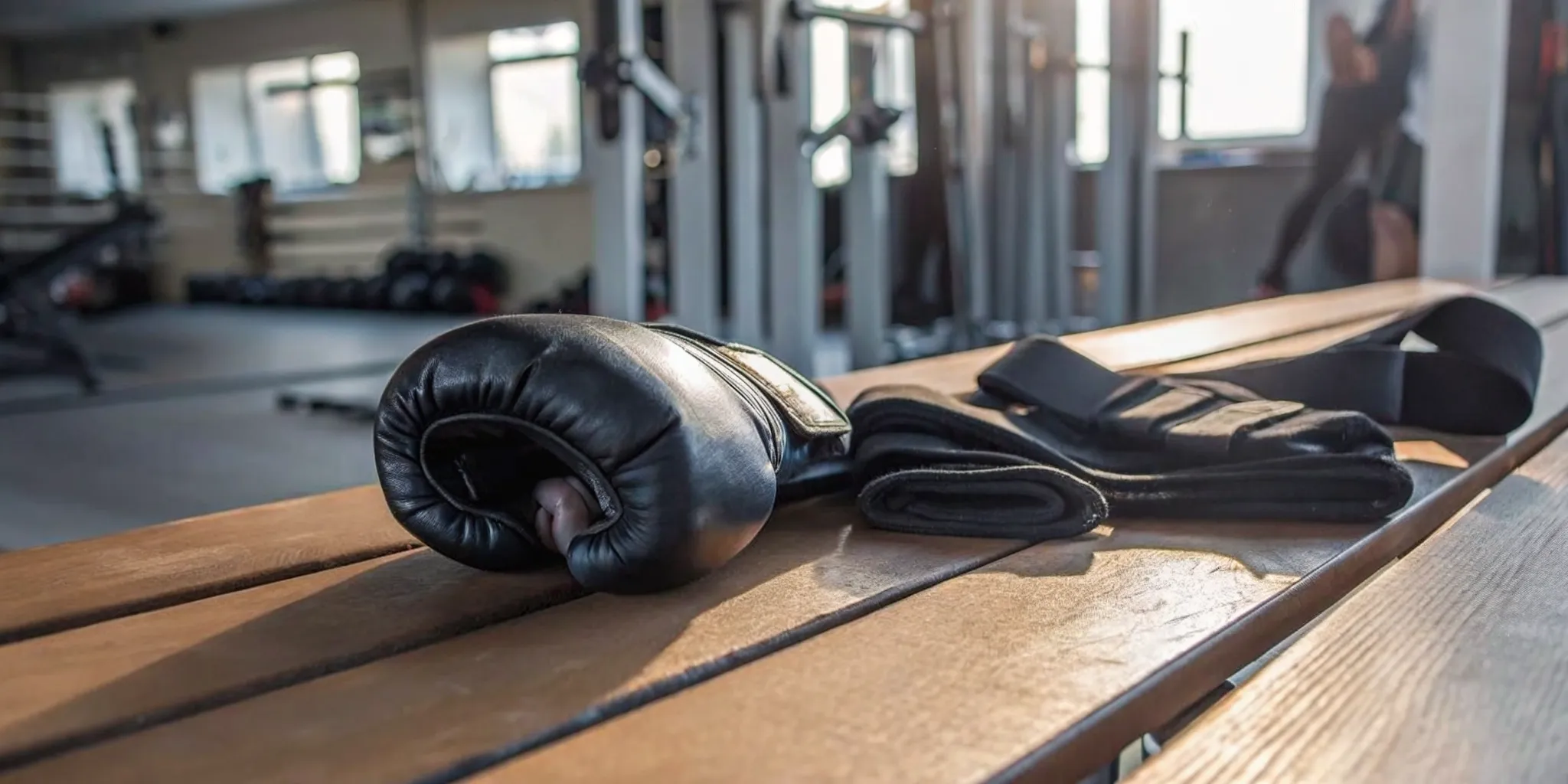
What the gym provides
Many gyms, including Grind House, provide shared training equipment such as bag gloves and heavy bags. That means your personal kit can stay fairly simple, while the facility supplies the larger equipment used for drills. Still, confirm the equipment policy before your first visit, since personal wraps and gloves are required at Grind House. View membership options and pricing for full class access.
Grind House Boxing is designed for beginners as well as experienced members. Boutique gyms commonly offer non-contact fitness training that welcomes people who are new to boxing, so you do not need prior ring experience to participate. In class, speed and power exercises alternate to challenge the heart, lungs, shoulders, and legs without making sparring the entry point. Start with the gear that fits, listen to the professional instructors, and build from there.
Boxing for Weight Loss: How Many Calories Can You Burn?
Boxing can support weight loss because it combines sustained cardiovascular effort with strength-demanding movement. Rounds of punches, footwork, defensive drills, and conditioning intervals raise your heart rate, while your legs, core, shoulders, and arms work together to control each movement. The result is a demanding workout that can feel more purposeful than repeating the same machine-based exercise.
How many calories does a boxing workout burn?
There is no single calorie number for every person or class. Body size, pace, rest intervals, technique, and whether the session includes bag work or conditioning all affect energy expenditure. In a study of noncontact boxing training, a 60-minute session used an average of 2,821 kilojoules, with results ranging from 2,519 to 3,079 kilojoules. That is approximately 675 calories on average, although individual results will vary. The researchers found the energy demand comparable to running, making boxing a credible cardio option rather than a light technique class. Read the PubMed study on noncontact boxing energy expenditure.
Why boxing intervals can help with fat loss
Many boxing classes use an interval structure: short, hard efforts followed by active recovery or a brief rest. That format resembles high-intensity interval training, or HIIT. A review in PubMed Central reports that HIIT can be more beneficial for fat loss and cardiometabolic health than moderate-intensity continuous training. The same review notes an advantage for reducing abdominal obesity. This does not make boxing a shortcut, and it does not guarantee a specific change in one body area. It means the training format can be an efficient part of a broader plan that includes adequate food, recovery, and regular attendance.
For a realistic starting point, aim for Boxing two or three times per week and increase intensity gradually. A heart-rate monitor can help you see whether your effort is reaching the training zone you are targeting. But it should support how the session feels, not replace attention to technique. Consistency matters more than chasing the highest calorie number. If you are ready to commit, browse all group fitness classes at Grind House to find boxing sessions that fit your weekly schedule. With professional instructors, controlled intervals, and full-body movement, boxing can build a sustainable routine for people pursuing better conditioning and gradual weight loss.
How to Choose the Right Boxing Gym in NYC
For beginners, the best boxing gym is not necessarily the most intense or the most famous. Look for a place that teaches fundamentals, makes it easy to scale the workout, and fits your schedule and budget. NYC boutique boxing gyms often cater to beginners through non-contact fitness classes, so you can learn the basics without needing prior ring experience.
| Criteria | Boutique gym | Traditional boxing gym | Fitness chain |
|---|---|---|---|
| Class variety | Boxing may sit alongside HIIT, strength, or other group fitness formats, creating options when you want to vary your workout. | Usually centered on boxing and related combat sports, with a clearer path toward technical development or sparring. | Often offers a standardized boxing-inspired format alongside a broad menu of general fitness classes. |
| Equipment quality | Look for well-maintained heavy bags, gloves, and mitts, with enough space for instruction and movement. | May provide a more traditional training setup, including equipment intended for technical practice. | Equipment and layouts tend to follow a consistent brand standard across locations. |
| Beginner support | Often offers scaled intensity, inclusive classes, intro sessions, or beginner workshops. Ask how professional instructors correct form. | Can provide highly focused coaching, but confirm whether the schedule includes a true beginner track. | Usually provides a predictable class structure, although individual coaching time may vary by location. |
| Membership value | Compare class access, schedule flexibility, trial periods, and what equipment you must bring before choosing a membership. Grind House lists its membership details online. | Compare coaching access, open-gym time, and whether sparring or specialty training costs extra. | Consider multi-location access, app booking, contract terms, and whether you will actually use the wider network. |
| Community atmosphere | Group classes can create a welcoming, motivating rhythm where beginners train alongside regulars. | May feel more sport-focused, with a community built around long-term boxing practice. | Can be energetic and social, though the experience may feel less personal when classes rotate between instructors. |
Before committing, take a trial class or intro session when available and ask whether the gym offers beginner workshops. Pay attention to how the instructor explains stance, punches, and intensity adjustments. Grind House’s Boxing class is one example of a boutique gym option for a beginner who wants structured instruction, a group atmosphere, and a fitness-first format.
Mental Health Benefits of Boxing Training
Boxing can give a crowded mind somewhere useful to go. The rhythm of stance, footwork, breathing, and controlled punches creates a clear task in the present moment. Many participants describe that physical release as an effective way to let go of built-up tension, although boxing is not a substitute for professional mental health care.
Stress relief through focused movement
A boxing class asks for enough attention that work emails, errands, and subway delays have less room to compete for your focus. Punching a heavy bag or working through non-contact drills can turn stress into purposeful movement rather than unchecked frustration. The goal is not to hit harder every round. It is to move with control, reset between combinations, and leave feeling more settled than when you arrived.
Combinations train attention, too
Learning a jab-cross-hook sequence is physical, but it also requires listening, remembering, and responding to a cue. As combinations become more complex, the brain has to track order, timing, foot position, and breathing at once. That practice can support cognitive agility and mental focus, especially for beginners who enjoy a workout with a problem-solving element. It also makes each class feel like a skill-building session instead of a repetitive cardio block.
High intensity without contact
Non-contact Boxing offers the exertion of a demanding workout without sparring or deliberate blows to the head. Research on noncontact boxing training reports meaningful energy expenditure while removing the head-injury exposure associated with traditional sparring: PubMed research on noncontact boxing. Participants should still learn proper form, scale intensity, and tell a professional instructor about injuries or health concerns before class.
Over time, the benefits can extend beyond the studio. A review of boxing-based exercise found positive effects on functional ability and quality of life, though individual results depend on consistency, health status, and the type of program: review of boxing exercise and quality of life. The group atmosphere matters here. At a boutique gym such as Grind House, shared effort, coaching, and familiar faces can make showing up feel less like a solo obligation and more like belonging. For more individualized support, personal training in Manhattan can provide a different starting point.
Frequently Asked Questions
How should a beginner start boxing?
Start with a beginner-friendly, non-contact class that teaches stance, footwork, and the jab, cross, hook, and uppercut before moving into longer combinations. Choose a gym where professional instructors can adjust intensity and correct punching form. No equipment? No problem. Grind House members should bring their own hand wraps and gloves for Boxing classes.
Where can beginners learn boxing in NYC?
NYC beginners can choose between traditional boxing gyms and boutique fitness studios in neighborhoods such as Williamsburg and Flatiron. Look for a class that welcomes all fitness levels, uses clear instruction, and focuses on drills, conditioning, and technique rather than requiring sparring. Grind House offers Boxing in Williamsburg at 203 Berry Street. Contact Grind House with any questions before your first visit. Contact Grind House with any questions before your first visit.
What gear do I need for a beginner boxing class?
Bring hand wraps and boxing gloves, along with comfortable workout clothes and water. Proper wraps support the bones and tendons in your hands during bag work, while gloves cushion your hands when you punch. Ask the gym whether it has preferred wrap or glove sizes before your first class.
How often should a beginner train boxing for fitness?
Two to three Boxing sessions per week provide a practical starting rhythm for building conditioning and technique. Leave room for recovery, hydrate, and adjust intensity if your body is not ready for another hard session. Consistency matters more than starting with an aggressive schedule.
Can boxing help with weight loss?
Boxing can support weight loss as part of a consistent training and nutrition plan. Non-contact boxing can provide substantial energy expenditure; one study measured 2,519 to 3,079 kJ during a 60-minute session, comparable to running. Research published in PubMed also describes boxing as a high-intensity workout with cardiovascular benefits.
Ready to Start Boxing in NYC?
If you want a structured, welcoming way to build boxing skills into your fitness routine, Grind House can help you take the next step. Call Grind House at 718-866-6292 to ask about joining a beginner-friendly Boxing class in Williamsburg. No equipment? No problem. Grind House can help you understand what to bring and how to get started with a professional instructor.
Leave a Reply
You must be logged in to post a comment.