
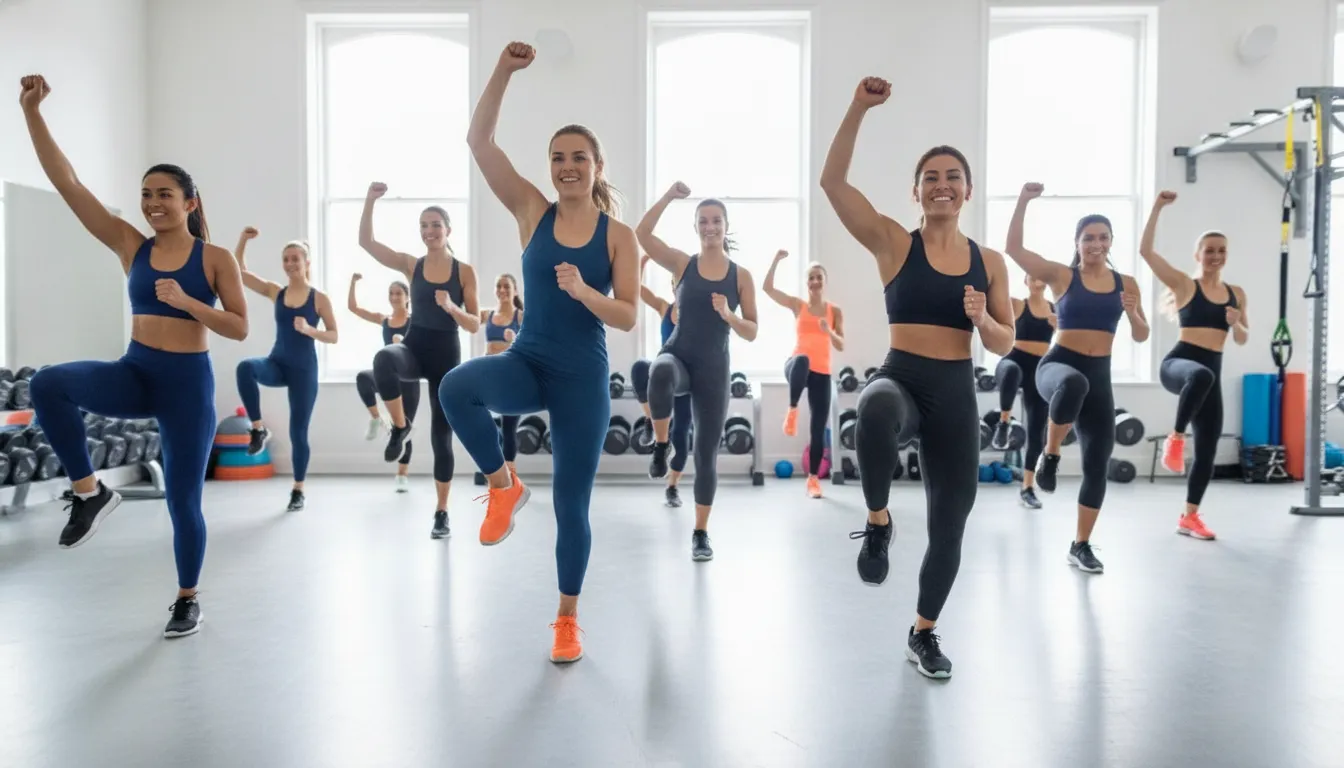
The best dance workouts do more than raise your heart rate. They give your brain a rhythm to follow, your feet a reason to keep moving, and your workout enough energy that you may stop checking the clock. That matters in New York, where a class needs to fit real goals, real schedules, and real effort.
The best cardio dance workouts combine sustained aerobic movement with varied steps, music, and coaching that keep you engaged. They can support cardiovascular fitness, coordination, balance, stress relief, and mood. While the right format lets you train at a challenging pace without making beginners feel out of place. MedlinePlus notes that dancing can improve heart health, balance, coordination, energy, and mood.
Book a Grind House Cardio Dance class in Williamsburg or Flatiron.
Before choosing a class, it helps to understand what makes dance-based cardio effective. How intensity changes the experience, and which format best matches the way you want to train.
What Counts as Cardio Dance, and Why Does It Work So Well?
Cardio dance is choreographed, rhythmic movement set to music with enough continuous motion to raise your heart rate. You might step, bounce, travel across the floor, squat, turn, or add light resistance, but the defining feature is sustained movement rather than a single technical dance style. The goal is not to perform a routine perfectly. It is to keep moving with purpose while your cardiovascular system does its job.
That makes cardio dance different from a dance rehearsal built around mastering complicated choreography. A well-coached class gives you repeatable combinations, clear cues, and options for changing the pace or impact. You can follow the beat, work through a full-body sequence, and build intensity without needing years of dance experience. MedlinePlus describes cardio dance classes as programs that mix moves from multiple dance styles into a vigorous workout for people of all abilities and fitness levels. Read the MedlinePlus overview of dance exercise.
Why does the music matter?
Music gives the workout an external rhythm, which can make repeated movement feel more natural and engaging. Instead of watching the clock through every interval, you have a beat to follow and a sequence to complete. That enjoyment matters because consistency is part of results. MedlinePlus notes that dancing can be so much fun that you may forget you are exercising. That does not make the work less serious. It makes it easier to return, push through another song, and build a habit that lasts.
The aerobic demand can also be real. Dance combines aerobic and weight-bearing exercise, and MedlinePlus lists better heart health among its benefits. A systematic review indexed by PubMed found that dance interventions may improve VO2peak, a measure of aerobic capacity, compared with sedentary controls. Review the research on dance and cardiorespiratory fitness.
At Grind House, Cardio Dance is one of eight class genres, coached with the same focus we bring to every training session. The room should feel energetic, but the session still has structure: an instructor guides the movement, you choose the appropriate challenge, and the group keeps you accountable. It is serious training without making fitness feel like punishment. That balance is what turns a dance class into one of the best cardio dance workouts for building a routine you will actually keep.
How Many Calories Do Cardio Dance Workouts Burn?
Cardio dance can burn a meaningful number of calories, but the total depends on the class format, pace, duration, and your body. A steady ballroom session burns about 260 calories per hour, roughly comparable to brisk walking, according to MedlinePlus. More vigorous dance classes can burn hundreds of calories in a single hour, but that figure is an estimate, not a promise.
That range matters when you are comparing the best cardio dance workouts. A class that keeps you moving continuously will usually create more cardiovascular demand than a routine with frequent pauses. Choreography, jumps, squats, quick direction changes, and upper-body movement can also raise the challenge. Still, the hardest-looking class is not automatically the best choice if the pace prevents you from completing the workout consistently.
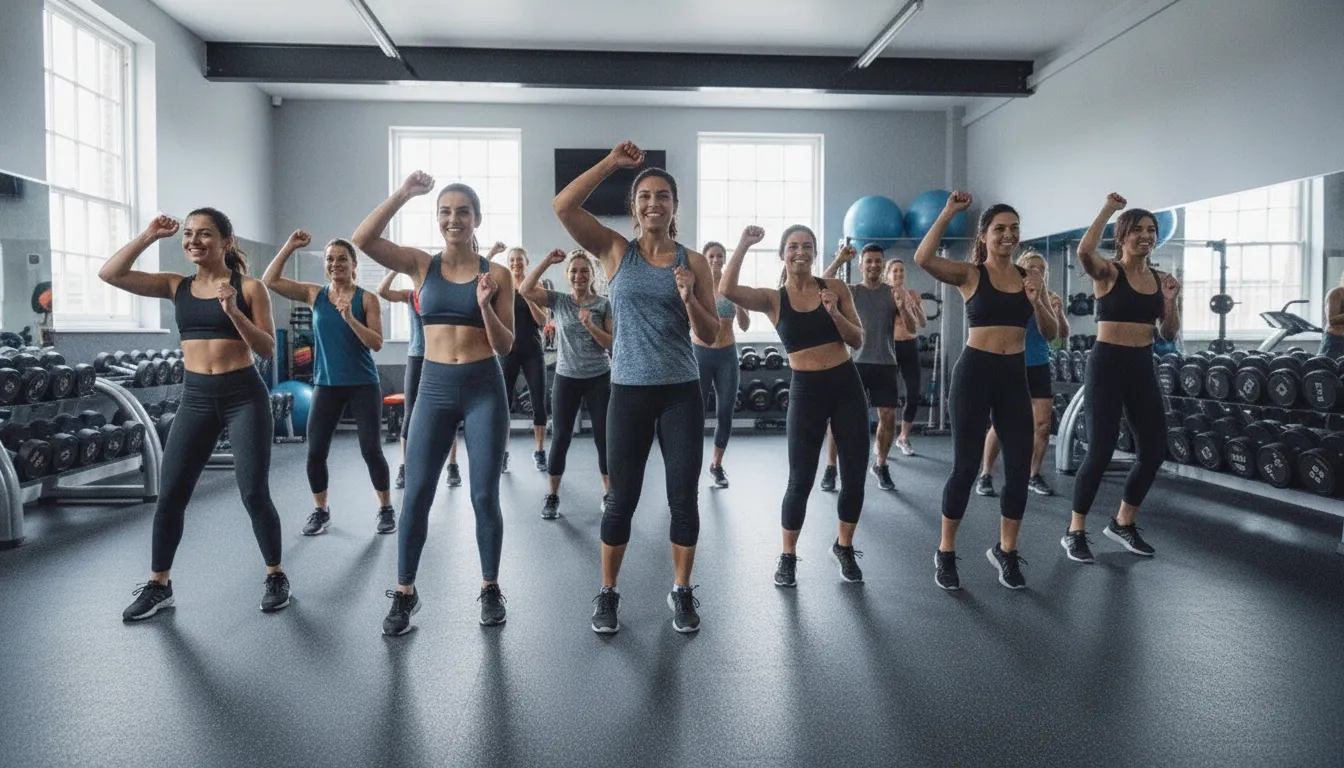
What determines your calorie burn?
Several variables shape the result:
- Intensity: A vigorous class with sustained movement uses more energy than a low-impact session with longer recovery periods.
- Duration: A 45-minute class and a 60-minute class will not create the same total workload, even if the pace is similar.
- Movement choices: Traveling steps, turns, repeated lower-body patterns, and full-body combinations can make a routine more demanding.
- Individual factors: Body size, fitness level, movement efficiency, and how hard you personally work all affect calorie use.
Use calorie estimates as context, not as the only scorecard. A wearable may offer a rough number, but it cannot perfectly measure effort during a dance class. Pay attention to whether you can maintain the pace, recover between combinations, and return ready to train again. That repeatability is more useful than chasing an inflated number for one session.
Is calorie burn the only measure of an effective class?
No. Dance is also an aerobic workout that supports cardiovascular health. And a systematic review found that dance interventions can improve VO2peak, a key marker of aerobic capacity, compared with sedentary controls. Read the findings in the PubMed review. In practical terms, a well-coached class can help you build fitness while improving rhythm, coordination, and confidence.
The strongest option is the one that gives you an appropriate challenge and keeps you engaged enough to attend regularly. If you finish a class feeling worked but capable of recovering. You are in a better position to build a sustainable training habit than if you measure success by calories alone.
How Does Cardio Dance Boost Coordination, Mood, and Brain Health?
A treadmill can raise your heart rate, but it does not ask much of your attention once the belt is moving. Cardio dance gives your brain a job, too. You listen for the beat, watch for a cue, shift your weight, change direction, and remember what comes next. That combination makes the workout feel active in more than one sense.
Dance also combines aerobic and weight-bearing exercise. According to MedlinePlus, dancing can support stronger bones as well as better balance and coordination. Those gains matter outside the studio. Better body awareness can make stairs, sports, travel, and everyday movement feel more controlled. The goal is not to perform every step perfectly. It is to keep responding, adjusting, and building skill as you go.
Why coordination is part of the workout
Cardio dance keeps you moving through patterns instead of repeating one identical stride. You may step forward, travel laterally, pause, pivot, or coordinate your arms with your legs. That requires timing and spatial awareness while your cardiovascular system is working. A good instructor can layer those patterns so beginners have a clear starting point, while experienced participants can add speed, range, or sharper transitions.
This is one reason the best cardio dance workouts feel different from mindless mileage. You are not only measuring minutes or distance. You are practicing control under changing demands. The class can be challenging without turning every interval into a test of willpower.
How dance can change the way you feel
The mental payoff is not imaginary motivation layered on top of exercise. MedlinePlus lists reduced stress, more energy, and improved mood among the mental health benefits associated with dancing. Music, movement, and a room full of people can help break up the static of a workday. You leave with a clearer head because you had to be present for the workout, not because someone promised a dramatic transformation.
What your brain gets from learning movement
Remembering combinations and reacting to cues gives the session a cognitive element that a fixed, repetitive machine workout may not provide. MedlinePlus also identifies improved memory and a lower risk of dementia among potential benefits of dancing. That is a long-term health association, not a promise that one class prevents cognitive decline. Still, it is a strong reason to choose an activity you can practice consistently and enjoy enough to return to.
Cardio dance earns its place in a serious training week because it develops fitness while keeping coordination, mood, and attention involved. The result is a workout that challenges more than your lungs, and one you are less likely to abandon from boredom.
How Do You Choose the Best Cardio Dance Workout for Your Goals?
- Define the result you want. Start with the outcome, not the trendiest class name. Are you trying to build cardiovascular endurance, move more consistently, improve coordination, or find a workout that lifts your mood? Your answer changes the best fit. A dance class can combine aerobic and weight-bearing exercise, while also supporting balance and coordination, according to MedlinePlus. If your main goal is conditioning, prioritize a class that keeps you moving for most of the session. If consistency is the goal, enjoyment matters just as much as the calorie estimate.
- Match the intensity to your current fitness. Look for clear descriptions such as low-impact, moderate, vigorous, or beginner-friendly. The best cardio dance workouts should challenge you without leaving you unable to recover or return next week. MedlinePlus describes cardio dance classes as vigorous programs that mix multiple dance styles for people of all abilities and fitness levels. That range is useful, but it does not mean every class feels the same. Ask whether the instructor offers lower-impact options, breaks down footwork, and shows ways to increase or reduce the pace. A sustainable challenge beats an all-out session that makes you dread the next one.
- Check whether beginners can actually follow along. “Beginner-friendly” should mean more than a label. Most dance workouts are suitable for beginners, but the teaching format still matters. Look for a simple warm-up, clear demonstrations, repeated combinations, and permission to skip advanced patterns while you learn. You should be able to join without already knowing choreography. If a class moves too quickly for you, focus on the rhythm and basic steps first. Progress comes from returning, not from getting every move perfect on day one.
- Evaluate the instructor, not just the playlist. A strong instructor makes the room easier to read. They preview transitions, cue changes before they happen, explain modifications without embarrassment, and keep the group moving safely. Check the class description, instructor profile, and reviews for evidence of coaching, not just claims about high energy. Good instruction lets you work hard while staying aware of your form, footing, and limits.
- Choose a community you will return to. Fun is not a minor bonus. MedlinePlus notes that because dancing is enjoyable, you may forget you are exercising. That experience can make attendance easier to sustain. Notice whether the atmosphere feels welcoming, whether members encourage one another, and whether the schedule fits your life. The right class gives you a reason to show up when motivation is low. Try one session, assess how you feel afterward, and choose the format and community that make regular training realistic.
Which Cardio Dance Workout Burns the Most Calories?
There is no single best format for every person or every training day. The right choice depends on the music that keeps you moving, the amount of structure you want. And whether your priority is steady aerobic work, coordination, or a harder conditioning push. Cardio dance classes can mix several styles and still work for different abilities and fitness levels. So use the comparison below as a starting point rather than a ranking.
| Format | Vibe | Calorie intensity | Beginner-friendly? | What you will improve |
|---|---|---|---|---|
| Latin or Zumba-style | Upbeat, social, and rhythm-driven, with repeating combinations and frequent changes in tempo. | Moderate to vigorous. Your total depends on pace, class length, body size, and how continuously you move. As a useful benchmark, MedlinePlus estimates about 260 calories per hour for most ballroom dancing, similar to brisk walking. | Yes. Repetition and low-pressure modifications make it easier to learn while staying active. | Aerobic endurance, rhythm, coordination, and comfort moving through different patterns. |
| Hip-hop cardio | High-energy, expressive, and music-led, with sharper combinations and room for individual style. | Moderate to vigorous. Larger movements and fewer rest periods can raise the challenge, but you can scale range of motion and pace. | Usually. New participants can start with the basic groove before adding faster footwork or larger movements. | Coordination, agility, timing, body control, and cardiovascular fitness. |
| Dance-HIIT hybrid | Fast, athletic, and interval-based, combining dance combinations with demanding bursts and recovery periods. | Vigorous. It is the strongest fit when you want a more obvious conditioning challenge, though calorie burn still varies by effort and individual factors. | Yes, with coaching and scaled options. Beginners should prioritize clean movement and controlled effort over matching the fastest pace. | Cardiorespiratory fitness, work capacity, power, and the ability to recover between efforts. |
| Choreography or video dance | Focused and skill-oriented, with a longer sequence that builds toward a complete routine. | Moderate to vigorous. Intensity rises as you repeat the sequence, add full range of motion, and spend less time reviewing steps. | Depends on the class. A slower breakdown works well for beginners, while advanced choreography demands more memory and footwork. | Memory, balance, coordination, musicality, and sustained aerobic effort. |
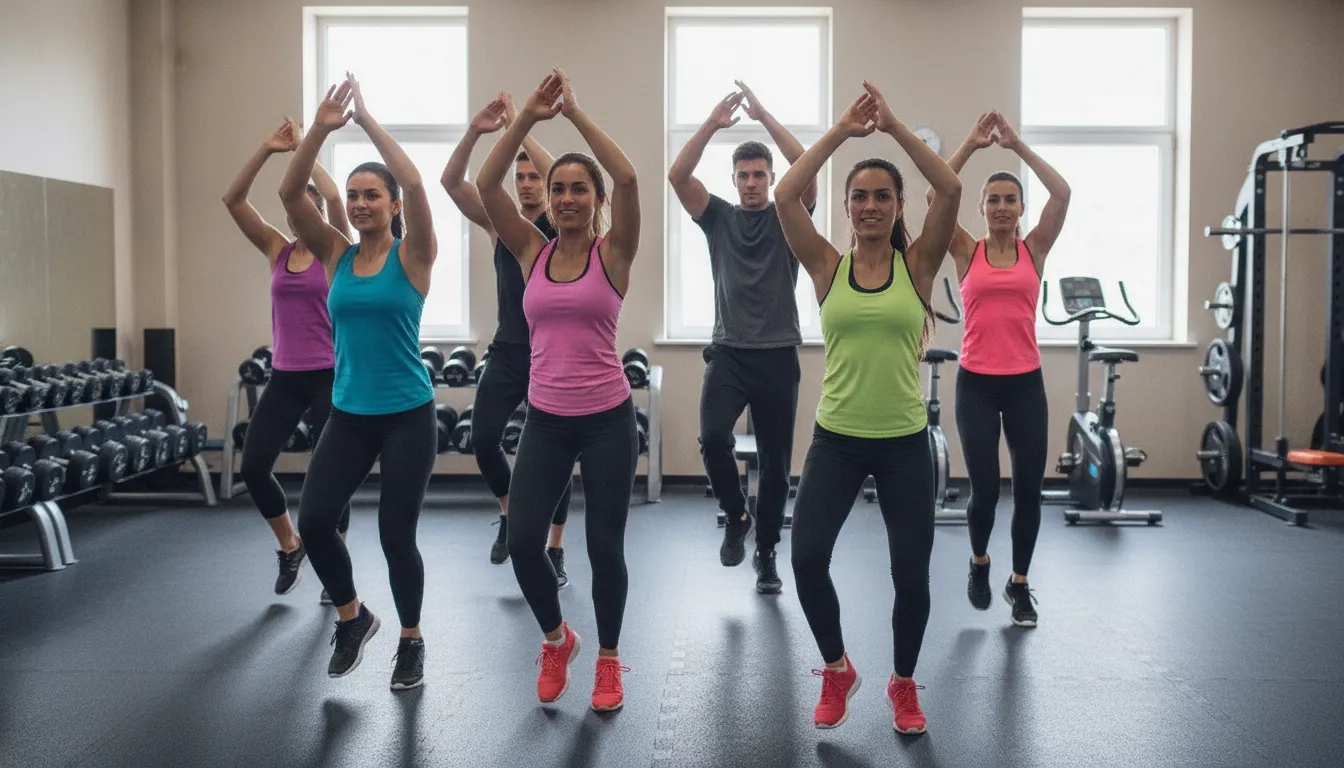
All four formats can support cardiovascular training. Dance interventions have been shown to improve VO2peak, a marker of aerobic capacity. Compared with sedentary controls, and dance also combines aerobic and weight-bearing benefits that support balance and coordination. Research summarized in PubMed supports the aerobic-training value, while MedlinePlus explains the broader health benefits of dance. Choose the format you will attend consistently, then increase pace, range of motion, or complexity as your control improves.
How Often Should You Do Cardio Dance Workouts?
For most people, two to four cardio dance workouts per week is a practical range. That gives you enough aerobic work to build a routine without turning every day into a hard training day. The right number depends on your current fitness, schedule, sleep, and how demanding each class feels.
Cardio dance can be vigorous, but it is also adaptable. MedlinePlus notes that cardio dance classes combine moves from multiple dance styles into a fun, vigorous program for people of all abilities and fitness levels: MedlinePlus guide to dancing for exercise. That makes frequency less about chasing a perfect number and more about choosing a pace you can repeat.
A sensible weekly starting point
If you are new to structured exercise, start with two sessions per week on nonconsecutive days. Leave at least one easier day between classes while you learn the movement patterns and see how your body responds. After two or three weeks, you can add a third session if your energy stays steady and you are recovering well.
Beginners do not need to match the pace, range of motion, or impact level of experienced dancers. Use lower-impact steps, take brief breaks, and focus on learning the combinations. A shorter or less intense session still counts. Consistency beats intensity when the goal is to build a lasting training habit.
Balance cardio dance with strength work
Cardio dance should be part of a balanced week, not your only form of training. Pair two to four dance sessions with two strength-training sessions that cover the major movement patterns. Strength work helps support the legs, hips, core, and upper body, while dance challenges your heart, coordination, balance, and ability to change direction.
One workable schedule might include cardio dance on Monday and Thursday, strength training on Tuesday and Saturday, and rest or easy walking on the other days. If you attend four dance classes, keep at least one or two sessions moderate rather than making every workout a maximum-effort push.
Adjust the plan to your recovery
More is not automatically better. Reduce frequency temporarily if soreness lasts several days, your performance drops, or you feel unusually fatigued before class. You can also alternate a challenging class with a lower-impact session. Review your group fitness classes per week and build a schedule that fits your actual life, not an idealized calendar.
The best cardio dance workouts are the ones you can attend regularly, enjoy enough to return to, and recover from without constantly feeling depleted.
Why Grind House Has the Best Cardio Dance Workouts in Williamsburg and Flatiron
A great cardio dance class is more than a playlist, a room, and a booking button. The difference is what happens when the music starts: whether the coach can keep the room moving. Whether the workout has enough structure to produce real training, and whether you want to come back next week.
That is the standard Grind House brings to its cardio dance classes in NYC. At the Williamsburg location on 203 Berry St and in Flatiron. The format combines rhythmic movement with focused coaching, a strong training environment, and the energy of a real tribe.
Experienced coaches who know how to coach the room
Cardio dance should feel fun, but fun does not mean unstructured. Grind House coaches understand how to teach movement clearly, build intensity, and offer adjustments without making beginners feel out of place. They keep the class moving while showing you how to find the beat, control your footwork, and stay engaged through the full workout.
That balance matters. Dance classes can mix styles into a vigorous workout for different abilities and fitness levels, according to MedlinePlus. The coach is what turns that range into a class where experienced members can work hard and newer members can keep learning.
Serious training without taking the fun out of it
Grind House is not built around watching other people train. You show up to put in work. Cardio Dance sessions typically run 45 to 60 minutes, giving you enough time to warm up, build momentum, and sustain a meaningful cardiovascular effort. The delivery stays upbeat, but the goal is still clear: move with purpose, challenge your conditioning, and leave knowing you trained.
Dance is not just entertainment dressed up as exercise. Research indexed by PubMed found that dance interventions may improve VO2peak, a key measure of aerobic capacity, compared with not exercising. That makes coaching and intensity important. The music gets you through the door. The work keeps the class effective.
A tribe, not a revolving-door booking list
In a generic studio, you can book a spot and disappear as soon as the class ends. Grind House is designed to make training more connected. Members recognize one another, coaches know the regulars, and the room carries a shared sense of effort. You can arrive on your own and still feel part of something quickly.
That community is part of the boutique fitness experience, without the posturing. You get boutique-quality facilities and focused programming, plus the broader training environment of a serious gym. With eight class genres available, Cardio Dance can fit into a larger routine instead of becoming your only option.
For Williamsburg and Flatiron members, that combination is the point: skilled coaching, a hard-working room, and a class you genuinely look forward to attending.
Book a Grind House Cardio Dance class in Williamsburg or Flatiron.
Frequently Asked Questions
How many calories do you burn in a cardio dance workout?
It depends on your body size, effort, class format, and how continuously you move. As a reference point, MedlinePlus estimates that most ballroom dancing burns about 260 calories per hour, similar to brisk walking. A faster class with larger movements may demand more, but calorie estimates are best treated as a guide, not a guarantee. MedlinePlus explains dance activity and calorie burn.
Is cardio dance good for beginners?
Yes. Cardio dance classes can combine moves from several styles into a vigorous workout for people with different abilities and fitness levels. Start by learning the basic patterns, keep your range of motion comfortable, and choose a lower-impact option when you need it. You do not have to know choreography before your first class.
What are the mood benefits of cardio dance?
Dance can support reduced stress, more energy, and improved mood, according to MedlinePlus. The music, steady movement, and focus required to follow a sequence can also make the session feel more engaging than repetitive cardio. Your response will vary, but an enjoyable workout is often easier to repeat consistently. See the cited mental health benefits of dancing.
Does cardio dance help with coordination?
It can. Repeating steps while changing direction, rhythm, and arm position challenges your balance and coordination. Dance also combines aerobic and weight-bearing movement, and MedlinePlus lists better balance and coordination among its potential benefits. Progress comes from practicing the patterns, not from getting every step perfect on day one.
How often should I do cardio dance workouts?
Choose a schedule you can recover from and maintain. Two or three classes per week is a practical starting point for many people, especially when you also strength train or do other cardio. Leave room for rest, reduce intensity if soreness lingers, and increase frequency gradually. The right plan is the one that supports consistent training without crowding out recovery.
Ready to book your cardio dance trial?
If you want a workout that challenges your conditioning, sharpens coordination, and keeps the room moving, try a Grind House Cardio Dance class. You will get clear coaching, a welcoming training community, and a focused session built to help you show up and put in the work. Classes are available in Williamsburg and Flatiron, so choose the location that fits your routine.
Leave a Reply
You must be logged in to post a comment.