
How Many Group Fitness Classes Per Week Should You Take?
If your calendar is already packed, deciding how many group fitness classes per week to take can feel harder than the workout itself. The practical answer for most adults is three to five classes per week, with the exact number based on training experience, class intensity, goals, and recovery. Beginners often do best with two or three classes. Experienced members may handle four or five when they vary the training stimulus and protect recovery days.
Explore Grind House class types and choose your next workout.
More is not automatically better. A smart week alternates demanding sessions with lower-impact movement, gives heavily trained muscles time to recover, and fits your real Manhattan schedule. This guide provides goal-based templates you can adjust instead of forcing yourself into a rigid plan.
How many group fitness classes per week is right for you?
Most people can make meaningful progress with three to five group fitness classes per week. Two or three sessions create a strong starting point for beginners. Four or five can suit experienced members when the week includes different class types and at least one recovery-focused day.
Your best number is the one you can repeat while maintaining good form, steady energy, and normal sleep. A schedule that looks impressive for one week but leaves you exhausted for the next two is not a productive schedule.
Use these ranges as a starting point
- New to group fitness: Start with two classes per week for two weeks, then add a third if recovery feels comfortable.
- Building general fitness: Aim for three or four classes that combine strength, cardio, and mobility.
- Training toward a specific goal: Use four or five purposeful sessions, but avoid stacking several high-intensity classes without recovery.
- Returning after time away: Begin below your old training volume and build gradually.
Health guidance often discusses weekly activity in minutes, not class count. Class length and intensity vary, so count alone cannot tell the full story. A vigorous boxing or HIIT session creates a different recovery demand than yoga or a mobility-focused class. If you have an injury, health condition, or recent medical change, consult a qualified health professional before increasing your training load.
Track quality, not just attendance
Use a simple weekly note to record the class, effort level, energy before training, and how you felt the next day. This creates useful feedback without turning fitness into a complicated spreadsheet. After several weeks, you may notice that three quality sessions produce better progress than five rushed ones, or that an easier class between hard sessions improves performance.
Progress can show up as smoother technique, better control, a stronger pace, or greater confidence with movements. Those signs matter more than collecting the highest possible class count.
Goal-based weekly group fitness schedules
A useful weekly plan begins with your main goal. Beginners need consistency and skill practice. Strength-focused members need enough resistance work and space between demanding sessions. Cardio-focused members need a mix of hard and easier aerobic work rather than maximum intensity every day.
| Goal | Classes per week | Suggested mix | Recovery focus |
|---|---|---|---|
| Beginner consistency | 2-3 | One full-body strength or kettlebell class, one moderate cardio class, optional yoga | At least one day between demanding sessions |
| General fitness | 3-4 | Two strength-focused sessions, one cardio session, optional mobility or dance | Alternate training emphasis |
| Strength development | 3-5 | Two or three resistance-focused classes, one cardio class, one recovery class | Avoid hard resistance work for the same muscles on consecutive days |
| Cardio improvement | 3-5 | One or two vigorous classes, one moderate cardio class, strength and mobility support | Separate the hardest cardio days |
A beginner three-class week
Try a full-body resistance class early in the week, a moderate cycling or cardio dance class after a recovery day, and yoga or another lower-impact option near the weekend. This exposes you to different movement patterns without making every visit feel like a test.
A strength-focused four-class week
Choose two resistance-focused sessions, such as kettlebell and a strength-oriented HIIT class, on nonconsecutive days. Add one cardio session for conditioning and one yoga or Pilates and Barre fusion class for control, mobility, and varied movement. Personal training can also help you refine technique or build a plan around a specific strength goal.
A cardio-focused four-class week
Use one vigorous boxing or HIIT class, one moderate cycling session, and one enjoyable conditioning option such as cardio dance or turf and tread. Add one resistance-focused class to support muscle strength and movement quality. Keep at least one easier day after the most demanding session.
How should you mix class types across the week?
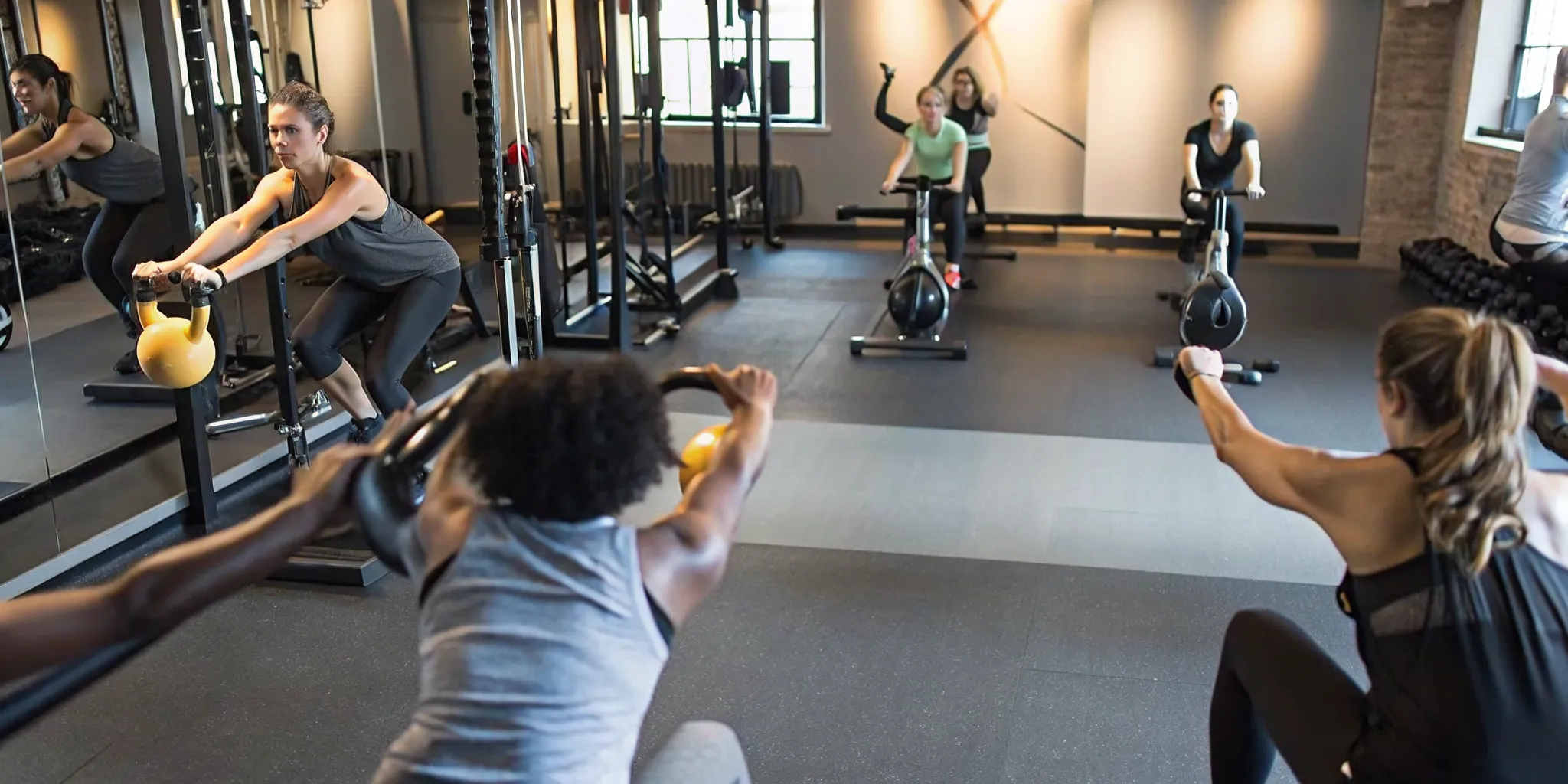
Mixing class types helps distribute physical stress and keeps each session purposeful. A balanced week usually includes resistance training, cardiovascular work, and mobility or recovery-focused movement. Grind House offers options across those categories, making it easier to vary your week without losing the energy of coached group training.
Pair hard days with easier days
Intensity should rise and fall during the week. If Monday is a demanding HIIT or boxing class, Tuesday could be yoga, a lighter technique session, or a rest day. That pattern lets you return to the next hard session with better energy and form.
Also consider what each class asks from the body. Boxing and kettlebell classes can both challenge the shoulders and grip. Cycling and turf and tread can both tax the lower body. Different class names do not always mean completely different recovery demands.
Let enjoyment influence the plan
The most scientifically elegant schedule is not useful if you dread it. Enjoyment supports consistency, and consistency gives training time to work. Use classes you love as anchors, then add complementary sessions around them. Someone who loves boxing might pair it with strength training and yoga. A cycling fan might add kettlebell work and Pilates and Barre fusion.
Compare Grind House pricing options and choose a routine that fits your week.
Recovery is part of your weekly training plan
Recovery is when the body adapts to training. It is not a sign that you are losing momentum. If your class schedule repeatedly disrupts sleep, reduces performance, or leaves soreness that does not improve, your current training load may be too high.
Watch for signs that you need an easier day
- Soreness changes your normal movement or lasts several days.
- Your usual class feels much harder at the same effort.
- You struggle to sleep or wake feeling unusually tired.
- Your motivation drops across several sessions.
- Your form breaks down earlier than normal.
One off day is normal. A pattern matters more. When several signs appear together, replace a demanding class with rest, easy movement, or a lower-intensity option. If pain is sharp, worsening, or affects everyday activity, stop and seek appropriate professional guidance.
Support recovery outside the studio
Sleep, regular meals, hydration, and manageable daily stress all influence how many classes you can absorb. Manhattan life can add long commutes, late work hours, and plenty of walking before a workout even starts. Treat those demands as part of your total load. On a difficult week, maintaining two quality classes may be more productive than squeezing in five tired sessions.
How can you increase your class schedule safely?
Increase your weekly class count gradually. Add one class, keep the rest of the schedule stable, and observe your energy, soreness, and performance for at least a couple of weeks. Gradual changes make it easier to identify what your body handles well.
- Establish a repeatable baseline. Complete your current schedule comfortably for two or three weeks.
- Add one purposeful class. Choose a session that supports your goal instead of duplicating your hardest workout.
- Keep recovery space. Avoid adding the new class directly beside another demanding session when possible.
- Review the result. Keep the class if your form, energy, and sleep remain steady. Scale back if they decline.
If you are unsure which class type complements your current routine, a coach can help you identify gaps and choose an appropriate starting intensity. Grind House members seeking more individualized guidance can also learn about personal training in Manhattan.
Can you take too many group fitness classes?
Yes. Too many classes can mean more sessions than you can recover from, too many high-intensity days, or excessive repetition of the same movement pattern. The warning sign is not a universal number. It is a sustained decline in how you feel, move, or perform.
Six classes may work for an experienced member when several are easy or technique-focused. Four all-out classes may be too much for someone balancing a stressful week and limited sleep. Quality, intensity, and recovery determine whether the total is appropriate.
A simple weekly intensity check
Label each planned class as hard, moderate, or easy before the week begins. If nearly every class is hard, change one or two. Most members benefit from leaving space between their highest-intensity sessions and using moderate or easy movement to maintain momentum without constantly chasing fatigue.
Rest also protects class quality. Arriving recovered helps you follow coaching cues, maintain technique, and get more from the session. Taking one day off can improve the workouts that follow.
Build a routine you can repeat at Grind House
The best answer to how many group fitness classes per week you should take is a range you can sustain. Start with two or three if you are new. Build toward three to five when your goals, experience, and recovery support it. Mix class types, vary intensity, and adjust during demanding weeks.
Before each week begins, choose the sessions that matter most and place them on your calendar. Booking ahead can make consistency easier during a busy New York week, while still leaving room to change the plan when work or recovery demands it. Check the current Grind House class schedule to build a realistic sequence.
Grind House gives Manhattan members room to build that mix through cycling, boxing, HIIT, turf and tread, yoga, kettlebell, Pilates and Barre fusion, cardio dance, and individualized training. Review the available class types, choose a few complementary sessions, and test the schedule for several weeks before adding more.
Frequently Asked Questions
Is three group fitness classes a week enough?
Three well-chosen classes per week can be enough to improve general fitness, especially when the schedule combines resistance, cardiovascular, and mobility-focused work. Results also depend on class intensity, consistency, everyday activity, sleep, and nutrition.
Should beginners take group fitness classes on consecutive days?
Beginners usually benefit from placing a recovery day between demanding sessions. Consecutive days can work when the class types and intensities differ, such as a strength class followed by gentle yoga. Start conservatively and monitor soreness and energy.
How many HIIT classes should you take per week?
Many people do well with one or two truly high-intensity sessions per week, separated by recovery or lower-intensity training. Your ideal number depends on experience, health, other activity, and how quickly you recover.
Can group fitness replace personal training?
Group fitness provides coaching, structure, and community. Personal training offers more individualized programming, feedback, and progression. Some members use only group classes, while others combine them with personal training for a specific goal or technique support.
Ready to plan your week?
Choose a schedule that challenges you without crowding out recovery. Start with a realistic number of classes, mix the training stimulus, and make adjustments based on how you perform across several weeks.
View Grind House pricing and start building your weekly class routine.
Leave a Reply
You must be logged in to post a comment.