
A deload week group fitness plan gives you a way to keep moving without asking your body to perform at its usual training load. Instead of stacking hard boxing, HIIT, cycling, and strength sessions until you feel worn down, you temporarily reduce intensity, volume, or both. You still show up, but every class has a recovery purpose.
Explore a smarter training week with Grind House.
For a New York fitness schedule, that distinction matters. Group classes create structure and energy, but a full calendar can also make every day feel like a test. A well-planned deload is not quitting, and it is not a week of doing nothing. It is a short reset that helps you return to challenging classes with better focus and more control.
What is a deload week for group fitness?
A deload week is a planned period of lower training stress. You can create that reduction by using lighter weights, choosing easier variations, shortening a session, lowering your pace, taking longer rests, or replacing a demanding class with gentle movement. The goal is to reduce accumulated fatigue while keeping a useful movement routine.
There is no single deload formula that fits every member. Someone taking two classes per week may need only a few easier sessions. Someone attending boxing, HIIT, cycling, and strength-based classes on consecutive days may need to reduce both class frequency and effort. Your recent training load, sleep, work stress, soreness, goals, and experience should guide the decision.
A deload is also different from training through pain or illness. If you have sharp pain, an injury, unusual symptoms, or a health concern, stop and consult an appropriate healthcare professional. A lower-intensity workout is not a substitute for medical care.
When should you plan a group fitness deload?
Plan a deload when your normal routine is no longer producing the same quality of work, or when recovery is falling behind the demands of your schedule. One difficult day is not automatically a reason to deload. Look for a pattern across several sessions and days.
Signs your training stress is accumulating
- Your usual warm-up feels unusually difficult.
- You are regularly dragging through classes that normally energize you.
- Your technique becomes less controlled as a session continues.
- Normal muscle soreness is lingering and affecting your movement.
- You are struggling to maintain your usual pace, load, or range of motion.
- You are losing interest in training because every session feels like a demand.
- Your calendar leaves no realistic space for sleep, meals, or easier movement.
These signals do not diagnose overtraining. They are prompts to review your plan. A coach can also help you distinguish ordinary effort from a schedule that needs adjustment.
Use the calendar, not just your mood
Look back at the previous two or three weeks. Note the classes you attended, the sessions that felt hardest, and the days when you recovered well. Then check the week ahead. A deload is especially useful before a busy period, after a demanding training block, or when you notice that your hard sessions are no longer separated by enough lower-stress time.
Keep your next step practical. You do not need to predict the perfect recovery date. Choose one week, define what will be easier, and reassess at the end.

How do you adjust each group fitness class during a deload?
The simplest approach is to keep the class format but change the dose. Tell the instructor that you are taking an easier week, select a modification before the session begins, and leave a few repetitions or minutes in reserve. You should finish feeling that you could have done more, not as if you found a new limit.
Boxing
Use boxing as a technique and rhythm session rather than a power test. Reduce the force behind punches, move at a controlled pace, and focus on footwork, breathing, and clean combinations. Take extra rest between rounds if your form starts to slip. Avoid turning every final round into an all-out effort.
If you normally bring a high level of conditioning to boxing, the discipline of holding back may be the most useful part of the week. Crisp, relaxed movement gives you practice without adding another hard conditioning demand.
HIIT
HIIT is often the class that needs the clearest modification. Use a lower-impact version of jumps, reduce the resistance, slow the work interval, and take the full recovery period. You can also complete fewer rounds if the class structure allows it. The target is controlled effort, not a peak heart-rate challenge.
Do not race other people in the room. A deload succeeds when you follow your own plan, even if the music and group energy encourage you to push harder.
Cycling
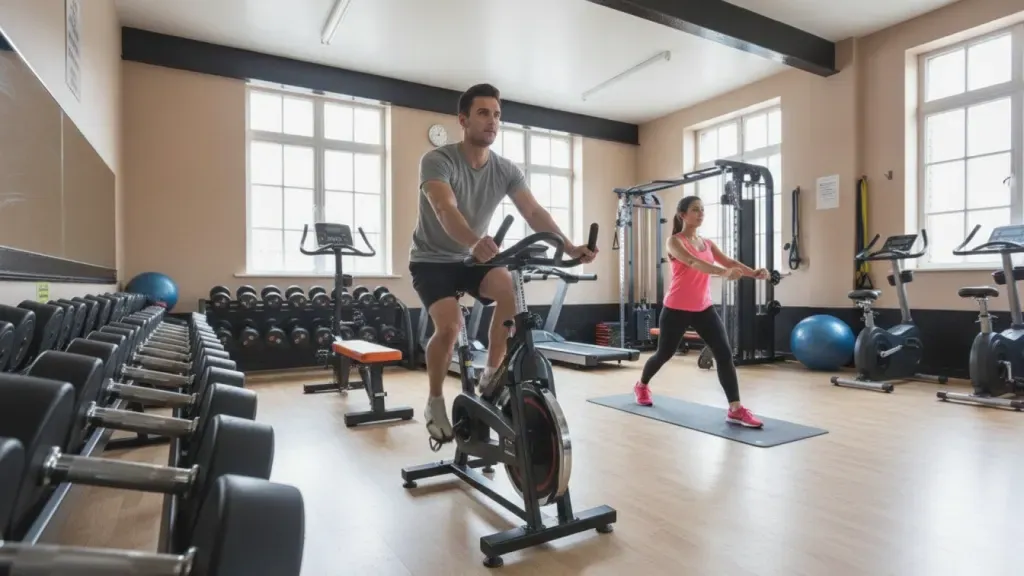
Keep the pedals moving, but lower resistance and avoid sprinting. Ride at a conversational effort when possible. If you track output, treat the numbers as information rather than a goal for this session. A shorter ride or an easy class can be a better choice than forcing your normal interval work.
Use the ride to practice smooth cadence and relaxed shoulders. Those small technical cues are valuable when you return to harder sessions.
Turf and Tread
Replace sprinting with brisk walking or an easy jog, and choose lighter loads for strength stations. Move deliberately through each transition. If the class combines treadmill work with turf exercises, keep both portions submaximal instead of making one section hard and calling the rest a recovery.
Kettlebell, Pilates, Barre, and yoga
Lower the kettlebell load and prioritize technique over speed. In Pilates or Barre, reduce the range or pause when your control fades. In yoga, stay with comfortable mobility and breathing rather than chasing an intense stretch. The best option depends on what your body has been doing recently. A class is not automatically easy because it uses a different format.
Grind House offers a variety of class styles, so you can use that range to build a lower-stress week instead of repeating the same hard stimulus. Review the available Grind House class formats and choose the sessions that let you control effort.
Check the current class schedule and choose a recovery-friendly session.
What does a seven-day deload week look like?
A useful deload schedule alternates lower-stress classes, easy movement, and complete rest. The example below is a framework, not a rule. Move the days to fit your work schedule and choose a different class if a specific area is sore or fatigued.
Day 1: Easy technique class
Start with a class you know well. Keep the effort moderate, use lighter options, and pay attention to how you feel afterward. Avoid using the first day to prove that you do not need a deload.
Day 2: Rest or gentle movement
Take a full rest day or walk at an easy pace. Light mobility can be useful if it feels better, but do not turn the recovery day into an unplanned workout.
Day 3: Controlled cardio
Choose an easier cycling session, a reduced-pace conditioning class, or another cardio format that allows you to control resistance and speed. Stay below your normal effort and leave the class feeling refreshed.
Day 4: Rest and review
Check your energy, soreness, sleep, and motivation. If the same warning signs are still building, keep the next session easy or take another rest day. A deload is working when you respond to feedback instead of forcing the original plan.
Day 5: Light strength or mobility
Use a technique-focused strength class with lighter loads, or choose Pilates, Barre, or yoga if those formats suit your current recovery needs. Keep movement smooth and stop before fatigue changes your form.
Day 6: Optional easy class
Attend only if you feel ready. Choose a class that you can modify and skip high-effort finishers. If you still feel depleted, replace the class with rest.
Day 7: Full rest and next-week plan
Take a full rest day and decide how you will return. Your first hard session should be intentional, not an attempt to make up for the work you skipped.
How should you return to normal classes after a deload?
Return gradually instead of making the first day back a test. Start with one familiar class at a moderate effort. If your movement stays controlled and you feel normal later that day and the next morning, add intensity or volume in the following session.
Keep the first week back simple:
- Choose one priority class: Start with the format that matters most to your current goal.
- Hold back from the maximum: Use a challenging but repeatable effort rather than an all-out finish.
- Separate hard days: Give yourself an easier day or rest day between demanding classes.
- Keep one recovery option: Leave room for a mobility, technique, or low-intensity session.
- Review the response: If fatigue quickly returns, reduce the next week instead of adding more work.
A deload is also a chance to improve how you plan your normal training. If your week repeatedly requires three hard classes in a row, change the order before the next fatigue cycle. If you enjoy variety, pair demanding formats with lower-stress options rather than treating every class as equally intense.
How can a coach help you plan a deload?
A coach can help you match the week to your recent workload, goals, and movement quality. Bring a short summary of the classes you have taken, the sessions that felt unusually difficult, and the days you can realistically train. That gives the coach something more useful than a vague request to make the week easier.
Ask about specific modifications. For example, you might need a lower resistance target in cycling, fewer rounds in HIIT, lighter kettlebells, or a technique emphasis in boxing. Clear options make it easier to follow the plan once the class begins.
At Grind House, the mix of group fitness formats and training support gives New York members room to adjust without abandoning their routine. You can also use the personal training path when you want more individualized help connecting class choices to a larger training plan.
Contact Grind House to discuss a training approach that fits your week.
Frequently Asked Questions
How long should a deload week last?
Many people use about one week, but the right length depends on how quickly your fatigue improves and what created it. One easier week may be enough after a demanding training block. If you still feel unusually run down, keep the next sessions easy and ask a qualified coach or healthcare professional for guidance.
Can I attend group fitness classes during a deload?
Yes. You can attend group fitness classes during a deload if you reduce the training stress. Use lighter loads, slower speeds, lower resistance, fewer rounds, longer rests, or a shorter session. Tell the instructor before class and choose a modification you can maintain without your form breaking down.
Should I take a complete week off instead?
A complete break may make sense when you are ill, injured, unusually exhausted, or unable to train without pain. A deload is different because it keeps some movement while lowering the demand. If you are unsure whether easy exercise is appropriate, get individual medical or coaching advice instead of guessing.
How often should I schedule a deload week?
There is no universal calendar. Some people plan one after a demanding block, while others respond to clear fatigue signals. Your training history, class frequency, work stress, sleep, and goals all matter. Review your routine regularly and use a planned easier week when your recovery is not matching your training load.
What is the biggest deload mistake?
The most common mistake is turning a deload into another competition. If you choose lighter weights but sprint every finisher, or attend fewer classes but make each one maximal, the total stress may not change enough. Decide what will be easier before class and follow that boundary.
A strong group fitness routine includes hard work and recovery. Plan the easier week, use the class formats that support it, and return to challenging sessions when your movement and energy are ready.
Leave a Reply
You must be logged in to post a comment.