
Learning how to modify HIIT workouts for beginners is not about making every interval easy. It is about choosing a version of each movement that lets you work with control, recover when you need to, and keep moving safely through your first class. You can lower impact, shorten your range of motion, reduce resistance, or take extra recovery without losing the purpose of the workout.
Book your 3-day trial and try a class
What does it mean to modify a HIIT workout?
High-intensity interval training alternates work periods with easier movement or rest. “High intensity” does not mean every person must use the same speed, jump, weight, or range of motion. The useful effort level depends on your current fitness, how familiar the movement is, and how well you can keep control as you get tired.
For a first class, think of a modification as a dial rather than an all-or-nothing choice. You can turn down one part of a movement while still participating. For example, step back into a lunge instead of jumping, use a smaller squat depth, or perform push-ups with your hands elevated. A lower-impact option can still raise your effort. The point is to choose a repeatable movement, not to prove you can do the hardest version.
HIIT formats vary. Work intervals may be short or longer, and the recovery period may involve rest or easy movement. The National Library of Medicine article on interval exercise describes HIIT sessions as repeated intense efforts separated by recovery periods, but that description is not a requirement to hit a particular number in every class. Follow the coach’s format and use the effort you can manage with good form. Read the research overview of very-low-volume high-intensity interval exercise.
How should you choose the right modification before class?
Arrive with a simple plan: tell the instructor that this is your first HIIT class, ask what options are available, and decide which movement changes you may need. You do not need a long explanation. Mention a movement you are unfamiliar with or an area you want to be cautious about. An instructor can explain the class setup and demonstrate alternatives.
Then choose a manageable starting effort. You should be able to respond to a cue, maintain balance, and control the movement. If you cannot keep a steady position or you are rushing through repetitions, reduce the speed, load, or range. Do not wait until you are completely spent to make the first adjustment.
- Use the simplest version first. Learn the pattern before adding speed, a jump, or equipment.
- Change one variable at a time. If you lower impact, keep the movement controlled before also adding resistance.
- Leave room to adjust. Start at an effort you can sustain for the planned interval, then reassess.
- Ask about equipment. If you are unsure how to set up a machine or hold a weight, pause and ask before the work period begins.
There is no need to match the person next to you. Class members can be at different experience levels, and the same interval can feel very different depending on pace and movement choice. Your reference point is your own control and how you feel, not someone else’s speed.
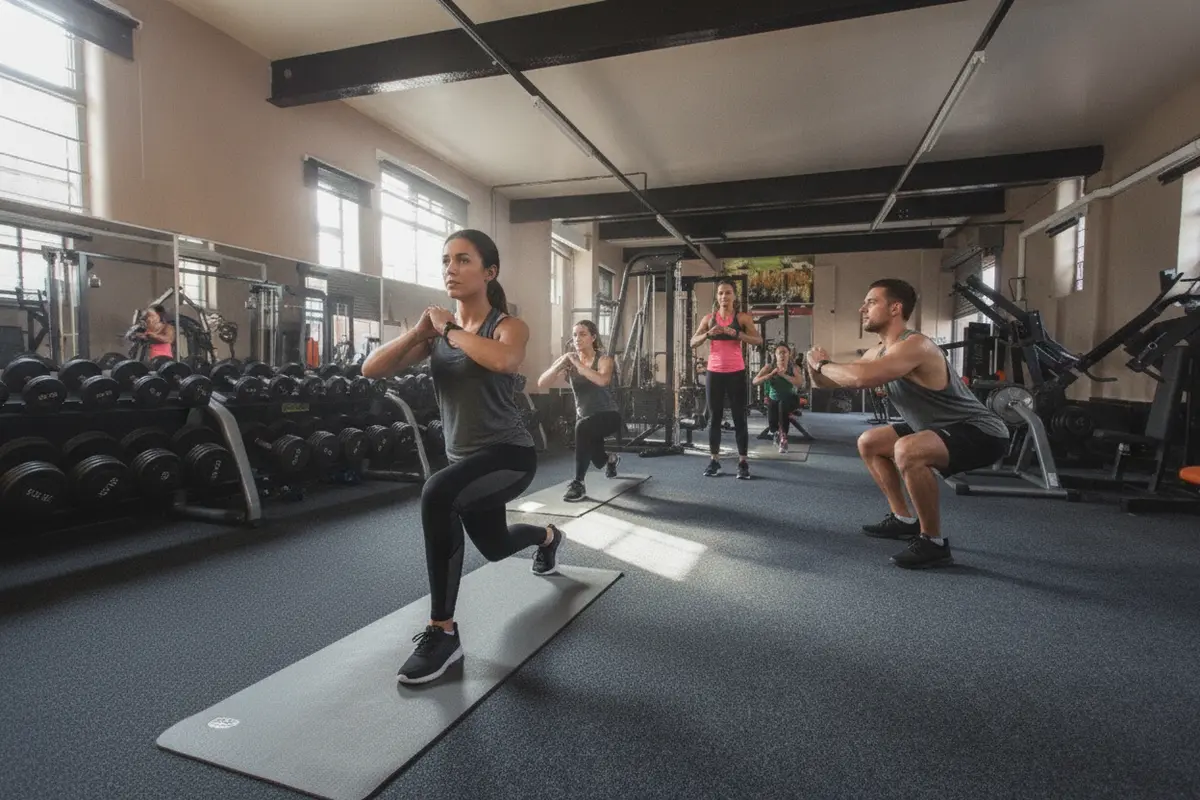
Which HIIT movements can you modify, and how?
Most common class movements have more than one way to perform them. Ask the instructor for the available options, especially if a movement is unfamiliar. The table below gives examples of adjustment choices. They are not medical prescriptions; use the option the instructor demonstrates and stop if a movement causes sharp pain, dizziness, or unusual shortness of breath.
| Movement or challenge | Beginner-friendly adjustment | What to focus on |
|---|---|---|
| Jump squat | Do a squat without leaving the floor, or sit back to a comfortable depth. | Keep your feet planted and use a controlled rise. |
| Jumping jacks | Step one foot out at a time while moving your arms only as far as comfortable. | Stay balanced and keep a steady rhythm. |
| Burpee | Step back one foot at a time, use an elevated hand position if offered, and omit the jump. | Move through each stage without dropping or rushing. |
| Lunge or split squat | Use a shorter step, reduce depth, or hold a stable support if the instructor allows it. | Keep your balance and move within a comfortable range. |
| Push-up | Raise your hands on a stable bench or use a knee-supported option shown by the coach. | Keep your body aligned and lower only as far as you can control. |
| Fast cardio interval | Walk, march, or use a lower speed rather than sprinting. | Build a consistent effort before trying to go faster. |
| Weighted movement | Use lighter equipment or perform the movement without added load. | Learn the path of the movement before increasing resistance. |
These options change different parts of the challenge. Removing a jump reduces impact. Reducing range can make a position easier to control. Using less weight reduces external resistance. Slowing down gives you more time to coordinate. You may need one adjustment for one exercise and a different one for the next.
For instance, during a timed lunge interval, you might step back without a jump and use a smaller depth. If balance still feels uncertain, slow the pace and ask the instructor to check your position. During the next interval, you may be comfortable with a regular bodyweight squat. There is no rule that says you must use one difficulty level for the whole class.
How do you adjust pace, impact, and range of motion?
When an interval starts, begin with the modification you chose instead of rushing to keep up. Use a steady pace for the first few repetitions. If your form stays consistent and you can keep breathing comfortably, continue. If your movement gets uncontrolled, take a brief pause or use an easier version. The aim is to complete quality work, not to fit the highest possible number of repetitions into the interval.
Lower impact without sitting out
Replace a jump with a step, march, or controlled rise when the instructor offers that choice. Keep both feet on the floor for movements such as jumping jacks or squat jumps. This keeps you active while removing the landing. If a low-impact version still feels too intense, slow it down or rest briefly.
Reduce the range of motion
Move through a smaller, controlled range rather than forcing a deeper position. For a squat, sit back to a depth you can manage without losing balance. For a lunge, take a shorter step and do not chase a depth that makes your movement unstable. Range can increase over time as the pattern becomes familiar, but there is no need to force it during a first class.
Adjust resistance and speed
When a movement uses weights, begin with a light option or bodyweight if that is permitted. Avoid increasing load simply because another member has chosen a heavier weight. For bodyweight exercises, slow the repetitions if speed makes your form harder to control. You can work hard without moving as fast as possible.
Use recovery on purpose
Recovery is part of interval training, not a test of willpower. Use the rest period to regain control of your breathing and prepare for the next movement. If you are not ready when the next interval begins, take additional recovery or continue at a gentler pace. Tell the instructor if you need help finding an option. Harvard’s guide to high-intensity interval training includes a beginner workout example and emphasizes choosing suitable movements; see the Harvard T.H. Chan School of Public Health HIIT guide.

What should you do if a HIIT class feels too fast?
Make an adjustment as soon as you notice that you are losing control. Switch to the lower-impact option, slow the repetition, reduce the movement range, or stop briefly. You can rejoin when you are ready. A modification is useful before fatigue turns into sloppy movement, so do not treat it as a last resort.
If you are unsure which change to make, get the instructor’s attention. Ask for a demonstration of the no-jump version, a lighter equipment choice, or a simpler position. If the class is moving on, step aside safely and ask at the next opportunity. You are better off understanding the movement than copying a version you cannot control.
Pay attention to the difference between ordinary exertion and a warning sign. Breathing harder and feeling your muscles work can be expected during a challenging interval. Stop exercising and seek appropriate help if you experience chest pain, faintness, severe dizziness, or another concerning symptom. If you have a health condition, have been inactive for a long time, or are uncertain whether vigorous exercise is appropriate for you, speak with a qualified health professional before starting. Stanford’s interval-training overview also suggests that people new to intervals can begin by adding a few short bursts to an everyday walk rather than jumping straight into demanding work. Read Stanford Lifestyle Medicine’s overview.
How can you prepare for a first HIIT class at a gym?
Preparation can make it easier to focus on the class rather than figuring out every detail in the room. Check the class information before you go, arrive with enough time to find the studio, and let the instructor know that you are new. Wear clothes that let you move freely and bring water. If equipment is part of the session, wait for instructions before setting up or choosing a weight.
- Check the class format. Review the group fitness class information and the class types available in Manhattan so you know what style of session you are considering.
- Share relevant context. Tell the instructor it is your first HIIT session and ask how to signal that you need an adjustment.
- Start conservatively. Choose a pace and movement option you can control, then build only if you feel ready.
- Review the experience afterward. Note which movements felt manageable and which ones you want to ask about next time.
It can help to treat the first class as information gathering. You are learning the room, the instructor’s cues, how intervals are organized, and which movement options work for you. One class does not have to settle what your long-term training should look like.
How do you know when to progress a modification?
Keep a modification while it helps you move with control. Consider a small change only when the movement feels familiar and you can repeat it without rushing or losing balance. That change could mean a slightly larger range, a little more speed, or a small increase in resistance. Change one thing at a time so you can tell what feels different.
There is no need to progress in every class. Some days you may need more recovery or choose a simpler variation. Your sleep, stress, the workout itself, and your familiarity with an exercise can all affect how it feels. Repeatable training is more useful than forcing a harder option on a day when your control is slipping.
For structure beyond one workout, read the HIIT gym workout guide. If you want to compare class options or take a first step at Grind House, the gym FAQ and trial information can help you decide what to ask before you attend.
Start your 3-day trial and find a class that fits
Frequently Asked Questions
Can beginners do HIIT without jumping?
Yes. Ask the instructor for a low-impact option and replace jumps with steps, marches, or controlled bodyweight movements where appropriate. The workout can still feel challenging without jumping. Choose the version you can perform with control.
Should I lower the weight or slow down first?
It depends on what is making the movement difficult. If the load makes it hard to control the movement, reduce the weight or use bodyweight if allowed. If speed is the problem, slow down. Make one adjustment, check your form, and ask the instructor if you are uncertain.
Is it okay to rest during a HIIT interval?
Yes. Use the planned recovery and take extra rest if you need it. Resume at a manageable pace when ready. If you feel unwell or have a concerning symptom, stop and seek appropriate help rather than pushing through.
What should I tell the instructor before my first class?
Say that you are new to HIIT and ask how to request a lower-impact or simpler variation. Mention any movement you are unsure about. If you have a health concern that could affect exercise, consult a qualified health professional and share only the relevant guidance with the instructor.
Your first HIIT class is a chance to learn how the workout works and find movement options you can repeat with control. Start with a manageable version, use recovery when you need it, and ask the instructor for help instead of chasing someone else’s pace.
Leave a Reply
You must be logged in to post a comment.