
Kettlebell training safety starts before the first swing. New members do not need to know every exercise or lift the heaviest bell in the room. They need a clear setup, a manageable load, enough space, and coaching that helps them repeat strong positions while they learn. That approach makes kettlebell training easier to understand and easier to build into a consistent routine.
Schedule a coached kettlebell session with Grind House.
What does kettlebell training safety mean for a new member?
Kettlebell training safety means matching the movement, weight, pace, and training environment to your current ability. It is not about avoiding effort. It is about putting skill before speed and control before fatigue. Harvard Health says healthy beginners should use an appropriate weight and learn proper form from an expert first, because poor technique can raise injury risk even with a lighter bell. Harvard Health’s kettlebell guidance is general health information, not a substitute for coaching or personal medical advice.
A kettlebell can be used for slower strength movements such as deadlifts, goblet squats, carries, and presses. It can also be used for ballistic movements such as swings, cleans, and snatches. The second group asks for more timing and coordination, so it should not be the automatic starting point for someone who has never learned the basic positions.
The safest first goal is not to complete a complicated circuit. It is to learn how to stand, brace, hinge, breathe, grip, and put the weight down without losing control. Once those skills are familiar, a coach can choose progressions that fit your goals and experience.
How should beginners prepare before picking up a kettlebell?
A few minutes of preparation can make the session more productive. Before you lift, take care of the simple details that affect control:
- Wear stable footwear. Choose shoes that let you feel balanced and connected to the floor.
- Clear your training space. You should be able to move the bell without hitting another person, bench, wall, or piece of equipment.
- Learn the plan. Know which movements you will practice, how many repetitions are expected, and where you can rest.
- Warm up the pattern. Rehearse a bodyweight squat, a hip hinge, and a relaxed brace before adding load.
- Tell the coach what matters. Share whether you are new to kettlebells, returning after time away, or managing a limitation that changes how you move.
Do not treat a warm-up as a test of toughness. Its job is to help you notice how your body feels and prepare the positions the workout will use. If a movement feels unfamiliar, ask for a demonstration and a scaled version before the session becomes fast.
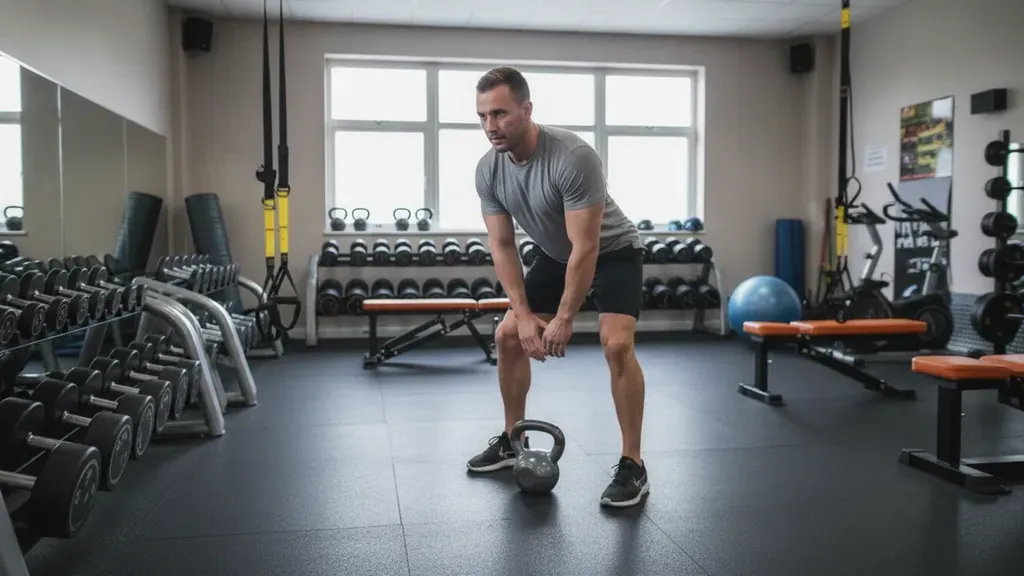
Which kettlebell movements are best to learn first?
Beginners usually benefit from learning controlled movements before adding speed. The right sequence depends on the person and the coach. These patterns are useful building blocks.
- Deadlift: Learn how to pick the bell up from the floor by sending the hips back, keeping the load close, and standing with control.
- Goblet squat: Hold the bell close to the chest while learning to keep the feet grounded and the torso organized through the squat.
- Carry: Walk with a light bell while keeping the ribs, shoulders, and hips steady. Carries teach control without requiring a fast moving load.
- Strict press: Practice a slow press only when the coach confirms that the position and range of motion are appropriate for you.
- Hinge drill: Rehearse the hip hinge without rushing. This is an important foundation for swings and other dynamic movements.
| Beginner focus | What to practice | Progress when | Scale back when |
|---|---|---|---|
| Deadlift. | Hips back, bell close, steady stand. | You can lift and set down without rushing. | Your back position or grip changes. |
| Goblet squat. | Balanced feet, controlled depth, upright finish. | You can keep the bell close through every repetition. | You lose balance or collapse at the bottom. |
| Carry. | Quiet steps, level shoulders, steady breathing. | You can walk and stop without leaning. | The bell pulls you sideways or forward. |
| Hinge drill. | Send the hips back without turning it into a squat. | You can repeat the pattern at a slow pace. | You feel strain that changes your movement. |
These examples are not a universal prescription or a replacement for instruction. A movement that suits one member may need a lighter load, smaller range of motion, or different variation for another. The purpose of controlled patterns is to create more chances to practice quality positions. That is easier before fatigue makes those positions harder to maintain.
Use the table as a conversation starter with your coach, not as a pass-fail test. The coach can watch your stance, breathing, and control together. They can then decide whether to keep the movement, change the load, shorten the set, or choose a simpler pattern. A safe progression should feel clear enough that you know what to do if the next repetition does not look or feel right.
For a broader explanation of how the tool fits into a workout, read what a kettlebell workout is. For a dedicated look at one dynamic movement, use the kettlebell swing form guide after you understand the basic safety principles in this article.
How do you choose a safe kettlebell load?
The right kettlebell is the one you can control for the planned movement and repetitions. A heavier bell is not automatically a better training choice. If the weight changes your posture, grip, breathing, or ability to stop, it is too much for that exercise at that moment.
Use these checks when choosing a starting load:
- You can set the bell down quietly instead of dropping it.
- You can keep the planned body position from the first repetition to the last.
- Your breathing stays controlled rather than turning into breath-holding or panic.
- Your grip does not fail before the target muscles or movement pattern are trained.
- You can pause, reset, or stop without the bell pulling you out of position.
For a new member, a coach may use a lighter bell to teach the path of a movement and then adjust the load after seeing how you move. Progress one variable at a time. You might add a small amount of weight, a few repetitions, or a little complexity, but changing all three together makes it harder to know what caused a loss of control.
Fatigue is also a load issue. A weight that feels manageable for five controlled repetitions may not be a good choice for a fast interval. Reduce the weight, slow the pace, or take a break when your technique starts to change.
Ask about personalized coaching for your kettlebell goals.
What technique cues help prevent common beginner mistakes?
Good coaching is specific. Instead of trying to remember ten cues at once, focus on the few that apply to the movement in front of you. In many kettlebell exercises, useful reminders include:
- Brace before you move. Create a steady trunk position without clenching every muscle or holding your breath longer than needed.
- Hinge from the hips. A hinge sends the hips back while the spine stays organized. It is different from turning every kettlebell movement into a squat.
- Keep the bell close when appropriate. A load that drifts too far away can make control harder and increase the demand on the back and shoulders.
- Let the legs and hips do their work. Dynamic movements should not become frantic arm lifts.
- Finish in a balanced position. You should know where the bell and your body will end before you start the next repetition.
Common mistakes include starting with too much weight, rushing the setup, rounding through a hinge, allowing the knees to collapse inward, shrugging through a press, and continuing after the grip or posture has failed. These are not reasons to feel embarrassed. They are signals to pause and ask for a clearer cue or a simpler variation.
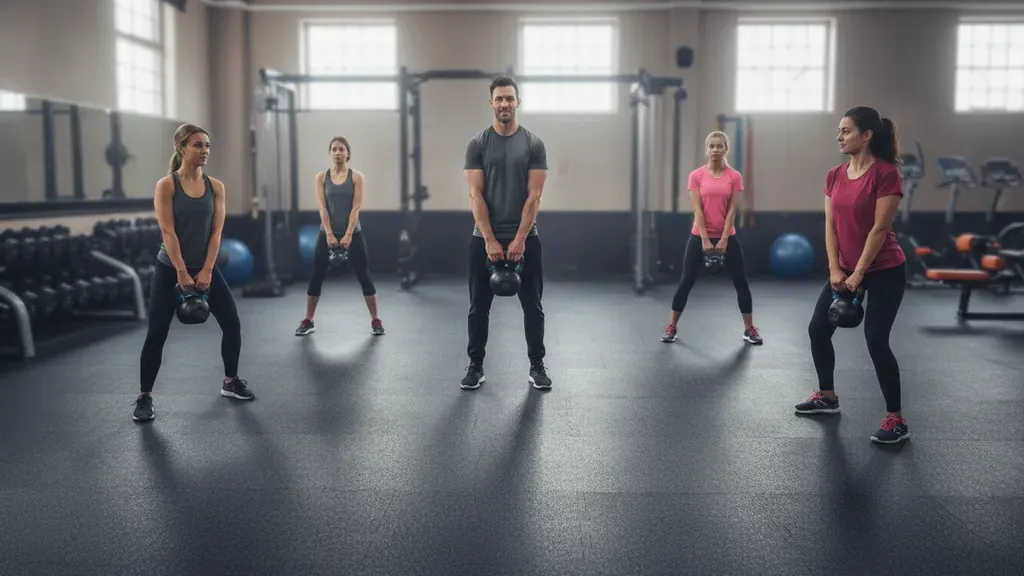
How should safety change for swings, cleans, and snatches?
Dynamic kettlebell movements deserve an extra layer of patience because the bell is moving through space and the timing is less forgiving. A swing is driven by a hip hinge, not an arm raise. A clean and a snatch also require you to guide the bell close to the body and finish in a position you can control. That is a coaching decision, not a test you need to pass on your first visit.
Before adding speed, make sure you can repeat the slower version of the pattern without losing your brace or balance. Practice the setup, hike, and finish separately if your coach recommends it. Keep enough room around you for the bell and for the person training nearby. If the bell pulls you forward, lands unpredictably, or makes you rush the next repetition, stop the set and scale the movement.
Advanced movements are not required for a useful workout. A session built around deadlifts, squats, carries, presses, and controlled hinge practice can still train strength and coordination while you build the skill needed for more dynamic work.
When should you stop a kettlebell exercise?
Stop and reassess when you lose control, feel sharp or unfamiliar pain, or cannot keep the planned position. A normal training challenge can feel demanding, but it should not require you to ignore a warning signal.
Pause the set if you notice:
- Sharp pain, sudden pain, or pain that changes the way you move.
- Numbness, tingling, unusual weakness, or loss of coordination.
- Dizziness, chest symptoms, or unusual shortness of breath.
- A grip that can no longer control the bell.
- Repeatedly rounding, twisting, or shifting to finish a repetition.
- A need to rush because the interval is moving faster than your skill.
Put the kettlebell down in a controlled way, tell the coach what happened, and do not restart at the same intensity simply to finish the block. Persistent pain or concerning symptoms deserve evaluation from an appropriate health professional. If you have a current injury, a medical condition, or a question about whether a movement is appropriate, get clearance and individualized guidance before training.
What does a safe first kettlebell class look like?
A safe first class should give you time to understand the room, the equipment, the movement standards, and the options for scaling. You should know how to ask for help and how to stop a set without feeling pressured to keep up.
At a well-coached session, expect some combination of:
- A brief explanation of the workout and the movement goals.
- A demonstration before you load the exercise.
- A chance to practice with a light or unloaded variation.
- Feedback on your stance, hinge, grip, breathing, and range of motion.
- Options to reduce weight, repetitions, speed, or complexity.
- Time to reset between movements rather than racing every transition.
Group training can be a good fit for new members when the coaching makes the class understandable and the room gives people space to learn. Grind House offers kettlebell programming alongside other fitness formats, so members can choose a training path that fits their goals and experience. Review the kettlebell classes guide and the full class offering before booking.
Try a coached Grind House session and build your kettlebell foundation.
Frequently asked questions about kettlebell training safety
Is kettlebell training safe for beginners?
It can be, when the exercises, load, pace, and instruction match the beginner’s current ability. Start with controlled patterns, learn how to stop, and progress after your technique is repeatable. Beginners with an injury, medical condition, or other concern should ask an appropriate health professional and their coach for individualized guidance.
Should I start with kettlebell swings?
Not necessarily. Swings are dynamic and require a reliable hip hinge, timing, and control. Many beginners start with slower movements such as deadlifts, squats, carries, or hinge drills before a coach introduces swings.
How heavy should my first kettlebell be?
Choose a load you can control for the specific movement and planned repetitions. The correct starting weight lets you keep your position, breathe steadily, and set the bell down safely. A coach can adjust the load after seeing your movement.
Can I train with kettlebells if I am returning after time away?
Possibly, but return gradually. Tell the coach how long you have been away and whether you have pain or a previous injury. You may need a simpler variation, less weight, fewer repetitions, or more rest while you rebuild consistency.
What is the safest next step for a new member?
Start with a coached session where you can learn the setup, ask questions, and practice a manageable version of the movements. Explore the Grind House trial and choose your next training step.
Kettlebell training safety is a process, not a single rule. Use a clear space, choose a controllable load, learn the positions, listen to useful coaching, and stop when your body gives you a reason to reassess. That foundation lets you build strength and confidence without turning every session into a test of how much discomfort you can tolerate.
Leave a Reply
You must be logged in to post a comment.