
Yoga classes can look similar on a schedule while feeling very different in practice. One may emphasize steady movement and strength, while another gives you more time to work on mobility, balance, and breathing. If you are comparing yoga classes in NYC, start with the experience you want, then check the format, coaching, schedule, and membership details. This guide gives you a practical way to choose without relying on a polished class description alone.
Book a yoga class at Grind House
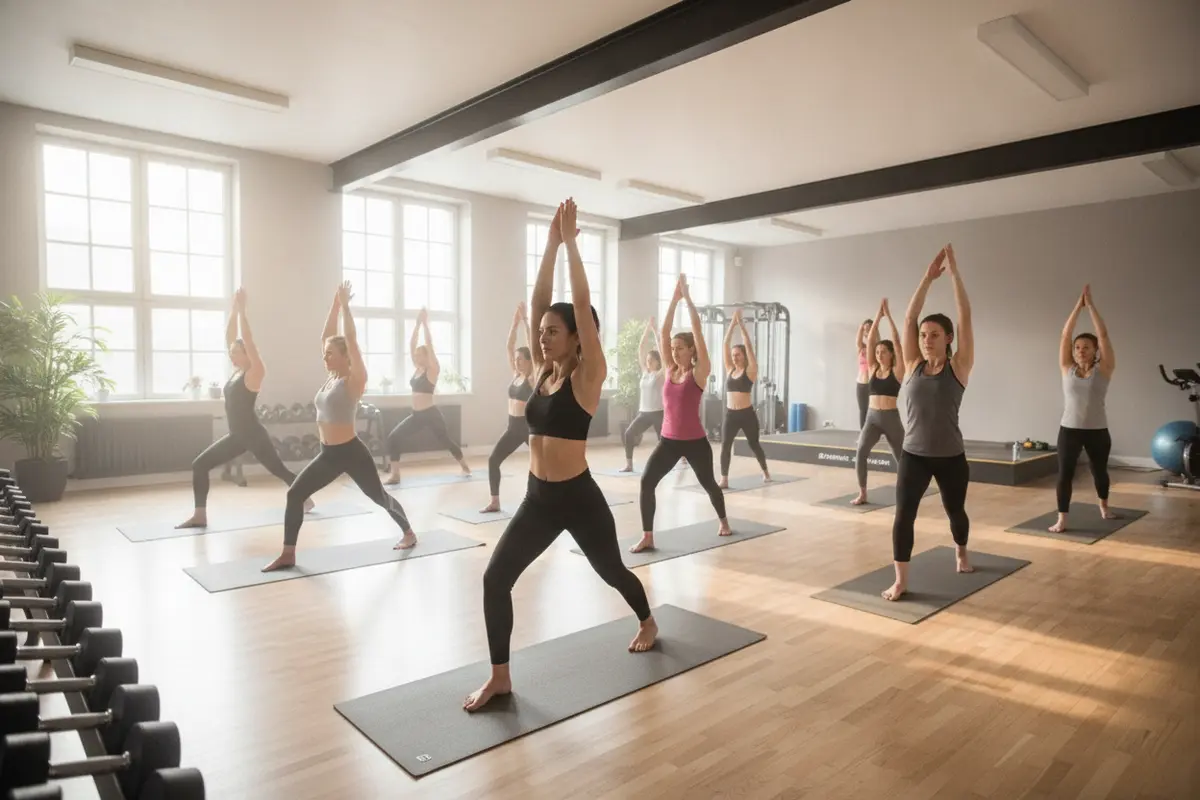
What should you want from yoga classes?
Begin by naming the job you want the class to do. You may want a calmer session after a demanding workday, a more active practice that builds heat, or a structured way to improve mobility alongside strength training. You may also want a group setting that gives your week a reliable rhythm.
There is no single best format for every person or every day. Your preferred intensity can change with your sleep, training load, stress, and experience. A useful first decision is whether you want a class that feels primarily restorative, technique-focused, or physically demanding.
Yoga can support more than flexibility. The National Center for Complementary and Integrative Health summarizes research and survey findings related to yoga and wellness, including reported improvements in sleep and stress among yoga users. Those findings do not promise a specific outcome for every participant, but they help explain why many people include yoga in a broader fitness routine. See the NCCIH overview of yoga and wellness for context.
How do common yoga class formats differ?
Class names vary by gym and studio, so read the description and ask a direct question when the format is unclear. These broad categories can help you compare your options:
| Class approach | Typical focus | Good starting point for | What to ask |
|---|---|---|---|
| Flow-based | Linked poses, transitions, breath, and steady movement | People who want an active group practice | How fast are transitions, and are modifications offered? |
| Power-focused | Strength, balance, heat, and demanding sequences | Members who enjoy a higher physical challenge | Is prior experience recommended? |
| Gentle or deep stretch | Mobility, longer holds, controlled breathing, and recovery | People adding mobility work to a busy training week | How much time is spent standing versus on the floor? |
| Specialty session | A defined theme such as hips, core, balance, or recovery | People with a specific training interest | Is the session suitable for beginners? |
At Grind House, yoga is one option within a wider group fitness environment. You can compare it with other group fitness classes in Flatiron when deciding how yoga fits into your week. A multi-format facility may suit you if you want one membership and several ways to train rather than a yoga-only schedule.
To make the comparison concrete, consider two people with different goals. A member who spends most days at a desk and wants a steady movement habit may prefer a class with deliberate transitions and enough instruction to follow along. Someone already training hard several days a week may prioritize a lower-intensity session that lets them work on control and breathing. Both can choose yoga, but the features they should look for are not identical.
Class labels are only a starting point. “Flow” can describe different speeds, and “power” can mean a range of effort depending on sequence and instructor. Ask what a typical class includes rather than assuming a name guarantees a particular experience. If the description does not tell you whether the class is continuous, how long poses are held, or how much instruction is given, those are useful questions to ask before booking.
What should beginners look for in a yoga class?
A beginner-friendly class is not defined only by the word beginner. Look for clear instruction, reasonable pacing, and options for different ability levels. The instructor should explain how to set up a pose, offer a simpler version when needed, and make it clear that you can pause.
Before your first class, ask these questions:
- What experience level is expected?
- How long are the holds and transitions?
- Will the instructor demonstrate or describe alignment cues?
- Can I modify a movement if my range of motion is limited?
- What should I bring, and what equipment is available?
Arrive a few minutes early so you can check in, choose a comfortable spot, and tell the instructor that you are new. Wear clothing that allows you to move without constant adjustment. You do not need to force a pose to make the session worthwhile. Controlled movement and consistent attendance are more useful than trying to match the person beside you.
One practical first-class plan is to arrive early, put your belongings away, and take a place where you can see the instructor. Keep water nearby if permitted. Listen for the transition cue before moving, and choose the easier version when you are unsure. If a pose causes sharp pain or feels unstable, stop and ask for an alternative rather than pushing through it.
If you want a more specific introduction, review a guide to a first group yoga session before arriving. It can help you understand the room, the pace, and the basic etiquette that makes a shared class run smoothly.
It can also help to define success realistically. Your first class does not need to look polished. A useful first visit is one where you understand the basic flow, know how to ask for a modification, and leave with a clearer sense of whether the pace suits you. Make a brief note afterward: which instructions were easy to follow, which moments felt rushed, and whether you would choose that style again.
How should you compare yoga coaching and class atmosphere?
Coaching quality is about more than an instructor demonstrating difficult poses. Pay attention to whether directions are easy to follow, whether the instructor watches the room, and whether modifications are presented without making anyone feel singled out.
A strong class atmosphere should make effort feel normal. Some people prefer quiet concentration. Others want music, a faster pace, and the energy of a larger training floor. Neither preference is automatically better. The right environment is the one that makes you likely to attend again.
When you visit, notice practical details. Is the room organized? Can you hear the instructor from the back? Is there enough space to move safely? Does the class description match what happens in the room? These observations are more useful than judging a facility by its branding alone.
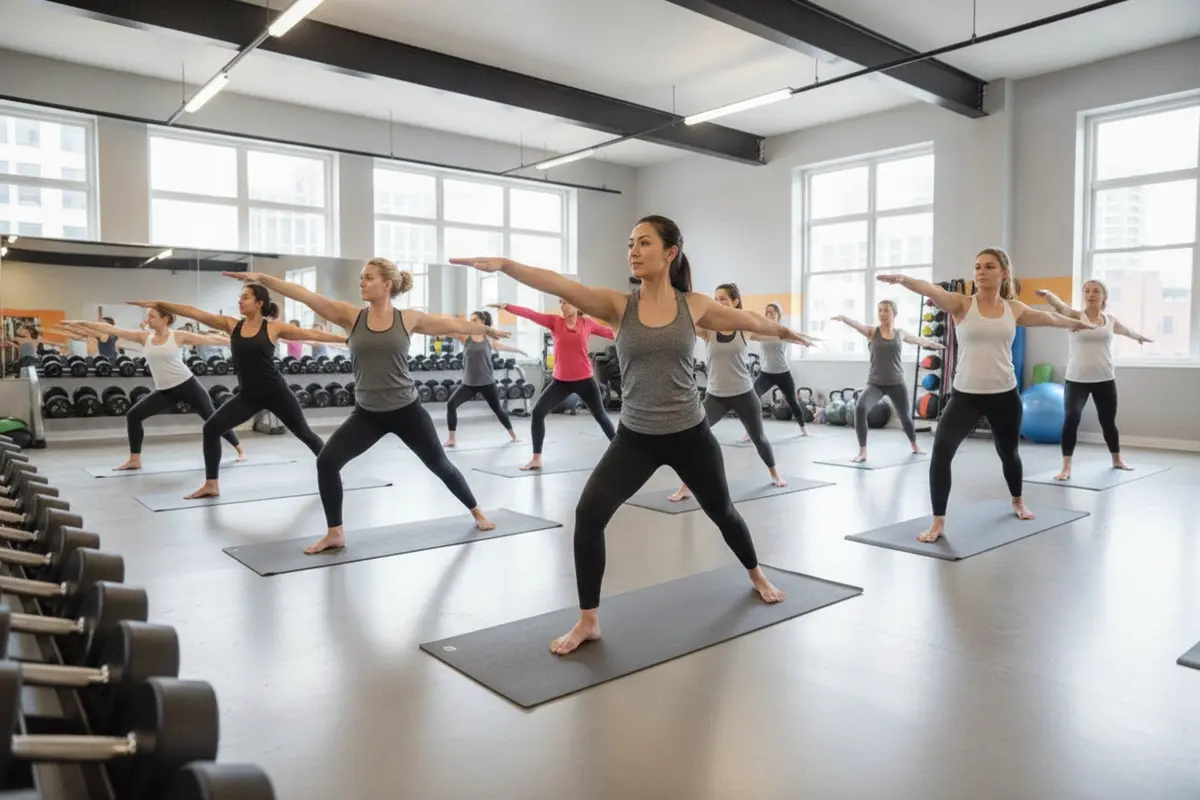
Coaching can be evaluated through small moments. Does the instructor explain what to do before a transition, or only after the class is already moving? Are cues specific enough to help you adjust, such as where to place your feet or how to keep a movement controlled? Is there room to rest without disrupting the group? These details matter more to a first-timer than an advanced pose demonstration.
Atmosphere also includes the practical environment around the class. Think about crowding, noise, lighting, and whether you have enough room to move through a lunge or reach your arms overhead. A busy group may feel energizing to one person and distracting to another. If you can, sample the class at the time you are most likely to attend, because the room and your energy can differ by time of day.
How can yoga fit into a weekly training plan?
Think of yoga as one part of your weekly movement plan. If you already do high-intensity training, a slower session may complement that work by giving you time to practice controlled range of motion. If your week is mostly sedentary, a flow-based class can add purposeful movement without requiring you to build a complicated routine.
Here are three simple ways to organize your week:
- Start with one class. Choose a day you can protect consistently and use the first few visits to learn the format.
- Pair different demands. Place a mobility-focused session near, rather than immediately after, the hardest training days if that feels better for your body.
- Adjust by feedback. If you feel unusually tired, choose a lower-intensity option or reduce the effort. If the class feels too easy after several visits, ask about a more active format.
Yoga is also easy to combine with strength, cycling, boxing, kettlebell work, or other group classes. Grind House lists group fitness classes in Manhattan, so you can compare the broader schedule before deciding how to use your membership.
For example, you might place yoga on a day between two demanding sessions rather than stacking it after a workout that has already left you drained. Another person might use an active flow class as a standalone training day. Let your own recovery and routine guide the decision. The point is not to follow a perfect calendar; it is to select a manageable pattern and notice how it feels over several weeks.
Keep the plan flexible. Work deadlines, travel, sleep, and changing energy levels can affect what you want from a class. If your planned session feels like too much, a slower option or a rest day may be more sensible. If you consistently finish with energy and want more movement, add a class gradually rather than making a large jump in frequency. This is a general planning approach, not a substitute for advice tailored to a medical condition or injury.
What should you check before joining yoga classes in NYC?
Location matters because the best class on paper is not useful if getting there creates friction every week. Check the route from work or home, the start time, the check-in process, and how much time you need on each side of class. A convenient schedule often supports better consistency than a more ambitious plan that is difficult to maintain.
Next, check the membership structure. Ask whether yoga is included with the membership, whether booking is required, and what happens if you need to cancel a reservation. Also confirm which location offers the class you want. Grind House operates in Manhattan and Williamsburg, with location-specific memberships and programming. You can review the Williamsburg location information if Brooklyn is more convenient, or start with the location and trial page to explore an entry point.
Do not choose based on price alone. Compare what is included, how many formats you can use, how the schedule fits your week, and whether the setting supports the way you prefer to train. A slightly different membership can be the better value when it removes barriers to showing up.
Use a short checklist before you make a decision:
- Travel: Is the route practical on the days and at the times you expect to go?
- Booking: Do you need to reserve a spot, and can you manage that process from your usual routine?
- Class details: Does the location offer the style and intensity you want?
- Membership: What training formats are included, and what are the applicable terms?
- First visit: Is there a suitable way to try the environment and learn how check-in works?
For a realistic schedule test, map a typical weekday from door to door. Include the commute, time to change, check-in, class duration, and the return trip. A class that fits a convenient window may be easier to repeat than one that requires an elaborate rearrangement of the day. If you work near Flatiron but live elsewhere, compare the route from each place; if you are in Brooklyn, check whether a Williamsburg class is more practical.
Membership comparisons should be specific. Write down the options you will actually use, such as yoga, strength training, or another group class, and check whether those options are included at the location you plan to visit. Avoid assuming that a class listed online runs at every location or at every time. Confirm the current schedule and membership terms directly before you rely on them.
What does research say about yoga and wellness?
Research on yoga covers many areas, including stress, physical function, and quality of life. A review in the National Library of Medicine discusses reported benefits, barriers, and factors that influence whether people practice yoga. It also emphasizes that access, time, cost, and the surrounding environment can affect participation. Read the review of benefits and barriers to practicing yoga for the full discussion.
These sources are useful for understanding the broader practice, not for predicting what one class will do for you. Use them alongside your own experience, instructor guidance, and any advice from a qualified health professional who understands your circumstances. If you have an injury, medical condition, or a concern about a specific movement, ask before class and choose an appropriate modification.
Research findings apply to groups and study conditions, not as a promise about an individual class. A class experience also depends on the format, instructor, attendance, and what else is happening in your life. Treat research as background, then evaluate practical questions you can answer for yourself: can you follow the class, does the pace feel appropriate, and can you attend regularly?
Schedule your Grind House visit
Frequently asked questions
Are yoga classes suitable for beginners?
Many are, but the format and instructor determine the experience. Check the class description, ask about modifications, and tell the instructor you are new. Start at a pace where you can control your breathing and movement.
How often should you attend yoga classes?
Begin with a frequency you can maintain, such as one class each week. After you understand how your body responds, you can decide whether to add another session or combine yoga with other training.
What should you bring to a yoga class?
Wear comfortable clothing that allows movement and bring water. Ask the facility whether mats and other equipment are provided. Arrive early enough to set up without rushing.
Can yoga replace strength or cardio training?
Yoga can build useful strength, balance, and mobility, but it may not provide the same training stimulus as dedicated strength or cardio work. Many members use it as one component of a varied weekly plan.
How do you choose between yoga classes in Manhattan and Brooklyn?
Start with the location you can reach consistently, then compare the available format, schedule, membership details, and overall atmosphere. A convenient class that fits your routine is usually the strongest starting point.
The right yoga class gives you clear instruction, a workable schedule, and an environment that makes regular practice realistic, so compare those details before you commit.
Leave a Reply
You must be logged in to post a comment.