
Searching for a cycle studio near me is only the first step. The right ride should fit the way you like to train, the time you have, and the level of coaching you want. In New York City, compare the class itself, not just the studio photos or distance from home.
Book a visit and see the ride in person
What should you compare in a cycle studio near me?
Start with five practical questions: What happens during class? How does the instructor coach? Can you get there reliably? Does the schedule suit your week? And will a new rider know what to do? A quick comparison on these points can reveal more than a list of amenities.
Write down your priorities before you browse. If you want an intense music-led ride, class energy may come first. If you are new to indoor cycling, bike setup and clear instruction may matter more. If your commute is unpredictable, schedule and location can outweigh a studio’s style.
The best choice is usually the studio you can attend consistently and understand quickly. That means looking beyond a single class description. Review the arrival process, booking terms, equipment, coaching approach, and options for adjusting effort. A simple checklist also makes it easier to compare two studios without letting polished photos make the decision for you.
| What to compare | What to look for | Question to ask |
|---|---|---|
| Class format | Ride structure, effort changes, music, and any strength intervals | What does a typical class include? |
| Coaching | Clear cues, options for effort, and instruction on bike controls | How does the instructor support first-timers? |
| Location | Real door-to-door travel time at your likely class hour | Can I arrive without a rushed transfer? |
| Schedule | Useful class times on the days you can attend | Are the posted times current for this location? |
| Beginner support | Arrival instructions, bike setup help, and clear expectations | How early should I arrive? |
How do cycle class formats differ?
Indoor cycling classes can feel different even when every rider uses a stationary bike. Some sessions emphasize rhythm and music. Others focus on intervals, changes in resistance, or a steady endurance effort. A class may also include upper-body work or off-bike strength segments, so check the description rather than assuming every ride follows the same pattern.
Look for a plain explanation of the ride. Does the instructor call out effort levels? Are there planned pushes and recoveries? Is the class built around cadence, resistance, or both? These details help you decide whether the workout matches your goals and experience.
Also consider how much structure you prefer. A tightly coached class can make it easier to stay engaged and know what comes next. A session with more room to choose your pace may suit someone who wants to manage effort independently. Neither approach is automatically right for every rider. The useful question is whether the format matches how you want to train that day.
Grind House offers indoor cycling alongside other group fitness formats. Review the Manhattan group fitness class types and the class schedule and offerings to understand what is available before you choose a visit. Class counts and schedules are location-specific, so confirm the current listing for the location you plan to attend.
What does good cycling coaching look like?
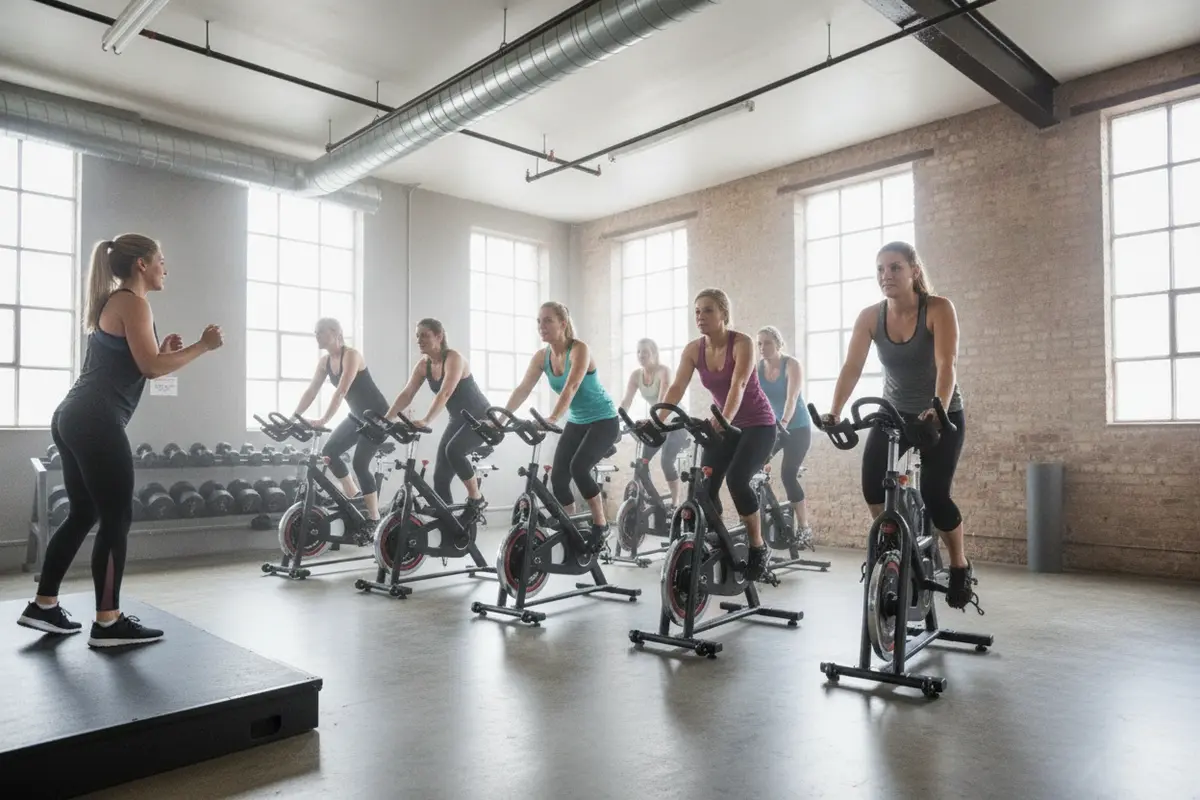
Useful coaching helps riders understand what to do and how to adjust their effort. Listen for concise cues about resistance, cadence, posture, and transitions. The instructor should make the sequence understandable without requiring you to copy another rider blindly.
For a first ride, look for guidance that covers how to set up the bike and use its resistance control. You should be able to ask a question before class without feeling like you are interrupting. During class, clear options can help you choose an effort that feels appropriate rather than racing to match someone else.
- Check whether the studio explains when to arrive and what to bring.
- Ask whether an instructor can help adjust the seat and handlebars.
- Notice whether cues are specific enough to follow while riding.
- Listen for reminders about posture, control, and transitions.
- Choose your own effort; discomfort or sharp pain is a reason to ease off or stop.
Coaching quality also shows up in small moments. Does the instructor explain a change before it happens? Are new terms made clear? Can riders select a lower effort without feeling singled out? A direct, attentive approach can make the room easier to navigate, especially when you are still learning how the bike responds.
For a closer look at first-ride preparation, read this NYC spin class guide. It can help you arrive with a better sense of basic gear and what to expect.
How should location and schedule affect your choice?
A nearby studio is useful only if the trip works in real life. Estimate your travel from work or home at the hour you expect to ride. Include walking time, transit connections, and a few minutes to check in. A studio that looks close on a map may be less convenient if the route adds a stressful transfer.
Then check the timetable against your actual week. Pick two or three class windows you could realistically attend. If there is only one workable session, a schedule change could disrupt your routine. Confirm the posted times and booking rules directly, since timetables can differ by location.
Think about the return trip as well. An early class may need a reliable route to work. An evening ride may need a practical way home. If you regularly carry work clothes or other gear, consider whether the check-in and storage process fits your day. These details sound minor, but they often decide whether a class becomes part of a routine.
A government Active&Fit Direct member FAQ similarly describes choosing a gym or studio in relation to schedule, lifestyle, and fitness preferences. Use those factors as a practical comparison lens, then apply them to your own commute and training needs.
Grind House has a Manhattan location and an established Brooklyn location. Use the Brooklyn location information if Williamsburg is more convenient, and confirm the location for your selected class before booking. For general studio information, see the Grind House NYC fitness studio page.
How can a beginner judge studio support?
Beginner support is not about making the ride easy. It is about making the room, equipment, and instructions understandable so you can participate at your own pace. Look for clear arrival directions, a chance to ask for bike setup help, and coaching that explains the movements and effort changes.
Before booking, ask what time first-time riders should arrive and whether the instructor can help adjust the bike. Wear clothing that lets you move comfortably and bring water. If you have a health concern or are unsure whether cycling is suitable for you, consult a qualified health professional before taking part.
At the start of class, set the bike to a comfortable position and learn how resistance changes the feel of the ride. Begin conservatively. You can increase effort as you understand the cues. There is no need to match the pace of the strongest rider in the room.
It also helps to know what questions to ask before you reserve a spot:
- Do first-time riders need to arrive early for orientation?
- Can someone help adjust the seat and handlebars?
- What should I wear, bring, or know before entering the room?
- What happens if I need to reduce resistance or take a short pause?
- How does the studio handle late arrival?
The answers tell you how much preparation the studio expects you to handle alone. Clear answers are useful. If information is difficult to find, contact the studio before committing to a class time.

What should you check before paying for a ride?
Compare the full terms, not only a headline price. Check whether you are booking a single class, an introductory offer, or a membership. Review any expiration dates, cancellation rules, late-arrival policies, and how far ahead you need to reserve. If you expect to ride regularly, compare the available membership details with the number of classes you are likely to attend.
Ask what access the membership includes and whether terms vary by location. A price only makes sense alongside the schedule, class format, and frequency you expect to use. If you are testing a new routine, start by confirming the conditions of the option you are considering rather than assuming a promotional offer applies to every class or location.
Use the studio’s current pages for accurate details. Grind House membership information is available on its Williamsburg membership page; verify the relevant location and terms before making a decision. Do not assume pricing, access, or class availability is identical across locations.
During a visit, focus on what you can observe: whether the room feels comfortable, how staff answer basic questions, and whether the ride description matches the class experience. A short checklist keeps the decision grounded in fit rather than hype. Note the bike setup process, the clarity of the opening instructions, and whether the room allows you to concentrate.
What should you do during a first visit?
Arrive with enough time to check in and ask for help. Tell the instructor that you are new if you have not taken this format before. Give yourself a few minutes to adjust the bike rather than waiting until the opening cue. A comfortable setup lets you focus on the ride instead of making repeated changes once class begins.
During the session, treat the instructor’s effort suggestions as guidance, not a requirement to ignore your own limits. Learn how resistance changes the work and keep your movement controlled. If you feel sharp pain, dizziness, or another concerning symptom, stop and seek appropriate guidance. A first class is a chance to learn the room and format, not a test of how hard you can push.
Afterward, write down what worked and what did not. Was the class length practical? Did you understand the cues? Could you reach the studio without rushing? Would another class time fit better? These answers are more valuable than a quick judgment based only on music or atmosphere.
Choose a time and book your visit
Frequently asked questions
How early should I arrive for my first cycle class?
Ask the studio for its arrival guidance when you book. Arriving with time to check in and get help with bike setup makes it easier to follow the opening instructions.
Do all indoor cycling classes use the same format?
No. Classes may differ in music, intervals, resistance work, endurance focus, and added strength segments. Read the description and ask what a typical session includes.
What should I look for in a cycle studio near me?
Compare the class format, instructor cues, travel time, practical schedule, and first-timer support. These factors show whether the studio fits your routine and comfort level.
Should I choose a studio based only on distance?
No. A convenient route matters, but a useful class schedule and clear coaching also affect whether you can attend consistently. Consider the whole trip and the sessions you can realistically make.
What should I ask before booking a cycling class?
Ask about arrival time, bike setup help, class format, effort options, booking terms, and what to bring. Clear answers help you arrive prepared and choose a class that fits your experience.
How do you choose the right NYC ride?
Make a shortlist, check the schedule and terms, then visit the studio that best fits your routine. A good choice is one you can reach, understand, and return to with confidence. Book a visit, ask your questions, and decide based on the ride and support you experience.
Leave a Reply
You must be logged in to post a comment.