Your first NYC boot camp should build confidence, not leave you scrambling to keep up. The right class gives you room to learn before asking you to push harder.
Book your first Grind House boot camp class and tell the coach you are new when you arrive.
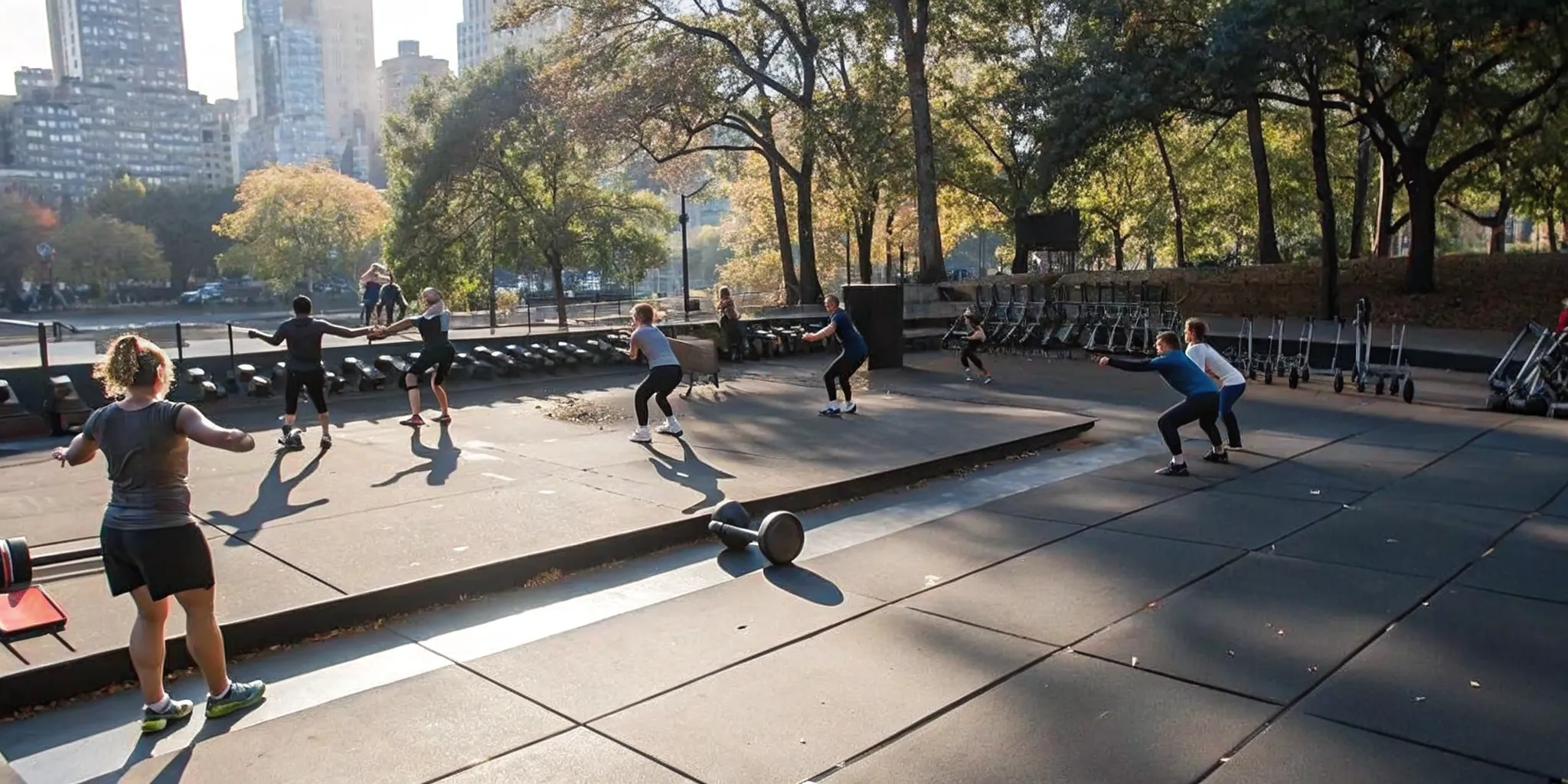
Boot camp classes NYC beginners can join combine coach-led strength and cardio intervals with beginner-friendly options. Expect a warm-up, short circuits or stations, planned recovery, and a cool-down. Arrive early, share movement concerns, choose manageable weights, and ask for lower-impact options whenever you need them.
This guide answers what to expect, how to pace yourself, and how to choose a class worth returning to. Next, learn the coaching and class features that make a first session manageable.
Boot camp classes NYC beginners can confidently start
Beginner-friendly boot camp classes combine coached strength and cardio intervals in a clear group format. New members can adjust weight, pace, impact, range of motion, and rest while learning each movement. A supportive coach explains the circuit and helps every participant choose a manageable challenge.
What a boot camp class involves
A boot camp class is a coached group workout built around short blocks of movement. Most sessions use a circuit, so you move through several exercises before repeating the round. A coach explains each movement, keeps time, and helps the group stay on track. The goal is steady, useful work, not military-style pressure.
The exercise mix often trains the whole body in one class. A round may pair squats, rows, presses, and core work with a short cardio interval. That blend has a sound purpose. The CDC’s physical activity guidance includes both aerobic activity and muscle-strengthening work.
How coached intervals work
Intervals divide the workout into clear periods for effort, rest, and transition. Instead of wondering what comes next, you follow the coach’s timing and cues. One interval may focus on controlled strength work. The next may raise your heart rate with a bike, treadmill, or simple bodyweight move.
This structure lets a mixed group train together without asking everyone to move at the same pace. Beginners can choose a lighter weight, reduce impact, or take more rest. More experienced members can add load or move faster while keeping good form. The exercise stays recognizable, but the challenge changes for each person.
Coaching matters most when a movement feels new. A good coach shows the setup, names the main form cues, and offers an easier option before the interval starts. That support makes boot camp classes NYC beginners can try feel less confusing. You can focus on one clear task instead of memorizing a full workout.
A practical first-class mindset
Your first goal is to learn the flow, not to finish every repetition. Arrive early, tell the coach that you are new, and ask about any unfamiliar equipment. During class, pick a pace that lets you keep control. Rest is a useful choice when your form starts to slip.
You also do not need a high fitness level before joining. The session itself gives you a place to build skill, strength, and stamina over time. Grind House’s group fitness classes include several training styles, so you can compare formats and find a suitable starting point.
Expect the room to feel active, but keep your attention on the coach and your own station. Small wins matter in an early class. Learning a safe squat setup or completing one controlled round gives you a base for the next session. With repeat visits, the timing and movements start to feel familiar.
What should you expect in your first boot camp class?
Expect a quick check-in, a coached warm-up, several timed circuits or stations, planned recovery, and a cool-down. Arrive early, tell the instructor you are new, and ask about modifications before class. You should understand each movement before the first work interval begins.
Your first class should feel structured, even when the workout moves quickly. Arrive early enough to meet the instructor and learn the room. Share any injuries, movement limits, or concerns before class starts. This check-in gives the coach time to explain options without slowing the group.
From check-in to the first circuit
Boot camp classes NYC beginners can enjoy often combine short work periods with planned rest. The exact mix may change by coach and class. Review the gym’s class options before you arrive, so the format and training focus are less surprising.
- Arrive and check in. Tell the instructor it is your first boot camp class. Ask where to place your things and what gear you need.
- Discuss your starting point. Mention pain, recent injuries, or exercises you avoid. Ask the coach to show a simpler option when needed.
- Join the warm-up. Expect easy movements that prepare you for the main workout. Focus on the coach’s cues instead of trying to move fastest.
- Learn the circuit. The instructor will show each station and explain the work and rest pattern. Watch the full demo before choosing your pace.
- Move through each station. Use a load and speed that let you keep good form. Stop and ask a question if a movement feels unclear.
- Use the recovery periods. Rest, breathe, and get water when the format allows. Tell the coach if you feel dizzy, sharp pain, or unusual discomfort.
- Finish with a cool-down. Follow the final easy movements and stretches. Ask the instructor what to expect after class and when to return.
Pacing and beginner-friendly options
You do not need to match the pace of an experienced member. A coach may shorten a work period, lower the load, or change a movement. These options keep the workout useful while you learn the pattern. Asking for help is part of training, not an interruption.
Choose steady form over extra repetitions. The CDC’s physical activity guidance notes that some activity is better than none. That idea can help beginners start at a manageable level and build over time.
If you want more help with movement basics, consider speaking with a coach before your next group session. Grind House also offers personal training for more focused instruction. A short conversation can clarify which class level, exercise option, or pace fits your current needs.
Recovery and the cool-down
Recovery begins during class, not only after it ends. Use each break to slow your breathing and notice how your body feels. Water may help, but follow the instructor’s timing so you can move safely between stations. Never hide pain to keep up with the group.
The cool-down marks a shift from hard work to easy movement. Stay for it, even if you feel ready to leave. After class, ask about soreness, rest, and the next suitable session. The instructor can also explain unfamiliar exercises while they are still fresh in your mind.
Who are beginner boot camp classes best for?
Beginner boot camp classes are best for people who want a structured full-body workout, coach guidance, and a motivating group setting. They also suit returning exercisers who want clear progressions. You do not need advanced strength, speed, or gym experience to participate.
Beginners who want a clear starting point
Beginner boot camp classes suit people who want to build a fitness routine without planning each workout alone. A coach explains the movements, sets the pace, and offers simpler options when needed. You can focus on learning sound form and finding an effort level that feels manageable.
You do not need to arrive with strong lifting skills or years of gym experience. A beginner-friendly class should teach each exercise before asking you to add speed or weight. To explore other formats, review the available fitness classes and choose options that match your goals.
Busy New Yorkers who value structure
Boot camp can fit busy New Yorkers who want variety within a set class time. Sessions may mix strength work, cardio, and short recovery periods. That structure removes the need to decide what to train after a long workday.
People who lose interest during the same workout each week may enjoy the changing exercises. The group setting can also make a routine easier to keep. You still control your effort, so a challenging class does not need to become an all-out race.
People who enjoy coaching and group energy
These classes work well for people who like direct coaching and a shared sense of purpose. The instructor can explain what comes next and help you adjust a movement. Classmates create energy without requiring everyone to work at the same level.
Boot camp classes NYC beginners choose should allow questions, breaks, and exercise changes. Tell the coach about past injuries or movements that cause pain before class starts. This helps the coach suggest a better option while keeping you involved with the group.
Some people should get personal guidance before starting a new workout plan. The CDC’s physical activity guidance says people with chronic conditions can consult a health professional about suitable activity. Speak with a qualified healthcare professional when you have health concerns, symptoms, or questions about exercise safety.
A good fit also depends on what helps you stay consistent. Boot camp may suit you if coaching, variety, and a set schedule make exercise easier to start. If you prefer one-on-one support, personal training may offer a pace and plan built around your needs.
How can beginners scale boot camp exercises?
Beginners can scale boot camp exercises by reducing weight, slowing the pace, limiting range of motion, choosing a lower-impact variation, or taking longer rest. Pick the option that lets you maintain control and sound form. Tell the coach what feels difficult so they can suggest an appropriate adjustment.
Scaling means changing an exercise so it fits your current strength, skill, and energy. Change the range of motion, weight, pace, impact, or rest time until you can keep control. The best option preserves the movement’s purpose without forcing you to match a more experienced member.
Explore Grind House boot camp classes to see whether the coached format fits your goals.
Five ways to adjust the challenge
Start by changing one training lever at a time. Range of motion is often the simplest choice. You might squat to a bench instead of lowering as far as possible. For a push-up, placing your hands on a sturdy raised surface reduces the demand while keeping the same movement pattern.
Load is another clear lever. Choose a lighter kettlebell, dumbbell, or medicine ball before adding weight over time. You can also slow your pace, take out jumps, or shorten each work period. A coach can help you pick an option that still feels purposeful.
- Range of motion: Use a comfortable depth that lets you stay steady.
- Load: Reduce weight until every repetition looks controlled.
- Pace: Move more slowly or complete fewer repetitions.
- Impact: Replace jumps with steps or grounded movements.
- Work and rest: Shorten work rounds or take longer breaks.
Rest is part of the plan, especially when you are new to group training. The CDC physical activity guidance notes that some activity is better than none. A brief pause can help you return with better form instead of rushing through tired repetitions.
Standard moves and beginner-friendly options
Many common boot camp movements have a lower-impact or lower-load version. These choices train the same broad skills without forcing a beginner to match an experienced member. Use the table as a starting point, then follow the coach’s cues for the day’s workout.
| Standard movement. | Beginner-friendly option. | What changes. |
|---|---|---|
| Full-depth squat. | Squat to a bench. | Shorter range of motion. |
| Floor push-up. | Incline push-up. | Less upper-body load. |
| Jumping lunge. | Reverse lunge or split squat. | Lower impact and pace. |
| Burpee with jump. | Step-back burpee without jump. | Lower impact and slower transitions. |
| Forty-second work round. | Twenty-second work round with added rest. | Shorter work period. |
You do not need to choose the easiest version of every movement. One exercise may feel comfortable while another needs a larger change. In Grind House classes, tell the coach that you are new before the session starts. This gives the coach time to explain options and watch your first few repetitions.
How to choose the right scale
A useful scale feels challenging but does not make your form fall apart. Stop and adjust if you cannot control the movement or follow the coach’s main cues. Sharp pain, dizziness, or unusual shortness of breath are also signs to stop and speak with the coach.
Think of each scale as a version for today, not a permanent label. Sleep, stress, soreness, and the workout format can change what makes sense. You might use a lighter load during a fast circuit, then lift more during a slower strength block.
For beginners comparing boot camp classes NYC beginners can attend, ask how instructors handle movement options. A helpful class makes scaling easy to understand and normal to use. As your control and fitness improve, you can add depth, load, pace, impact, or work time one step at a time.
What should you bring to a boot camp class?
Bring a filled water bottle, a small towel, and any personal equipment listed by the gym. Wear breathable workout clothes and supportive athletic shoes that feel stable in several directions. Check the class details before leaving home, then arrive early enough to get settled.
Clothes and shoes that can keep up
For boot camp classes NYC beginners should wear breathable clothes that allow a full range of motion. Choose a top and bottoms that stay comfortable during squats, lunges, and floor work. Avoid anything that needs frequent fixing. Simple, secure clothing lets you focus on the coach and each movement.
Wear supportive athletic shoes that fit well and feel stable during quick changes of direction. Shoes made for training often handle side-to-side movement better than soft running shoes. If you are unsure what the class may include, review the gym’s class options before choosing your gear.
Plan for the trip to and from class, too. A light outer layer can help when the weather changes during an NYC commute. Pack damp clothes in a separate bag after class. Leave jewelry and loose items at home so they do not get in the way.
- Breathable workout top and bottoms
- Supportive, secure athletic shoes
- Filled water bottle
- Small towel, if you prefer one
- Any personal item needed for a known limitation
Water and pre-class fuel
Bring a filled water bottle so you can take small drinks when the coach gives a break. The CDC explains that drinking enough fluids helps reduce heat-related risk. This matters more when a workout is intense or the room feels warm.
A heavy meal right before class can make hard movement uncomfortable. If you need food, choose a light meal or snack with enough time to settle. Familiar foods are usually the safer choice before your first session. Avoid testing a new supplement or a large energy drink just before class.
Arrival and coach communication
Arrive early enough to check in, find the training area, and meet the coach without rushing. Tell the coach that you are new before class starts. This gives you time to ask about the format, where to place your things, and how to follow transitions.
Share any injury, pain, movement limit, or health concern that may affect the workout. Keep the note clear and specific, such as trouble with jumping or kneeling. A coach can then explain a lower-impact option when one fits. Stop and speak up if a movement causes sharp pain.
Beginners do not need special gear or perfect fitness to prepare well. Bring the basics, arrive ready to listen, and pace your effort during the first class. For more one-on-one help with movement choices, explore personal training before or alongside boot camp.
How to find the right beginner boot camp in NYC
Choose a beginner boot camp with clear demonstrations, accessible exercise modifications, attentive coaching, and a schedule you can follow consistently. Review the class description and ask how instructors support first-timers. The right NYC class should feel challenging, understandable, and welcoming from your first visit.
The right beginner boot camp offers clear demonstrations, normalizes exercise modifications, and fits a schedule you can repeat. Before booking, compare the class format, ask how coaches support first-timers, and choose a convenient NYC location. A manageable routine will serve you better than the hardest possible workout.
Coaching you can follow
Good boot camp classes for NYC beginners start with clear coaching, not a race to keep up. Before booking, ask how the instructor teaches each move and supports first-time members. A strong coach demonstrates the exercise, explains its purpose, and checks form while the group works.
Look for a class that offers easier and harder versions of each exercise. Modifications let you train at your current level without sitting out. They also help you build sound movement skills before adding speed, weight, or more complex drills.
A helpful instructor should welcome questions about pain, past injuries, and your training history. The coach can then suggest a safer option or tell you when to stop. For more individual guidance, personal training can help you learn form before joining a group session.
A format that fits your goals
Ask what a typical class includes before your first visit. Some boot camps mix strength work with short cardio rounds. Others focus more on treadmills, turf drills, boxing, or kettlebells. The right format should match both your goals and the way you enjoy moving.
Start with Grind House Manhattan’s boot camp class overview, then compare the broader class types, including HIIT, Turf & Tread, boxing, cycling, yoga, and kettlebell training. Reviewing those choices can help you compare the pace, equipment, and main focus before you book.
Do not judge a class only by how hard it sounds. A useful session gives you enough work to improve while leaving room for sound form. The CDC’s physical activity guidance also recommends mixing aerobic activity with muscle-strengthening work.
A routine you can keep
In NYC, convenience matters. Check the studio location, class times, session length, and booking rules. A class near home, work, or your usual commute is easier to attend when the week gets busy.
Pay attention to the room during your first session. Staff should explain where to go, what equipment you need, and how the class will run. The group should feel focused and welcoming, without pressure to match another person’s pace.
- Arrive early enough to meet the instructor and discuss your experience.
- Ask how often beginners attend and which session is the best starting point.
- Check whether the coach gives form cues throughout the workout.
- Choose a schedule you can follow most weeks, not just on ideal days.
After class, consider how your body felt and whether the coaching made sense. Normal effort can feel challenging, but sharp pain is a reason to stop. The right beginner boot camp gives you a clear path to return, learn, and progress.
Build confidence during your first month
Build confidence by attending consistently, repeating the basic movements, and choosing an effort you can recover from. Track small wins such as understanding the circuit or using better form. Your first month should create a sustainable routine, not test your maximum speed or strength.
Your first month is not a test of how fast or strong you are. It is time to learn the class flow, practice each move, and build a routine you can keep. Beginners in boot camp classes NYC often gain more from steady attendance than from pushing hard in every session.
Set a pace you can repeat
Start with a weekly schedule that leaves room for rest. Pick class times that fit your real routine, then protect those appointments. The goal is to return with enough energy to practice well, not to finish each class spent.
Recovery is part of training. Sleep, regular meals, water, and easier days can help you arrive ready to move. The CDC’s physical activity guidance also supports spreading activity across the week instead of doing it all at once.
- Choose two or three class times you can attend most weeks.
- Keep at least one easier or rest day between hard sessions.
- Tell the coach when you need a lower-impact option.
- Add a session only when your current plan feels steady.
Track skills, not the room
Comparison can hide your own progress. Another member may know the format, have years of training, or simply feel strong that day. Focus instead on signs you can control: your form, breathing, pace, and comfort asking for help.
After class, write down one movement that felt smoother and one question for next time. Small notes make progress easier to see. They also give your coach clear details when you want feedback on a squat, plank, push-up, or interval.
Use the same idea when choosing from Grind House fitness classes. A format that suits your current goals may help you stay consistent. You do not need to copy someone else’s schedule.
Expect a learning curve
New class names, exercise cues, and station changes can feel confusing at first. That is normal when you enter a new training setting. Listen for one cue at a time, watch the coach’s demo, and choose a version you can perform with control.
Confidence often grows through familiar steps. Arrive early, tell the coach you are new, and learn where the equipment belongs. Over several classes, the setup takes less thought, which lets you focus more on movement quality.
At the end of the month, review what helped you return. Keep the class times, coach cues, and recovery habits that worked. Then choose one simple goal for the next month, such as steadier form or one more well-paced round.
Frequently Asked Questions
How fit do I need to be before joining a boot camp class?
You do not need an advanced fitness level to start a beginner boot camp class. Most classes combine strength and cardio exercises that can be adjusted for different abilities. Tell the instructor that you are new before class begins. Start with lighter weights, use lower-impact options, and take breaks whenever your form begins to slip.
What should I wear and bring to my first boot camp class?
Wear breathable workout clothes and supportive athletic shoes that allow safe movement in several directions. Bring water, a small towel, and any required personal equipment listed by the studio. Arrive about 10 minutes early so you can check in and meet the instructor. Review the studio’s class information before leaving home.
How often should beginners take boot camp classes?
Many beginners start with one or two boot camp classes each week, leaving recovery time between sessions. Your ideal schedule depends on the class intensity, your current activity level, and how your body responds. Avoid increasing frequency while you remain unusually sore or fatigued. A trainer or qualified health professional can help tailor a plan around injuries or health concerns.
Can boot camp exercises be modified for beginners or injuries?
Boot camp exercises can often be modified by reducing weight, slowing the pace, shortening the range of motion, or choosing a lower-impact movement. Ask the instructor about modifications before class and speak up if an exercise causes pain. If you have an injury or medical condition, get guidance from a qualified health professional before joining a class.
What should I expect during my first boot camp class in NYC?
A typical first boot camp class includes a warm-up, several strength and cardio intervals, short recovery periods, and a cool-down. The exact format varies by studio and instructor. Expect clear demonstrations, group movement, and options for different ability levels. Focus on learning proper form rather than matching another participant’s speed or weight during your first session.
Ready to book your first NYC boot camp class?
Delaying your first class can keep your fitness goals vague, making it easier to lose momentum and postpone the routine you want to build. Starting now lets you learn the format, practice at your own pace, and use each new session to build comfort and consistency. You will leave your first class with practical experience, a clearer sense of what to expect, and a specific next step for continuing.
Ready to begin? Book your first boot camp class today to choose a session that fits your schedule and turn your interest into a firm commitment. Make your request now, then prepare for class knowing your starting date is set and your first step is no longer waiting.
Leave a Reply
You must be logged in to post a comment.