
Walking into a group workout should feel energizing, not intimidating. Good group fitness class etiquette means arriving prepared, sharing space thoughtfully, listening during instruction, and leaving equipment ready for the next person. These simple habits help every New Yorker in the room focus on moving well and enjoying the shared energy.
Start your Grind House trial and put these class-ready habits into practice.
In New York, consideration matters because a class compresses many different schedules, experience levels, and goals into one active room. People may arrive from a packed train or a demanding workday, then quickly transition into a workout where every foot of space counts. Awareness helps the group settle faster without turning the experience into a rigid list of rules.
This guide is practical advice for first-time and returning participants, not a statement of unverified Grind House policies. When a facility or instructor gives specific directions, those directions should always guide your choices.
Group fitness class etiquette starts before class
The best pre-class etiquette is to arrive with enough time to check in, store belongings, learn the room, and gather only the equipment you need. A calm setup protects the opening minutes of class and gives the instructor a chance to help newcomers before everyone begins moving.
Arrive ready, not stressed
New York schedules can be unpredictable, so plan for a small buffer when possible. Arriving before class begins lets you choose a spot without stepping around people who have already settled in. It also helps you avoid interrupting the instructor’s opening explanation or warm-up.
If it is your first class, briefly introduce yourself to the instructor. Mention that you are new, share any relevant limitations, and ask where to set up. Keep the conversation concise so the instructor can welcome other participants too. Checking the available Grind House class types before your visit can also help you understand the format.
Pack for the actual format
Different classes call for different preparation. Grind House offers formats including cycling, boxing, HIIT, kettlebell, yoga, Pilates, and other group workouts. For example, the Grind House class information notes that boxing participants should bring wraps and gloves. Its cycling information says bikes support SPD and Delta clip-in shoes or normal sneakers in cages, while cycling shoes are not provided.
- Check the class description before leaving home.
- Bring water and format-specific gear when applicable.
- Keep coats, large bags, and unnecessary items outside the active area when storage is available.
- Silence your phone before the instructor begins.
These details are not minor. Being prepared reduces last-minute movement through the room and lets the instructor focus on the entire class instead of solving preventable setup problems.
How do you share space in a busy New York class?
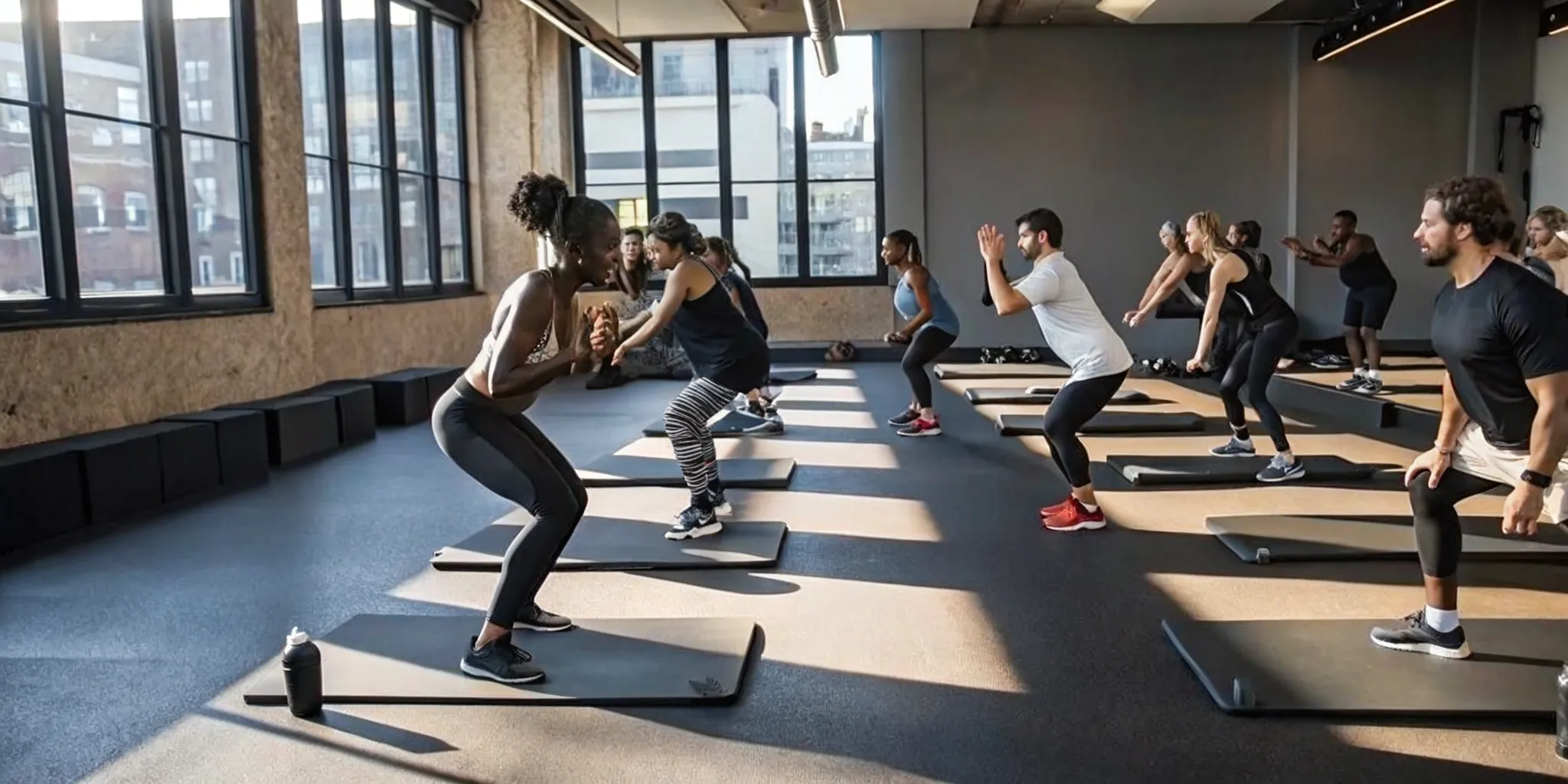
Share a busy studio by matching the spacing already established, keeping walkways clear, and adjusting your movement range when needed. You do not need a perfect position. You need enough room to move with control while allowing your neighbors to do the same.
When choosing a spot, notice the pattern already established in the room. Avoid squeezing directly in front of someone if it blocks their view of the instructor. Place equipment within your area rather than spreading it across an open walkway. A useful mental model is a moving footprint: your space includes not only where you stand, but also where your arms, legs, and equipment travel.
| Do. | Avoid. |
|---|---|
| Match the spacing already used in the room. | Claiming more room than the workout requires. |
| Keep belongings away from active movement areas. | Leaving bags, coats, or bottles in walkways. |
| Adjust your range of motion when space is tight. | Moving unpredictably into a neighbor’s area. |
| Keep your phone silenced and put away. | Recording people without their permission. |
Move predictably and reset calmly
Some exercises travel forward, backward, or side to side. Before a larger movement, take a quick look around and adjust your range if needed. Controlled movement is more useful than forcing a full range that puts someone else on guard. If your position becomes crowded, calmly reset instead of competing for space.
Phones can quickly pull attention away from the room. Avoid taking calls or sending messages during instruction. If you must deal with something urgent, step out discreetly when it is safe to do so.
Treat shared equipment like it belongs to everyone
Good equipment etiquette means taking only what the workout requires, placing each item safely, and returning it in an organized condition. That approach helps everyone start on time, move without hazards, and find the tools they need during fast transitions.
Dumbbells, kettlebells, mats, resistance bands, and other tools support the workout, but they also require consideration. Take only the equipment the instructor recommends. Collecting extra weights just in case can leave someone else without what they need.
Set up for safe transitions
Place equipment close enough to reach but not where someone may step on it. Keep weights flat and stable. Avoid stacking items in a way that could roll or tip. When transitioning between exercises, look before moving equipment through a shared area.
If a preferred weight is not available, ask the instructor about an alternative rather than taking an item from another participant’s station. A different load, range of motion, or tempo can often preserve the purpose of the exercise. For participants who want more individual guidance on movement selection and technique, explore personal training at Grind House.
Leave the station ready for what comes next
At the end of class, return equipment to its proper place and follow the facility’s available cleaning process. Gather items efficiently without cutting through the cool-down. Returning weights in order and checking your area for forgotten items help the room reset smoothly.
Equipment care is not about perfection. It is recognition that the next class deserves the same organized start that your class enjoyed.
Compare Grind House class types and choose a format that fits how you like to move.
What is the best way to follow instructor cues?
Follow cues by watching the full demonstration, beginning on the instructor’s signal, and selecting the option you can perform with control. Brief questions during a natural pause are useful. Side conversations or starting early can make instructions harder for the whole room to follow.
Listen first, then move
An instructor manages timing, demonstrates movements, offers options, and watches the room. During a demonstration, pause and watch before beginning. Starting early can cause you to miss an important detail, and it may distract nearby participants. If a cue is unclear, watch one complete repetition or use the simplest version until you understand the pattern.
Ask a short question during a natural pause, or speak with the instructor before or after class. A useful question is specific: ask where you should feel a movement, which option best matches your current ability, or how to arrange a piece of equipment. Lengthy conversations during an active interval pull attention away from the group.
Use modifications without apology
A modification is not a lesser workout. It is a way to make the movement appropriate for your body and experience that day. Follow the instructor’s suggested options and choose the one that lets you move with control. Avoid copying a neighbor simply because their version looks more advanced.
Side conversations can also make instructions harder to hear. A quick encouraging comment is different from a running conversation. Keep the room’s attention on the instructor, especially during demonstrations and transitions.
Be the classmate you would want beside you
A considerate classmate contributes energy without turning the workout into a competition for attention. Respect different goals, leave coaching to the instructor, take breaks away from active pathways, and offer encouragement that does not comment on another person’s body or performance.
Respect different bodies and goals
Your classmate may be training for an event, rebuilding a routine, learning a new movement, or simply taking an hour for themselves. Avoid commenting on another person’s body, weight selection, speed, or modification. A friendly hello or a simple nice work is usually more supportive than unsolicited coaching.
Let the instructor handle form guidance. Even well-meant advice can be distracting or unsuitable for someone else’s needs. Focus on your own movement and ask the instructor if you need help. This creates a welcoming room without assuming everyone wants the same experience.
Manage breaks and exits thoughtfully
Take water or recovery breaks when you need them. When possible, move to the side rather than stopping in an active pathway. If you need to leave early, choose a spot near an exit before class and tell the instructor in advance. Exit during a safe transition rather than crossing the room during a fast sequence.
Strong class energy includes patience. Give people time to learn transitions, make room when someone needs to pass, and keep competitive instincts focused on your own effort.
How should you wrap up after a group fitness class?
Wrap up by participating in the cool-down when possible, cleaning your station according to available guidance, returning equipment, and clearing the room without disrupting others. The final few minutes belong to the class, and a thoughtful exit makes the transition easier for everyone.
- Join the cool-down. Follow the instructor’s final movements when you can, and avoid packing up noisily while others are focused.
- Clean your area. Use the cleaning supplies provided and follow posted guidance.
- Return equipment. Put each item back where it belongs without blocking participants who are still moving.
- Gather your belongings. Check the floor and surrounding area for bottles, towels, or small personal items.
- Save longer questions for after class. Let others exit, then ask the instructor for clarification or suggestions.
If you enjoyed the workout, thanking the instructor is always appreciated. You can also make a mental note about the equipment, pace, or modification that worked well so your next class feels even more comfortable.
Keep momentum without rushing the room
After a strong session, it can be tempting to immediately check messages, start a conversation, or hurry toward your next commitment. Take a moment to notice whether other participants are still cooling down or returning equipment. Moving calmly makes the transition easier for everyone.
If you want to speak with a classmate, move the conversation away from the active studio area when possible. This keeps walkways clear and gives the next class room to prepare.
Your first New York group fitness class can feel easy
A successful first class starts with three actions: arrive with time to spare, tell the instructor you are new, and choose manageable movement options. You do not need advanced fitness or insider knowledge. Awareness and a willingness to learn are enough to help you participate confidently.
Pick a format that sounds inviting
Start with a workout style that matches what you enjoy. You may want rhythmic movement, strength training, boxing-inspired work, cycling, yoga, Pilates, or high-intensity intervals. Review the available group fitness formats to find what captures your interest.
During class, focus on learning the flow rather than matching the most experienced person in the room. Stand where you can see the instructor, use lighter equipment while learning, and treat every modification as a useful tool. Familiarity builds when you return.
Most importantly, remember that group fitness class etiquette is based on awareness, not insider knowledge. Be prepared, listen, share space, and leave the room ready for others. Those habits help you belong from the moment you walk in.
Frequently asked questions
These quick answers cover the etiquette questions new group fitness participants ask most often. When class-specific instructions differ, follow the instructor and facility guidance for that session.
How early should I arrive for a group fitness class?
Give yourself enough time to check in, store belongings, and set up before class starts. First-time participants may benefit from arriving a little earlier so they can introduce themselves to the instructor and understand the equipment. Always check the facility’s specific arrival guidance when booking.
Is it okay to leave a fitness class early?
Yes, if you need to leave, do so thoughtfully. Tell the instructor beforehand when possible, choose a position near the exit, and leave during a safe transition. Avoid crossing through moving participants or packing up loudly during the cool-down.
What should I do if I cannot perform an exercise?
Use a modification suggested by the instructor, reduce the range of motion, or pause until you can ask for guidance. You do not need to match anyone else’s version. Moving with control and choosing an appropriate option are signs of smart participation.
Can I use my phone during a group fitness class?
Keep your phone silenced and put away so you can focus and avoid distracting the room. If you must handle something urgent, step out discreetly when it is safe. Do not record classmates without their permission.
Ready to join the room?
Good etiquette makes a group workout feel welcoming from the first cue to the final cool-down. Start with the essentials: arrive prepared, listen during demonstrations, give your neighbors room, and return what you use. As class becomes familiar, these habits will feel automatic, leaving you free to focus on effort and shared energy.
Start your Grind House trial and experience a group fitness class in New York.
Leave a Reply
You must be logged in to post a comment.