
If you have wondered what muscles does indoor cycling work, the short answer is that your legs do most of the repeated work. Your quadriceps, hamstrings, glutes, and calves all contribute as you pedal, while muscles in your trunk help you stay steady. The exact feel depends on bike setup, resistance, cadence, posture, and how the instructor structures the ride. Here is how to think about those demands before choosing a class.
Which muscles do you use most during indoor cycling?
Pedaling is a repeated push-and-pull motion. Your feet stay connected to the pedals while the legs take turns moving through the cycle. Different muscle groups contribute at different points, and no single muscle works alone. The main muscles to know are the quadriceps at the front of the thighs, the hamstrings at the back, the gluteal muscles around the hips, and the calf muscles in the lower legs.
Quadriceps: the front of the thighs
The quadriceps help straighten the knee as you press the pedal down and forward. They often feel prominent during steady riding, especially when the resistance is moderate to high. If the bike is set too low or you force a heavy gear with poor control, the front of the knee may feel uncomfortable. That is a reason to pause and check your setup or ask the instructor for help, not to push through sharp pain.
Hamstrings: the back of the thighs
The hamstrings help bend the knee and support movement at the hip. They contribute as one leg transitions from the bottom of the pedal stroke and returns upward. On a stationary bike, how much active pull you produce depends on your pedal connection and technique. Most riders should focus first on a smooth, controlled circle rather than trying to yank the pedals upward.
Glutes: the muscles around the hips
Your glutes help extend the hip and contribute to force through the pedal. They may feel more involved when you ride with added resistance or stand briefly, because your hips and trunk have to help control your position. Standing is not automatically better or harder for every rider. Keep the movement controlled, maintain a stable torso, and follow class cues that match your experience.
Calves: the lower legs
The calf muscles help control the ankle and foot as the pedal moves. They assist with the transfer of force through each stroke, but the ankle should not do all the work. A relaxed, stable foot and a comfortable shoe position can help you avoid excessive toe-pointing. If your calves cramp, reduce the effort, check your foot placement, and drink according to your needs.
Does indoor cycling work your core and upper body?
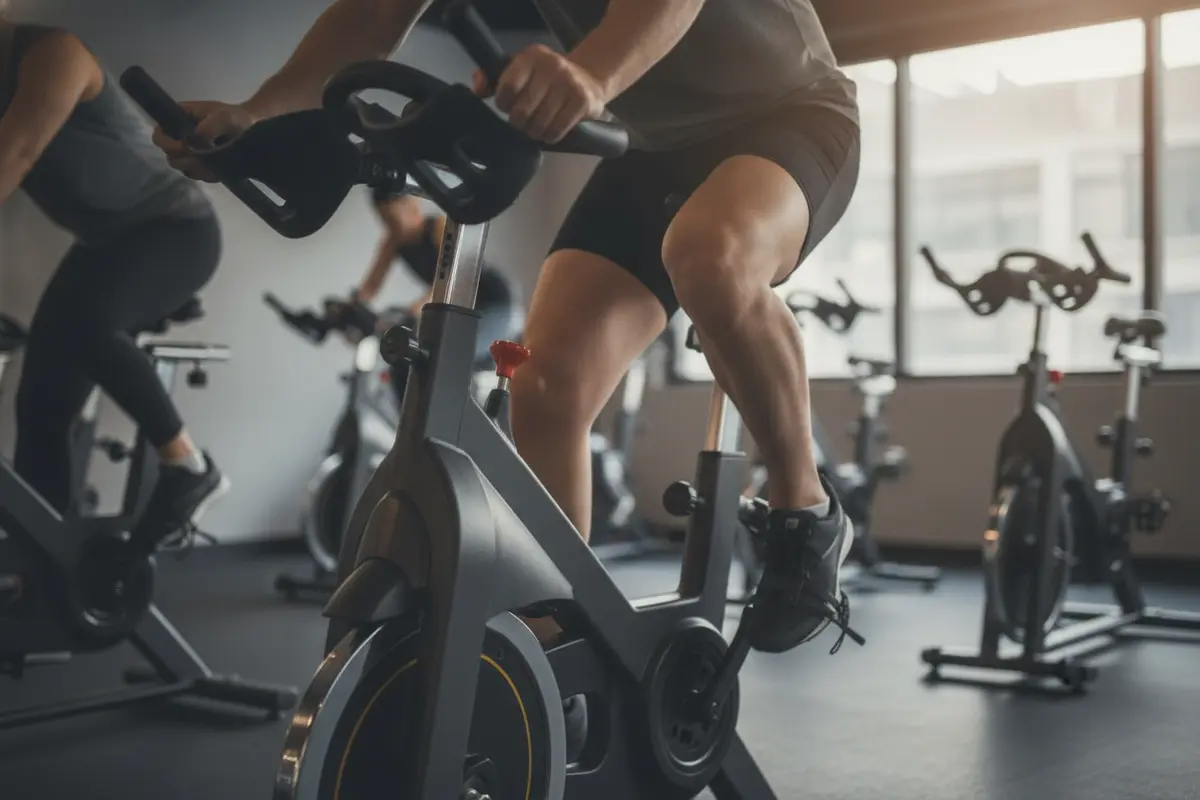
Your core muscles help keep your torso supported while your legs move. That does not mean every cycling class is a core workout in the same way as a dedicated trunk-strength session. Think of the abdominal and back muscles as stabilizers: they help you maintain a balanced position, particularly when the pace changes or you rise out of the saddle. A stable trunk can make it easier to pedal without rocking from side to side.
Your arms, shoulders, and upper back also contribute to holding a comfortable position on the handlebars, but they are not usually the main drivers of the pedal stroke. Keep your hands light rather than leaning heavily on them. If you notice your shoulders creeping toward your ears or your wrists taking your weight, ease your grip and reset your posture.
A member discussion on the Cycling UK forum describes one rider’s experience of feeling benefits around the core and lumbar area. That is an individual report, not a training or medical recommendation. Riders vary, and cycling should not be treated as a guaranteed fix for back discomfort. If you have persistent pain, talk with a qualified health professional before changing your exercise routine.
How do resistance, cadence, and position change the effort?
The same bike can feel very different from one interval to the next. Resistance is the pressure you feel as you push the pedals. Cadence is how quickly you turn them. Position describes whether you are seated or standing, along with how you hold your torso and hands. Instructors may combine these variables to create changes in effort. More resistance does not mean every muscle is isolated, and faster pedaling does not guarantee a better workout.
| Ride choice | What changes | Practical focus |
|---|---|---|
| Light resistance, comfortable cadence | The pedals turn with less pressure | Practice a smooth stroke and relaxed upper body |
| More resistance, controlled cadence | Each pedal turn asks for a firmer push | Keep the movement steady; lower the load if form breaks down |
| Faster cadence, manageable resistance | The legs complete more turns in the same time | Stay seated and controlled unless the instructor cues another position |
| Brief standing segment | Body position changes and balance demands increase | Use support lightly, keep hips controlled, and sit when needed |
These are broad training sensations, not promises about which muscle will grow or how your body will change. A group ride can include different combinations, so follow the instructor’s guidance and choose an effort you can control. If you are new, it is reasonable to keep resistance modest while learning the rhythm. You can explore how class formats differ on the Grind House class page.
What should you adjust before your first cycling class?
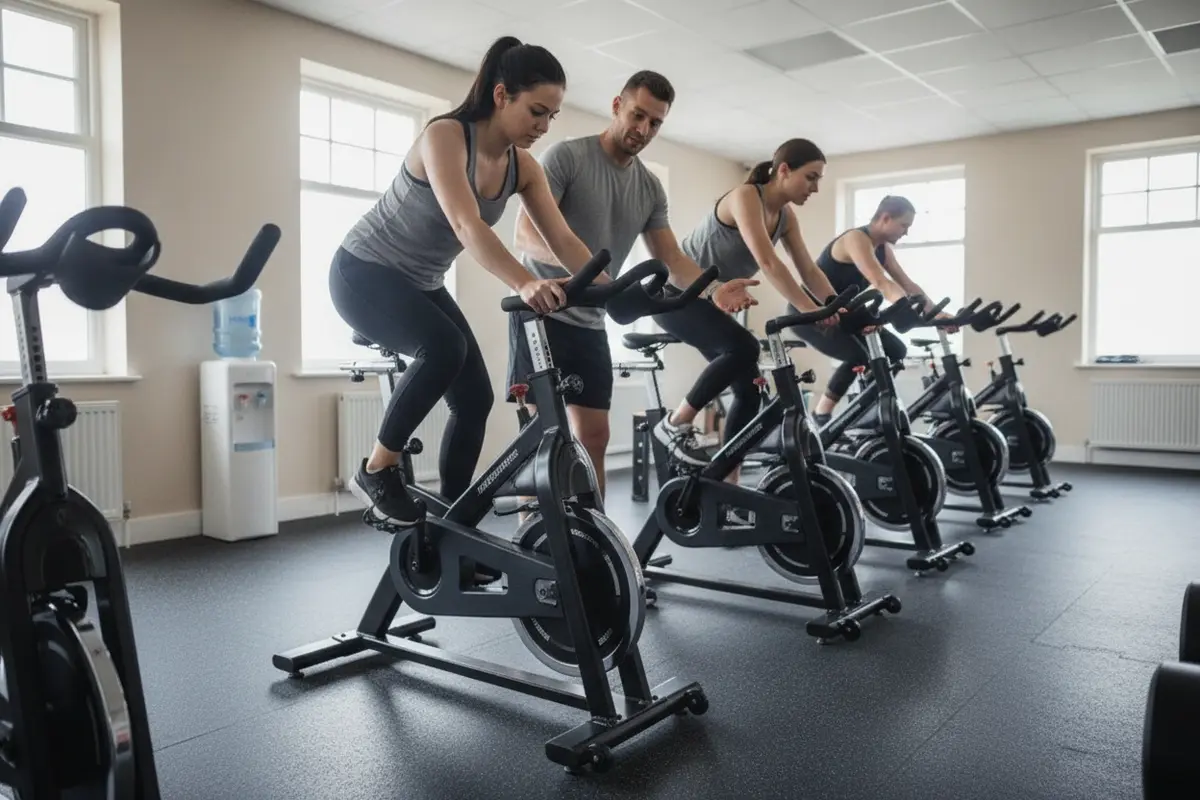
A good bike fit supports a smoother ride. Arrive with enough time to set up and ask for assistance. Bike models vary, so use the adjustment method shown in the studio rather than assuming every lever works the same way.
- Set the seat height. At the bottom of the pedal stroke, your knee should remain slightly bent rather than locked. If your hips rock to reach the pedal, the seat may be too high. If your knees feel cramped at the top, it may be too low.
- Check the seat position. Sit comfortably and place your feet on the pedals. You want to reach the handlebars without stretching or collapsing forward. Small adjustments can make a noticeable difference in comfort.
- Set the handlebars. Choose a height and reach that let you keep your shoulders relaxed. A new rider may prefer a more upright position if the bike allows it.
- Secure your feet. Use the pedal system provided and ask how to clip in or adjust straps. Your foot should feel supported, not painfully tight.
- Test the movement gently. Pedal for a short moment before class begins. If you feel pinching, wobbling, or sharp discomfort, stop and ask for help.
During class, keep a soft bend in your elbows and avoid locking your knees. Move your hips with control. A little muscle effort is expected; sharp pain, numbness, or dizziness is a signal to stop and get appropriate help. For more first-ride details, read the indoor cycling class guide and the guide to shoes for cycling class.
How can you pair cycling with strength training?
Cycling gives you repeated lower-body work and a cardiovascular challenge, while resistance exercises let you train muscles through other movement patterns. Pairing them can help create a more varied routine, but your schedule should reflect your experience, recovery, and goals. You do not need to stack hard sessions every day to make exercise worthwhile.
Think about what you want each session to do. A cycling class can be a way to practice steady movement, work through changing intervals, or add a group setting to your week. Strength training can provide a different kind of challenge, with deliberate repetitions and pauses between sets. Neither format has to replace the other. If you like both, plan for variety rather than trying to make every visit an all-out effort.
Pay attention to how you feel during and after a ride. Breathing harder during a challenging interval is different from losing control of the pedals or feeling pain in a joint. A session that leaves you unusually fatigued may be a sign to make the next workout lighter or take a rest day. Keep notes on the class format, resistance choices, and how recovered you feel. That simple record can help you spot patterns and make gradual adjustments without guessing based on one tough ride.
Muscle soreness can happen after unfamiliar exercise, but it is not a scorecard and does not prove that a workout was more effective. Begin with a pace you can sustain, and give yourself time to adapt. If you are taking multiple classes in a week, consider whether your legs feel ready before adding another demanding ride. A balanced plan can include easier movement, rest, and training for other areas of the body.
- If you are building a routine: Start with a manageable number of sessions and leave room to recover. Notice how your energy and soreness respond before adding more.
- If strength is a priority: Include movements that train the hips, legs, and upper body with controlled resistance. Consider doing strength work when you are fresh, or separate it from a demanding ride.
- If you want variety: Alternate cycling with a different class format instead of repeating the same effort every visit. Grind House lists its Manhattan group class types online.
- If you are unsure about effort: Use a scale that describes how hard a set feels, and adjust when form or breathing becomes difficult to manage. The gym class effort scale can help you think through that choice.
There is no single ideal combination for every rider. A person returning after a long break may need a different starting point from someone already training several times a week. If a health condition, injury, or ongoing pain affects your exercise choices, get individualized advice from an appropriate professional.
Choose a class and plan your visit
Frequently asked questions
Does indoor cycling work your abs?
Your trunk muscles help stabilize you as you pedal, but the amount of direct abdominal work varies with posture and class structure. Cycling does not replace focused core-strength exercises when those are part of your plan.
Will cycling make my thighs bigger?
Muscle changes depend on many factors, including training history, resistance, overall activity, food intake, and individual response. A cycling class alone cannot predict how your thighs will look or change.
Is standing on the bike necessary?
No. Many parts of a ride can be done seated, and standing is only one position an instructor may cue. If standing feels unstable or uncomfortable, remain seated and ask for an appropriate option.
Should my knees hurt during a cycling class?
Muscle effort can feel challenging, but sharp or persistent knee pain should not be ignored. Stop, check the bike setup with the instructor, and seek qualified care if discomfort continues.
How do you decide if indoor cycling fits your goals?
Indoor cycling mainly asks your lower-body muscles to work repeatedly, with your trunk helping you stay steady and your upper body supporting a comfortable riding position. Resistance, pace, and body position shape how each segment feels. If that mix sounds useful, review the available class options, ask questions before riding, and choose an effort you can control. Start with sound setup and build your routine at a pace that suits you.
Leave a Reply
You must be logged in to post a comment.