
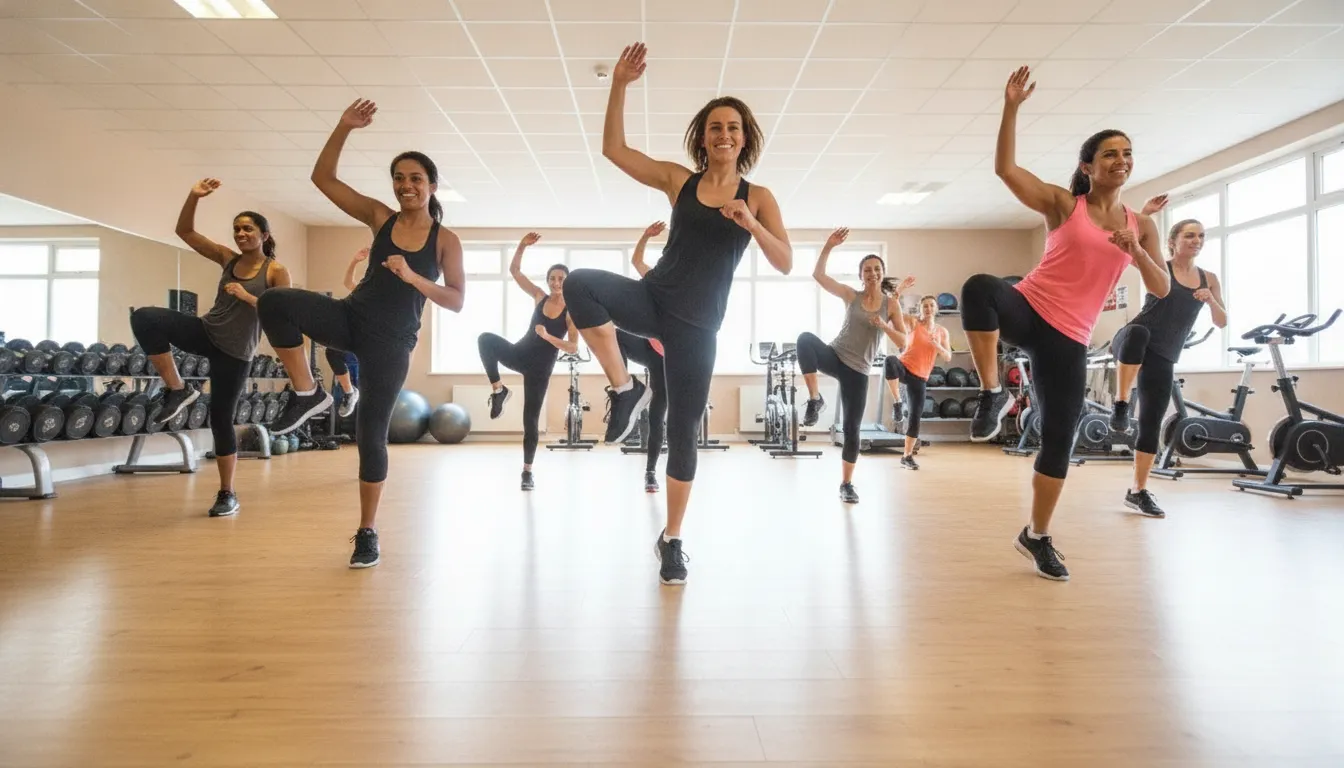
You do not need to choose between a workout that works and one you actually want to attend. Dance-based training can raise your heart rate, challenge your muscles, and make a regular gym routine feel less repetitive.
Dance fitness classes combine continuous movement, upbeat music, and easy-to-follow choreography for a full-body aerobic workout. Depending on intensity, dancing can burn roughly 300 to 600 calories per hour, while regular practice may support heart health, muscle strength, balance, coordination, mood, and stress management.
The biggest advantage is consistency. When the session feels engaging instead of like a chore, it becomes easier to keep showing up and putting in honest work. At Grind House, Cardio Dance brings that approach into a high-energy, club-inspired class that welcomes beginners and experienced movers alike. Start by looking at what the format involves, how the movements fit together, and why it can deliver more than a quick calorie burn.
Book your 3-day trial and try Cardio Dance for yourself.
What Are Dance Fitness Classes?
Dance fitness classes are choreographed aerobic workouts set to music. Instead of moving through a traditional run, bike, or machine routine, you follow a sequence of steps. Turns, pulses, and full-body movements that keep you active from start to finish. The pace raises your heart rate, while the repeated patterns challenge your coordination, balance, and muscular endurance.
The format can range from moderate movement to a genuinely vigorous workout. According to MedlinePlus, more intense forms of dance, including aerobic dancing, can provide a workout similar to jogging or swimming laps. Depending on intensity and the individual, dance-based exercise may burn roughly 300 to 600 calories per hour. That is a useful training effect, but the bigger point is that the workout involves more than calorie burn.
How the workout works
A coach leads the room through easy-to-follow choreography, usually building combinations one movement at a time. You do not need to memorize a full routine before you can participate. You can follow the instructor, modify the range or speed of each movement, and gradually make the workout harder as your confidence and fitness improve.
Because dance combines aerobic and weight-bearing movement, it can support heart health and stronger muscles while also developing balance and coordination, as NIH MedlinePlus explains. The music and group setting add energy, but they do not replace the work. You still have to move, sweat, and stay engaged.
At Grind House, Cardio Dance brings that approach into a high-energy, club-inspired class with choreography designed for all skill levels. Prior dance experience is not required. If you want to see the current class options and schedule, browse the Grind House classes and choose a session that fits your week.
How Many Calories Do Dance Fitness Classes Burn?
Most dance fitness classes burn roughly 300 to 600 calories per hour, depending on the pace, choreography, class format, and how consistently you keep moving. A lower-impact session may land toward the bottom of that range, while a demanding aerobic or salsa-based class can reach about 500 calories per hour. The National Library of Medicine’s MedlinePlus guidance compares more intense dance with jogging or swimming laps.
That range is useful, but it is not a promise printed on the door. Your body size, fitness level, movement efficiency, breaks, and effort all affect the final number. A wearable can provide a rough estimate, but the better measure is whether the class challenges your breathing, keeps you engaged, and fits a routine you can repeat.
How dance compares with traditional cardio
Dance is not automatically easier than a treadmill. When the class includes continuous footwork, directional changes, squats, and faster combinations, it can create a serious aerobic demand while also asking your legs and core to stabilize. Research indexed in PubMed found that formats including Step aerobics and other high-intensity group exercise were as effective as jogging at roughly 8 kilometers per hour for weight management and maintenance.
The practical difference is how the work feels. A treadmill gives you a predictable pace and a straightforward way to track time and distance. Dance gives you changing movement patterns, music, and a group environment. Both can support cardiovascular training. The stronger choice is the one you will perform with enough effort and return to consistently.
| Factor. | Dance fitness classes. | Treadmill cardio. |
|---|---|---|
| Calories per hour. | Roughly 300 to 600 depending on intensity. | Varies by speed and incline. |
| Skill required. | None, easy-to-follow choreography. | Basic machine operation. |
| Engagement. | Music and group energy keep you moving. | Can feel repetitive alone. |
| Movement variety. | Steps, turns, and full-body patterns. | Linear walking or running. |
If you prefer a more structured high-intensity format, compare HIIT or dance fitness classes based on the kind of training you will actually enjoy doing. At Grind House, Cardio Dance keeps the work direct: follow the choreography, keep moving, and earn the sweat. No dance background is required, and the goal is not to perform. It is to get a challenging workout that you can keep showing up for.
Beyond the Burn: The Mood and Mental Health Benefits
The obvious payoff is a sweaty shirt and a higher heart rate. The less obvious payoff is how you feel when the class is over. Dance combines aerobic movement, music, and other people in the room, which can make a demanding workout feel more energizing than draining.
Regular physical activity is linked with improved mood and reduced stress. Dance also adds a mental challenge: you are listening for the beat, remembering combinations, changing direction, and coordinating your whole body. That combination gives your brain something useful to focus on instead of letting the same workday thoughts run on repeat. The National Library of Medicine notes that dancing can support improved mood, reduced stress, improved memory, and a lower risk of dementia. Those are meaningful benefits, but they are not a promise that one class fixes your mental health or prevents cognitive decline. Consistent movement is the point.
There is also a practical benefit to choosing a workout you actually want to attend. Research and public health guidance often make exercise sound like a discipline test. In a dance class, the music, group energy, and changing choreography give you reasons to stay engaged. As MedlinePlus puts it, because dancing is so much fun, you may forget you are exercising. That is not an excuse to coast. It is a reason the work can become easier to repeat.
Consistency matters more than chasing one heroic session. Showing up week after week gives you more chances to build cardiovascular fitness, practice coordination, and use movement as a reliable pressure release. A class can be hard without feeling miserable, and it can be social without turning into a performance for anyone else. That is the sweet spot: honest effort, a better mood, and a workout habit with some staying power.
Plan the other half of the equation, too. Hydration, sleep, and recovery after dance fitness classes help you come back ready to work instead of treating every session like a test of survival.
What Does a Cardio Dance Class at Grind House Look Like?
Cardio Dance at Grind House is built around movement, music, and steady effort. The class has a high-energy, club-inspired feel, but the choreography stays easy to follow. You do not need a dance background, perfect rhythm, or years of studio experience to take part. You learn the combinations as you go, keep moving, and work at an intensity that makes sense for your current fitness level.
Expect a full-body cardio session rather than a performance audition. The instructor guides the room through repeatable steps and combinations, giving you enough structure to stay engaged without turning the class into a technical dance lesson. Your heart rate comes up, you sweat, and the repeated movement challenges your coordination and endurance. The format also gives you room to make the movements smaller while learning, then add more speed and energy as the patterns become familiar.
High energy without the pressure to perform
The point is not to look like a professional dancer. It is to put in honest hard work and enjoy the process. Some people will pick up the choreography quickly. Others will take a few rounds to find the rhythm. Both approaches belong in the room. Consistent participation matters more than getting every step right on the first try. And the enjoyable nature of dance can make it easier to keep showing up over time.
Cardio Dance is one of the classes included with Grind House’s unlimited membership, so it can be part of a broader training routine rather than a one-off event. You can use it to add variety between strength sessions, or pair it with other conditioning work when you want a different kind of challenge. If you are comparing options, see the beginner-friendly dance fitness classes guide for more ways to build a sustainable starting routine.
Two NYC locations, one straightforward workout
You can take Cardio Dance at the Williamsburg location, 203 Berry St, Brooklyn, NY 11249, or at the Flatiron/Chelsea location, 47 W 17th St, New York, NY 10011. Check the current schedule on the Grind House classes page before you visit. Whichever location you choose, bring comfortable workout clothes, water, and a willingness to work. No prior dance experience is required, and there is no need to wait until you feel perfectly ready.
How to Get Started With Dance Fitness
You do not need a dance background to begin. The goal of your first class is not to look polished or memorize every combination. Show up, watch the instructor, follow the moves you can follow, and keep moving at an effort that feels challenging but manageable. The choreography is there to give your workout structure, not to test whether you belong in the room.
Start with a low-pressure first class
Choose a Cardio Dance class that fits your schedule and arrive a few minutes early. Wear clothes you can move and sweat in, bring water, and let the instructor know you are new. During the class, stay near a spot where you can see the demonstrations clearly. If a step feels unfamiliar, simplify it, march in place, or take a brief pause. You will still get useful work in without turning the first session into a performance.
Set realistic expectations for the first session
You may leave feeling energized, or you may notice that your legs and core worked harder than expected. Both are normal. Cardio Dance is designed to raise your heart rate through high-energy, easy-to-follow movement, but intensity depends on your pace, the class, and your current fitness. Focus on learning the flow and finishing safely. Familiarity usually improves quickly once your body recognizes the patterns.
Use the 3-day trial to build a routine
One class can be fun. A few sessions help you decide whether the format fits your life. Grind House offers a 3-day trial, giving you a practical way to try Cardio Dance and experience the gym before committing. Because dancing is enjoyable, consistency can feel more natural than forcing yourself through a form of cardio you already dread. Schedule your next visit before the trial ends, then aim for a repeatable weekly rhythm rather than an unrealistic daily streak.
Recover so you can come back ready
Drink water, eat a normal meal with protein and carbohydrates, and give yourself time to cool down after class. Light walking or mobility work can help you transition out of the session. If you are especially sore, choose an easier workout or a rest day instead of trying to prove something. Use this recovery guide after dance fitness classes for practical rest-day ideas. Progress comes from returning consistently, not from making one class unnecessarily brutal.
Get started with the 3-day trial today.
Frequently Asked Questions
What are the benefits of dance fitness classes?
They combine aerobic and weight-bearing movement to support heart health, muscle strength, balance, and coordination. The music and group setting can also make exercise more enjoyable, which helps you stay consistent. Dance may improve mood and reduce stress as well. MedlinePlus outlines these physical and mental health benefits.
How many calories do you burn in a dance fitness class?
Calorie burn depends on your body, effort, class format, and duration. A general range is about 300 to 600 calories per hour, with more vigorous aerobic or salsa-style dancing reaching up to roughly 500 calories per hour. Treat those numbers as estimates, not a promise. MedlinePlus provides the activity guidance.
Are dance fitness classes good for weight loss?
They can support weight loss by helping you expend energy and build a repeatable exercise habit, but results also depend on nutrition, recovery, and overall activity. The best class is one you can attend consistently. Research has found some aerobic class formats comparable to jogging for weight management, when performed at an appropriate intensity. See the published comparison of aerobic formats and jogging.
Do I need dance experience for dance fitness classes?
No. You do not need formal dance training to get started. Beginner-friendly classes use easy-to-follow choreography, and the goal is to keep moving, raise your heart rate, and improve with practice. Start at your own pace, follow the instructor, and do not worry about getting every step perfect on the first visit.
What should I wear to a dance fitness class?
Wear comfortable, breathable workout clothes that let your hips, legs, and shoulders move freely. Choose supportive athletic shoes with enough grip for lateral movement, but avoid footwear that feels stiff or unstable. Bring water, and dress for the fact that you will warm up quickly once the class gets moving.
Ready to Try Cardio Dance?
If you want a workout that keeps you moving, learning, and engaged, Cardio Dance is a straightforward way to add more energy to your routine. No dance background is required, and you can start at the Grind House location that works best for you in Williamsburg or Flatiron. Get started with the 3-day trial and try a class for yourself.
Leave a Reply
You must be logged in to post a comment.