
Learning how to wrap hands for boxing makes it easier to arrive prepared and focus on the session. A hand wrap adds a layer between your hand and glove, but it only works as intended when it sits smoothly and comfortably. The exact pattern can vary by wrap design and instructor, so treat this as a practical starting point, then ask a coach to check your first attempt.
Trial eligibility is limited to residents of New York, New Jersey, and Connecticut. If you are new to boxing, bring your wraps and arrive early enough to ask for a quick fit check before class begins.
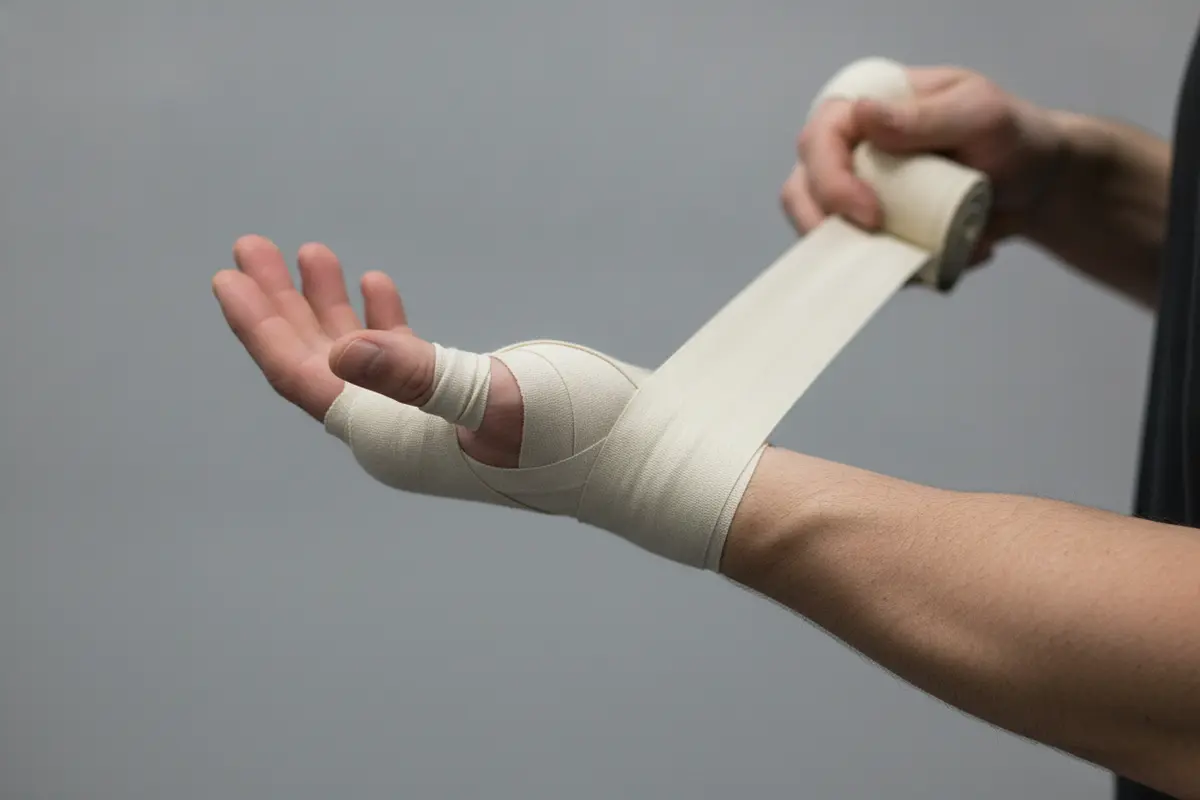
What do hand wraps do in a boxing class?
A wrap holds the hand and wrist together beneath a boxing glove. It can help limit rubbing and keep the glove’s interior from sitting directly against your skin. It does not make a glove fit correctly, replace coaching, or make an uncomfortable hand feel safe to train on. Your wrap should feel secure without pinching, cutting off circulation, or restricting normal finger movement.
Boxing wraps come in different lengths, materials, and fastening designs. A traditional long fabric wrap gives you control over how much material goes around the wrist, knuckles, and fingers. A quick wrap or inner glove is simpler to put on, but its fit depends on the shape and size of your hand and glove. Check the product instructions, and ask the instructor which type is suitable for the class.
Do not assume every session uses the same equipment or wrapping method. Check the class details on the group fitness classes page and, if anything is unclear, contact the gym before you arrive. For a broader look at the boxing format, see the guide to boxing training for cardio.
What should you prepare before wrapping your hands?
Start with clean, dry hands and a wrap that is fully untangled. Lay it out so you can find the thumb loop and fastener. If the wrap is damp, badly stretched, frayed, or has a fastening that will not stay closed, choose another one. Damaged fabric can bunch up or loosen as you move.
- Check that the wrap length works for your hand and the amount of support you prefer.
- Find the thumb loop and identify which side of the fabric should face your skin, if the instructions specify one.
- Keep your fingers relaxed and slightly apart while wrapping. A tight fist can make it harder to judge the final fit.
- Have your boxing gloves nearby so you can test whether the wrapped hand fits without forcing it inside.
- Ask a coach to demonstrate if you are unsure about the class’s preferred wrap style.
If you are choosing between wrap types, use the comparison below as a starting point, not as a substitute for the manufacturer’s instructions or a coach’s advice.
| Option | What it is like | What to check |
|---|---|---|
| Traditional fabric wrap | You guide the fabric around the wrist, hand, and knuckles, adjusting the pattern as you go. | It lies flat, stays fastened, and does not restrict finger movement. |
| Quick wrap or inner glove | A pre-shaped sleeve or padded layer that is usually quicker to put on. | The size fits your hand and glove, with no seams or pads pressing uncomfortably. |
| No wrap available | You do not have a layer to wear under your boxing glove. | Ask the instructor what is appropriate for that session rather than assuming gloves alone are suitable. |
How do you wrap your hands for boxing step by step?
Wraps differ, so follow the instructions that came with yours whenever they conflict with a general pattern. The steps below describe one common approach for a traditional wrap. Keep the fabric flat throughout. If it twists, forms a hard ridge, or pulls sharply across a joint, unwind that section and redo it.
- Place the loop over your thumb. Keep the fabric lying across the back of your hand and the loose end directed toward your wrist. The loop is an anchor, not a tight band. It should not pull your thumb sideways.
- Secure the wrist. Pass the wrap around the wrist several times, covering the area just above the hand. Keep each pass smooth and overlapping. The wrist should feel supported, not squeezed.
- Cover the knuckles. Bring the wrap across the back of the hand and over the knuckle area, then return around the wrist. Repeat as the wrap length allows. Spread the fabric across the knuckles instead of stacking a thick lump in one spot.
- Support the fingers if the pattern calls for it. Guide the fabric from the wrist across the back of the hand and between two fingers, then return toward the wrist. Repeat between the remaining fingers as appropriate for the wrap’s length and design. Keep the webbing between fingers comfortable, with no sharp pull.
- Secure the thumb and hand. Follow your wrap’s instructions to route fabric around the thumb and back toward the wrist. Avoid winding tightly around the thumb joint. Smooth loose folds as you go.
- Finish at the wrist. Use the remaining fabric to reinforce the wrist, then close the hook-and-loop fastener. Place the fastener where it does not dig into the other hand or glove.
There is no need to pull the wrap as hard as possible. Tension should be even: secure enough that the wrap does not slide, loose enough to preserve comfortable movement. The pattern should keep fabric out of the palm’s main crease and away from bulky folds that could rub.
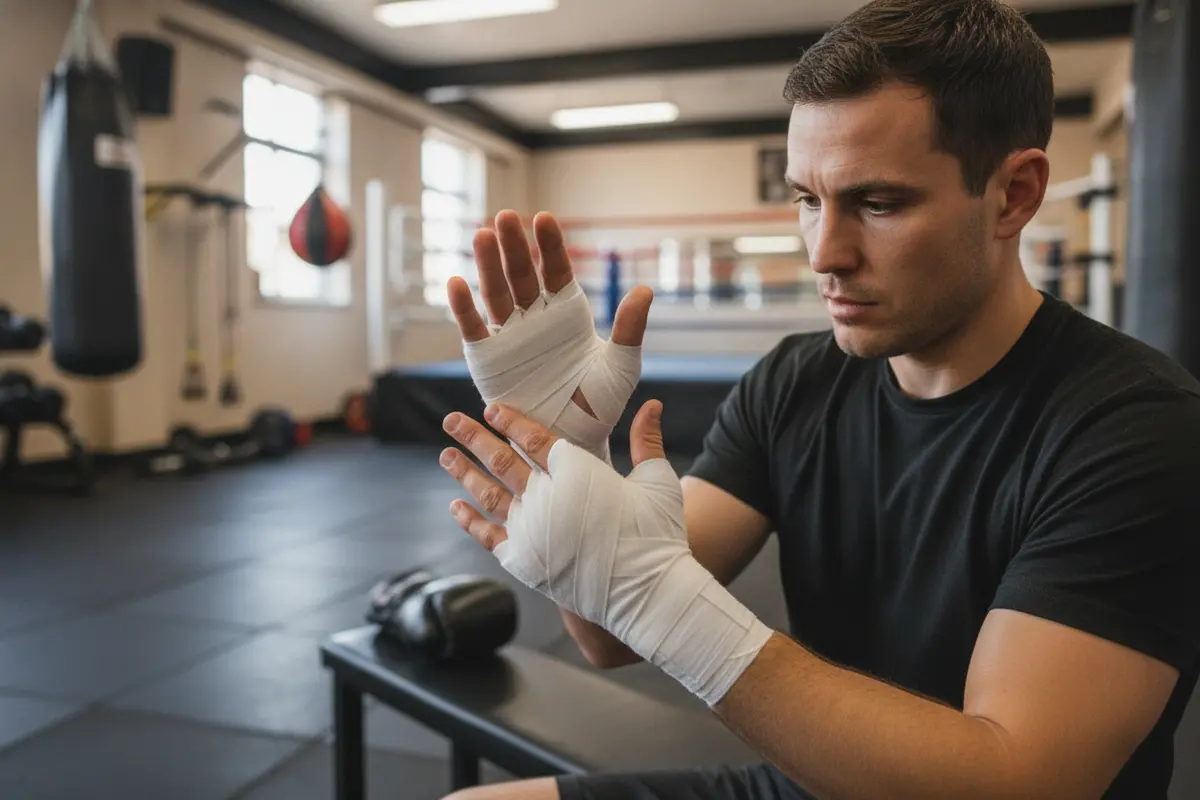
How can you tell if the wrap fits correctly?
Before putting on a glove, open and close your hand several times. Your fingers should move normally, and you should not feel tingling, numbness, sharp pressure, or a pulsing squeeze. Check that the wrap is smooth, the fastener is closed, and no section is slipping. Put on the glove carefully. It should fit over the wrap without forcing your hand into it or creating a painful pressure point.
Take the glove off and adjust the wrap if the fit changes when you make a fist or move your wrist. A wrap that feels fine with an open hand can become too tight when your fingers curl. If discomfort remains, remove it and start again, or ask the instructor to inspect the fit. Stop and tell the coach if your hand hurts during class; do not try to train through pain or numbness.
For competition, rules and equipment standards may differ from a fitness class. Check current event requirements with the relevant organizer. USA Boxing’s official site is a starting point for information about the sport’s organized boxing context; it is not a substitute for event-specific instructions.
What mistakes can make hand wraps uncomfortable?
- Pulling too tightly: Tightness does not equal better support. Rewrap if your fingers tingle, feel cold, or cannot move comfortably.
- Leaving wrinkles or twists: Raised fabric can rub or press under the glove. Flatten each pass before continuing.
- Building a thick ridge on one knuckle: Spread material evenly rather than piling several edges in the same place.
- Wrapping with a clenched fist: This can make the finished wrap feel restrictive when you relax your hand. Keep your hand open and relaxed during most of the process.
- Ignoring the thumb loop: If the loop pulls the thumb awkwardly, pause and check that the wrap is oriented correctly.
- Using a loose or damaged wrap: A wrap that slips or will not fasten securely needs to be replaced or adjusted before training.
- Forcing on a glove that is too tight: The wrap and glove need to work together. Do not treat a painful fit as something to endure.
Hand wraps are personal gear, so wash them according to their care label and let them dry fully before storing them. Keep the fastener closed during washing if the instructions recommend it. A clean, dry wrap is easier to handle and less likely to smell or feel unpleasant in your bag.
What should a beginner ask before boxing class?
Get the practical details before class rather than guessing at the door. Ask whether traditional wraps or quick wraps are preferred, whether you should bring your own gloves, and how early to arrive for equipment help. Do not assume that a class provides wraps, gloves, or a particular size; confirm what is available for that session.
At Grind House, boxing is one format among several offered in Manhattan. Review the current class types and ask a staff member if you need help identifying a boxing session. You can also check the gym’s frequently asked questions or instructor information before choosing a class. Specific equipment and coaching details can depend on the session, so verify rather than relying on assumptions.
Give yourself enough time to get situated, put on wraps and gloves, and ask for a demonstration. If you are new to group boxing, it can help to tell the instructor before class begins. They can clarify the format and where to stand. For practical etiquette and arrival pointers, read boxing class etiquette for first-timers. Keep your wraps and gloves in your bag after class, and check them before your next visit.
How should you choose a wrap for your training?
Pick a wrap you can apply consistently and comfortably. Consider how much time you have before class, whether the wrap’s length is manageable, how secure its fastener feels, and whether it fits inside your glove. A traditional wrap lets you control where material sits, but takes practice. A pre-shaped option can reduce steps, but the size and shape may not suit every hand or glove.
Try the wrap at home before your first session. Practice taking it off and putting it on without rushing. If you are shopping for one, compare the care instructions and sizing information rather than relying only on appearance. You do not need to master a complicated pattern before attending. A clear, even fit and a coach’s check are more useful than speed.
Keep your personal comfort in the decision. Hands differ, and one pattern may feel different from another. If a wrap consistently presses on a joint, bunches in the palm, or makes the glove uncomfortable, try a different fit or ask an instructor for help. The right choice is the one that stays secure and lets you move normally during the session.
How can you troubleshoot a wrap before class starts?
Set aside a few minutes for a simple check rather than waiting until the class is underway. Stand with your hand relaxed, inspect each side of the wrap, and move through the motions you expect to use: open your hand, make a light fist, and bend your wrist gently. The fabric should stay in place without forming a new ridge. Then put on your glove and check the fit again. If the wrap shifts, bunches, or creates pressure, take the glove off and fix the cause before you start.
- If the fingers feel squeezed, loosen the passes around the hand and check whether you pulled the fabric too hard between the fingers.
- If the wrist feels unsupported, review the pattern and use the remaining fabric around the wrist as directed. Do not compensate by tightening every section.
- If the knuckles feel bulky, spread the wrap flatter and reposition overlapping edges so they do not stack in one spot.
- If the fastener lands awkwardly, adjust the final pass so it closes securely without rubbing the other hand or pressing against the glove.
- If you cannot resolve the fit, remove the wrap and ask an instructor to help. It is better to take another minute than to train with a setup that feels wrong.
Each hand may need a slightly different adjustment. Do not assume that matching the number of passes on both sides will produce an identical feel. Use the same general method, then check each hand independently for comfort and movement. If you have an existing hand or wrist concern, ask an appropriate health professional whether training is suitable for you, and tell your instructor what modifications you may need.
What is a simple pre-class hand-wrap routine?
Build a repeatable sequence so you are not rushing through the details. First, check the condition of both wraps and lay them out. Next, wrap one hand slowly, testing the fit before putting on its glove. Repeat on the other hand, making any small adjustment that feels necessary. Finally, make sure each fastening is secure, each glove fits comfortably, and you can move your fingers and wrists normally.
Keep the routine practical. You do not need to copy a competition setup for a fitness class, and you should not guess at specialized requirements. If the instructor demonstrates a preferred pattern, watch the route of the fabric and ask questions about any step that feels unclear. Practice that method outside class, then check whether it still feels right with your own gloves. This turns a fussy first attempt into a familiar part of getting ready.
Frequently asked questions
Should I wrap my hands before putting on boxing gloves?
For a boxing session, ask the instructor what hand protection is expected. If you use a traditional wrap, put it on before the glove and check that the glove fits comfortably over it. Do not assume every class has identical equipment requirements.
How tight should boxing hand wraps feel?
They should feel secure and even, not restrictive. You should be able to move your fingers normally without numbness, tingling, sharp pressure, or pain. If you notice those sensations, remove the wrap and adjust it before training.
Can I use quick wraps instead of traditional wraps?
Possibly, but check the product directions and ask the instructor whether that type is appropriate for the class. Confirm that the quick wrap fits your hand and sits comfortably inside your glove.
How do I know when to replace my wraps?
Replace a wrap when the fabric is frayed, stretched out, difficult to fasten, or unable to stay in place. Follow its care label, let it dry fully, and inspect it before each session.
Take a few minutes to practice the wrap at home, then ask a coach to check your first in-class fit. A smooth, comfortable setup gives you one less thing to figure out when training starts.
Leave a Reply
You must be logged in to post a comment.