
Boxing Fitness Classes: Train With Purpose
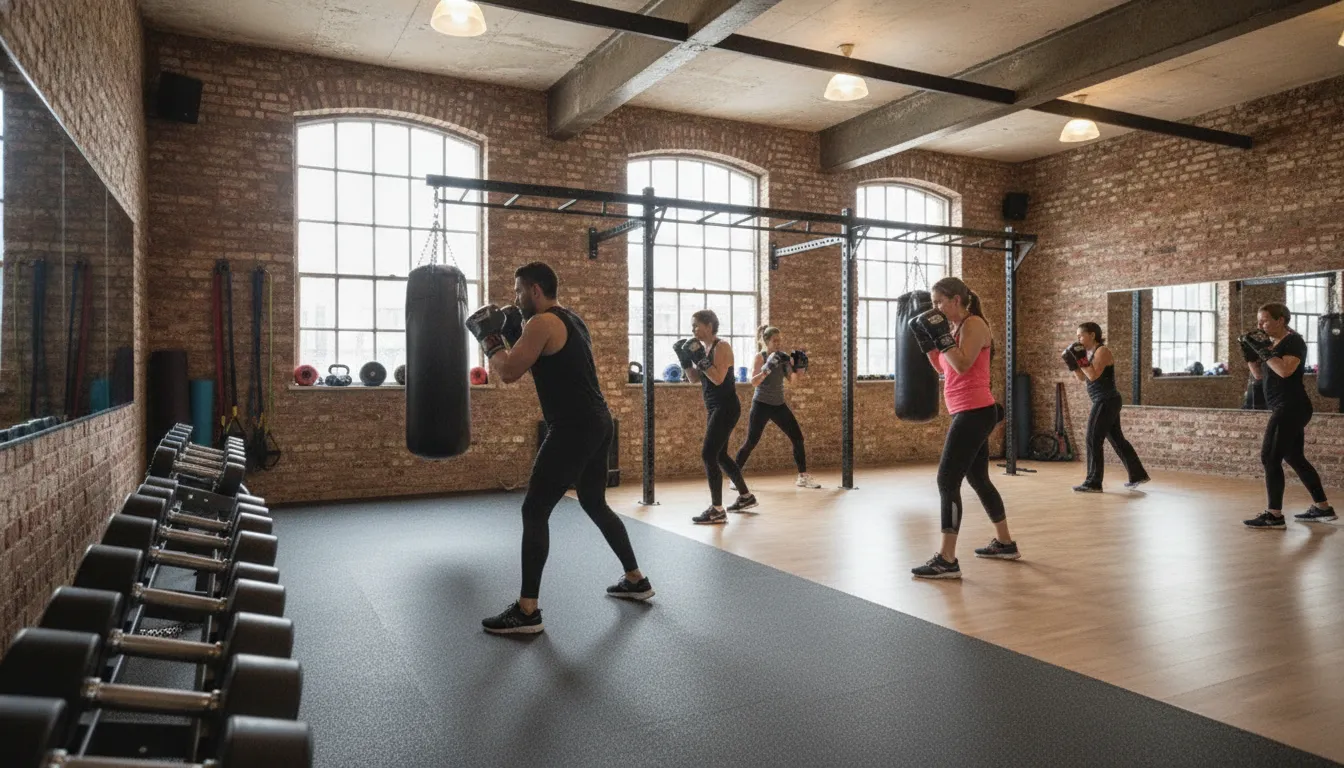
Boxing fitness classes give you a clear job on the gym floor: learn useful movement, work through focused rounds, and build conditioning without needing to compete or spar. At Grind House, boxing combines drills and boxing movements with speed, power, and total-body work.
See how to start training at Grind House.
This guide covers the ongoing class experience rather than repeating a first-session walkthrough. If you are comparing formats in New York, the key questions are simple: what do you practice? How hard is the work, what do you bring, and how can the coach adjust the session to your level?
What Are Boxing Fitness Classes?
Boxing fitness classes use boxing stance, footwork, punches, combinations, and conditioning drills to create a full-body workout. They are fitness sessions, not a promise of competitive boxing or contact sparring.
The distinction matters. Fitness boxing can use shadowboxing, coached combinations, and bag work while keeping exercise and skill development at the center. Harvard Health describes the format as a way to adapt boxing movements for exercise without making sparring the focus. Read Harvard Health’s overview of fitness boxing.
At Grind House, the boxing class is described as a total-body strengthening and conditioning experience. Sessions alternate speed and power exercises, challenging the heart, lungs, shoulders, and legs.
How Do Boxing Fitness Classes Build a Workout?
A boxing fitness class usually moves from preparation and technique into coached rounds, then finishes with conditioning and recovery. The exact drills and pace can change, but the class stays organized around quality movement and controlled effort.
Preparation sets the standard
The opening block prepares your body for repeated movement. Expect some combination of mobility, light boxing motions, footwork, and a review of the day’s focus. This is also when you can ask for a clarification or tell the coach about an adjustment you need.
Technique gives the rounds a purpose
Once the class is moving, coaching can cover stance, guard position, straight punches, hooks, defensive movement, or combinations. The point is not to memorize a complicated sequence for its own sake. Each cue helps you stay balanced, transfer force, and return to a position where you can move again.
Rounds connect skill and conditioning
Rounds ask you to apply the movement while managing fatigue. Grind House describes boxing sessions as alternating speed and power exercises. One block may ask for quicker combinations, while another emphasizes stronger controlled efforts. Rest gives you a chance to reset your breathing and sharpen the next round.
Which Boxing Skills Do You Practice Over Time?
Progress in boxing fitness comes from repeating fundamentals until they feel more controlled, then applying them to more demanding combinations and rounds.
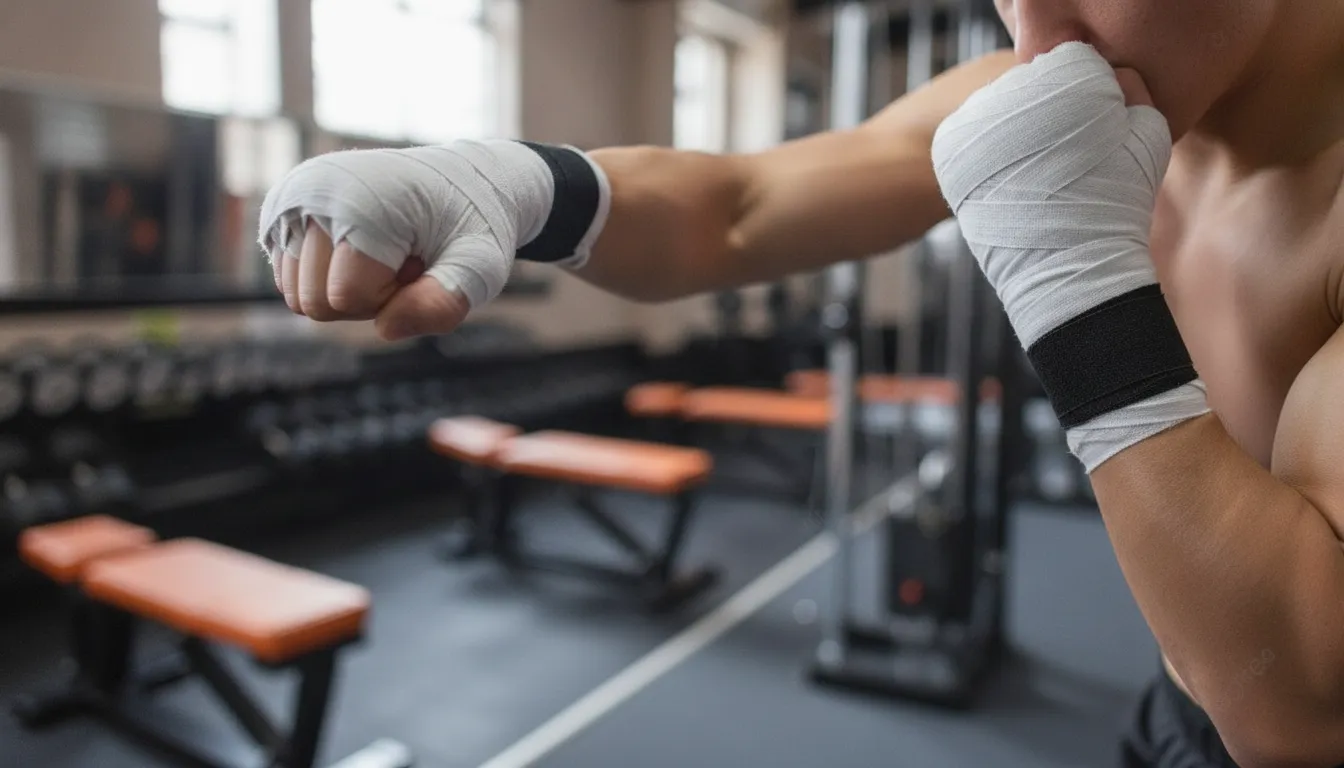
Early work may focus on a stable stance, a consistent guard, straight punches, hooks, and basic footwork. With practice, you can connect those pieces. A combination becomes more than a list of punches because you learn when to move, where to place your weight, and how to recover your position.
This is where ongoing classes differ from a one-time novelty workout. The coach can give specific feedback, and you can compare your movement and effort with your own previous sessions. The goal is not to look like a professional fighter. It is to perform the fundamentals with more awareness while building the capacity to repeat quality work.
How Can Boxing Conditioning Scale to Different Levels?
Boxing conditioning can scale through pace, power, range of motion, footwork, recovery, and the complexity of a combination. Beginners can prioritize control, while experienced members can increase the challenge when their form stays sound.
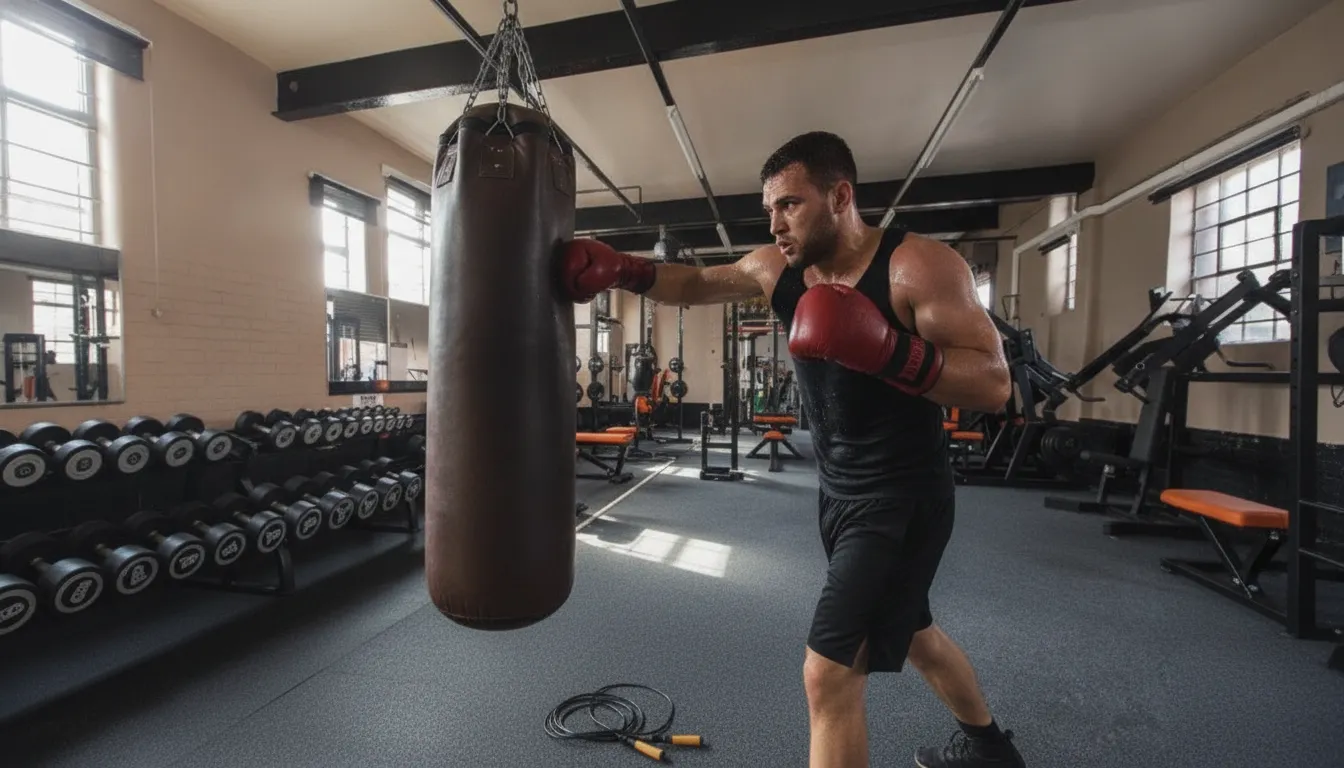
High intensity does not mean every person should work at the same speed. A coach may adjust the demand by changing how quickly you move, how much power you use, how far you travel, or how long you recover. If your stance breaks down, reducing the pace is productive. It lets you keep practicing the movement instead of turning fatigue into sloppy repetitions.
What Equipment Do You Need for Boxing Fitness Classes?
For Grind House boxing classes, members must bring their own hand wraps and gloves. Wear comfortable training clothes and bring water so you can focus on the session rather than avoidable distractions.
Wraps help create a secure layer under the gloves, while gloves provide the equipment needed for bag or pad work when those drills are part of the class. If you are unsure which size or style to bring, ask the gym before attending. Do not assume that boxing equipment is supplied unless the current class information says so.
| Class element | What it trains | How to approach it |
|---|---|---|
| Stance and footwork | Balance and coordination | Keep the movement controlled before adding speed. |
| Punch combinations | Technique and timing | Listen for the cue and return to your guard. |
| Speed rounds | Rhythm and conditioning | Move quickly without losing your position. |
| Power rounds | Force and full-body effort | Use controlled power and protect your form. |
What Makes the Ongoing Class Experience Different?
The value of ongoing boxing fitness classes is the combination of repetition, feedback, and community. Each session gives you another chance to make a basic movement cleaner while working toward stronger conditioning.
Grind House is built around authentic community culture and real training rather than a staged fitness experience. People can share a demanding room while focusing on their own progress.
Use a simple progression across several sessions:
- Learn the stance, guard, and movement pattern.
- Repeat the pattern until you can perform it without rushing.
- Add combinations while keeping your feet and breathing organized.
- Increase speed or power only when your form remains controlled.
- Track consistency and ask the coach what to practice next.
This approach keeps the focus on skill and sustainable effort. You do not need to chase the hardest variation in the room. You need a class structure that lets you show up, learn, work, and come back ready to train again.
Are Boxing Fitness Classes a Good Choice for Beginners?
Yes, beginners can start boxing fitness classes when they choose a coached, non-contact format and scale the effort to their current ability. You do not need to arrive with boxing experience, but you should be ready to listen, practice, and ask questions.
The first goal is not to finish every round at maximum intensity. Learn the stance. Keep your hands where the coach asks. Move with balance. Then build the pace as the pattern becomes familiar.
If you want details about what happens during a first visit, use Grind House’s introductory boxing class guide. That page owns the first-session walkthrough. This article stays focused on the broader class format, ongoing coaching, and conditioning decisions.
Grind House also offers personal training information for people who want more individualized instruction. Use the option that fits your goal, schedule, and preferred level of coaching.
How Should New York Members Choose a Boxing Class?
Choose a class by matching the format, schedule, location, and coaching support to your actual routine. A class you can attend consistently is more useful than one that looks ideal but never fits your week.
Start with the Grind House class information and confirm the current schedule before you go. Think about whether you want a technique-led workout, a higher-conditioning challenge, or a class that complements other training. Grind House offers multiple formats, so boxing can be part of a broader routine rather than your only option.
Contact Grind House with questions about boxing classes and scheduling.
Frequently Asked Questions
What is included in a typical boxing fitness class?
A typical class may include a warm-up, stance and footwork, boxing technique, coached combinations, rounds, conditioning, and recovery. The exact sequence can vary by session. Grind House describes its boxing format as alternating speed and power exercises for total-body strengthening and conditioning.
Do I need experience to join boxing fitness classes?
No. Beginners can start with a coached, non-contact fitness format. Focus on balance, clear technique, and a manageable pace before adding speed or power. Tell the coach that you are new so you can receive useful cues and modifications.
What gear do I need for boxing fitness classes?
Grind House members must bring their own hand wraps and boxing gloves. Comfortable training clothes and water are sensible additions. Confirm any current equipment instructions with the gym before attending.
How do boxing fitness classes differ from competitive boxing?
Boxing fitness classes use boxing movements to train conditioning and coordination. They may include shadowboxing or bag work, but they are not the same as a competitive boxing program and do not require contact sparring. Ask the coach about the specific class format.