
A sauna after workout sessions can feel like a natural way to wind down, but heat is an added stressor, not a required recovery step. The useful question is whether a sauna fits how you feel, the workout you just finished, and the rest of your day. Here is a practical way to decide, without treating heat as a shortcut or a guarantee of recovery.

What does a sauna add after a workout?
Exercise already raises body temperature and puts demand on the heart and circulation. A sauna adds heat while your body is still settling after that effort. Some people enjoy the quiet transition and the feeling of warmth. Others feel light-headed, overly hot, or simply more drained. Your response matters more than a fixed rule about what every workout should include.
It also helps to separate a pleasant ritual from a proven recovery outcome. Researchers have studied sauna use after exercise, including infrared sauna exposure and strength training, but the findings do not establish one best routine for every person, workout, or type of sauna. A 2022 study examined post-exercise infrared sauna use and neuromuscular performance and muscle soreness; a separate study examined far-infrared sauna bathing after strength exercise. These are useful areas of research, not a promise that sauna use will prevent soreness or speed recovery for you. (post-exercise infrared sauna research; far-infrared sauna and strength recovery study.)
A sauna is not a substitute for the basics: ending the session at an appropriate effort, cooling down, drinking according to your needs, eating enough across the day, and getting sleep. If you want more context on balancing hard sessions with lighter days, see this guide to active recovery workouts.
Should you cool down before using a sauna?
Usually, make the transition gradual. Do not step straight from a demanding interval or lifting set into intense heat while you are still breathing hard or feel unsteady. First stop exercising, walk or move gently if that feels comfortable, and let your breathing and sense of heat settle. Then check in with yourself before deciding whether to use a sauna.
There is no single waiting period that suits every person or session. A hard class in a warm room, a long run, and a moderate strength workout leave different starting points. Use how you feel, the facility’s instructions, and any advice from your clinician rather than racing a clock. If you remain flushed, nauseated, weak, unusually thirsty, or dizzy, skip the sauna and continue cooling down. Do not use heat to push through symptoms.
- Finish the workout. Stop the exercise and move to a cooler, comfortable area.
- Let your body settle. Breathe normally, cool down at an easy pace, and notice whether you feel steady.
- Rehydrate as appropriate. Drink to thirst and follow any medical fluid guidance you have. Avoid forcing a large amount at once.
- Make a fresh decision. If you feel well and the sauna is available for your use, follow its posted rules and start conservatively.
This sequence is a decision aid, not a prescription. If you have been advised to limit heat or fluid changes, your clinician’s guidance takes priority.
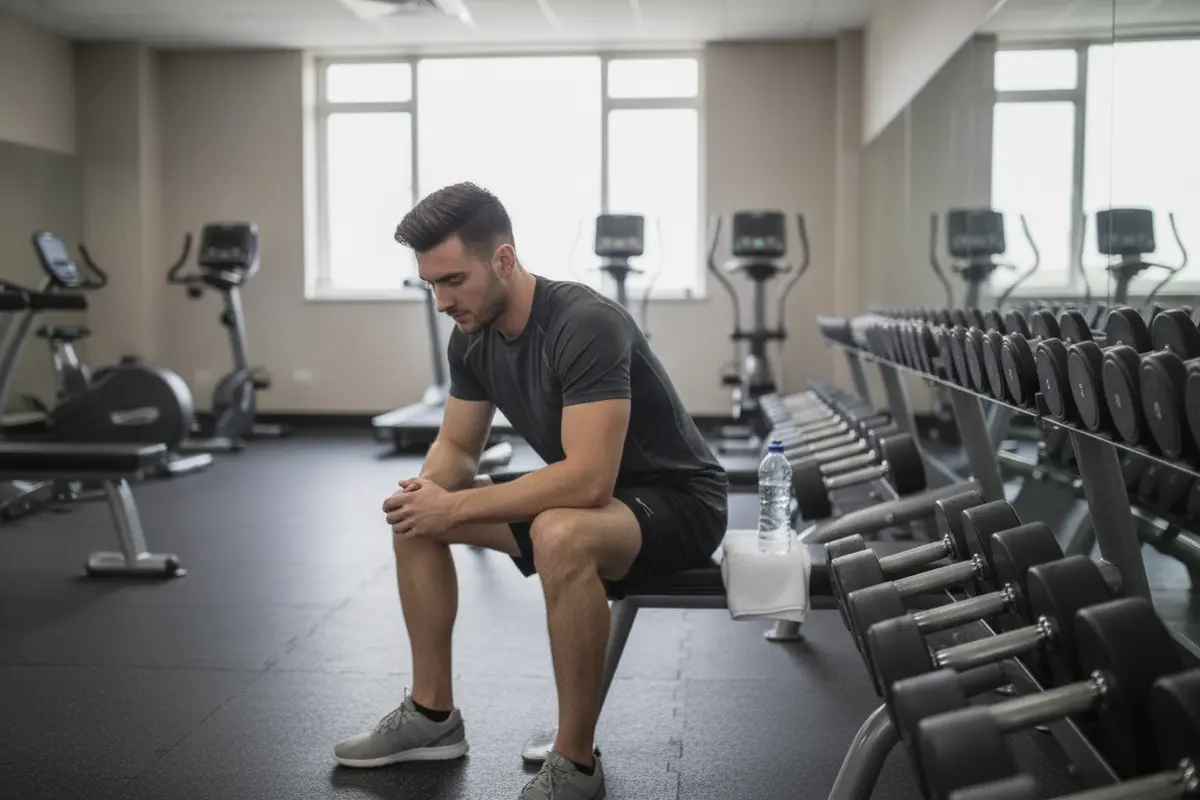
Use the pause to ask a few plain questions: Can I breathe comfortably? Do I feel steady when I stand? Am I still unusually hot, nauseated, or weak? If you are unsure, choose the cooler option and give yourself more time. You do not lose the value of your workout by skipping the sauna.
The goal is not to prove that you can tolerate more heat. It is to finish training in a way that lets you leave safely and get on with the day. If the sauna is crowded, unavailable, or does not feel appealing, a calm cool-down is still a complete choice. You can decide again another day rather than turning one session into a rule.
How can you tell whether heat fits this workout?
Look at the workout and your condition together. A session that felt manageable may leave you comfortable enough to consider a brief sauna visit. A session that included repeated high-effort intervals, a long duration, or substantial heat may call for a simpler cool-down instead. There is no need to add heat just because it is available.
| What you notice | A sensible next step | Why |
|---|---|---|
| You feel steady, comfortable, and have cooled down | Consider sauna only if it is appropriate for you; follow the facility’s rules and leave if you feel unwell. | Your current response is a better guide than a strict routine. |
| You are still breathing hard, overheated, or unsettled | Skip the sauna for now. Rest in a cooler place and reassess. | Adding heat can make it harder to feel comfortable after an already demanding session. |
| You feel dizzy, faint, nauseated, confused, or weak | Do not enter. Sit or lie down somewhere safe and seek help if symptoms are severe or do not improve. | These symptoms are a reason to stop, not something to train through. |
| You have a health condition, take medication that affects heat tolerance, or have been told to avoid heat | Ask your health professional before using a sauna. | Individual medical history can change what is appropriate. |
| You have another hard session soon or still feel depleted | Prioritize cooling down, food, fluids, and rest over adding another stressor. | Recovery choices should support the next part of your training, not become another test. |
Use the same check after any class format. A boxing session, strength circuit, cycling class, and yoga session can leave you with different levels of fatigue and heat. Review the available group fitness class options and choose effort that fits your day. Sauna use does not turn one class into a better choice than another.
How long should you stay in a sauna after training?
There is no universal duration to recommend from the information here. Sauna temperature, humidity, type of sauna, recent exercise, and individual heat tolerance all affect the experience. Follow the specific facility’s posted time and safety instructions. If you are new to sauna use, be cautious rather than trying to match someone else’s routine, and leave promptly if you feel unwell.
More time is not automatically more beneficial. Do not treat sweat as a measure of fat loss, workout quality, or recovery. Sweating mainly reflects the body’s response to heat and does not tell you whether you have recovered from training. Avoid extending a session to meet a number or to compensate for a meal or missed workout.
Research should also be read in context. Studies differ in the type of heat exposure, exercise protocol, and outcomes measured. For example, one published study investigated sauna use before exercise and delayed-onset muscle soreness, while other work has examined post-exercise exposure. The fact that these questions are being studied does not establish a universal timing or duration recommendation. When you see a claim about sauna and recovery, check what kind of heat exposure was used, when it happened, and what researchers actually measured. A result about one exercise test or one symptom does not automatically answer whether a different routine will help you. Even a promising finding is a reason for more careful questions, not a reason to ignore how you feel. Keep the practical test personal and simple: does this feel comfortable, and does it fit your training and health guidance. (study of sauna exposure and delayed-onset muscle soreness.)
What should you do before and after a sauna?
Keep the process simple and follow the rules where you train. A few checks can help you avoid turning a relaxing finish into an uncomfortable one.
- Check the facility guidance. Follow posted entry, hygiene, and time limits. Ask staff if you are unsure about access or use.
- Start only when you feel settled. If you are still overheated or unsteady after class, keep cooling down instead.
- Bring water and drink normally. Do not use a sauna to deliberately dehydrate yourself or force fluids beyond your needs.
- Leave when your body says stop. Dizziness, nausea, unusual weakness, or feeling faint means end the session and get to a cooler area.
- Cool down afterward. Give yourself time before returning to exercise, rushing out, or taking on another demanding task.
Avoid sauna use when you have been drinking alcohol or feel sick, overheated, or dehydrated. If you are pregnant, have a medical condition, or use medication that may affect blood pressure, sweating, or heat tolerance, ask a qualified health professional about your situation first. This article is general information, not a diagnosis or individualized medical advice. Seek urgent help for severe symptoms such as fainting, confusion, or symptoms that worsen or do not resolve.
How can a sauna fit into a training week?
Think of sauna as an optional part of the setting, not a required training method. Start by choosing the workout that fits your schedule and current capacity. Finish the workout at a sustainable effort, then decide whether additional heat feels appropriate. If you are often exhausted after training, adding more intensity or heat may not solve the problem; look at session effort, spacing, sleep, and whether you have enough time to recover.
For example, after a moderate strength session, you might feel settled after a brief cool-down and choose to use the sauna if that is comfortable and permitted. After a demanding interval class, you might still feel hot and decide to shower, eat, and head home instead. Neither choice says anything about your discipline. They are different responses to different days.
Also consider what comes next. If you need to travel, work, or train again soon, leave enough time to cool down and feel steady before moving on. If heat tends to make you sluggish, do not schedule it before a task that needs your full attention. The practical choice is the one that fits your body and your plans, not the one that adds the most steps to the session.
It can help to make a quick note after trying a sauna: what workout you did, how you felt before entering, whether you felt comfortable, and how you felt afterward. Do not turn the notes into a score or assume one experience predicts every future session. If a sauna consistently leaves you feeling worse, leave it out. A consistent cool-down and sensible training plan are valid choices on their own.
For a location-specific overview of sauna access, compare the details in this guide to gyms with a sauna in NYC and confirm current amenities directly with the location before planning around them. Facility offerings and rules can vary. If you are deciding between formats, the class type overview can help you compare training options without assuming every class or location offers the same setup.
Frequently Asked Questions
Is a sauna after a workout necessary for recovery?
No. It is optional. Prioritize an appropriate cool-down, hydration based on your needs, food, and rest. Skip the sauna if you feel unwell or have been advised to avoid heat.
Should I use a sauna immediately after a workout?
Do not rush from intense exercise into heat. Let your breathing and body temperature settle first, then decide based on how you feel and the facility’s instructions. There is no single waiting time that fits every workout.
Can a sauna prevent muscle soreness?
Research has examined heat exposure and muscle soreness, but that does not show that a sauna will prevent soreness for every person. Soreness varies, and sauna use is not a replacement for sensible training and recovery habits.
What should I do if I feel dizzy in a sauna?
Leave the sauna, get to a cooler place, and sit or lie down safely. Ask someone nearby for help. Seek urgent medical care for severe symptoms, fainting, confusion, or symptoms that persist or worsen.
Can I use a sauna after every workout?
There is no need to make it part of every session. Consider the workout, your recovery, personal health guidance, and how you respond. On some days, a straightforward cool-down is the better fit.
A sauna can be one optional way to end a workout, but it should never come at the expense of listening to your body. Cool down first, follow facility guidance, and choose the recovery step that leaves you ready to train well again.
Leave a Reply
You must be logged in to post a comment.