
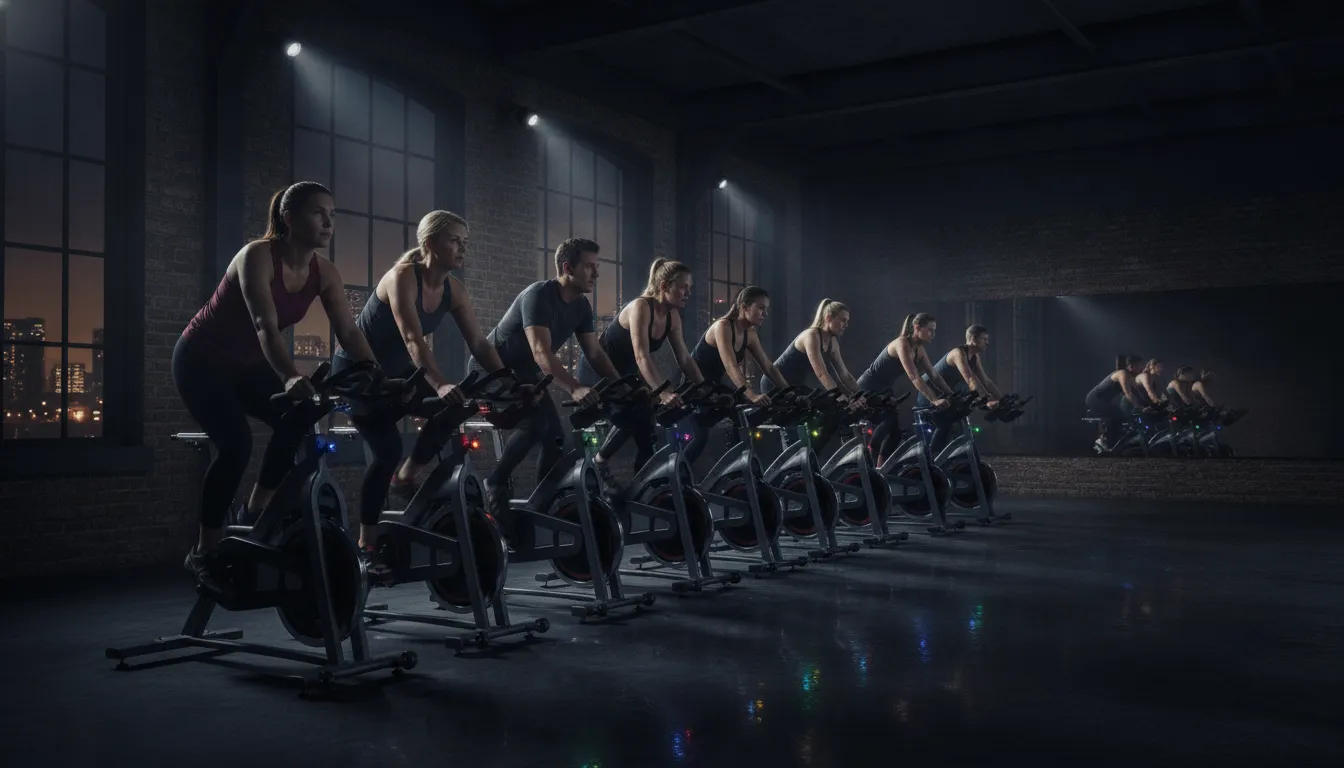
When your workday is packed, a workout has to earn its place on the calendar. A well-coached spin class delivers focused effort without asking you to choose between cardio and strength work. You can push your pace, climb against resistance, and leave with a clear sense that the session counted.
The benefits of spin classes include stronger cardiovascular fitness, more lower-body strength, and a challenging workout that is easier on your joints than high-impact options. The group setting adds shared effort and accountability, which can make consistent training easier.
That combination matters in NYC, where efficient training and a room full of people doing the work can keep your routine moving. The first benefit to understand is the one most people expect, but spin’s cardiovascular impact is only the beginning.
Schedule your first spin class trial.
The Benefits of Spin Classes Reach Beyond Cardio
Indoor spin is built around sustained effort, controlled resistance, and repeated surges that challenge your aerobic system. Over time, that work can enhance aerobic capacity, helping your heart and lungs deliver oxygen more effectively during training. A review published in the National Library of Medicine reports that indoor cycling may improve overall aerobic capacity.
That matters for more than a stronger finish on the bike. Better aerobic fitness can make stairs, long walks, and demanding workdays feel more manageable. It also gives you a reliable base for strength training, HIIT, and other sessions that require you to recover between efforts.
The public-health target is clear, but busy schedules make consistency difficult. The CDC recommends at least 150 minutes of moderate-intensity aerobic activity each week, or 75 minutes of vigorous activity. A 45-minute class at Grind House gives NYC professionals a focused way to build that weekly total without spending an hour commuting to a distant facility.
One class does not replace a complete training week. Three 45-minute sessions would total 135 minutes, leaving a short walk or another brief aerobic effort to reach the CDC’s moderate-activity benchmark. The exact contribution depends on how hard you ride, your fitness level, and how your instructor structures the session.
Research also points to broader cardiovascular markers. Harvard Health describes a study of 36 middle-aged adults who completed either two 30-minute spinning sessions or an hour of moderate-intensity exercise. After six weeks, the spinning group showed greater improvements in fitness, blood pressure, total cholesterol, and fat mass than the comparison group. Harvard Health summarizes the study here.
Those findings do not promise identical results for every rider. They do show why structured indoor cycling deserves a place in a serious routine. You can adjust resistance, cadence, and effort while an instructor keeps the session moving, which makes hard work easier to execute consistently.
For a closer look at the local format, explore Grind House’s Flatiron cycling classes. The goal is straightforward: show up, ride with purpose, and build cardiovascular capacity one demanding session at a time.
How Spin Classes Strengthen Your Legs and Core
Spin does not build lower-body strength by accident. Every pedal stroke asks your legs to produce force, hold rhythm, and keep working when the resistance climbs.
The quads drive the downward phase of the stroke, while the hamstrings and glutes help control the return and create power through the full rotation. Your calves contribute at the ankle, especially when cadence rises or the instructor calls for a heavier push. That repeated effort builds muscular endurance first, then gives stronger muscles a reason to keep adapting.
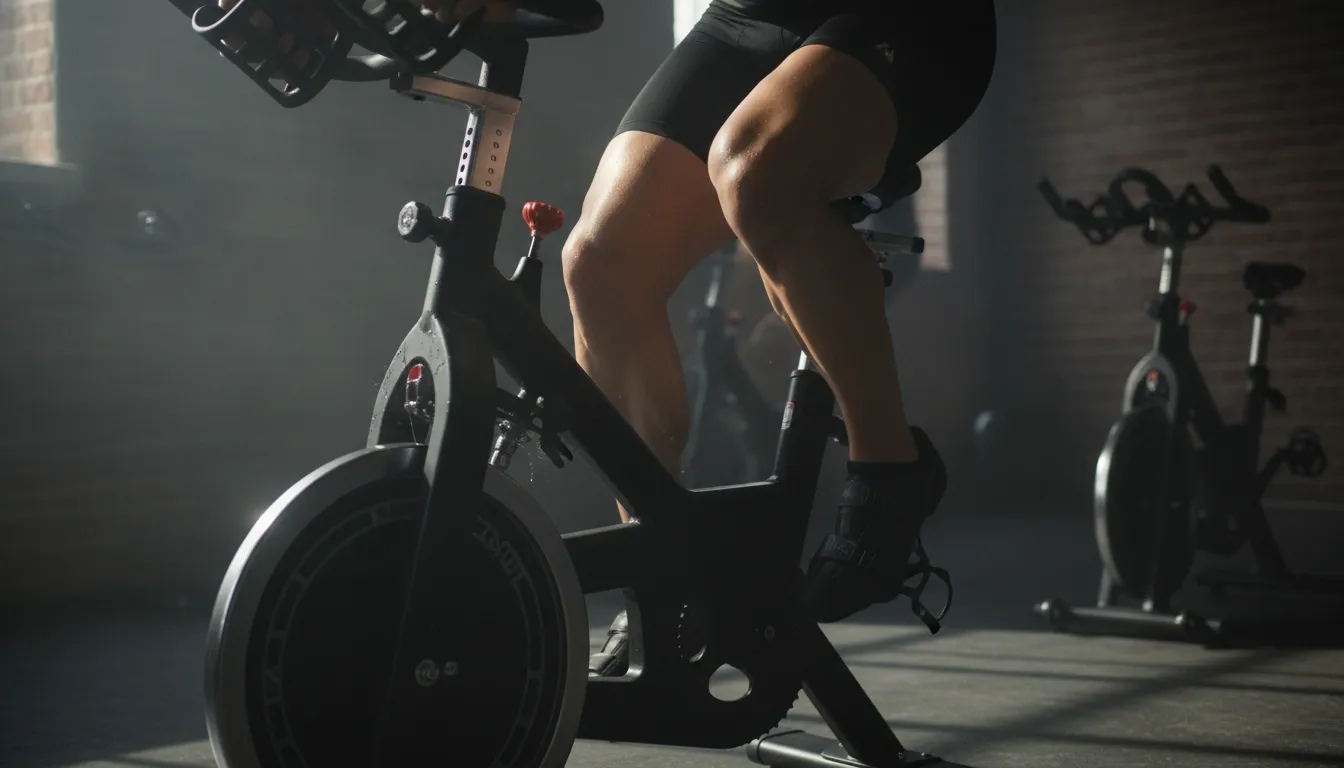
Resistance turns riding into real work
The resistance knob is where the easy spin ends. Add load, and each revolution demands more from your quads, glutes, hamstrings, and calves. You are not simply moving faster. You are moving against a harder challenge.
Standing climbs raise the demand again. With your hips lifted from the saddle, you brace your trunk, control your balance, and drive through the pedals under load. The core works as a stable base for the legs, helping you stay controlled instead of bouncing through the movement. That is gritty, useful strength, earned one push at a time.
Good coaching also changes the stimulus. A class may move from a seated climb to a standing effort, then return to a controlled recovery. Those shifts ask your lower body to produce force in different positions without turning the workout into random punishment. The result is a demanding session that trains strength and stamina together.
What the research says
A study discussed by Harvard Health compared two 30-minute spinning sessions with an hour of moderate-intensity exercise among 36 middle-aged people. After six weeks, the spinning group showed more improvement in leg strength than the moderate-intensity group.
That finding does not promise overnight muscle growth. It supports what consistent riders already learn in the room: progressive resistance and repeated effort can make the legs stronger. Show up, use the knob, stay honest through the hard intervals, and let the work accumulate.
Spin also fits into a broader training week. At Grind House, cycling can sit alongside HIIT and strength sessions as part of a functional, multi-modal routine. Your legs get a focused challenge, your core stays engaged, and the shared effort keeps you working when quitting would be easier.
Are Spin Classes Really a Low-Impact Workout?
Yes, indoor cycling is generally a low-impact workout because the bike supports your body while you pedal. Unlike running, jumping, or repeated plyometric drills, seated cycling keeps your feet from striking the floor.
That difference can make training more comfortable for people who want challenging cardio without constant impact through the knees, ankles, or hips. You can still work hard, raise your heart rate, and build endurance while reducing the landing forces associated with many other high-intensity exercises.
Why seated cycling can feel easier on your joints
Running and jumping ask your joints to absorb force each time your foot meets the ground. A properly adjusted spin bike creates a different movement pattern. Your legs turn against resistance, while the saddle and pedals help support your weight throughout the effort.
Low impact does not mean low effort. You can increase resistance, maintain a faster cadence, or use short standing intervals to create a demanding session. The key distinction is that the workout challenges your cardiovascular system and muscles without requiring repeated hard landings.
Bike setup and technique still matter. Adjust the saddle so your knee remains slightly bent at the bottom of the pedal stroke. Keep your movement controlled, and ask the coach for an adjustment if your knees, hips, or lower back feel strained. Anyone managing an injury or diagnosed joint condition should also follow guidance from a qualified healthcare professional.
What the research says about knee-friendly cycling
Stationary group cycling has also been studied in people with mild-to-moderate knee osteoarthritis. After 12 weeks, participants in one cycling intervention showed significantly less knee pain and improved physical function and stiffness compared with the comparison group.
The study reported a mean pain-score difference of 14.9 points, with a 95% confidence interval of 2.6 to 27.0. Those findings do not mean every spin class will produce the same result. They do support cycling as a practical movement option when joint comfort is part of your training decision.
Read the Journal of Orthopaedic and Sports Physical Therapy study on stationary group cycling.
Spin vs. running vs. HIIT at a glance
| Workout | Joint impact | Cardio intensity | Lower-body load | Best for |
|---|---|---|---|---|
| Spin class | Low | High | High | Efficient cardio plus leg strength with little landing force |
| Running | High | High | Moderate | Outdoor athletes who tolerate repeated impact |
| HIIT | Moderate to high | High | Moderate | Short all-out bursts mixing strength and cardio |
How low-impact spin fits a balanced routine
Because cycling limits impact, it can complement sessions that place greater demands on your body. At Grind House, spin can sit alongside HIIT and strength training as part of a multi-modal routine. That combination lets you train cardiovascular fitness, force production, and movement capacity without making every workout a high-impact session.
Use spin for a hard cardio day, then plan recovery around your overall workload. The goal is not to avoid effort. It is to distribute stress intelligently, so you can keep showing up, training consistently, and building fitness without treating sore joints as proof of progress.
How Many Calories Do Spin Classes Burn?
A typical high-intensity indoor cycling class can burn roughly 400 to 600 calories, according to Brown Health. That range is useful, but it is not a promise printed on every bike.
Your actual energy burn depends on body weight, resistance, cadence, class duration, and how hard you work. A rider who stays controlled through every interval may burn less than someone who pushes resistance and sustains a higher heart rate. Fitness level also changes how much effort a given pace requires.
That is where a focused class environment matters. At Grind House, the energy is built around maximizing effort, not casually turning the pedals while waiting for the clock. You can adjust resistance to your level, then keep working as the intervals demand. The result is an efficient workout that challenges your cardiovascular system and lower body in the same session.
What does calorie burn mean for weight management?
Calories are only one part of body-composition change. Weight management depends on your overall energy balance, eating pattern, sleep, stress, and consistency across weeks. One hard class cannot cancel out every other factor, and a calorie estimate should not become the only measure of progress.
Research in the medical literature reports that combining indoor cycling with dietary changes can help improve lipid profiles, reduce body weight, and lower blood pressure. The important takeaway is the combination. Use cycling to create repeatable training, then support that work with nutrition habits you can maintain.
For a practical approach, track how consistently you attend, how your resistance and endurance develop, and how your clothes fit. You may also notice better work capacity before the scale changes. Those signals show whether your training is becoming more effective.
If weight loss is your priority, build a routine that includes challenging rides without treating every workout as punishment. Strength sessions and other functional training can complement cycling, helping you develop a more balanced program. Explore indoor cycling for weight loss to see how the pieces can fit together.
Spin works best when it becomes a regular part of your week. The calorie number starts the conversation, but sustained effort and consistent choices create the result.
Why the Group Energy in Spin Classes Keeps You Coming Back
A difficult workout is easier to repeat when you are not carrying the entire effort alone. In a Grind House spin class, the room moves with a shared purpose. Music sets the pace, the instructor gives you a clear target, and the riders around you keep showing up for the next interval.
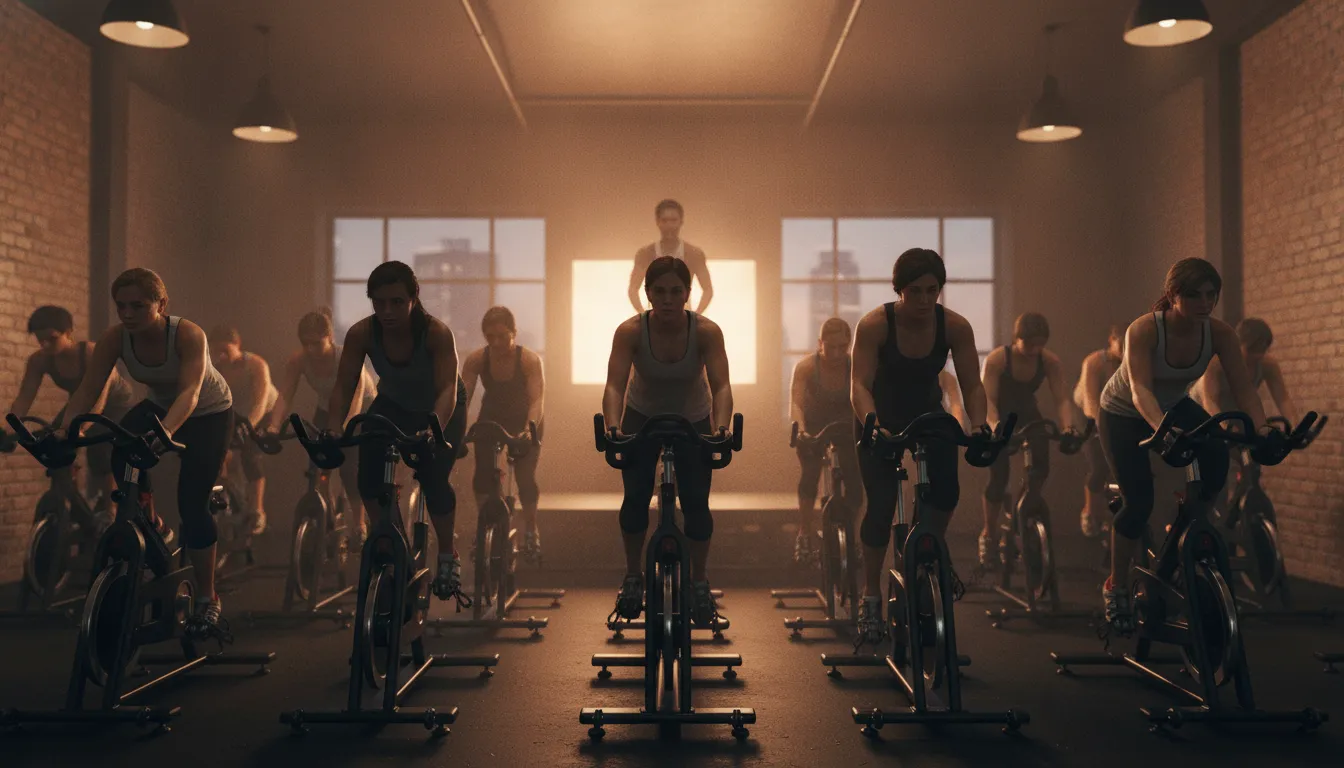
That atmosphere is part of what makes the benefits of spin classes extend beyond the bike. Grind House positions its spin training as high-energy, high-intensity, and community-driven, creating a setting built around shared effort rather than passive motivation. See how Grind House approaches community-driven training.
Shared effort makes hard work feel possible
When the lights are low and the music rises, you still have to do the work. The difference is that the work has a rhythm. A cue from the instructor can help you add resistance, settle into a climb, or stay committed through the final seconds of an interval.
You also get the useful pressure of a room full of people working toward the same outcome. Nobody needs to compete with the rider beside them. Seeing others push can simply make your own next effort feel more manageable. That is the foundation of the Grinder tribe: show up, struggle together, and leave knowing you did something demanding.
For a closer look at the format, read what rhythm cycling is and how music, coaching, and resistance work together.
Accountability starts with returning
Accountability does not have to mean posting every workout or chasing a perfect streak. It can mean recognizing the instructor, seeing familiar faces, and knowing that a class is waiting at a specific time. That small amount of structure removes some of the daily negotiation that makes solo training easy to skip.
A Women’s Health account of a beginner spin challenge described attending twice weekly for one month. The article also discusses how instructors and class settings can help people push through mental barriers, not just physical fatigue. Read the beginner spin challenge account.
That matters if you are new, returning after a break, or unsure whether you belong in a high-intensity room. You can control your resistance and effort while still benefiting from the energy around you. Over time, the unfamiliar becomes routine, and routine gives your training somewhere to build.
The goal is not to rely on hype forever. It is to use the group to get through the moments when motivation is thin, then let consistency create its own momentum.
How to Get the Most from a Spin Class at Grind House
- Arrive early and get oriented. Give yourself enough time to check in, find your bike, and ask for setup guidance. A calm start lets you focus on the ride instead of rushing through the door. If you are comparing locations, review the indoor cycling classes in Williamsburg before choosing the class that fits your schedule.
- Adjust the bike before the music starts. Set the seat so your knee remains slightly bent at the bottom of each pedal stroke. Position the handlebars where your shoulders can stay relaxed. Ask the coach to check your setup if anything feels unstable, cramped, or difficult to control.
- Build your effort instead of chasing someone else’s pace. Follow the coach’s resistance cues, but treat your own form as the priority. Start with a manageable load, then add resistance when the movement stays smooth. You should be able to work hard without bouncing in the saddle or gripping the handlebars for support.
- Ride to the beat and use the room’s energy. The group format makes effort visible, which can help you stay engaged through challenging intervals. Keep your attention on consistent movement, controlled breathing, and the next cue. Grind House positions spin as a high-energy, high-intensity, community-driven workout, so shared effort is part of the experience.
- Recover with intention. Ease down gradually when the class ends, drink water, and notice how your legs and joints feel. Recovery helps you decide how hard to train next time. If cycling shoes are new to you, read what shoes to wear to indoor cycling before your first visit.
- Pair spin with strength and HIIT. Spin is a core group modality included with Grind House membership. Its low-impact format can fit alongside strength sessions and HIIT, giving you a more balanced functional training routine. Alternate demanding sessions with easier days, and choose the combination you can repeat consistently.
- Track consistency rather than perfection. Notice practical markers such as smoother resistance changes, stronger posture, and better control late in class. These observations give you useful feedback without turning every ride into a test. Over time, a repeatable schedule helps you capture more of the benefits of spin classes.
Schedule a free spin class trial at Grind House.
Frequently Asked Questions
Is spinning good for belly fat?
Spinning can support overall fat loss by adding vigorous aerobic work to your routine, but it cannot target belly fat alone. Results depend on consistent training, nutrition, sleep, and your individual starting point. Research indicates that combining indoor cycling with a diet can help improve lipid profiles, reduce body weight, and lower blood pressure. Read the research on indoor cycling and metabolic health.
Does spinning change your body shape?
Regular classes can strengthen and condition the muscles that drive the bike, especially the quadriceps, hamstrings, glutes, and calves. As your fitness improves and body composition changes, your legs may look and feel more defined. The exact result varies by training frequency, resistance, nutrition, and genetics.
Are spin classes actually good for you?
They can be an effective way to build aerobic fitness, lower-body strength, and exercise consistency in one focused session. Indoor cycling may enhance aerobic capacity, and the fixed bike offers a low-impact option for people who want a challenging workout without running. Adjust resistance and pace to match your experience and current fitness.
How often should you do spinning?
Start with one or two classes per week, then increase gradually as your body adapts. Allow recovery between hard sessions and balance cycling with strength, mobility, or other training. For general health, the CDC recommends at least 150 minutes of moderate-intensity aerobic activity weekly for adults ages 18 to 64. Review the CDC activity guidelines.
Ready to Book Your First Spin Class?
Spin gives you an efficient way to build cardio, challenge your legs, and train alongside people who bring real energy to the room. Book your first class at Grind House and see how shared effort can make consistent training feel more engaging.
Leave a Reply
You must be logged in to post a comment.