
The right boxing class is not necessarily the hardest one on the schedule. For a first-timer, the better fit is the class where coaching makes technique understandable, the format gives you room to learn, and the schedule makes regular attendance realistic.
Explore beginner-friendly boxing class options
The best boxing classes nyc options for beginners balance instruction style, individual attention, beginner support, schedule, and training goals. Look for clear level guidance, coaches who explain how to move, and a class format that matches whether you want conditioning, skill development, stress relief, or a mix.
Grind House’s Williamsburg boxing format combines drills and boxing movements with alternating speed and power work. The format is designed as a total-body conditioning experience rather than a purely technical boxing program. Members should bring their own wraps and gloves, and confirm current availability before attending.
Start by comparing the details that shape your experience, not just the class name or intensity label.
How Can You Compare Boxing Classes NYC Beginners Will Enjoy?
Use this quick comparison order before you book:
- Confirm whether the coach teaches technique, conditioning, or a balance of both.
- Check the class format and the experience level it expects.
- Ask how beginners receive feedback and progress to the next level.
- Match the schedule and booking process to your normal week.
- Confirm equipment requirements before your first session.
Start with the kind of coaching you want
Not every boxing class teaches the same experience. Some programs center proper form, technique, and execution, while coaches add conditioning and strength drills around the instruction. Others are built first as a high-energy group workout, using boxing combinations and timed rounds to keep the pace moving. Neither approach is automatically better. The right choice depends on whether you want to learn boxing mechanics carefully, build conditioning through boxing-inspired movement, or combine both.
Look for clear information about what the coach demonstrates, how feedback is delivered, and whether the session is designed for first-timers. For example, Grind House describes its boxing class as a total-body strengthening and conditioning experience. The format uses boxing drills and moves while alternating speed and power exercises, with work directed at the heart, lungs, shoulders, and legs. That is a useful distinction if your priority is a challenging fitness class rather than a solely technical boxing program.
Compare progression, format, and support
A beginner-friendly schedule should make the next step understandable. One NYC boxing program lists separate beginner, all-level, beginner-to-intermediate, and intermediate-to-advanced options. It also offers group classes, small-group training, private lessons, and women’s boxing classes. Those labels show the kind of progression to look for, but they are not universal standards. Ask what experience level is expected, how coaches adapt combinations, and when a new member should move up.
| Factor. | What to look for. | Why it matters for beginners. |
|---|---|---|
| Coaching style. | Technique feedback, conditioning guidance, or a balance of both. | Helps you choose between skill development and a fitness-first workout. |
| Class format. | Group, small-group, private, or mixed-level sessions. | Sets expectations for pace, interaction, and individual attention. |
| Progression. | Beginner labels, all-level options, and a clear path to harder classes. | Reduces the risk of starting in a session that moves too quickly. |
| Schedule. | Times you can attend consistently, plus current booking availability. | A workable routine is more useful than an ideal class you rarely attend. |
| Equipment. | Confirm whether wraps and gloves are supplied or need to be brought. | Prevents surprises before your first workout. |
Check the practical details before booking
Schedule fit is part of class quality. Grind House uses rotating class schedules, and its booking system provides real-time availability, mobile booking, waitlists, and attendance tracking. The facility is open from 5:00 AM to 10:00 PM on weekdays and 7:00 AM to 8:00 PM on weekends. Check current class times before you plan a routine. Members should also bring their own boxing wraps and gloves. Compare those details with your commute, training goals, and equipment needs before committing.
For a broader look at available formats, review the boxing classes and group fitness classes, then confirm the current schedule.
What Instruction Style Helps Beginners Learn?
The right coaching style can make a bigger difference than a flashy class description. When you compare boxing classes nyc beginners may enjoy, listen for how the instructor teaches, not only how hard the workout sounds. A useful class should help you understand the movement, stay engaged through conditioning, and feel clear about what to improve next.
Technique-led instruction builds a useful foundation
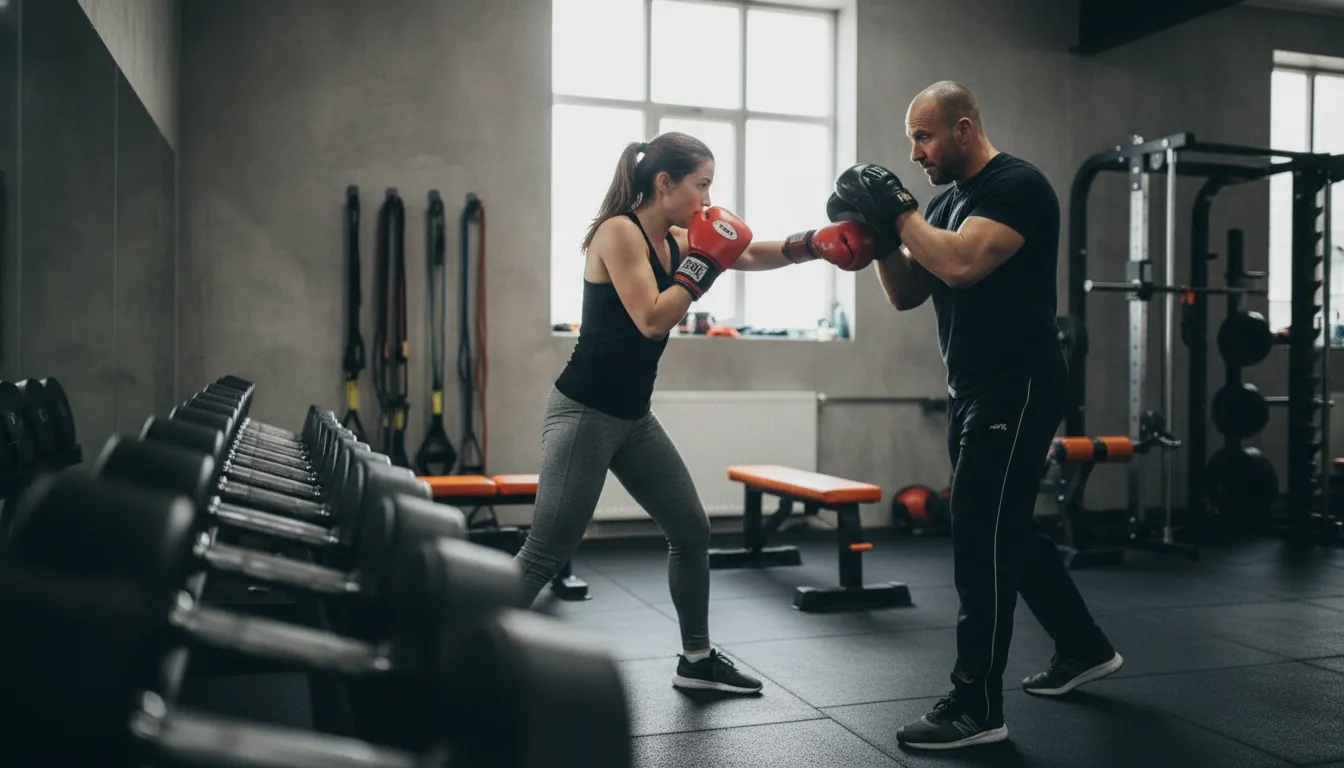
Some programs put form first. Church Street Boxing, for example, says its program emphasizes proper form, technique, and execution. That approach can suit a beginner who wants to understand stance, footwork, punches, and defensive movement instead of simply copying a fast sequence. Look for coaching that explains why a movement matters, demonstrates it clearly, and gives you a correction you can apply on the next repetition. You do not need to arrive already fit or experienced, but you should leave knowing more about how to move.
Coach-led conditioning connects skill with effort
Other classes combine technical instruction with a stronger conditioning focus. Church Street Boxing describes coaches leading members through conditioning and strength drills alongside boxing instruction. Grind House takes a similar fitness-forward approach: its boxing class uses boxing drills and moves, alternates speed and power exercises, and targets the heart, lungs, shoulders, and legs. The class is described as a total-body strengthening and conditioning experience, rather than solely a technical boxing program.
This format may fit you if you want boxing to be part of a demanding workout, while still learning the basic movement patterns. Before booking, ask whether the class is primarily skills practice, total-body conditioning, or a deliberate mix. That answer helps set expectations without treating one format as universally better.
Motivational coaching should still have substance
Energy can help a room stay focused, but motivation works best when it supports actual instruction. A coach who keeps the pace moving while explaining the drill, watching technique, and offering useful feedback gives beginners more to work with than volume alone. Grind House documents 11 specialized trainers with expertise that includes boxing and combat conditioning, strength, mobility, functional movement, and general conditioning. That range can matter when your goals extend beyond learning combinations, especially if you need help connecting boxing work with broader training priorities.
To judge fit, ask yourself what you want from the hour. If you want detailed mechanics, prioritize visible technique coaching. If you want a structured challenge, look for a clear conditioning format. If you need help identifying the right starting point, ask about the initial training assessment. Grind House says the assessment can identify goals, support form education, and guide trainer matching. You can also read about what boxing fitness classes are like before choosing.
How Do Class Size and Individual Attention Affect Fit?
Class size changes how a boxing session feels and how much direct feedback you may receive. It is not automatically better to choose the smallest room. The right format depends on whether you want shared energy, focused correction, a private training plan. Or a setting that helps you feel comfortable as a woman new to boxing.
Group energy, small-group focus, or private coaching?
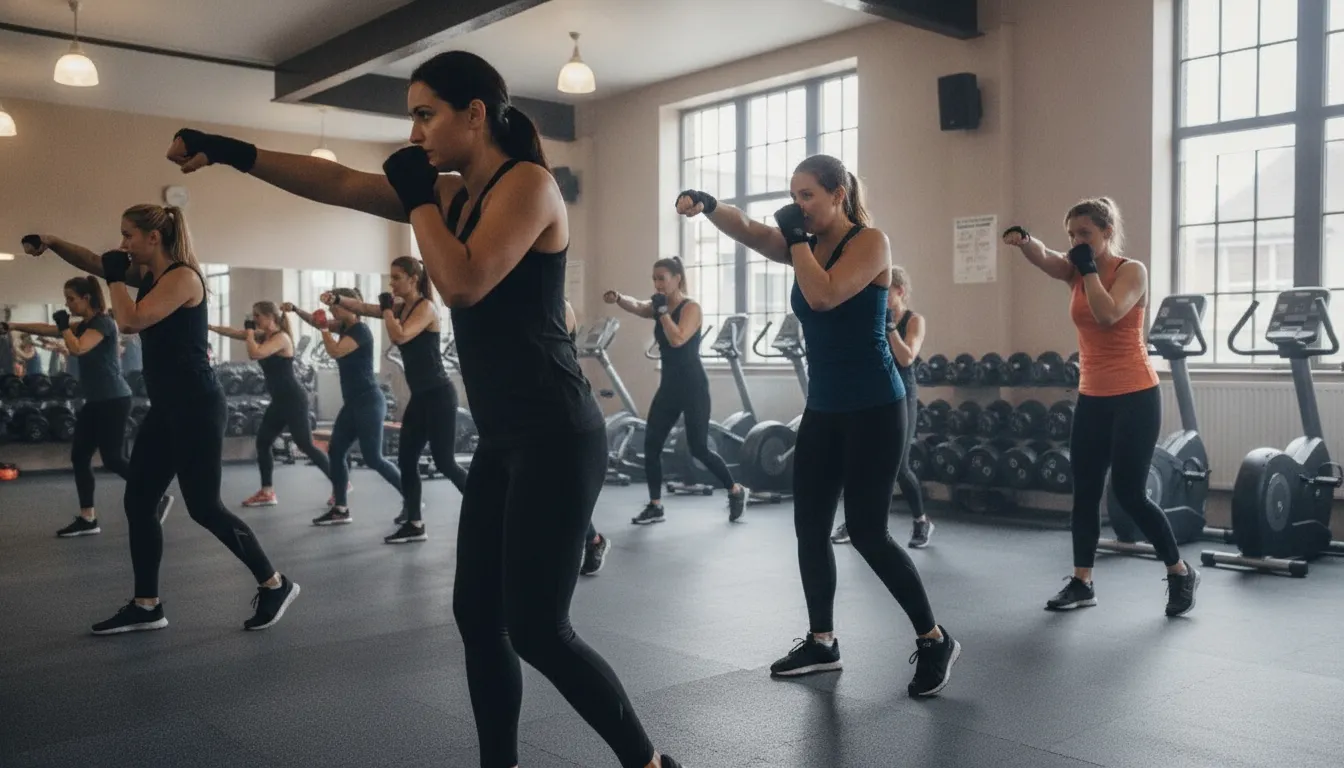
Large group classes can be a strong fit when you enjoy training alongside other people and can stay engaged with the coach’s demonstrations. They often create momentum, but you may need to speak up when you want a technique checked. Ask whether the coach circulates during drills, how form questions are handled, and whether first-timers receive modifications.
Small-group training sits between a standard class and private instruction. You still get the motivation of training with others, with more opportunity for a coach to notice stance, guard position, punch mechanics, and pacing. Private lessons offer the most concentrated attention and can make sense when you have a specific goal. A schedule that does not match group classes, or a strong preference for one-to-one coaching. NYC gyms may list all three formats. For example, Victory Boxing lists group classes, small-group training, private lessons, and women’s boxing classes among its options, but each gym defines those formats differently. Review the gym’s current format descriptions before assuming the experience will match another facility.
What should you ask about attention and comfort?
A women’s class can be the best fit when you want to learn in a setting built around shared comfort and goals. It does not replace checking the coaching approach. Ask who leads the session, whether the class welcomes complete beginners, how corrections are delivered, and whether you can talk with the coach before or after class.
Grind House documents a complimentary initial training assessment that can help identify goals, support form education, and guide trainer matching. It also lists 11 specialized trainers with experience that includes boxing and combat conditioning. Those details speak to available support, not a promise that every group class provides individualized attention. The exact boxing class capacity is not documented, so ask about current enrollment, coach access, and how feedback works before booking. You can also review the personalized training option if one-to-one guidance is your priority.
Before choosing among boxing classes NYC readers can access. Treat class size as one question in a larger fit check: Will you get useful feedback, feel comfortable asking for help, and return consistently? Those answers matter more than a label alone.
Ask about the best boxing class for your goals
What Beginner Support Should a First-Timer Expect?
A first boxing class should give you a clear way to participate without assuming you already know the language, stance, or pace. That support can show up in the class label, the coach’s explanations, and the way your next step is made easier to understand.
Look for a level label that tells the truth
New students should not have to decode whether a class is appropriate. Some NYC gyms separate beginner, all-level, beginner-to-intermediate, and intermediate-to-advanced sessions, giving members a visible progression path. An all-level class can also work for newcomers when the coach explains the fundamentals while offering experienced participants ways to increase their challenge. The useful question is not whether a class sounds intense. It is whether the level description matches your current experience and gives you room to learn.
Expect form feedback, not just a follow-along workout
Boxing support should include practical corrections on stance, guard, footwork, and the mechanics of basic punches. That does not mean a first class needs to become a private lesson. It means the coach should make the movement understandable, watch for common errors, and explain how technique fits into the conditioning work. At Grind House, boxing uses drills and boxing movements while alternating speed and power exercises. The format is designed as total-body strengthening and conditioning, rather than solely a technical boxing program, so a first-timer should expect both instruction and work.
Grind House also offers a complimentary initial training assessment. The assessment can identify goals, support form education, and help guide trainer matching. Its trainer team includes 11 specialists with experience across boxing and combat conditioning, strength, mobility, functional movement, and general conditioning. Those details matter when you want a starting point that connects your current ability with a realistic direction.
Prepare your equipment and watch for steady progression
Ask what you need before your first visit. Grind House members bring their own boxing wraps and gloves, so plan for both rather than assuming equipment will be supplied. Once you have the basics, progression should come from better control, cleaner combinations, improved conditioning, or a more demanding class level. Do not pretend you are ready for an advanced session on day one. You can review the boxing HIIT class structure to understand how rounds, intervals, and recovery may fit together. A welcoming gym makes room for different starting points while keeping the work honest.
How Can Boxing Classes NYC Fit Different Training Goals?
The best boxing class is the one you can attend consistently and that matches what you want from training. Before choosing among boxing classes NYC readers may find across the city, look at the commute. The available time slots, and the kind of effort you want to repeat each week.
Start with the commute and the calendar
A class that looks perfect on paper will not help much if getting there turns every workout into a logistical problem. Grind House is at 203 Berry Street in Brooklyn, about a five-minute walk from the Bedford Avenue L train station. That location may work well for Williamsburg residents, nearby workers, or anyone whose commute already passes through the area. If you are coming from elsewhere in NYC, map the trip at the time you would actually train, including the return journey.
Consistency does not require one long workout block. The CDC says adults can spread activity across the week and break it into smaller periods, while Mayo Clinic emphasizes consistency even when time is limited. Grind House lists weekday hours from 5:00 AM to 10:00 PM and weekend hours from 7:00 AM to 8:00 PM. Class times and formats rotate, so view the current class schedule before building your routine. The EZFacility system provides real-time availability, mobile booking, waitlists, and attendance tracking, which can make a changing NYC schedule easier to manage.
Match intensity to the goal you will keep pursuing
Training goals should shape the class format you select. If you want a total-body conditioning session, Grind House boxing uses drills and boxing movements, alternating speed and power exercises while working the heart, lungs, shoulders, and legs. If your priority is strength, mobility, endurance, or variety, the facility offers eight class types. Including boxing, cycling, HIIT, Turf and Tread, yoga, kettlebell, Pilates and Barre Fusion, and cardio dance.
That variety can support cross-training rather than forcing every workout to feel the same. Regular physical activity can improve muscle strength and endurance, and physical activity may help people feel more relaxed and less anxious, according to Mayo Clinic. Those are useful reasons to train, but they are not guarantees from any single class. Choose an intensity you can recover from and a format you will be willing to attend again.
Use current availability to test your plan
Think through the week you actually have. A morning boxing class might suit one schedule, while a weekend session or a different group class may be more realistic for another. Grind House’s unlimited membership includes access to all group fitness classes, so members can potentially build variety into their routine. Confirm current membership details and class availability on the live pages. You can also explore workouts that fit your schedule before committing to a pattern.
Finally, check practical requirements before booking. Grind House members must bring their own boxing wraps and gloves. Confirm the current class time, waitlist status, equipment expectations, and any level guidance so your first visit supports the goal you chose.
Contact Grind House about your first class
Frequently Asked Questions
Are boxing classes in NYC suitable for complete beginners?
Yes, if the class explains technique, offers clear coaching, and matches your current training level. Look for beginner or all-level language, then ask how the coach introduces stance, movement, and combinations before the pace increases. You do not need to arrive already fit or experienced.
How should I compare boxing class prices in NYC?
Compare what the price includes, not only the advertised rate. Check whether you are paying per class, buying a package, or joining a membership with access to other group formats. Confirm current pricing, cancellation rules, booking requirements, and any equipment costs on the gym’s live membership or schedule page.
Are there boxing classes in NYC for women?
Some gyms offer women-specific sessions, while others use mixed classes with different experience levels. Choose the format that makes you most comfortable learning and asking questions. Before booking, ask whether the class is designed for beginners, how coaching feedback works, and whether the session matches your goals.
Is Brooklyn a practical option when I am searching for boxing classes in NYC?
It can be, especially if the location supports consistent attendance. Grind House is at 203 Berry Street in Williamsburg, Brooklyn, about a five-minute walk from the Bedford Avenue L train station. Check the current schedule and commute before choosing any class.
What should I bring to a beginner boxing class?
Confirm the gym’s equipment policy before your first visit. At Grind House, members must bring their own boxing wraps and gloves. Wear comfortable training clothes, bring water, and arrive early enough to ask where to check in and how the class is organized.
Ready to Find the Right Boxing Class?
The right beginner-friendly class should match your goals, preferred coaching style, and weekly routine. Take a look at the current options, then choose a time that feels realistic for you. Check the current class schedule and contact Grind House with any questions before booking.
Leave a Reply
You must be logged in to post a comment.