
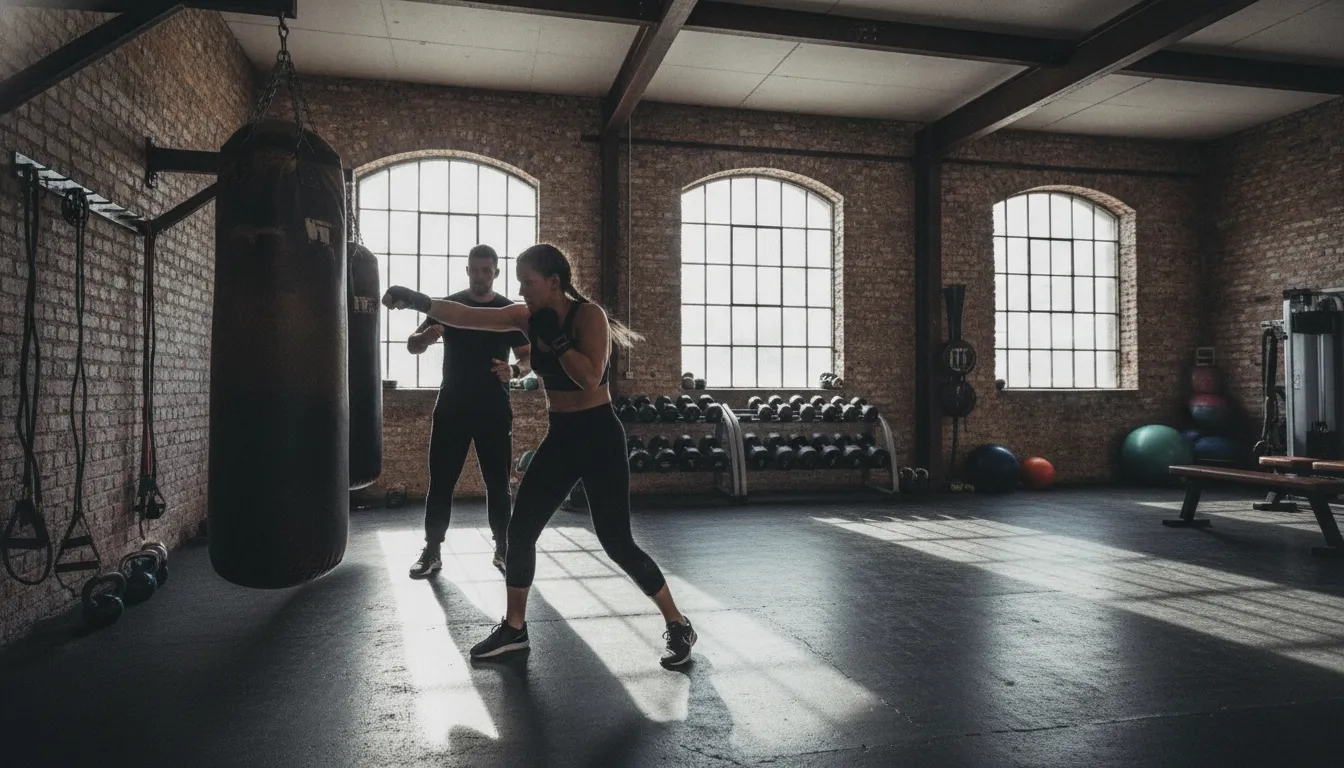
A boxing HIIT workout works best when the interval clock increases effort without erasing technique. Pair short boxing combinations with deliberate recovery, then use your stance, guard, breathing, and punch path to decide whether the next round should be harder.
Explore Grind House classes for coached boxing and HIIT training.
A boxing HIIT workout combines boxing movements such as jabs, crosses, hooks, footwork, and shadowboxing with short work periods and lower-intensity recovery. Begin with simple combinations, progress one variable at a time, and reduce intensity when your form stops being repeatable.
This guide gives you a practical structure for general training. Grind House describes its boxing class as a total-body strengthening and conditioning experience that alternates speed and power exercises, while its HIIT offering uses varied work-to-rest ratios. Class timing and combinations can vary by coach and session.
What Does a Boxing HIIT Workout Train?
Boxing contributes the movement skill. You hold a balanced stance, protect your guard, rotate through the hips, and bring each punch back to position. HIIT contributes the timing pattern. You work at a challenging pace, recover deliberately, and repeat without treating exhaustion as the only measure of success.
That makes technique the first progress marker. You can improve by keeping a cleaner guard through the same rounds, using less recovery without losing balance, or repeating a combination with more relaxed shoulders. The goal is controlled movement under rising effort, not the largest possible punch count.
Which form cues matter most?
Keep your chin protected, shoulders relaxed, and hands returning to guard. Let the jab travel directly from the lead hand and return along the same path. Drive the cross from the rear hip and torso rather than only the shoulder. Keep hooks and uppercuts compact, with feet balanced beneath you. If a punch becomes wide, tense, or unstable, slow it down.
Grind House says its boxing class targets the heart, lungs, shoulders, and legs and requires members to bring their own wraps and gloves. Those are verified offering details, not a promise that every session follows this article’s timer. Read the Grind House HIIT class overview for related programming context.
How Should You Structure the Intervals?
Start with a separate warm-up, then choose a work-to-rest ratio that lets you keep your stance and breathing under control. A practical starting point is 40 seconds of work followed by 20 seconds of recovery for six rounds. Treat that as a template, not a rule.
- Warm up for five minutes. March, step, use an easy step-out jack, and add relaxed shadowboxing.
- Give every round one job. Use jabs, jab-crosses, hooks, uppercuts, or light footwork instead of changing combinations constantly.
- Recover on purpose. Walk lightly, reset your guard, relax your shoulders, and breathe steadily.
- Progress one variable. Add a round, extend work slightly, or reduce rest, but do not change all three together.
- Cool down. Walk until breathing settles, then use comfortable mobility for shoulders, hips, chest, and legs.
When should you shorten the work period?
Shorten work or extend recovery when your guard drops, feet cross, punch paths become uncontrolled, or you cannot regain steady breathing before the next round. A clean 20-second effort is more useful than a 40-second flurry that collapses halfway through.
For a short session, try five minutes of warm-up, 12 to 15 minutes of intervals, and several minutes of easy movement afterward. More experienced trainees can add time only if the last round still resembles the first in posture and control.
Which Boxing Techniques Fit Each Round?
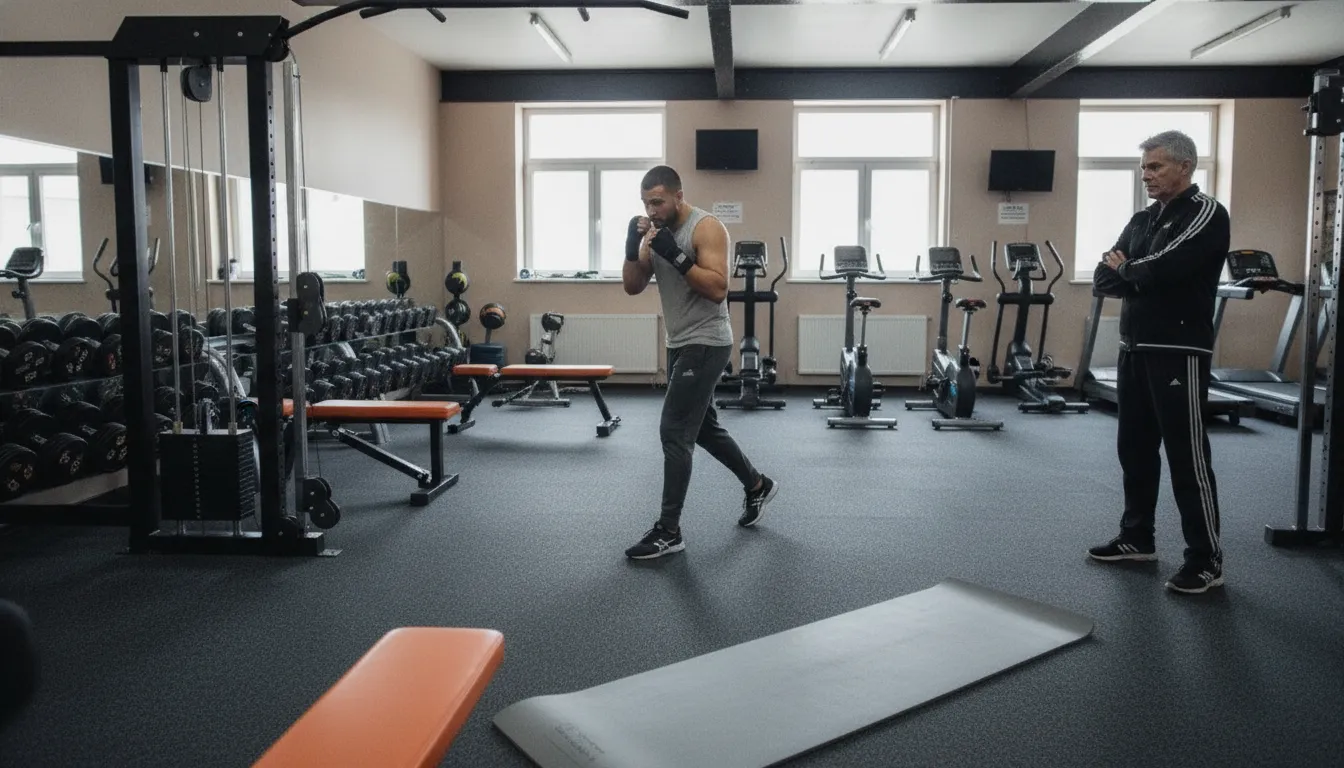
Use simple combinations before adding speed or complicated movement. Start with alternating jabs, progress to jab-crosses, then add a hook once you can rotate the lead foot without losing balance. Add an uppercut only when you can drive it from your legs and hips without dropping the opposite hand.
A focused six-round sequence might use alternating jabs, jab-crosses, jab-cross-hooks, light movement with single punches, your cleanest repeatable combination, and a controlled finish. Reset after each sequence. Step forward with the lead foot, follow with the rear foot, and reverse that order when moving back. Keep lateral steps small.
Shadowboxing is a useful first option because it lets you rehearse distance, balance, and returns to guard without impact. If you use a heavy bag, follow qualified instruction and use suitable wraps and gloves. Do not punch a hard surface without the right setup. For more foundational technique, review this boxing fundamentals guide.
How do you keep a combination useful?
Give each round one recognizable objective. Ask whether you can name the combination, return both hands to guard, and stay aware of your position. If not, reduce the next round to one or two punches and rebuild the pattern. The interval should create urgency, not replace coaching or attention.
How Can You Scale Intensity Without Losing Form?
The correct intensity is the hardest pace you can control. Beginners can use smooth punches, basic resets, and longer recovery. A steady level can add repeatable combinations and simple footwork. Advanced trainees can add pivots or defensive movement, but only after the punch path and stance remain reliable.
| Level | Pace | Movement | Recovery |
|---|---|---|---|
| Beginner | Smooth and deliberate | Basic punches and resets | Take enough time to breathe |
| Steady | Moderate and repeatable | Combinations with footwork | Use the planned rest |
| Advanced | Fast but controlled | Combinations, pivots, or defense | Protect the next effort |
If 40:20 feels too aggressive, try 20:40 or 30:30. If it feels easy across several sessions, add a few seconds of work or reduce rest slightly. Change one demand at a time so you know what caused a form breakdown.
Recovery is an active skill. Lower your punch output, relax your shoulders, organize your feet, and prepare to work again. For guidance on balancing hard sessions with easier movement, see this post-workout recovery guide.
What Warm-Up and Recovery Does Boxing HIIT Need?
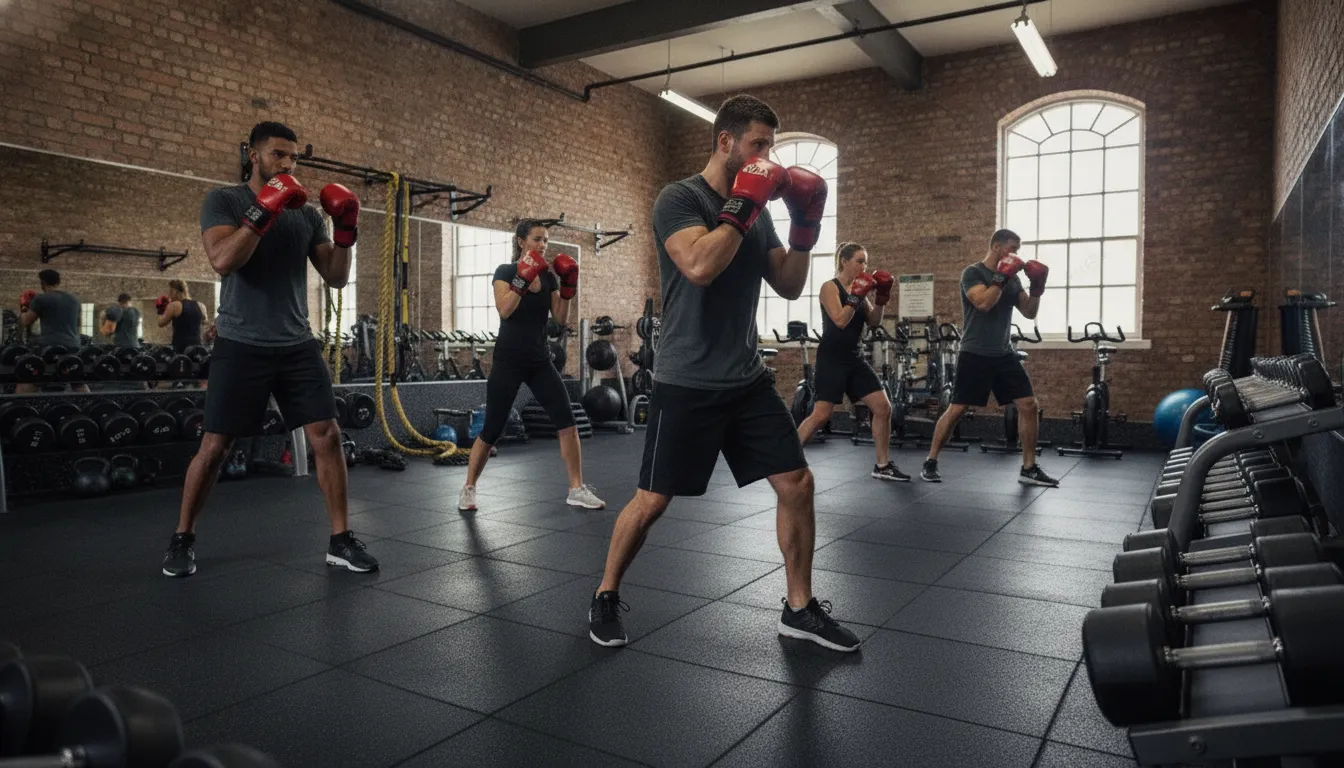
Do not start a hard round cold. Use easy movement to raise your heart rate, move your shoulders and hips, and find a controlled stance before the timer demands speed. A simple sequence is one minute of marching, one minute of step-out jacks. One minute of arm circles, and two minutes of relaxed shadowboxing with easy jabs and footwork.
After the final interval, keep moving for several minutes. Walk slowly, breathe steadily, and let your arms relax. Follow with comfortable mobility for the shoulders, upper back, hips, and calves. Drink water and allow enough time between hard sessions for energy and movement quality to return.
Stop for sharp pain, dizziness, unusual symptoms, or a sudden loss of control. If you have an injury or health concern, ask a qualified healthcare or fitness professional whether this training is appropriate.
Which Mistakes Make Boxing HIIT Less Effective?
Sprinting every round
Starting at maximum speed often produces tense shoulders, dropped hands, and poor footwork later. Work at a pace you can repeat, then progress when the final round remains organized.
Adding volume after technique fails
When movement becomes unreliable, simplify the combination, slow down, or take more recovery. More minutes cannot repair a broken pattern.
Changing every variable at once
Do not extend work, speed up punches, add complex combinations, and shorten recovery in one session. Record the timer and technical focus so you know what changed.
Find a coached Grind House class to put your boxing and HIIT practice into action.
Frequently Asked Questions
How long should a boxing HIIT workout be?
Start with 12 to 15 minutes of interval work after a warm-up. Add time only when you can keep your stance, breathing, and punch control consistent.
What is a practical boxing work-to-rest ratio?
Try 40 seconds of controlled work and 20 seconds of recovery, or use 30:30 if you need more recovery. The best ratio lets you repeat clean movement.
Do beginners need a heavy bag?
No. Shadowboxing is enough to practice stance, footwork, combinations, and returns to guard. Add a bag only with suitable equipment and instruction.
How can I make boxing HIIT easier?
Reduce punch speed, simplify combinations, remove jumps, shorten work intervals, or extend recovery. Keep technique clean while you build capacity.
Leave a Reply
You must be logged in to post a comment.