
The first interval of a HIIT class can tempt you to sprint ahead, especially when the room is moving together. A better approach is to treat the workout as a series of repeatable efforts: move with control. Respect the recovery period, and choose an option you can perform well more than once.
Review the Grind House class schedule and find your next HIIT session.
To pace yourself in HIIT class, start below your absolute maximum, protect your technique, and use each recovery interval to reset your breathing. The right effort will feel challenging without forcing you to sacrifice clean movement before the next round.
That matters in a Grind House workout, where fast-paced sessions combine bodyweight and equipment-based exercises with varied work-to-rest ratios. Your best pace may change with the movement, the interval, and your experience level. The goal is not to prove you can go all out once, but to build consistent effort across the full class. Start by understanding what sustainable intensity looks like in the first round.
How Do You Pace Yourself in a HIIT Class?
Pacing means choosing an effort you can repeat across the class, then using each recovery period to prepare for the next interval. It is not a test of whether you can reach maximum intensity during the first round. A strong pace leaves room for controlled movement, steady breathing, and enough focus to follow the coach when the exercises change.
That matters in a class that combines bodyweight movements with equipment-based exercises. Grind House describes its HIIT sessions as fast-paced, but the goal is not to sprint blindly through every interval. The work may feel different from one exercise to the next, and your best pace can change with the movement, load, and time available.
Use a repeatable effort, not your maximum effort
Start the first work period with an effort that feels challenging but sustainable. If you empty the tank immediately, you may spend the rest of class trying to recover instead of training well. Keep your range of motion controlled, choose a load that lets you maintain sound technique, and adjust your speed before your form breaks down.
Fitness level also changes how intensity feels. The CDC explains that an activity vigorous for one person may be moderate for someone with a different fitness level. Use that relative context rather than copying the pace of the person beside you. You should be working hard, but the appropriate effort is personal.
Recovery is part of the pace, not lost time. When the interval shifts to lower-intensity movement or rest, use it to settle your breathing, reset your position, and listen for the next instruction. Grind House uses varied work-to-rest ratios, so follow the timing for that day’s session rather than expecting every class to feel identical.
For the schedule, format, and coaching environment, review the Brooklyn HIIT class options. Arrive ready to work, but let repeatable effort, technique, and recovery determine how hard you push.
What Does the Right HIIT Effort Feel Like?
The right effort in a HIIT class is challenging enough to demand focus, but controlled enough that you can repeat quality movement through the session. There is no single speed, weight, or heart-rate number that fits every person. Relative intensity depends on your current fitness level, so the same exercise can feel vigorous to one participant and moderate to another.
Use effort and breathing as practical cues
The CDC describes a simple 0-to-10 effort scale. Zero represents the effort of sitting, while 10 represents maximal effort. On that scale, moderate effort is about 5 or 6, and vigorous effort begins around 7 or 8. These numbers are useful reference points, not grades you must hit every round.
Breathing and conversation offer another practical check. At moderate effort, you should be able to talk, but not sing. At vigorous effort, you may only be able to say a few words before pausing for breath. During a hard interval, that can be an appropriate sign of effort. If your breathing becomes too difficult to control early in the class, reduce your pace, load, or range of motion so you can keep moving well.
Think of pacing as finding a repeatable level of work. A fast-paced class does not require maximum effort from the first interval. Start with enough reserve to respond to the coach, maintain your technique, and return to the next work period after recovery.
Know when to reduce effort
Reduce effort when speed causes your form to break down. Reduce it when you cannot follow the movement safely or recover during the designated rest period. Choose a simpler variation, slow the tempo, use less load, or pause briefly while tracking the instructor’s next cue. These adjustments are part of learning how to pace yourself in HIIT class, not a sign that you are failing.
Sharp or unusual pain is different from normal exertion. Stop the movement and ask the instructor for guidance rather than trying to push through it. If you are unsure how to scale an exercise, ask for a modification before the next interval. The goal is steady, technically sound effort that supports the whole workout.
See the CDC’s guide to measuring physical activity intensity.
How Should You Adjust Speed, Load, and Range of Motion?
Scaling a HIIT movement is not backing out of the workout. It is choosing the version that lets you work with control, breathe, and repeat quality effort when the next interval starts. Intensity can change through speed, weight, work or rest periods, total duration, or the number of exercises you complete. That gives you several ways to adjust without treating every movement like a test of maximum output. HIIT intervals and recovery depend on making that effort repeatable.
| Adjustment. | Best use. | Goal. |
|---|---|---|
| Slow down. | Fast reps change form. | Control. |
| Lower load. | Weight disrupts posture. | Technique. |
| Shorten range. | Full range feels unstable. | Quality. |
Use the smallest adjustment that protects your technique.
Start by slowing the movement if speed is making your positions inconsistent. For a bodyweight squat, that may mean a steady descent and a controlled stand instead of rushing through partial repetitions. For a loaded movement, reduce the weight when you cannot maintain the intended posture or finish each repetition cleanly. A lighter load performed well gives you more useful practice than a heavier load that changes the movement.
Range of motion is another practical lever. If a full-depth squat, push-up, or lunge makes you lose control, shorten the range temporarily and keep the same basic pattern. You can build the range back as the movement becomes more stable. If a jump creates too much impact or disrupts your landing, use a step-back or another low-impact version approved by the instructor. HIIT movements can be modified for different fitness and ability levels, so ask for a clear option rather than guessing.
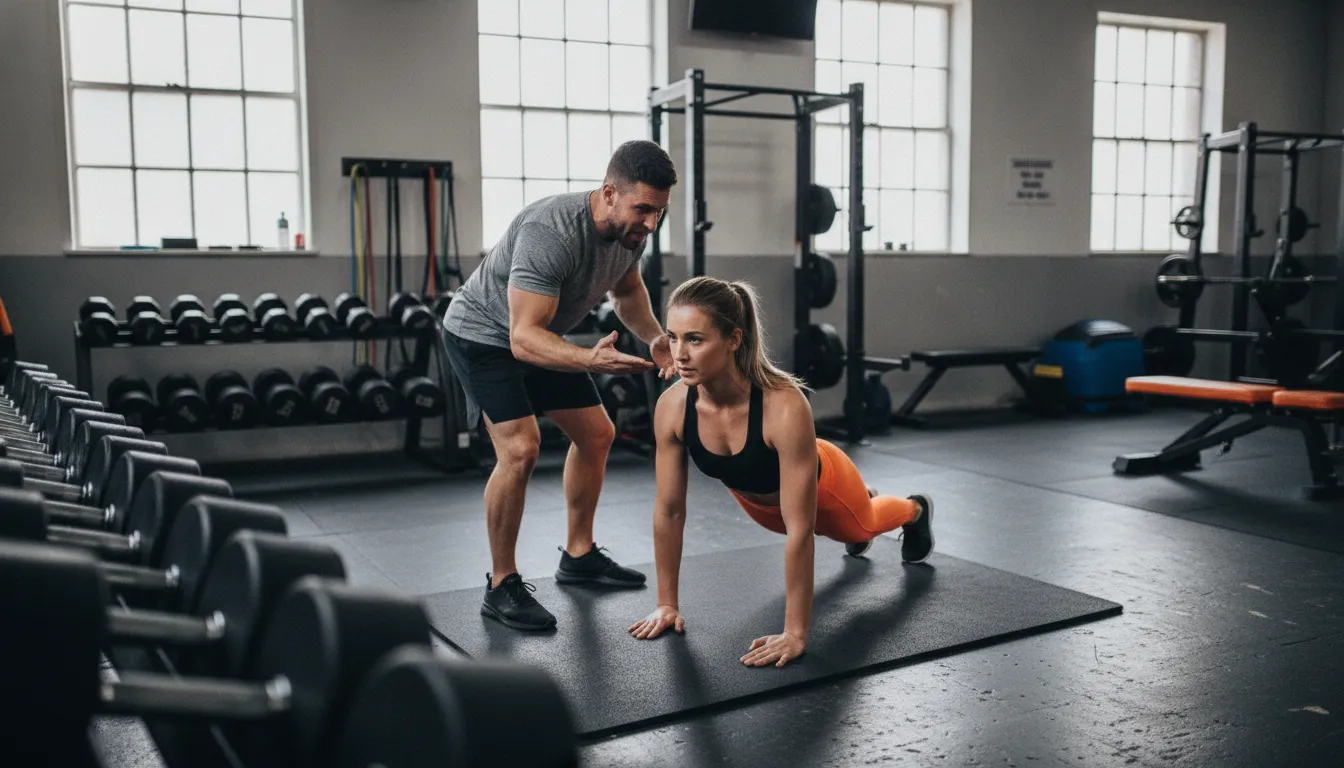
Use one change at a time when possible. Keep the range of motion steady while reducing speed, or keep the pace steady while lowering the load. This helps you notice which adjustment improves control. Once the technique is reliable, you can gradually add speed, load, or range of motion when you are ready. The goal is not to look fast for one interval. It is to produce sound movement across the class, with recovery used as intended.
Grind House recommends scaling intensity and prioritizing sound technique. That approach matters in a fast-paced class that combines bodyweight and equipment-based exercises. Quality movement should come before speed, and a modification should help you stay engaged rather than force you to chase someone else’s pace.
How Do You Use Work and Recovery Intervals?
Work and recovery intervals are two parts of the same training cycle. The work period asks you to apply focused effort, while recovery gives your breathing and movement a chance to settle before the next round. A useful interval is not the one that leaves you empty after the first effort. It is the one that lets you return to the next effort with control.
At Grind House, the class format can change from session to session. The gym describes its HIIT sessions as using varied work-to-rest ratios, so one class may feel different from the next. That variety is a reason to listen for the coach’s timing rather than arrive with a fixed personal formula. The goal is to pace yourself in HIIT class according to the movement, the interval, and the quality you can repeat.
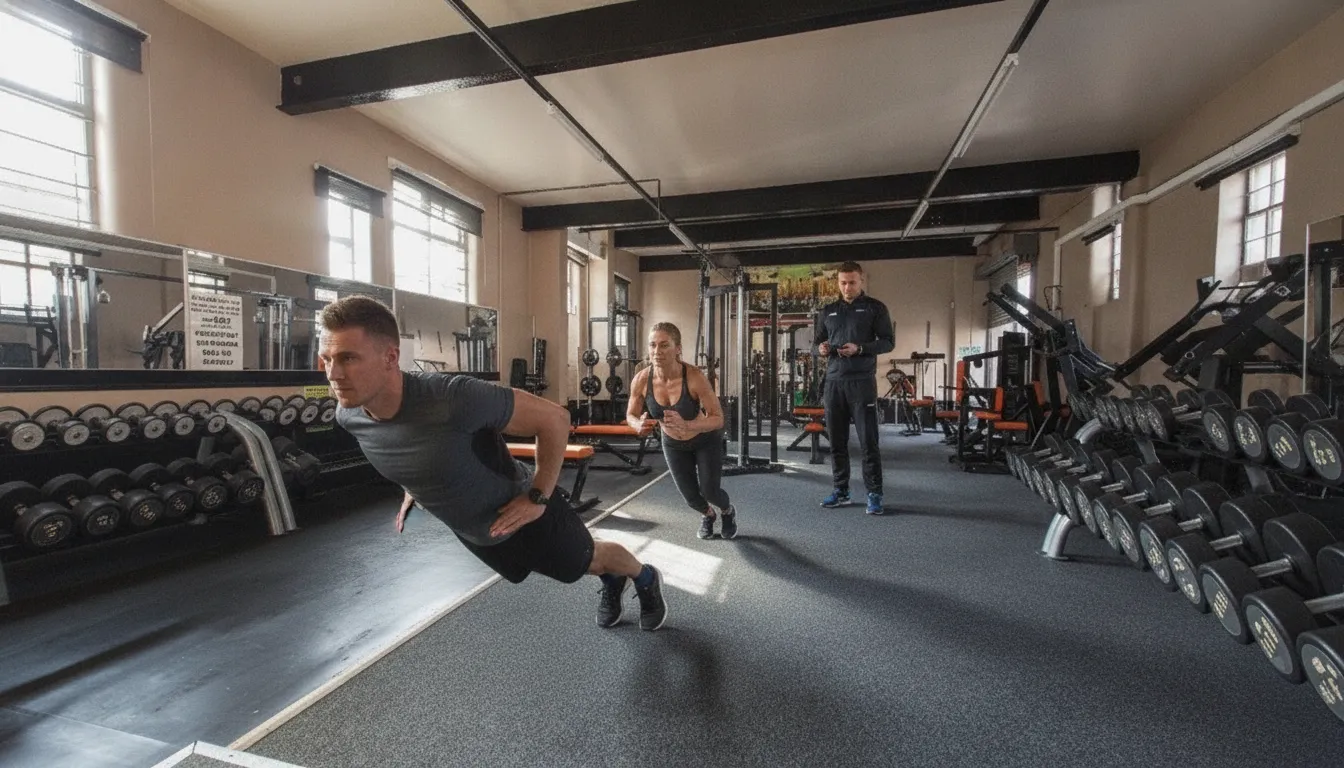
Use recovery as part of the work
Recovery does not mean you have failed or stopped participating. It may mean walking, breathing steadily, resetting your stance, or using a lower-intensity version of the movement. Rest or lower-intensity movement after a hard interval can help you catch your breath before the next one. The instructor’s direction matters because the planned ratio is part of that day’s training design.
- Listen for the interval. Start when the coach signals work and note whether the movement calls for speed, strength, or controlled repetitions.
- Choose a repeatable effort. Begin below your maximum so you can keep sound technique through the full work period.
- Make the transition deliberate. When work ends, move promptly into the assigned rest or lower-intensity option instead of adding extra repetitions.
- Use the recovery to reset. Slow your breathing, check your position, and prepare for the next movement without rushing.
- Adjust before form breaks down. If you cannot repeat the movement with control, ask the instructor for a modification or reduce the intensity.
Some HIIT programs use examples such as 20 seconds of work and 40 seconds of rest. But that is a competitor’s example, not a Grind House promise or prescription. Your class may use another ratio. Treat the clock as guidance, recovery as training, and technique as the standard for deciding how hard to push.
What Should Beginners Do When a HIIT Class Feels Too Fast?
A fast class can feel like a lot when you are still learning the movements, timing, and room setup. The goal is not to match the most experienced person in every interval. Pace yourself in HIIT class by choosing an effort you can repeat, then adjust the movement before your technique starts to fall apart. Progress at your own pace and build up when you are ready.
Change the movement before you abandon the interval
Start with the simplest version of the exercise the instructor demonstrates. If a jumping movement feels too aggressive, use a step-back or another low-impact option. If the prescribed load slows your form, reduce the weight. You can also shorten your range of motion or move more deliberately while keeping the same general pattern.
These adjustments are not a way of avoiding the workout. They are tools for keeping the work useful. HIIT movements can be modified for different fitness and ability levels, and Grind House encourages members to scale intensity while prioritizing sound technique. Quality movement matters more than rushing through a repetition. If you are unsure what to change. Ask the instructor. “What is the best modification for me here?” A clear question gives the coach a chance to offer a specific option.
Use the coach and your own feedback
Before class starts, mention that you are new or returning after time away. During the interval, watch for signs that your pace is too high. Your form may change, or you may struggle to follow the movement safely. You may also spend the next recovery period trying to recover from the previous one. The class is designed around varied work and rest, so use recovery instead of treating it as wasted time.
Discomfort from effort is not the same as sharp or unusual pain. If something feels sharp or wrong, stop that movement and tell the instructor. Do not try to push through it to prove that you can keep up. For more ideas on building a manageable starting point, review this beginner workout routine, then bring questions to your next session.
How Can You Finish Strong Without Chasing Maximum Effort?
Finishing strong does not mean turning the final interval into a test of how much discomfort you can tolerate. It means keeping enough control to move well, respond to the coach, and use the remaining work productively. In a class built around changing exercises and work-to-rest ratios, sustainable effort is a better goal than trying to win every interval.
Make your last interval look like training, not survival
As fatigue builds, return to the basics: steady breathing, a stable position, and a range of motion you can control. If your speed starts to pull your technique apart, reduce the pace or load before the movement becomes sloppy. Quality work gives you a clearer training signal than rushing through repetitions you cannot repeat safely.
Recovery is part of that effort. Use lower-intensity periods to bring your breathing down, listen for the next instruction, and prepare for the movement ahead. Grind House describes its HIIT sessions as fast-paced, but the class is designed to help members get fitter, faster, and stronger over time. It does not demand maximum effort from every person through every interval. The right level is relative to your current fitness and how you are moving that day.
That mindset also makes it easier to train consistently. A hard session should fit into your wider week rather than leave you unable to recover for the next one. If you are balancing different forms of conditioning, this guide to balance cardio and recovery can help you think about effort beyond a single class.
Finally, let the room work for you. A coach can offer a modification, and the people around you provide steady energy without requiring you to match their pace. Real training for real people includes scaling when needed, recovering with purpose, and showing up ready to work again.
Talk with Grind House about finding a sustainable pace for your next HIIT class.
Frequently Asked Questions
How can you pace yourself in a HIIT class?
Start at an effort you can repeat across several work intervals, rather than sprinting through the first round. Use controlled movement, keep your technique consistent, and treat the recovery period as part of the workout. If your form breaks down early, reduce speed, load, or range of motion before the next interval.
How do you know when to increase or reduce your effort during a HIIT class?
Increase effort when you can complete the movement with stable technique and still return to the next interval prepared. Reduce effort when you lose control, cannot follow the movement safely, or spend the entire recovery period trying to recover from one interval. A smaller adjustment is usually better than stopping abruptly.
How long should you recover between HIIT intervals?
Recover for the amount of time programmed by the instructor, since each class may use a different work-to-rest ratio. Use that period to lower your pace, breathe steadily, and prepare for the next movement. Do not add extra work during recovery just to match someone else’s pace.
Can beginners take a HIIT class without going all out?
Yes. Beginners can use a scaled movement, lighter load, slower pace, or shorter range of motion while learning the class format. Tell the instructor when you are unsure about a movement or need a modification, and progress when the current version feels controlled and repeatable.
Ready to Find Your HIIT Pace?
A well-paced class lets you focus on consistent effort, sound technique, and recovery instead of trying to match someone else’s speed. Review the schedule, choose a session that fits your availability, and arrive ready to adjust the workout to your current pace. When you are ready to take the next step, review the HIIT schedule and choose a class that feels like a practical fit.
Leave a Reply
You must be logged in to post a comment.