
Trying to choose between a cycling class and running? The better option is the one that fits your goals, schedule, and recovery capacity well enough to repeat. A cycling class gives you a coached, structured workout with adjustable resistance. Running gives you simple, portable training and direct practice for time on your feet. This guide compares cycling class vs running so you can build a training week that is challenging without becoming impossible to maintain.
Check the current Grind House class schedule and find a workout that fits your week.
What Is the Cycling Class vs Running Difference?
Cycling classes and running both train cardiovascular endurance, but they create different demands. Running is weight-bearing and built around repeated foot strikes. A cycling class is performed on a stationary bike, uses resistance and cadence, and follows an instructor-led structure. The choice comes down to the type of stress, coaching, and convenience you want from each session.
| Training factor | Cycling class | Running |
|---|---|---|
| Impact. | Low-impact pedaling with no repeated landing. | Weight-bearing movement with repeated foot strikes. |
| Workout structure. | Instructor-led intervals, climbs, and cadence changes. | Self-directed or coach-prescribed pace, hills, and intervals. |
| Equipment. | Stationary bike, resistance, and comfortable training clothes. | Running shoes and a route, track, or treadmill. |
| Setting. | Indoor, timed, and shared with a class. | Indoor or outdoor, with more control over location. |
| Best planning advantage. | A defined session that is easy to place on a calendar. | A portable workout that can happen almost anywhere. |
How Do Impact and Recovery Change the Choice?
Impact and recovery are not the same as workout quality. They are planning variables that help you decide where each session belongs. Running places your body in a weight-bearing pattern with repeated contacts against the ground. That can be useful when you want to improve running skill. But it also means your lower legs, feet, and connective tissues need time to adapt to the workload. A cycling class removes the repeated landing pattern while still allowing you to work hard through resistance and cadence.
That distinction matters when your week already includes demanding sessions. If a long run leaves you sore, an indoor cycling class may let you train your cardiovascular system without adding another run. If your goal is a road race, cycling should support your running rather than replace all of it. You still need regular, appropriate running exposure to practice pacing, foot strike, and the feeling of holding a target effort on the road or treadmill.
Use recovery signals instead of rigid rules
Pay attention to more than muscle soreness. A useful check is whether you can move normally, sleep well, complete your warm-up, and maintain the quality of your next planned session. If your stride feels unusually guarded or your energy remains low, reduce intensity or choose an easier movement day. If the bike allows you to complete a controlled session without disrupting the rest of your week, it can be a smart cross-training option.
Recovery also includes the practical details that decide whether training happens. A class with a fixed start time may reduce decision fatigue, while a run may be easier when you have a flexible window and a reliable route. Neither format automatically creates better results. The better choice is the one that matches your current training load and leaves enough capacity for the work you care about most.
Which Cycling Class vs Running Option Fits Your Goal?
The most useful comparison is not which workout wins in every category. It is which format gives you the right training stimulus with the fewest barriers. Choose cycling when structure, lower impact, and coached intensity help you stay consistent. Choose running when you want portable cardio, outdoor time, or direct preparation for a running event.
Choose a cycling class for coached, repeatable cardio
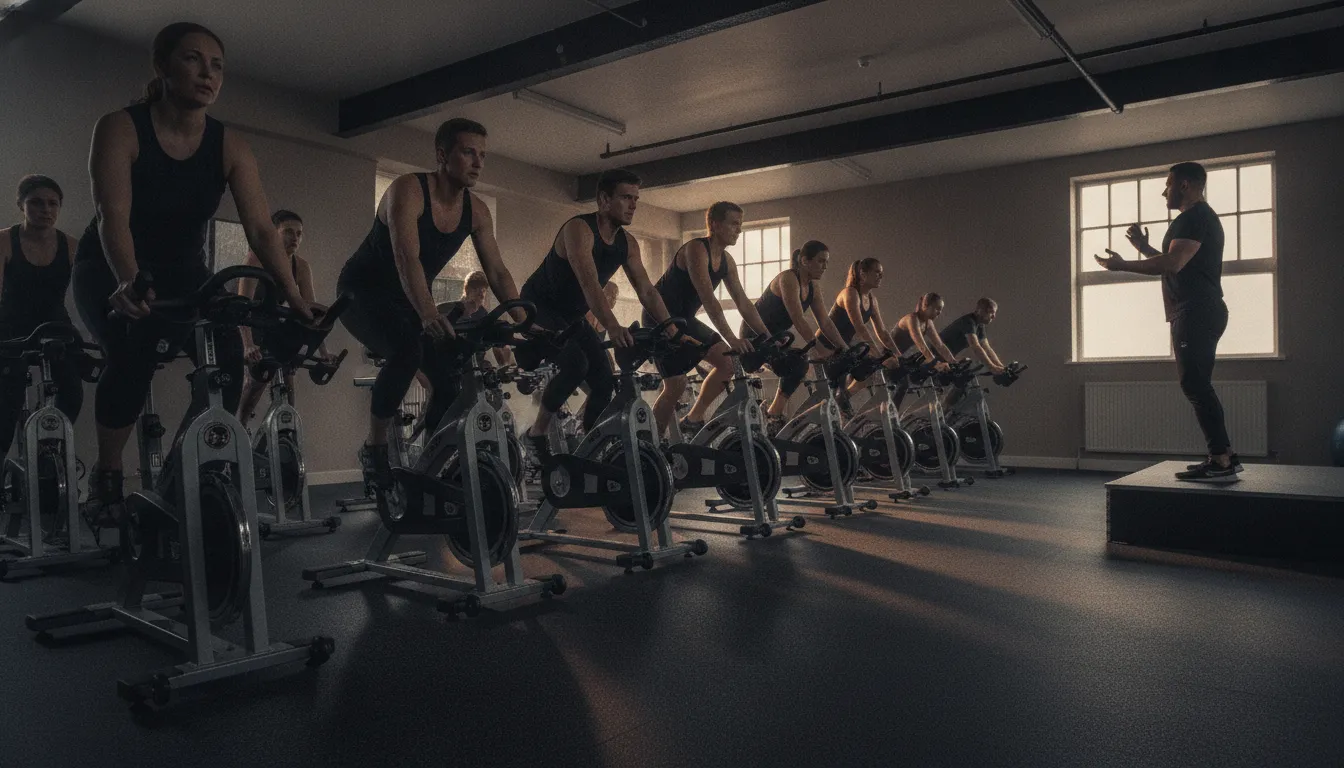
A cycling class can make a busy training week easier to organize. You arrive at a set time, follow a planned progression, and use resistance to adjust the challenge. That structure is useful when you want a hard cardio session without spending extra time deciding whether to run intervals, hills, or a steady route.
Indoor cycling also gives you a way to train your cardiovascular system while changing the impact profile of your week. That does not make every ride easy. Resistance, cadence, and class intensity can still create a demanding session. It simply means the movement pattern is different from repeated running strides.
Choose running for portability and running-specific goals
Running is hard to beat for convenience. You can run outdoors, use a treadmill, or build a short session around the time you have available. It is also the more direct choice if you are preparing for a 5K, half marathon. Road race, or any goal that requires you to become more comfortable covering distance on foot.
The tradeoff is that running asks your body to absorb and repeat landing forces. That is not a reason to avoid it. It is a reason to increase distance and intensity gradually, pay attention to recovery, and avoid turning every run into a test.
Choose the format you will actually repeat
Consistency is a training advantage. A theoretically perfect workout does not help if the commute, weather, uncertainty, or lack of motivation keeps you from doing it. A scheduled class may be the better choice for someone who thrives on a start time and group energy. A run may be the better choice for someone who values independence and flexible timing.
Before deciding, ask three practical questions:
- Which format can I reach or start reliably on my busiest day?
- Do I want coaching and a planned session, or control over my own route and pace?
- Can I recover well enough to complete the next important session?
How Should Cycling Class vs Running Fit Your Week?
A strong training week balances hard sessions with easier movement and recovery. Cycling can serve as your primary cardio work, a cross-training session between runs, or a structured alternative when you want to train without adding another run. Running can serve as an easy aerobic session, a long effort, or a race-specific workout. Start with the smallest schedule you can sustain, then add volume only when recovery is steady.
Three-day example: build a reliable base
- Day 1: Cycling class at a controlled, sustainable effort.
- Day 2: Rest, mobility, or an easy walk.
- Day 3: Easy run or run-walk based on current fitness.
This setup gives you two different cardio exposures without stacking demanding sessions on back-to-back days. It is a practical starting point for someone returning to regular training or managing a crowded calendar.
Four-day example: combine structure and mileage
- Day 1: Cycling class with intervals or resistance changes.
- Day 2: Easy run at a conversational effort.
- Day 3: Rest or strength training with a focus on good movement quality.
- Day 4: Longer easy run, or a second cycling class if running recovery is limited.
The key is to keep the easy session easy enough to support the next hard session. If both cycling and running are performed at maximum effort, the plan stops being balanced even if the calendar looks organized.
Five-day example: support a runner with cross-training
- Day 1: Quality run, such as controlled intervals or hills.
- Day 2: Easy cycling class or relaxed spin.
- Day 3: Rest or strength training.
- Day 4: Easy run.
- Day 5: Longer run, or cycling if the week needs less running impact.
This is not a universal prescription. A new runner, a returning athlete, and an experienced racer need different progressions. Use the example as a scheduling framework, not a requirement. The CDC also recommends combining aerobic activity with muscle-strengthening work each week, so a complete plan should include more than cardio alone.

Use this guide to plan a class schedule that supports your weekly training load.
Is a cycling class a good substitute for a run?
A cycling class can substitute for some of the cardiovascular work in a training week, but it does not perfectly replace running-specific practice. It can build aerobic fitness, challenge your legs, and provide a demanding session with a different movement pattern. It cannot fully prepare your feet, lower legs, and overall running rhythm for a race on foot.
For general fitness, swapping one run for a cycling class may be a smart way to add variety or manage the total stress of the week. For a running event, keep at least some running in the plan so your body practices the skill you want to improve. The closer the event gets, the more important event-specific training becomes.
What should you choose at Grind House?
Grind House cycling is a guided indoor cycling experience with music, adjustable resistance, and options for all levels. The class page notes that bikes accommodate SPD and Delta cycling shoes or normal sneakers with cages. Cycling shoes are not provided, so check the current class details before your first visit.
Start with the Grind House cycling class details if you want an instructor-led cardio session. If you are still comparing formats, browse the full Grind House class lineup to see how cycling fits alongside boxing, HIIT, Turf & Tread, yoga, kettlebell, Pilates and Barre fusion, and cardio dance.
For a New York professional, the right decision may also depend on whether the workout fits before work, during a lunch break, or after the commute. A class with a fixed start time can create useful accountability. A run may be more practical when your schedule changes day to day. The best option is the one you can place on the calendar and repeat without neglecting sleep, strength work, or recovery.
How can you test the decision before committing?
Do not decide from a calorie estimate or a single hard session. Test each format under normal conditions. Try a cycling class on the day you would realistically attend it. Take an easy run when you have the time and route you would normally use. Then compare how each workout affects your energy, motivation, schedule, and ability to complete the next session.
Track four simple signals for two weeks:
- Attendance: Did the workout happen as planned?
- Effort: Did the session feel appropriately challenging rather than all-out?
- Recovery: Could you move well and train again when planned?
- Enjoyment: Did the format make you want to come back?
If you are in Manhattan or elsewhere in New York and want a more structured option, review the current Grind House indoor cycling guide for Flatiron. You can also contact the team through the approved Grind House contact page with questions about class fit, equipment, and the current way to get started.
Talk with Grind House about the right starting point for your training week.
Frequently asked questions about cycling class vs running
Is a cycling class better than running?
Neither is better for everyone. A cycling class may be the better fit for coached, low-impact cardio and a fixed schedule. Running may be better for portability, outdoor training, or race preparation. Your goals, preferences, and ability to recover should decide the balance.
Can cycling replace running for cardio?
For general cardiovascular training, cycling can replace some running sessions. It does not replace running-specific practice for an event because it does not train the same foot-strike and running mechanics. Use cycling as a primary option, cross-training tool, or way to add variety.
Is a cycling class good for beginners?
A cycling class can be beginner-friendly when the instructor explains the setup, resistance, and effort cues clearly. Start at a manageable resistance, follow your own pace, and ask about bike setup before class. Confirm the current class description and equipment requirements before attending.
How many cycling classes should I take each week?
There is no single correct number. Start with one or two classes, leave room for recovery, and consider what other running, strength, or sports sessions are in your week. Increase frequency only when you can maintain good energy and complete the rest of your plan consistently.
In the end, cycling class vs running is not a debate you have to settle forever. Use running when you want portable, race-specific work. Use cycling when structured indoor training, group energy, or a different impact profile helps you stay consistent. Build the week you can repeat, then let your results guide the next adjustment.
Training note: This article is general fitness education, not individualized medical or training advice. If you have an injury, medical condition, or a specific event goal, consult an appropriately qualified professional.
Leave a Reply
You must be logged in to post a comment.