
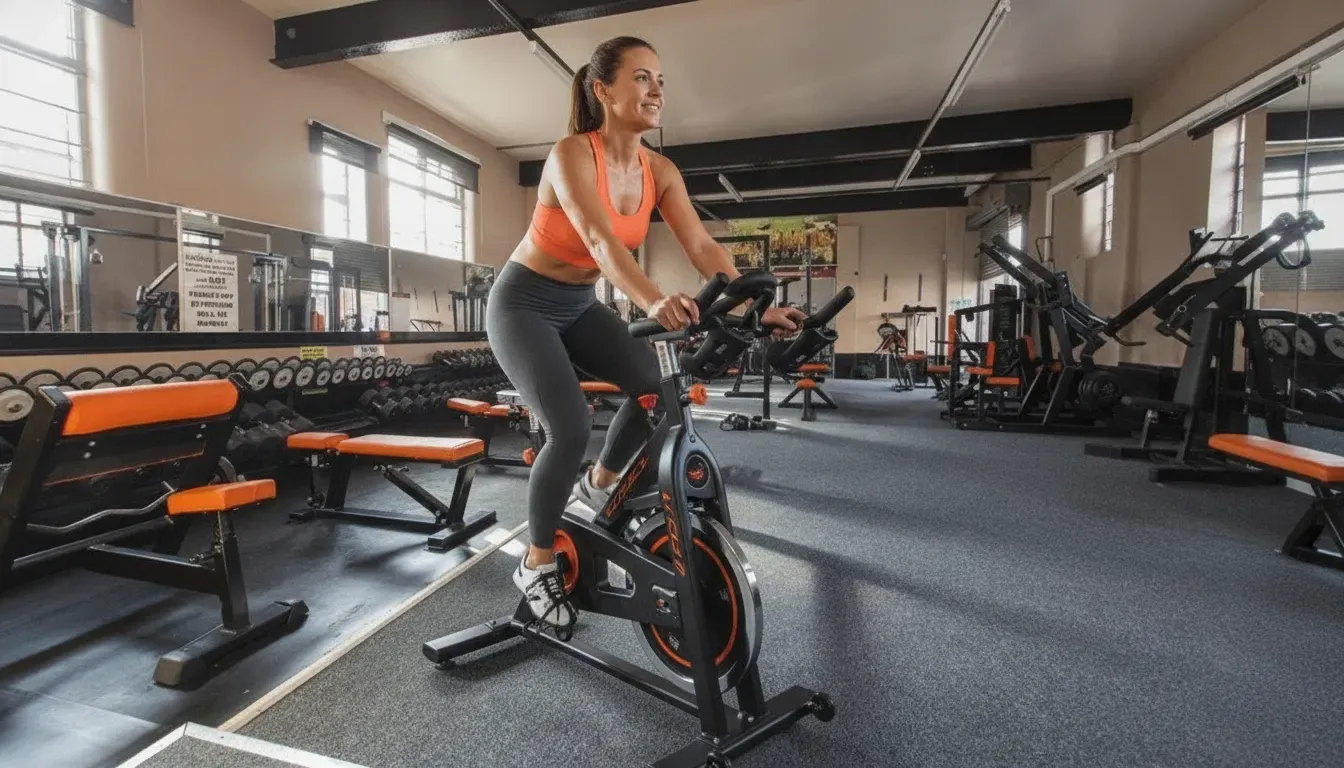
Wondering what to wear to spin class for the first time? Keep it simple: choose fitted athletic clothes that let you move, secure supportive shoes, and bring water so you can focus on the ride instead of adjusting your outfit. You do not need a highly specialized wardrobe to get started.
Plan your first ride at Grind House with a 3-day trial.
What should you wear to spin class?
Quick answer: Wear a breathable athletic top, fitted shorts or leggings, comfortable socks, and supportive athletic shoes. Your clothing should stay close to your body without restricting your breathing or leg movement. Skip loose fabric that could catch on the bike, heavy layers that trap heat, and anything you would not want to sweat in.
The best first-class outfit is usually something you already trust at the gym. A new outfit can look good on a hanger but distract you if it shifts, rubs, or needs constant adjustment. Try a short movement check before leaving: squat, reach forward, raise your arms, and take a few steps. If the outfit stays comfortable through those movements, it is a strong starting point for the bike.
Indoor cycling is repetitive, seated movement with changes in pace and resistance. That makes comfort and secure fit more useful than fashion or technical labels. You can refine your choices after one or two rides based on what feels good for your body.
Why do fitted, moisture-wicking clothes work best?
Fitted, moisture-wicking clothing works well because it manages sweat while reducing fabric that can shift near the pedals and moving parts. The fit should be close, not restrictive. You should be able to breathe freely, bend at the hips, and move your shoulders without tugging at your shirt.
For your top, choose a tank, fitted T-shirt, or lightweight long-sleeve layer. A breathable material can feel more comfortable as the class gets warmer. If you prefer more coverage, a fitted top is still practical as long as it does not bunch under your arms or fall forward when you lean toward the handlebars.
For bottoms, leggings, cycling shorts, training shorts, or close-fitting athletic pants can all work. Look for a waistband that stays in place when you hinge forward. Shorts should allow your legs to move freely without riding up. Leggings should feel secure at the waist and knees without creating pressure points.
Avoid jeans, stiff fabrics, long skirts, and loose sweatpants. They can limit movement or become uncomfortable during repeated pedaling. Very baggy pants also create more fabric around the crank and pedal area, so a streamlined fit is the safer practical choice.
You do not have to buy padded cycling shorts for a first class. Some riders like the extra cushioning, while others prefer regular training shorts or leggings. If you decide to try padded gear later, choose a fit that stays in place and does not create new rubbing or pressure.
Can you wear regular sneakers to spin class?
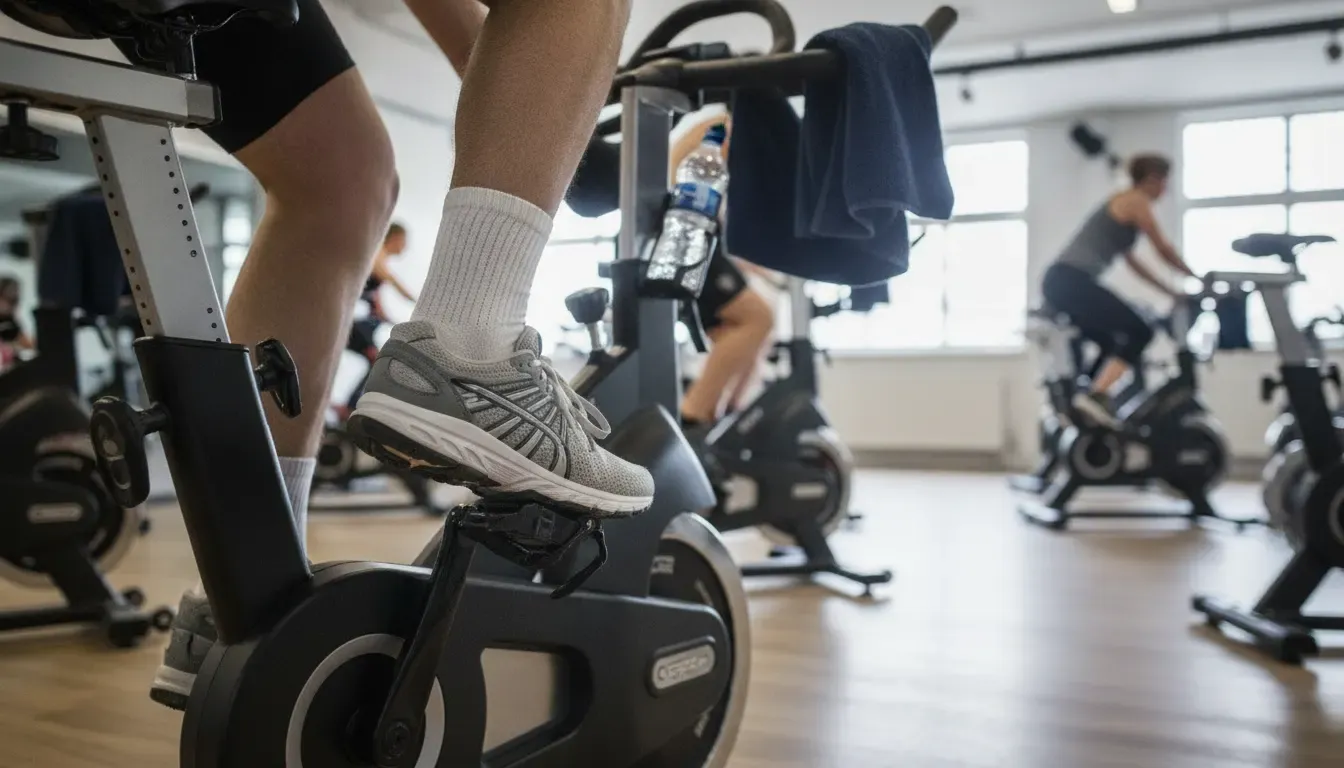
Yes, regular athletic sneakers can work when the indoor cycling bike has toe cages or straps that hold the shoe in place. Ask the studio what its bikes use before class, and make sure your sneakers are clean, supportive, and tied securely.
Regular sneakers are often the easiest option for a first ride because you already know how they fit. Choose a pair with a secure heel, a stable sole, and laces or closures that will not loosen. Avoid walking shoes with a very soft, unstable upper, sandals, slides, or shoes with loose straps.
The important question is not whether your shoes look like cycling shoes. It is whether they fit the pedal system and let you maintain a stable foot position. Never force a shoe into a clip or cage that does not fit. If the setup feels unclear, ask the instructor or front desk for help before the class begins.
At Grind House, the cycling class information says bikes support SPD and Delta clip cycling shoes and also have cages for normal sneakers. Cycling shoes are not provided, so beginners who do not own clip-in shoes can plan to use the sneaker option. Policies and equipment can change, so confirm the current setup when you book or arrive.
Do not test clip-in shoes for the first time while the class is already moving. If you bring them, arrive early enough to confirm the cleat type, practice clipping in and out, and ask for a bike adjustment. If you use regular sneakers, check that both feet are seated securely in the cages before the warm-up starts.
What shoes should you bring to an indoor cycling class?
Bring the shoes that match the studio’s pedal system and give you the most secure, comfortable starting point. For most first-time riders, that means clean athletic sneakers unless the studio specifically requires cycling shoes. If you already use clip-in shoes, verify whether your cleats are SPD or Delta compatible before class.
Clip-in cycling shoes connect to compatible pedals through cleats on the sole. They can make the foot-to-pedal connection feel more secure, but they are not a requirement at every studio. The exact cleat standard matters. A shoe can be a legitimate cycling shoe and still be incompatible with a particular bike.
Use the following checklist before putting shoes in your gym bag:
- Confirm whether the bikes use cages, SPD clips, Delta clips, or another system.
- Choose regular sneakers with a secure fit if cages are available.
- Check that laces are tied and tucked away from the pedals.
- Do not bring sandals, slip-on shoes, or worn-out soles for a moving bike.
- Ask for help if you are unsure how to secure your feet.
Shoe comfort also affects the rest of your outfit. A secure shoe lets you concentrate on posture, cadence, and the instructor’s cues rather than worrying about your feet sliding. If you notice numbness, sharp pressure, or pain, ease off and ask the instructor to check your position.
Review the Grind House Cycling class details before choosing your first outfit.
What should you pack besides your workout clothes?
A small, practical bag is enough for most indoor cycling classes. Pack water, a towel if you like to use one, and any personal items you need after training. You do not need to bring a complicated collection of accessories to have a productive first ride.
Water and hydration
Bring a filled water bottle unless the studio gives you a different instruction. Take normal sips as needed rather than waiting until you feel distracted by thirst. If you have a medical condition or a personal hydration plan, follow the guidance from your qualified clinician.
Towel and hair accessories
A small towel can be useful during a sweaty class. If you have long hair, secure it so it stays out of your face and does not interfere with your helmet-free workout setup. A simple hair tie or headband is usually more practical than an accessory you will need to adjust repeatedly.
Layers for the trip there and back
Wear a light layer over your class clothes if you are commuting through New York weather. Choose something easy to remove before the ride and put back on afterward. Avoid arriving in a heavy layer that you plan to keep wearing during class, since overheating can make the session less comfortable.
What not to pack
Leave valuables and bulky items at home when possible. You also do not need special gloves, a heart-rate monitor, or expensive cycling accessories unless they are part of your own routine. Start with the basics, learn what the class feels like, and add equipment only when it solves a specific comfort or training need.
How can beginners dress for comfort and safety?
Beginners should dress for stable movement, clear visibility, and easy adjustments. Wear clothing that stays out of the way, shoes that secure to the pedals, and layers that can be removed before you become overheated. Comfort is not a luxury here; it helps you pay attention to form and instruction.
Check the fit before you leave
Do one quick test at home. Sit on a chair and lean forward as if you were holding handlebars. Check whether your waistband rolls, your shirt falls over your face, or your shorts ride up. Fix those issues before class rather than discovering them during the warm-up.
Choose support without over-tightening
A sports bra or supportive base layer can make repeated movement more comfortable, but nothing should make it difficult to breathe. The same principle applies to socks and shoes. Secure is good; painfully tight is not. If you feel pressure, tingling, or numbness, make an adjustment and tell the instructor if it continues.
Keep the pedal area clear
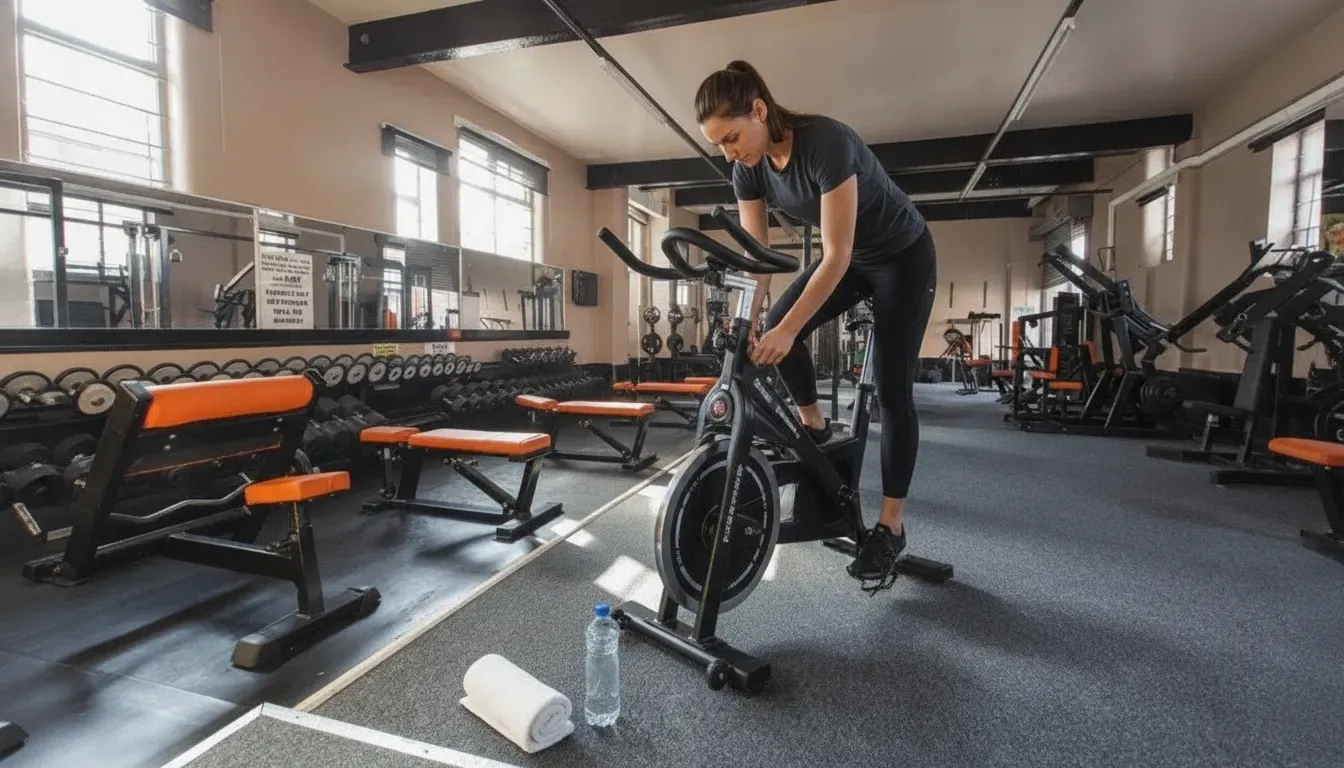
Tie long laces, remove loose accessories, and avoid pants that can drag near the crank. This is a small preparation step, but it keeps your attention on the class. Your phone, keys, and other items should stay in the designated storage area rather than beside the pedals.
Do not copy an advanced rider’s setup
A regular rider may have specialized shoes, padded shorts, cycling gloves, or a particular layering system. That does not mean you need the same setup for your first visit. Use the equipment the studio makes available, follow the instructor’s directions, and make notes about what you would change next time.
What should you do before the class starts?
Arrive early enough to find the room, check the bike, and ask questions without rushing. The exact arrival recommendation depends on the studio and schedule, so confirm it when you book. A few unhurried minutes can make the difference between starting relaxed and spending the first song trying to solve an equipment problem.
- Tell the instructor that you are new to the class.
- Confirm whether you will use cages or clip-in pedals.
- Ask for help setting the seat and handlebars to a comfortable position.
- Check that your water bottle and towel are secure and out of the pedal path.
- Test your foot position before the warm-up begins.
- Keep the first ride at an effort you can control, and follow the instructor’s cues.
Your first class is not a test of how much gear you own. It is an opportunity to learn the room, the bike, and the rhythm of the workout. If your clothes are comfortable, your shoes are secure, and you can ask questions, you have handled the most important preparation.
What should you wear to Grind House Cycling?
For Grind House Cycling, start with fitted workout clothes, clean athletic sneakers, comfortable socks, and water. Grind House’s class information describes cages for normal sneakers as well as support for SPD and Delta clip cycling shoes, and it notes that cycling shoes are not provided. If you plan to use clip-in shoes, confirm compatibility before you arrive.
Grind House offers Cycling as part of a wider group fitness lineup in New York, so your preparation can stay straightforward even if you are new to boutique fitness. Review the current class information, choose a manageable outfit, and ask the team any equipment question that is not answered online.
For more context on the experience, read the guide to Cycling classes in Flatiron or explore the benefits of spin classes.
Get ready for your first Grind House ride and choose a time that fits your routine.
Frequently asked questions about what to wear to spin class
Do I need special clothes for spin class?
No. Start with clean, breathable workout clothes that fit close to the body without restricting movement. Leggings, fitted shorts, a tank top, or a lightweight athletic T-shirt can all work. Specialized cycling clothing is optional and can be added later if it improves your comfort.
Can I wear leggings to spin class?
Yes. Leggings are a common choice because they allow movement and keep loose fabric away from the pedals. Pick a pair with a waistband that stays in place when you lean forward and a fabric that feels comfortable while you sweat.
Are cycling shoes required for a beginner spin class?
Not always. Some studios provide pedal cages that work with regular athletic sneakers, while others may use a clip-in system or have different rules. Ask the studio before your class. At Grind House, the cycling information lists cages for normal sneakers and SPD and Delta clip support, while noting that cycling shoes are not provided.
Should I wear shorts or leggings to spin class?
Choose whichever keeps you comfortable and lets your legs move freely. Shorts can feel cooler, while leggings provide more coverage. The best choice is a secure fit that does not bunch, chafe, or require frequent adjustment.
What should I bring to my first spin class?
Bring water, comfortable workout clothes, secure athletic shoes, and a small towel if you prefer one. Arrive ready to ask about the bike and pedal system. You do not need expensive accessories or a complete cycling wardrobe for a strong first visit.
Contact Grind House if you have a question about class equipment or arrival details.
Leave a Reply
You must be logged in to post a comment.