Ashton Bailey

Founder & Owner, Grind House

In 2019, Ashton Bailey purchased a rundown gym in Williamsburg, Brooklyn — just six months before COVID forced a seven-month shutdown and wiped out the entire membership base. Instead of walking away, Ashton and his partners reinvested in themselves and rebuilt from the ground up, turning chaos into a new kind of fitness brand. That rebirth became Grind House: a no-frills, unapologetic gym built for real people who want to feel part of something the moment they walk through the doors. Today, Grind House is a rapidly expanding fitness brand known for its community-driven culture, high-performance training environment, and refusal to follow the traditional big-box gym playbook.

🏋️ Gym Owner since 2019
📍 Manhattan & Brooklyn, NYC
💪 COVID Recovery & Rebuild
🏆 Boutique Fitness Expert

BLOGS

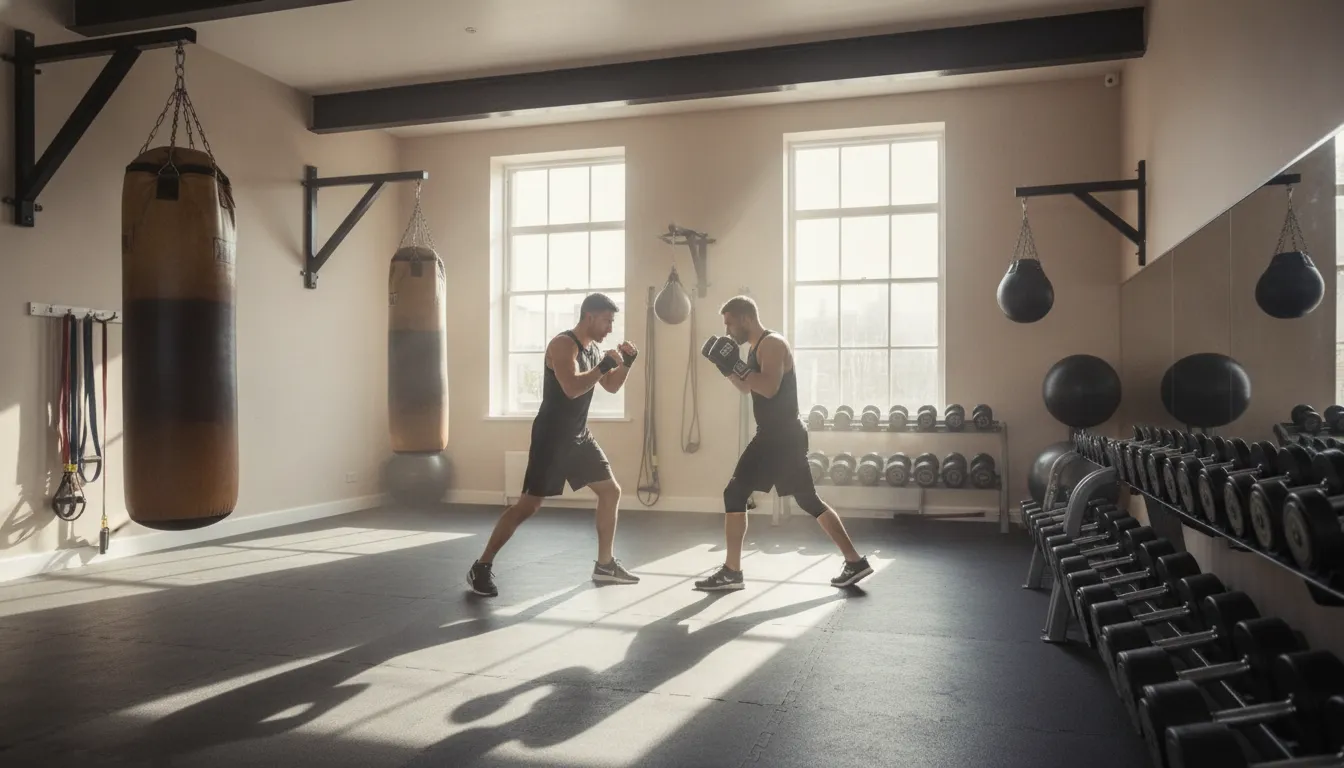
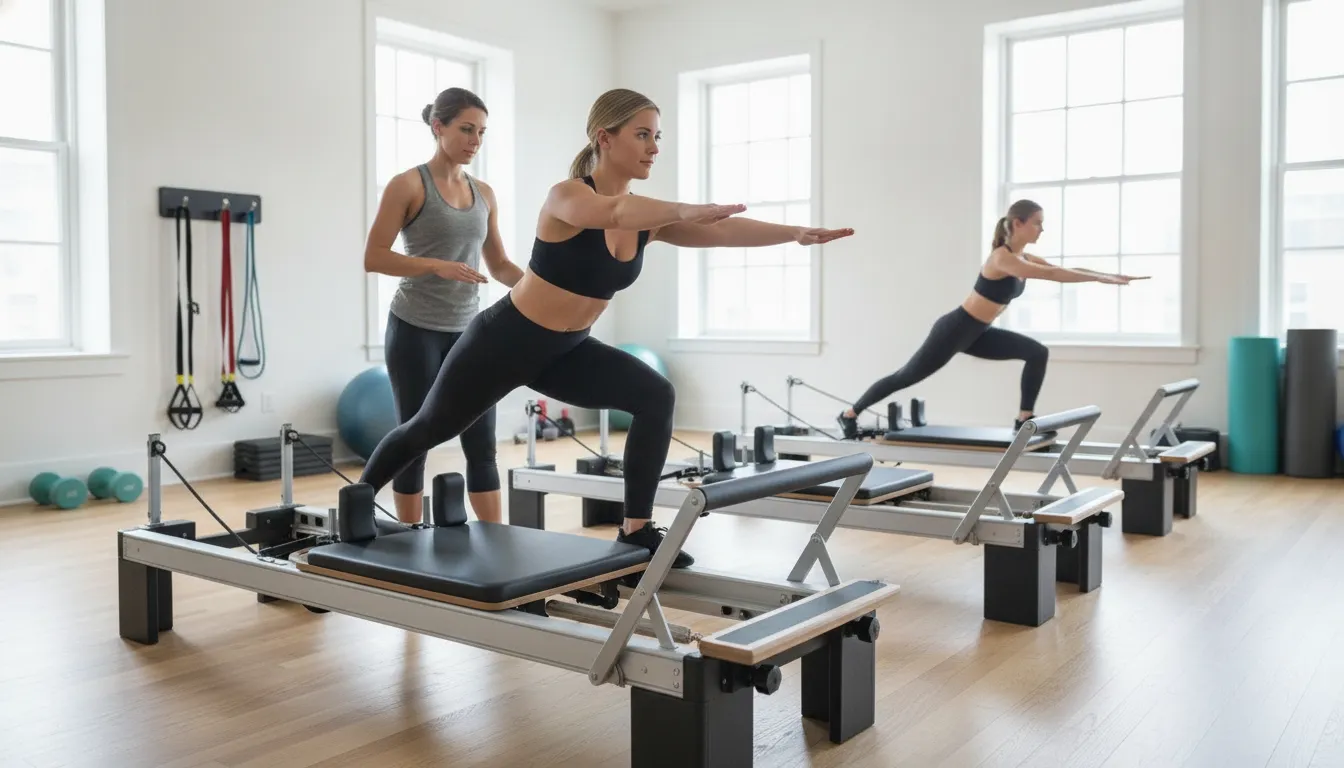
  • Personal training in a bright modern boutique gym in Williamsburg, Brooklyn

    Personal Training Williamsburg: Find the Right Trainer

    Choosing a personal trainer is less about finding the loudest coach in the room and more about finding someone who understands your goals, experience, and schedule. In Williamsburg, that decision also means choosing the right training environment. A corporate gym can offer scale, while a boutique facility can make coaching feel more personal and connected to the neighborhood.

    The right personal training williamsburg program should match your goals with individualized programming, clear progress tracking, and a trainer whose experience fits the way you want to workout. At Grind House, one-on-one training covers strength, endurance, agility, mobility, Boxing, Kettlebells, and functional movement at 203 Berry Street in Brooklyn.

    That combination of focused coaching and a community-driven setting gives you more to evaluate than credentials alone. Before comparing programs, consider how consistent guidance can affect motivation, confidence, and your ability to stay engaged with training over time.

    Contact Grind House in Brooklyn to schedule a personal training conversation today.

    Why Work With a Personal Trainer in Williamsburg?

    A personal trainer can make a workout plan easier to follow by giving it structure, feedback, and a human connection. Individualized coaching may also strengthen confidence and autonomous motivation, helping you build habits that support better self-reported health, physical function, and energy over time.

    One-on-one coaching is useful when good intentions keep losing to a crowded schedule. A professional instructor can turn a broad goal into a clear session plan, then adjust the work as your strength, mobility, or conditioning changes. You are not left guessing which exercise comes next or whether your technique matches the goal. That clarity makes it easier to show up and stay engaged with an exercise program.

    There is also a behavioral benefit to having a coach who knows your goals. Research on individualized training found that a sense of social belonging, alongside motivation and confidence, can support adherence to an exercise program. In practice, that can mean a workout feels less like another obligation and more like a consistent appointment in your Williamsburg routine. The research is available through PubMed.

    Confidence makes consistency more realistic

    Self-efficacy is the belief that you can perform a task successfully. It matters when a movement feels unfamiliar, a session gets difficult, or progress seems slower than expected. Individualized training supports basic psychological needs, including self-efficacy, and those needs are associated with greater autonomous exercise motivation and life satisfaction. That is different from relying only on outside pressure. You begin to understand what you are doing and why, which can make independent training feel more manageable.

    More energy for the rest of your week

    The same research linked autonomous exercise motivation with exercise self-efficacy and greater self-reported health and energy. That does not promise an overnight transformation, but it points to a more durable outcome than simply completing a few hard sessions. A thoughtful program can help you build capacity while keeping the work appropriate to your experience and current condition.

    For people balancing work, errands, and life around Brooklyn, the value is practical: less wasted time. Clearer direction, and a better reason to keep the next workout on the calendar. Grind House offers a local setting for that approach at 203 Berry Street. If you want more context on fitting coaching into a demanding schedule, read about personal training.

    Boutique Studio vs. Corporate Gym for Personal Training

    A boutique studio offers a more focused alternative to the typical corporate gym experience. Instead of navigating a crowded floor with generic programming, members can work with professional instructors across strength, mobility, flexibility, Kettlebells, Boxing, functional movement, and conditioning. The result is a training environment built around attention, variety, and community.

    The difference is not about whether a corporate gym has enough equipment. It is about what happens between arriving and leaving. In a large, membership-driven facility, personal training can feel like an add-on to an otherwise independent workout. A boutique studio makes coaching, conversation, and accountability part of the environment. The room is smaller, the interaction is more direct, and the plan has a clearer connection to the person doing it.

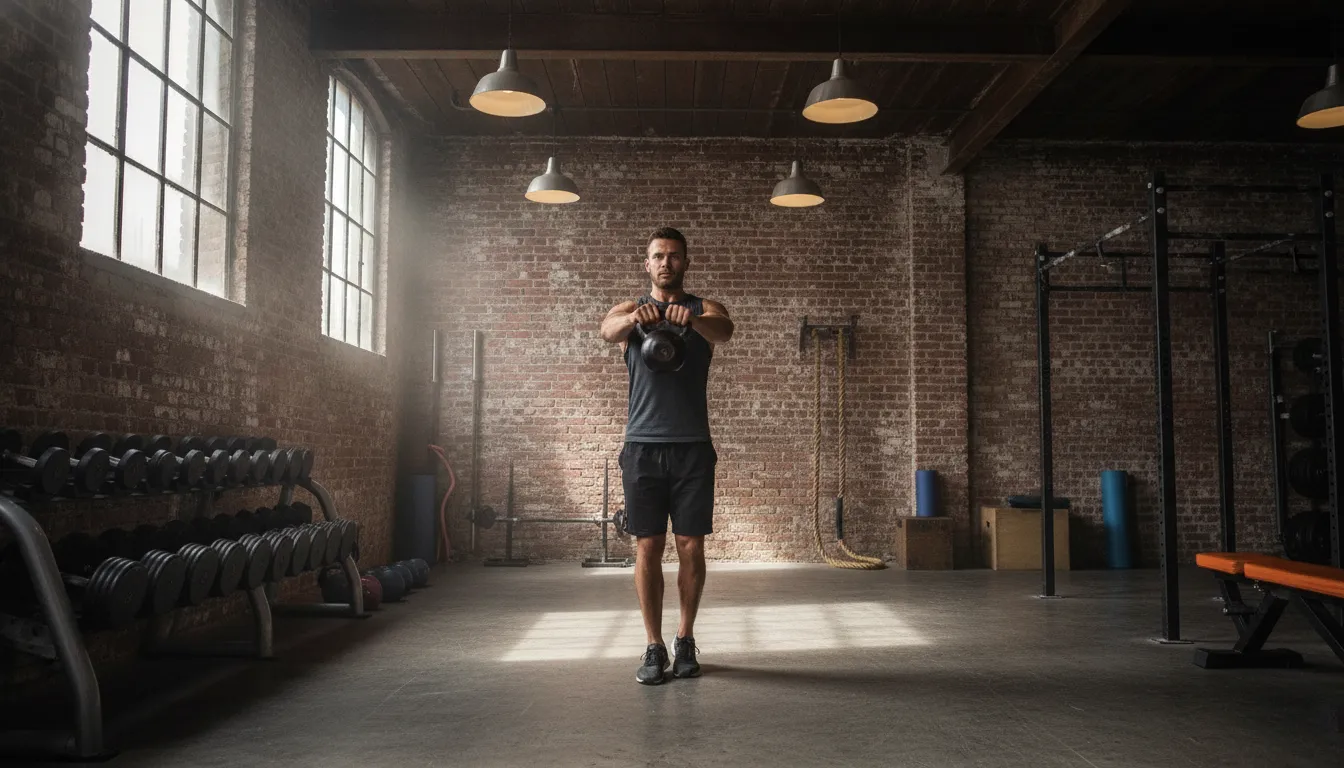
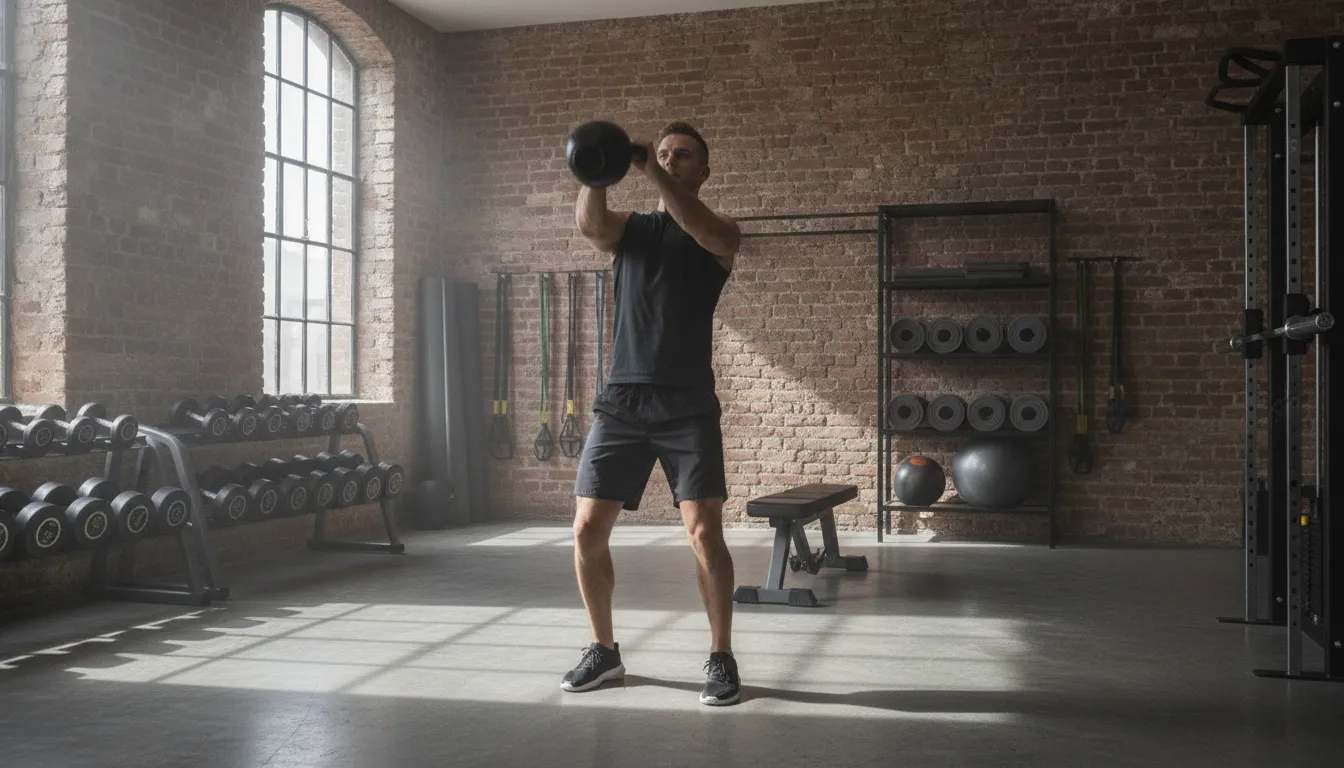
    A personal trainer coaching a member through a kettlebell exercise in a bright boutique Williamsburg fitness studio.
    One-on-one coaching at a boutique studio keeps the workout built around your movement and goals.
    AspectBoutique StudioCorporate Gym
    CoachingProfessional instructors who learn how you move.Add-on sessions beside an independent workout.
    EnvironmentSmaller, community-driven room.Large floor with more anonymity.
    Training rangeStrength, mobility, flexibility, Kettlebells, Boxing, and more.Varies by location, often generic.
    AccountabilityRegular feedback from a coach who knows your goals.Mostly self-directed unless booked.

    More than one training lane

    Grind House has a deep field of professional instructors with experience across different areas of fitness. That matters when your goals do not fit neatly into one category. A program may need strength work alongside mobility and flexibility, or conditioning alongside functional movement. It may also use Kettlebells, Boxing, and Olympic weightlifting to develop different qualities without turning every session into the same workout. Grind House personal training covers these modalities and more.

    This range gives members room to progress without being boxed into a single method. Someone rebuilding movement quality may need a different starting point than someone pursuing strength or conditioning. Someone who wants a more demanding workout may benefit from Boxing or Kettlebells, while another member may need mobility and flexibility work to move well between harder sessions. The point is not novelty. It is choosing the right tool for the goal.

    Attention without the corporate-gym shuffle

    A boutique setting also supports a stronger sense of familiarity. Professional instructors can learn how a member moves, what tends to break down, and where a useful push is needed. Other members are not anonymous bodies passing through the weight room. That community can make training feel more consistent and less transactional, while still leaving room for individualized coaching.

    When you join a boutique personal training program, the experience tends to center on things that matter week to week:

    • A coach who knows your goals, not a rotating floor staff.
    • Programming that adapts to your movement and experience.
    • Feedback on technique during each session.
    • A community that keeps showing up with you.

    Grind House takes that no-nonsense approach at its Williamsburg location, where the personal training offering is designed around custom programs for strength, endurance, and agility. For someone comparing personal training options, the practical question is simple: do you want access to a generic floor. Or a training community with enough expertise to shape the workout around you?

    How to Find the Right Personal Training in Williamsburg for Your Goals

    The right personal training fit starts with a plan built around your goals, current experience, schedule, and movement needs. Look for a trainer who can explain relevant experience and credentials, track meaningful progress. And adjust the workout as you become stronger, more confident, or ready for a new challenge.

    Start with the plan, not the personality. A good trainer should ask what you want to improve and turn that answer into a practical training process. That might mean building strength, improving endurance, developing agility, or moving with better control. The plan should feel specific to you rather than like a standard circuit handed to everyone in the room. Grind House describes its personal training approach as custom programming designed around an individual’s goals, with a no-nonsense focus on strength, endurance, and agility. See how Grind House personal trainers approach individualized programs.

    Look for relevant experience and credentials

    Ask how the trainer’s background connects to your needs. Someone seeking better movement may need a different coaching background than someone preparing for a demanding sport or returning to a regular workout after time away. Ask about certifications, experience with similar clients, and the methods they use to coach technique. The goal is not to collect impressive labels. It is to find professional guidance that makes each exercise understandable, appropriate, and useful.

    Range matters, too. Grind House lists experience across strength, mobility, flexibility, functional movement, Kettlebells, Boxing, conditioning, and Olympic weightlifting. That breadth can help a trainer choose the right tools instead of forcing every goal into the same workout format. The facility also describes a deep field of experienced trainers with expertise across fitness areas. Sources: Grind House personal training.

    Ask how progress will be tracked

    Progress tracking should be concrete enough to guide decisions. Depending on your goal, that could include changes in strength, range of motion, conditioning, technique, consistency, or how confidently you handle a movement. Ask what the trainer will measure, how often you will review it, and what happens if the plan is not producing the expected result. Grind House positions its trainers around helping members pursue strength, endurance, and agility goals, so the best plan should connect sessions to observable improvements rather than vague promises.

    Choose someone who can adapt

    A useful trainer can meet you where you are and adjust as you change. Research on individualized training has examined participants with different ages, exercise experiences, and goals, underscoring why a flexible approach matters. Your trainer should be able to scale a movement, change the session when recovery is limited, and progress the challenge when the current plan becomes easy. In Williamsburg, that kind of conversation should happen face to face, in a setting where the coach can see how you move and respond in real time.

    How Grind House Structures Its Personal Training

    Grind House personal training starts with a clear goal and builds a practical program around it. Trainers create no-nonsense plans for strength, endurance, and agility, then draw from disciplines such as mobility, flexibility, Kettlebells, Boxing, functional movement, and conditioning. Sessions take place at 203 Berry Street in Williamsburg, Brooklyn.

    There is no single Grind House workout template to force onto every member. The starting point is the goal: build strength, improve endurance, move with more control, develop agility, or combine several priorities into one sustainable plan. From there, a professional instructor can select the training methods that make sense for the person in front of them.

    A personal trainer spotting a member through a barbell press in a compact boutique Brooklyn training space.
    Grind House builds each program around your goal, drawing on strength, conditioning, and movement work.

    That may mean using strength work as the foundation, adding mobility and flexibility where movement is limited. Or bringing in conditioning to challenge how the body performs under fatigue. Kettlebells, Boxing, functional movement, and other training disciplines give the program range without turning it into a random circuit. The point is not to collect exercises. It is to build a workout with a reason behind each part.

    A program built around real training goals

    Grind House describes its approach as a no-nonsense program for strength, endurance, and agility. That directness matters. A useful plan should make it clear what the member is practicing, what the trainer is looking for, and how the work connects to the larger goal. The structure can evolve as the member develops, rather than staying fixed because a preset class format says so.

    Members also get access to a deep field of experienced and motivated professional instructors, with expertise across fitness disciplines. That gives Grind House more ways to match the coaching approach to the member’s needs, whether the priority is foundational strength, movement quality, Boxing technique, or conditioning.

    Local coaching at 203 Berry Street

    The Brooklyn personal training program is based at 203 Berry Street in Williamsburg. For nearby residents, that location makes consistent coaching part of the neighborhood routine instead of another trip across New York. Grind House trainers bring experience and a personalized push to the process, helping members stay accountable while they work toward their own definition of progress.

    Explore personal training in Williamsburg and Manhattan to compare the available training options and find the right starting point.

    What Should Personal Training in Williamsburg Cost?

    Personal training in Williamsburg does not have one standard price. Rates vary by trainer, session format, frequency, and the amount of individual attention included. A useful comparison is not simply the number on the invoice. Consider whether the plan addresses your goals, whether coaching is consistent, and whether the format helps you follow through.

    For context, the Grind House membership is $149.99 per month. That membership provides access to the broader Grind House experience, while personal training is a more focused coaching option. The two are not interchangeable, and the right choice depends on how much structure and direct feedback your workout requires.

    What are you paying for?

    Individualized attention is the central value of personal training. A session may begin with a shared warm-up, followed by focused one-on-one coaching that applies the workout to your movement, experience, and goals. Research on individualized training describes approximately 50 minutes of personalized work within a typical session format, although the exact structure and duration depend on the program. See the source details at PubMed.

    That time can be more useful than simply adding another class to your week. A professional instructor can adjust technique, select an appropriate challenge, and keep the session moving when you would otherwise lose direction. If your goal is strength, conditioning, mobility, or better movement, those adjustments are part of what you are paying for.

    How does one-on-one coaching compare with group sessions?

    Group training can be an efficient and motivating way to exercise. It offers a set schedule, shared energy, and a lower-commitment way to experience different formats. Personal training generally trades some of that group dynamic for more direct coaching and a plan built around you. Neither is automatically better. Someone who needs accountability, technique correction, or a progression that changes week to week may find the added attention worthwhile.

    Ask for the current personal-training options before committing. Pricing can vary, so Grind House should confirm session rates, package terms, and scheduling directly. Contact the Williamsburg location through the Grind House contact page and compare the full program, not just the headline cost.

    Talk to the Grind House team about a personal training plan built around your goals.

    Frequently Asked Questions

    How much does personal training in Williamsburg cost?

    The cost depends on the trainer, session format, frequency, and whether you choose one-on-one or small-group coaching. Grind House lists a $149.99 monthly membership, while personal training is arranged around your goals and program. Contact Grind House directly for current personal training options and pricing: visit the contact page.

    What is the best personal training in Williamsburg?

    The best option is the one that matches your goals, schedule, experience, and preferred training style. Look for a program with individualized planning, clear coaching, and access to relevant disciplines. Grind House offers personal training across strength, mobility, flexibility, functional movement, Kettlebells, Boxing, conditioning, and Olympic weightlifting. Review the available personal training programs.

    How do I choose the right personal trainer in Williamsburg?

    Start by naming the outcome you want, such as building strength, improving mobility, developing endurance, or learning better technique. Then ask how the trainer assesses your starting point, tracks progress, adapts the workout, and communicates between sessions. A good match should make the plan feel specific, practical, and sustainable rather than generic.

    Are there affordable personal training options in Williamsburg?

    Ask about small-group personal training if one-on-one sessions do not fit your budget. This format can preserve individualized coaching while sharing part of the session with other members. A research study describes participants receiving individualized training in sessions with one to five other adults, demonstrating how coaching can be personalized within a shared setting (PubMed).

    Is female personal training available in Williamsburg?

    Availability depends on the current trainer roster and scheduling, so ask Grind House about matching with a female trainer. Share your goals, preferred coaching style, and experience level when you inquire. That information helps the team recommend a professional instructor who fits the way you want to approach your workout.

    Ready to Schedule Personal Training in Williamsburg?

    The right one-on-one program can give your workouts more structure and keep the plan aligned with your goals, experience, and schedule. Grind House can help you take the next step with a focused personal training conversation at its Williamsburg location. Reach the Brooklyn team by phone at (718) 963-0835, or contact Grind House to schedule your personal training in Williamsburg.

  • Yoga class at a boutique fitness studio in Williamsburg Brooklyn with exposed brick and natural light

    A yoga class should give you more than a quiet hour on a mat. In Williamsburg, the right room can help you move with control, build useful strength, and leave feeling ready for the rest of the day. At 203 Berry Street, Grind House brings that practical mindset to a boutique fitness setting built around consistent effort and community.

    Schedule a Yoga class in Williamsburg today. Contact Grind House to book your visit.

    For yoga williamsburg, Grind House offers Vinyasa flow built around seamless movement between postures and deliberate breath. Bring your own mat and expect a class that supports strength, mobility, and tranquility without separating yoga from the rest of your fitness routine.

    The format is approachable for members who want a grounded practice, while the broader class mix makes it easy to balance Yoga with higher-intensity training. That combination is what gives the Williamsburg program its character: focused instruction, honest work, and a place where your goals can shape how you train.

    Why Williamsburg Yoga at Grind House Stands Out

    Yoga at Grind House is built for people who want a focused class without the ceremony or anonymity that can come with larger fitness chains. The Williamsburg, Brooklyn facility at 203 Berry Street keeps the experience direct: a vinyasa flow that links each posture through seamless movement, with deliberate breathing guiding the pace. The result is a class that can build strength, create space to move, and settle the mind without turning the session into a performance.

    That balance is part of what makes yoga Williamsburg members can return to feel different here. Grind House offers a boutique setting, but not a precious one. There are no spa vibes or unnecessary distractions, just a professional instructor, a room full of people putting in honest effort. And a format that respects both the physical and mental sides of the practice.

    Location matters too. The studio sits at 203 Berry Street in the heart of Williamsburg. An easy walk from the L train at Bedford Avenue and transit-friendly for anyone moving through Brooklyn or Manhattan. That convenience means a yoga class can fit into a busy day without a long detour. For Williamsburg residents, it turns a good habit into one that is genuinely practical to keep. And for members who occasionally train near Flatiron, the same Grind House programming is available at the facility on 17th Street in Manhattan.

    A sweat that fits your pace

    Vinyasa gives the class a clear rhythm, while breath helps you stay connected to the movement. You can work with the pace of the room and focus on steady transitions rather than chasing the most advanced shape. That makes Yoga a useful option whether you are building a consistent routine or adding a lower-impact modality to a week that already includes harder training.

    It also sits inside a broader fitness plan. Grind House includes eight group modalities under one unlimited membership:

    • Cycling
    • Boxing
    • HIIT
    • Turf & Tread
    • Yoga
    • Kettlebell
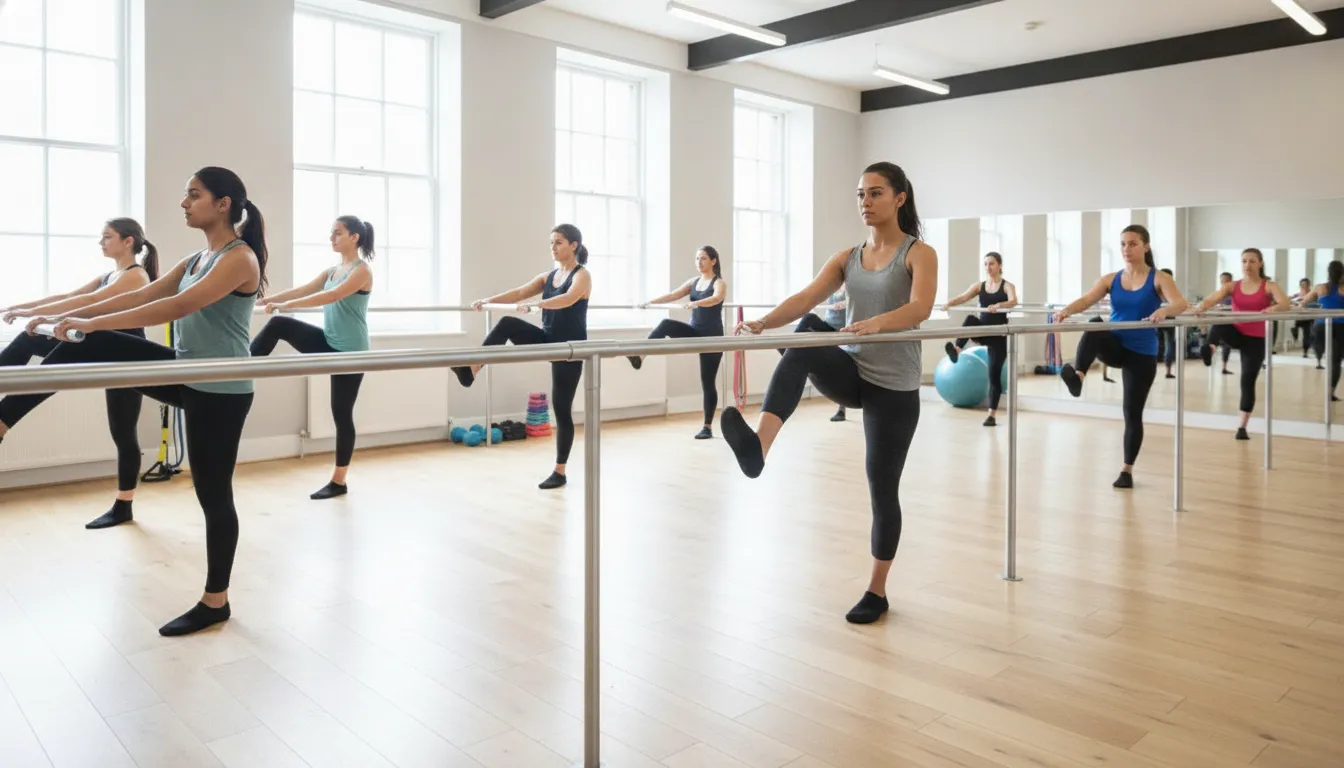
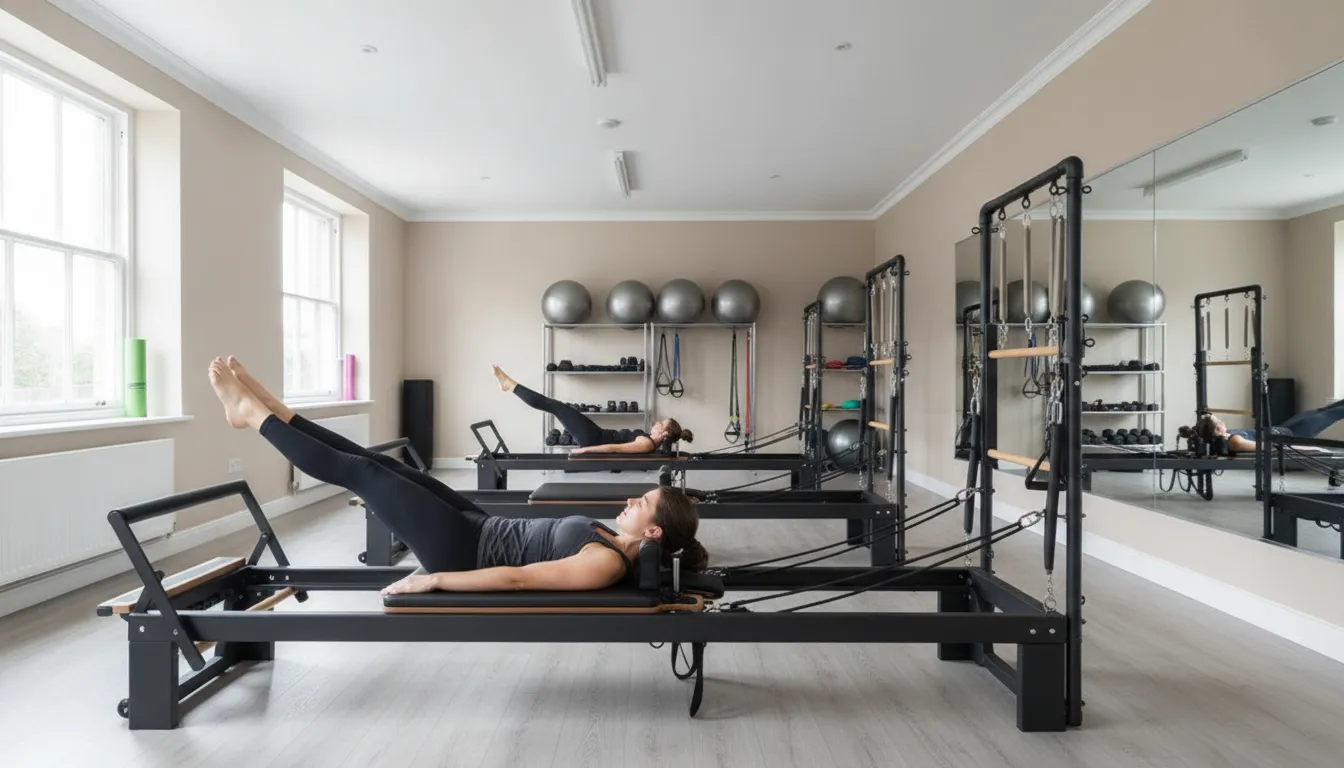
    • Pilates & Barre Fusion
    • Cardio Dance

    You do not have to choose between a yoga studio and a place to train strength or conditioning. The same facility lets you follow the work your body needs that day.

    More than a mat: the Grind House community

    A dedicated studio can be the right fit for someone seeking a narrowly defined yoga experience. Grind House takes a wider view. Yoga is one part of a community-driven, mid-market boutique facility that rejects both luxury-gym pretension and budget-gym anonymity. The emphasis is on showing up, learning the movement, and sharing the room with members who take their workouts seriously without needing to make them a lifestyle display.

    Bring your own mat, arrive ready to move, and expect the class to feel connected to the rest of the Grind House schedule. Explore the Grind House class schedule to see how Yoga can fit alongside the facility’s other training options.

    Yoga vinyasa flow class in a Williamsburg Brooklyn boutique fitness studio

    What Are the Benefits of Regular Yoga Practice?

    Regular Yoga can give a Williamsburg workout routine something many high-intensity sessions cannot: a deliberate pause that still builds useful physical capacity. Breath-guided movement helps connect attention to the body, making the practice feel less like checking out and more like resetting with purpose. Mayo Clinic describes yoga as a practice that may support relaxation, stress management, and peacefulness of body and mind.

    Calm the nervous system

    Stress does not stay in the mind. It can show up as shallow breathing, a racing heart, restless sleep, and muscles that never quite release. Yoga’s combination of controlled breathing, steady transitions, and focused attention can help reduce the body’s fight-or-flight response while supporting its rest-and-digest response. That shift matters after a packed day in Williamsburg, especially when the goal is to leave a workout feeling restored rather than wired.

    With consistent practice, yoga may also help lower stress, blood pressure, and heart rate. Mayo Clinic also notes potential benefits related to inflammation, digestion, sleep quality, and immune system strength. These are health-supporting effects, not promises of a cure, but they explain why a calm, repeatable practice can have value beyond the mat. Read the Mayo Clinic overview of yoga benefits for the medical context behind these findings.

    Move better, every day

    Yoga develops movement quality you can use outside class. A consistent practice supports:

    • Improved joint range of motion
    • Greater flexibility in the hips and spine
    • Dynamic balance for everyday movement
    • Controlled breathing for recovery

    Its sequences also explore the spine through flexion, extension, rotation, and side-bending. That variety is useful for Williamsburg residents who spend long hours at a desk, commute on foot or by train, or alternate between sitting and demanding workouts.

    At Grind House, Yoga is taught as vinyasa flow, with seamless movement between postures and deliberate breath guiding the pace. The result is a physical practice that can build strength and mobility while leaving room for focus and tranquility. Bring a mat, follow the guidance of professional instructors, and give your body a consistent way to recover. Move with more control, and stay ready for the rest of your week.

    How Yoga Complements Your Other Workouts

    High-intensity training asks your body to produce force, speed, and endurance. Yoga gives it a different kind of work: controlled movement, deliberate breathing, and space to restore range of motion. That makes it a useful recovery and balance practice alongside HIIT, Boxing, Cycling, and Turf & Tread, not a replacement for them.

    Yoga can improve joint range of motion and dynamic balance, two benefits that may not receive the same attention in a conventional gym routine. It also moves the spine through flexion, extension, rotation, and side-bending. Those motions matter after repeated sprinting, cycling, lifting, or punching, when the body can start to feel strong but restricted. Mayo Clinic explains yoga’s effects on mobility and balance.

    WorkoutMain DemandHow Yoga Complements It
    HIITShort bursts of max effortSlower pace, breath control, and recovery for the nervous system
    BoxingForce, speed, and shoulder outputThoracic mobility and range of motion around the shoulders and spine
    CyclingRepeated lower-body pedalingOpening the hips and restoring flexibility through the legs
    Turf & TreadHybrid cardio and strength workDynamic balance and joint range that support varied movement

    Open the thoracic spine and reset from desk work

    Training is only part of the physical picture. Hours spent sitting can contribute to neck and back discomfort, along with limited thoracic spine range of motion. Yoga poses that extend through the rib cage can help improve thoracic mobility, while balance work challenges the body in ways a seated workday does not. The goal is not to force a deep pose. It is to restore comfortable, controlled movement that supports your next workout and your daily life.

    Build recovery into a balanced week

    After a demanding Boxing or HIIT session, a breath-guided Yoga class can provide an intentional change of pace. The practice supports muscle recovery by combining mobility, light strength, and relaxed focus. The slower pace can help you shift out of the constant push of high-intensity training. Members who spend much of the week on the bike or Turf &. Tread can use Yoga to keep movement varied instead of repeating the same demands every day.

    At Grind House, Yoga sits alongside strength-focused training, boxing classes in NYC, HIIT, Cycling, and Turf & Tread under one membership. That makes a balanced schedule practical: hard training when you want the challenge. Yoga when your body needs mobility and recovery, and guidance from professional instructors throughout the week. Members seeking more individualized structure can also explore personal training in Williamsburg to coordinate strength, conditioning, and recovery around specific goals.

    What Should You Know Before Your First Williamsburg Yoga Class?

    Your first Yoga class at Grind House starts with a simple plan: bring a mat, wear comfortable athletic clothing, and give yourself enough time to arrive without rushing. The Williamsburg studio is at 203 Berry Street, so check the Grind House class schedule before leaving and build in a few extra minutes for your trip.

    Grind House Yoga is a breath-led Vinyasa flow. Poses move together in a deliberate sequence rather than feeling like a series of unrelated stretches. Professional instructors coordinate movement with the breath, helping the class develop a steady rhythm while you build strength, mobility, and a greater sense of calm.

    Instructor guiding a vinyasa flow sequence at Grind House Williamsburg

    What should you bring and wear?

    Keep your first class simple and comfortable:

    • Yoga mat: bring your own mat for hygiene and comfort.
    • Clothing: wear athletic wear that allows standing poses, transitions, and floor work without adjustments.
    • Water: hydrate before class, especially if Yoga is part of a larger workout day.

    There is no need to arrive with specialized gear or a complicated setup. Show up hydrated and unhurried, and you will be ready to move.

    What happens if you are new to Yoga?

    No prior experience is needed. All levels can participate, and the goal is not to force a pose or match the person next to you. Pay attention to the instructor’s cues, keep your breathing steady, and use a modification when one is offered. A first class should feel like an introduction to the movement and pace, not a test of flexibility.

    Arriving a few minutes early gives you time to check in, set up your mat, and settle into the room before the breath-led sequence begins. If you want to understand the format before booking, read about vinyasa flow classes in Williamsburg. Then use the schedule to choose a time that fits your week and approach your first class ready to move at a sustainable pace.

    Ready to try it? Contact Grind House to check availability.

    Frequently Asked Questions

    Are there yoga classes in Williamsburg for beginners?

    Yes. A beginner can start with a group Yoga class at Grind House in Williamsburg, Brooklyn, and build familiarity with breath-guided movement at a manageable pace. Bring a personal mat, wear comfortable clothing, and tell the professional instructor that you are new so modifications can be explained clearly.

    What is the difference between hot yoga and vinyasa yoga?

    Hot yoga takes place in a deliberately heated room, while vinyasa yoga links postures through continuous movement coordinated with breath. Grind House Yoga follows a vinyasa flow format, so the focus is seamless transitions, strength, mobility, and tranquility rather than a heated-room experience.

    How often should someone attend a Yoga class?

    The right frequency depends on your schedule, experience, and recovery needs. One consistent class each week can establish a routine, while additional sessions may fit members who want more mobility or a lower-intensity complement to Boxing, HIIT, or Cycling. Pay attention to how your body responds and increase gradually.

    What should I bring to a Williamsburg Yoga class?

    Bring your own Yoga mat, water, and clothing that allows unrestricted movement. Arrive a few minutes early at Grind House, 203 Berry Street, so you can settle in and ask any first-class questions before the vinyasa flow begins. Visit the Grind House class schedule for current offerings.

    Ready to Try a Yoga Class in Williamsburg?

    A Yoga class at Grind House offers a focused way to move, breathe, and build a balanced workout into your week. If vinyasa flow fits what you are looking for, schedule your visit and see how the Williamsburg space feels in person. Contact Grind House to try a Yoga class in Williamsburg and take the next step toward a practice that fits your routine.

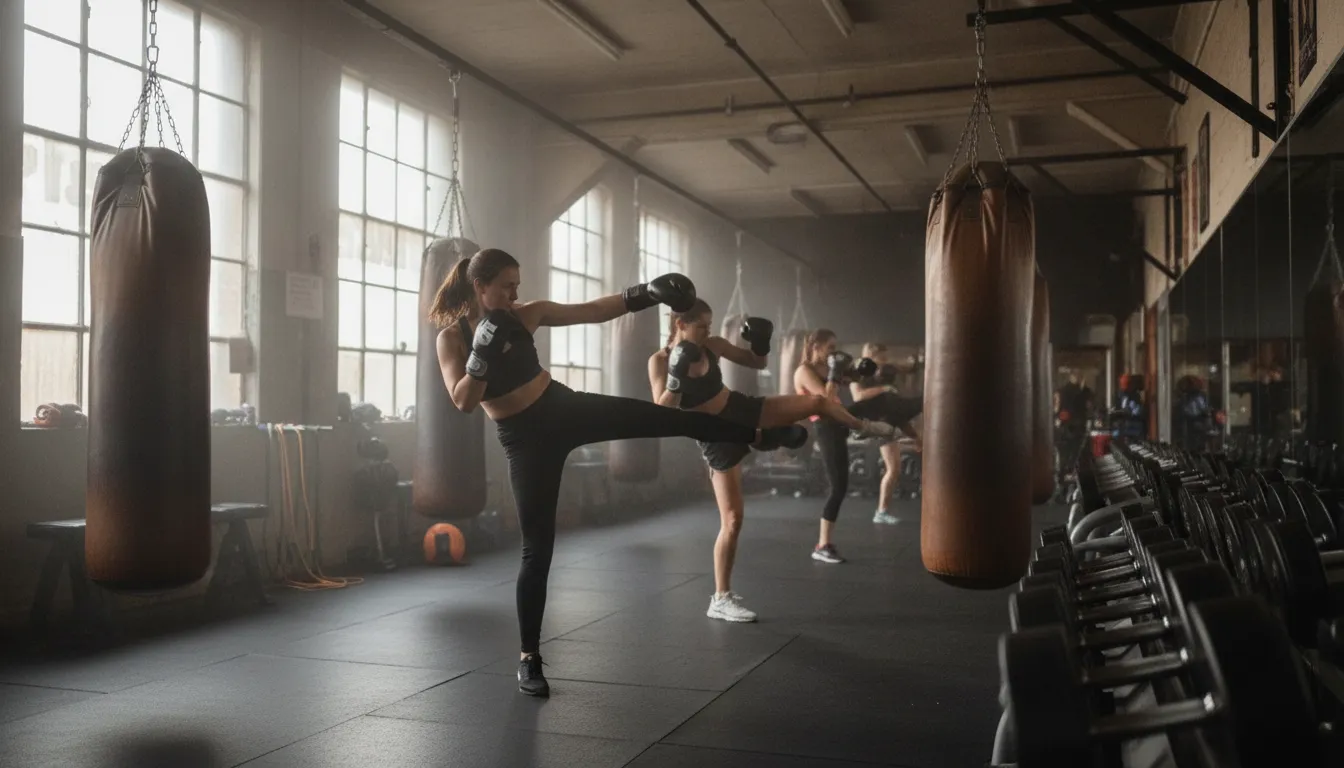
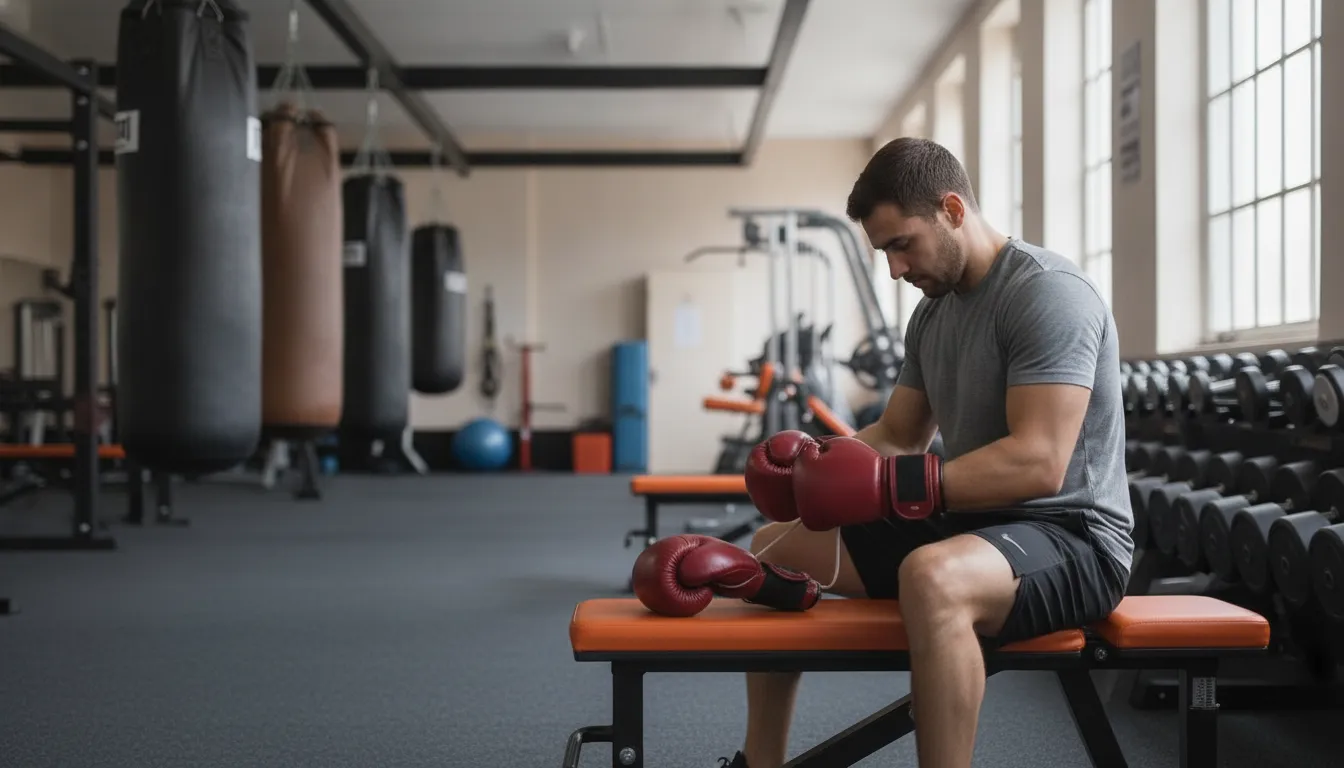
  • Boxing athlete wrapping hand wraps inside a Brooklyn boutique fitness studio
    Prepare for your first Boxing class at Grind House: instructor-led technique, focused combinations, and real conditioning in a community-driven Williamsburg boutique gym.

    A first Boxing class should give you more than a fast pulse and a room full of unfamiliar equipment. At a boutique training center, you can expect professional instruction, focused combinations, conditioning rounds, and a welcoming group that takes the work seriously without taking itself too seriously.

    Book your first Boxing class at Grind House

    Looking for a boxing gym Williamsburg locals recommend? At Grind House, expect technique, power, and practical conditioning, with the added benefit of a community-driven setting. The original location at 203 Berry Street is a short walk from the Bedford L train, making it easy to fit a demanding workout into a Brooklyn routine.

    That mix of accessible coaching and real training changes how the class feels from the moment you walk in. It also explains why the details of a boutique facility matter, from the atmosphere around the bags to the way each session supports confidence and resilience. Here is what separates the right space from a standard commercial gym.

    What Sets a Boutique Boxing Gym in Williamsburg Apart

    A good boxing program gives you more than a place to burn through a cardio session. It gives the workout a clear purpose: learn how to move, build power with control, and stay engaged from the first round to the last. At Grind House in Williamsburg, that focus lives inside a community-driven training center rather than an anonymous room of machines.

    Coaching attention that keeps technique in the picture

    Boxing rewards attention to detail. Stance, guard position, footwork, rotation, and breath all affect how efficiently you move. Professional instructors can help you understand those pieces while you build conditioning, so the class feels like training instead of a string of disconnected exercises. You do not need to arrive with a boxing background. You need enough curiosity to learn and enough consistency to keep refining the basics.

    That distinction matters for anyone searching for a boutique boxing gym in Williamsburg. The goal is not to perform a character or prove that you belong in a ring. It is to develop useful skills in a room where beginners and experienced members can take the work seriously without turning every round into a competition.

    A focused space without the commercial-gym disconnect

    Large commercial gyms can make training feel isolating, especially when the main experience is moving between equipment on your own. Research from Barnard’s Ringside Athena project describes boxing spaces as an alternative to fitness environments that feel exclusive, individualistic, or overly competitive. A boutique setting can create more room for shared effort, encouragement, and a sense that the people around you are part of the workout.

    That does not mean the atmosphere is soft. Boxing still asks you to concentrate, work through demanding rounds, and accept that technique takes repetition. The difference is that the challenge has context. You are learning alongside other people, with instruction that connects physical effort to confidence and resilience in everyday life. Barnard’s research identifies those outcomes alongside technique and power. That is one reason boxing remains meaningful after class: the work is physical, but the gains are not limited to appearance.

    Grind House’s original Williamsburg facility is at 203 Berry Street, a short walk from the Bedford L train. The neighborhood setting, structured Boxing sessions, and community-first approach make the experience feel rooted in Williamsburg rather than copied from a generic fitness chain.

    What Can You Expect from the Boxing Program at Grind House?

    Grind House keeps Boxing practical, structured, and connected to the rest of the training floor. The goal is not to stage a fight or turn every session into a cardio performance. Professional instructors use boxing fundamentals, focused combinations, and real conditioning to help members build skill, power, confidence, and resilience. You can train hard without needing to arrive as an experienced boxer. The class description on the Grind House classes page frames the format directly: a series of boxing drills and moves for a total-body strengthening and conditioning experience that alternates between speed and power. That rhythm shapes every round, from the first combination to the final conditioning interval.

    What a Boxing class feels like

    A class typically moves through a clear progression. You begin by getting settled, preparing your hands, and reviewing the movement or combination for the session. Hand wraps give your wrists and knuckles support before you put on gloves, while the instructor explains how to stand, move, punch, and return to position. The early technical work matters. It gives you something specific to focus on before the pace increases.

    From there, the workout builds through combinations, conditioning intervals, and repeated rounds. You may work on stance, footwork, straight punches, hooks, or defensive movement, then apply those skills at a higher intensity. The emphasis stays on clean mechanics and purposeful effort, not on throwing punches as fast as possible. Expect to sweat, reset, and keep learning as the class develops. The conditioning demand is real. Research from the University of New Mexico measured oxygen consumption, ventilation, heart rate, and perceived exertion across repeated boxing work-bouts. Intensity climbs steadily with tempo, which is why a structured class stays challenging even for experienced members.

    Equipment and professional instruction

    You do not need to arrive with a full kit. Hand wraps and boxing gloves are the key pieces to understand, and the professional instructors can help you get oriented with the setup and safe technique. No equipment? No problem. Ask what is available before your first class and bring comfortable workout clothes, water, and a willingness to listen.

    Instruction is direct and approachable. Corrections are part of the class, whether that means adjusting your stance, keeping your guard up, rotating through a punch, or managing your breathing during a conditioning round. That attention separates a skills-based Boxing program from a generic class that only borrows boxing movements for extra intensity.

    Boxing student wrapping hand wraps before class at a Williamsburg boutique boxing gym

    Boxing is part of a broader training community

    Boxing is one part of Grind House’s Williamsburg schedule. Members can also choose Cycling, HIIT, Turf & Tread, Yoga, Kettlebell, Pilates & Barre Fusion, and Cardio Dance. That mix makes it easier to build a consistent routine around your goals without treating every workout the same way. One day may sharpen technique and conditioning; another may focus on mobility, strength, or a different kind of effort.

    At the original Grind House location on Berry Street, the atmosphere is community-driven rather than intimidating. You can take the technical side seriously while still training alongside people with different experience levels and reasons for being there. The result is a Boxing program built around real instruction, real conditioning, and a place to keep showing up.

    Boutique Boxing vs. a Traditional Boxing Gym

    The right training environment depends on what you want from boxing. Some people arrive to develop ring skills, while others want a demanding workout, stronger conditioning, or a more focused path toward personal wellness. Research from a historic Brooklyn boxing program notes that many members are motivated by fitness and aesthetic goals as much as by learning to fight. Boxing gyms serve more than one kind of athlete, and the differences below can help you choose the setting that fits.

    Boutique boxing and traditional boxing gym differences
    CategoryBoutique boxing facilityTraditional or commercial boxing gym
    Class formatStructured, coach-led sessions that combine boxing technique, conditioning, and a clear workout arc.Training may be more open-ended, with members choosing drills, rounds, or equipment around their own schedule.
    InstructionProfessional instructors guide the group through combinations, movement, and physical intensity at an approachable pace.Instruction can center more heavily on sparring, competition preparation, or independent repetition, depending on the facility.
    Atmosphere and communityThe shared class creates structure and connection. The goal is a challenging room where people can train together without an isolating, overly competitive feel.The larger floor can offer a strong fight-culture identity, but the experience may be less social for members who train independently.
    EquipmentEquipment supports a specific class experience, with the coach directing how it is used during the session.A broader equipment floor may suit members who want to build their own boxing, strength, or conditioning routine.
    Who it servesPeople seeking technique, fitness, confidence, and community in one consistent program, including first-time boxers.Boxers who prefer independent training, specialized fight preparation, or a less programmed approach.

    These categories are not rigid. A well-run boutique program can take technical training seriously while still welcoming members who are there for fitness rather than competition. One Williamsburg boxing initiative described by Barnard similarly connected boxing instruction with wellness, personal development, and community. That blend of training and connection is the practical advantage of a focused class environment: you get a reason to show up. Professional guidance once you arrive, and people around you who are putting in the same work.

    Your First Boutique Boxing Class: A Step-by-Step Walkthrough

    Your first session should feel structured, welcoming, and purposeful. At Grind House, the workout moves from preparation to technique to conditioning. With professional instruction and a community that helps new members settle in without pretending everyone arrived as a fighter.

    1. Arrive at the Williamsburg location. Grind House Brooklyn is at 203 Berry Street, Brooklyn, NY 11211, about a five-minute walk from the Bedford L train. Give yourself enough time to check in, put your belongings away, and meet the instructor before class begins. That small margin makes the first few minutes calmer and gives you room to ask questions.
    2. Wrap up and get geared up. The instructor can explain the hand-wrapping process and help you understand how the gloves and other equipment should fit. New to boxing? No equipment? No problem. Start with what the facility provides, follow the setup guidance, and focus on learning rather than arriving with a full kit.
    3. Move through the warm-up. The opening work raises your temperature and prepares your shoulders, hips, feet, and core for boxing patterns. Expect controlled movement, light conditioning, and basic coordination rather than an immediate sprint. Use this time to learn the instructor’s cues and find a pace you can maintain.
    4. Build the technique. You may work through stance, guard, footwork, punches, and defensive movement before the intensity rises. Technique comes first because clean positioning makes the rest of the session more effective. Ask for a correction when you need one. A first class is the right place to learn the details, not hide that you are learning.
    5. Take on the bag rounds. Once the fundamentals are in place, combinations and timed rounds bring the workout together. The bag work challenges conditioning, rhythm, accuracy, and power while the instructor keeps the room moving. Work hard, but leave enough control to maintain your form through the final round.
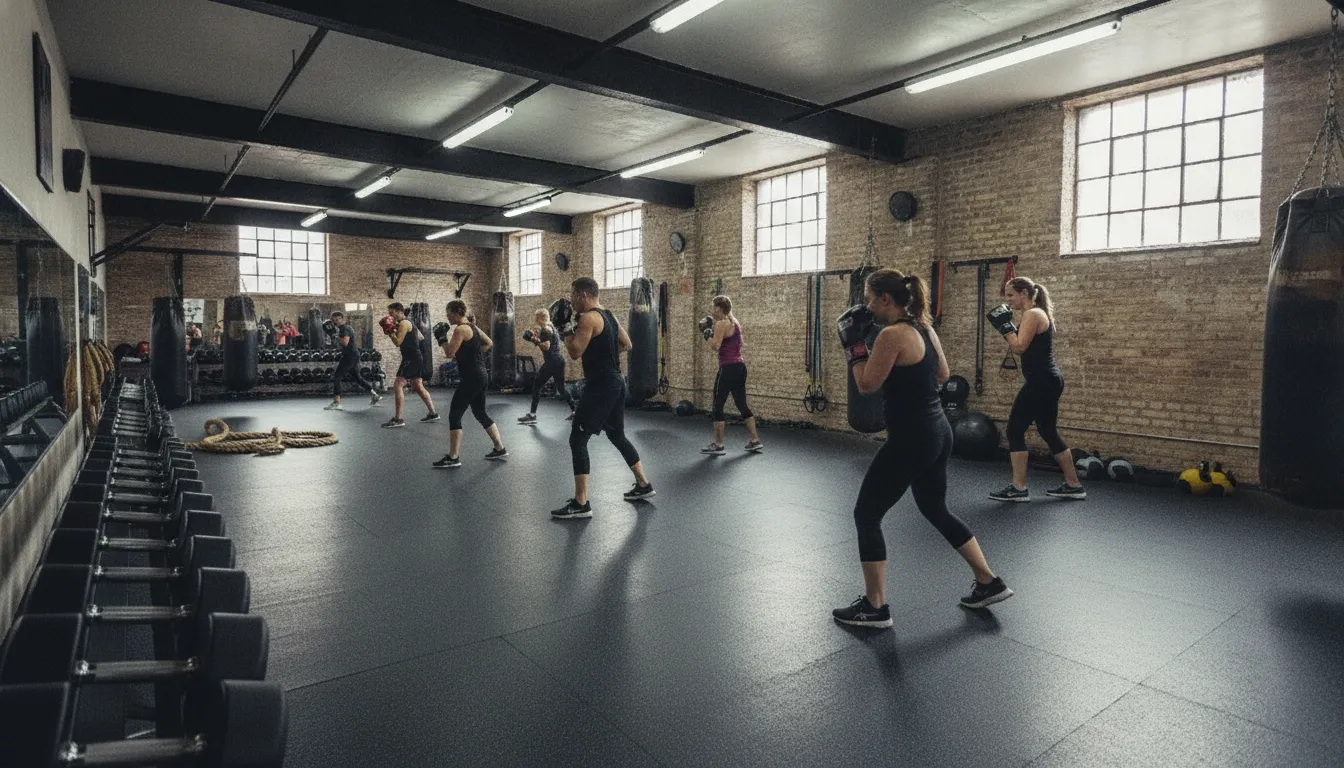
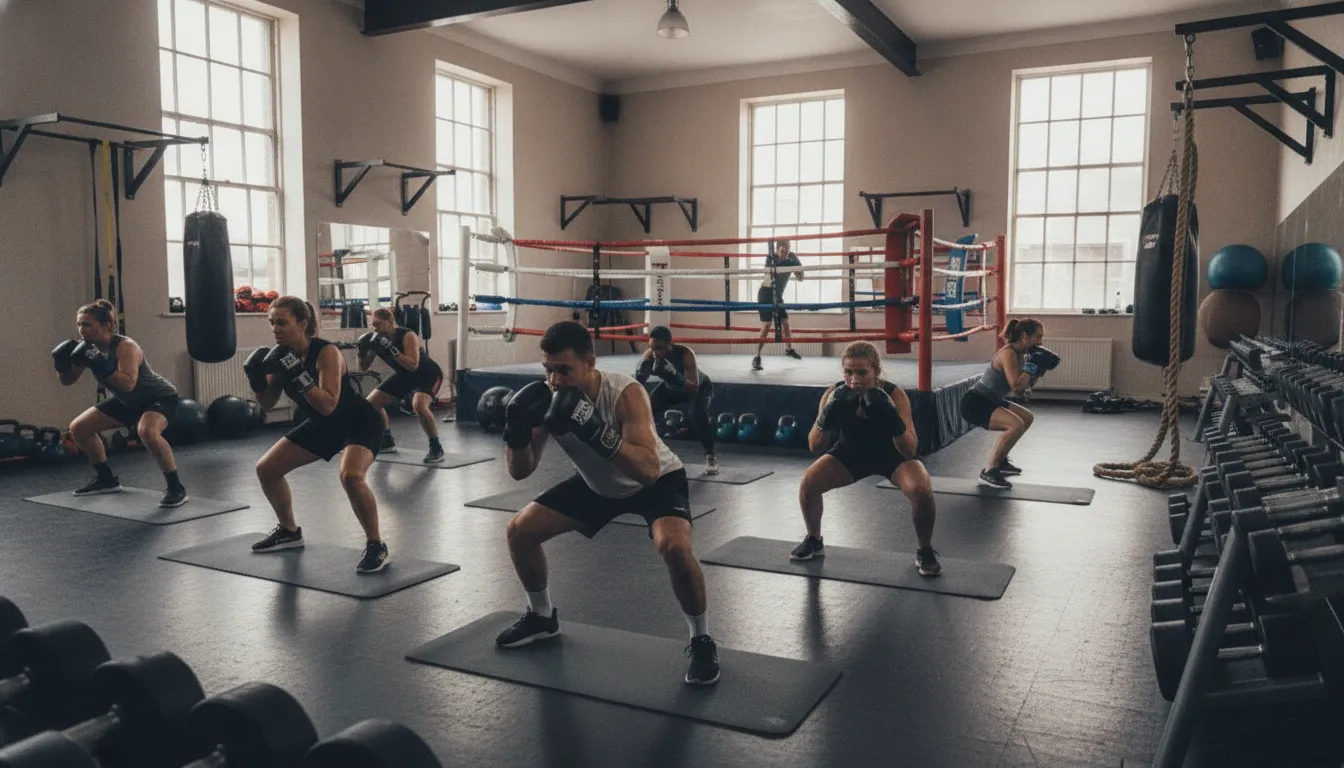
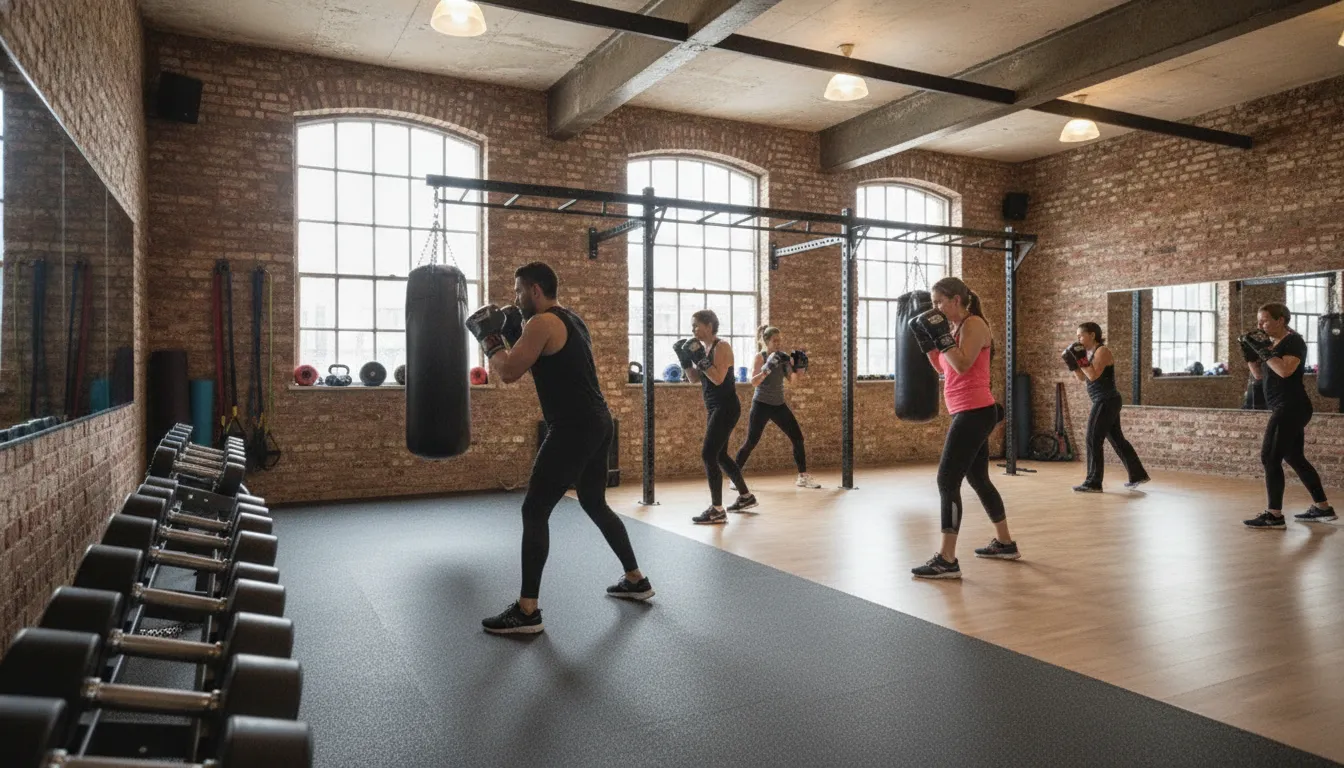
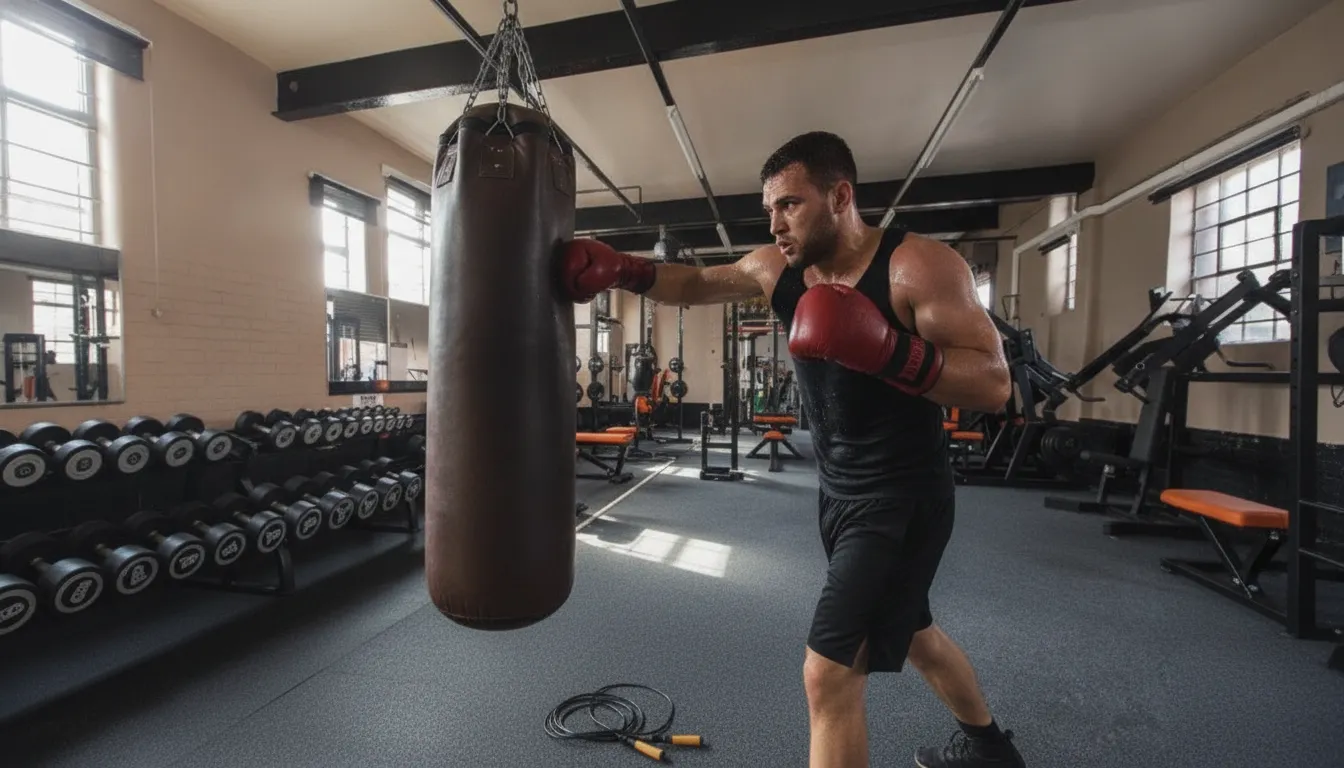
    6. Group boxing class on heavy bags in a boutique gym in Brooklyn
    7. Finish with the group. The closing portion may bring the intensity down through conditioning, mobility, or a focused cooldown. Take a breath, remove your gear, and notice what felt unfamiliar. Boxing classes combine physical training with community, so the conversation after class can be part of finding your place in the room. You can decide what you want to practice next right there.

    Who Is a Boutique Boxing Gym in Williamsburg For?

    A Williamsburg boutique boxing facility can work for far more than aspiring fighters. It is a strong fit for anyone who wants structured training, real conditioning. In a place where the people around them take the workout seriously without taking themselves too seriously.

    Beginners are welcome. You do not need a boxing background to start learning the fundamentals. Professional instructors can help new members build coordination, rhythm, and confidence at a manageable pace. If you want a little more individual guidance, personal training in Williamsburg offers a more focused way to work on technique, conditioning, or a specific goal. The Grind House personal training team in Brooklyn can build the same structure around your schedule.

    Professionals and creatives often need a workout that clears their head as much as it challenges their body. A demanding Boxing session gives the day a defined start or finish, while the community helps the facility feel less like another anonymous commercial gym. For people fitting training around a busy Brooklyn schedule, Grind House is at 203 Berry Street, a short walk from the Bedford L train.

    Former athletes may appreciate the combination of skill, pace, and measurable effort. You can return to disciplined training without pretending that every session has to be a competition. The goal is consistent progress, better conditioning, and a workout that feels connected to something real.

    It is also a fit for people who have felt out of place in appearance-driven fitness spaces. Research on inclusive boxing programming describes body-neutral environments that encourage wellness, friendship, and community rather than requiring participants to perform a particular look. That approach matters because boxing can build confidence and resilience for everyday life, not just technique and power. Read more about boxing, confidence, and community.

    At $149.99 per month, the membership is best viewed in the context of access to a broader training environment, not just one class format. Alongside Boxing, Grind House offers options such as HIIT, Cycling, Yoga, and personal training, giving members room to build a sustainable routine. The right question is not whether you already look like a boxer. It is whether you want real training in an authentic Williamsburg community.

    Join Grind House and start Boxing today

    Frequently Asked Questions

    What should a beginner look for in a Williamsburg boxing program?

    Look for professional instructors, clear technique coaching, and conditioning that meets you at your current level. A strong program should feel challenging without making first-time participants prove they already know how to box. Community matters, too. The right training center helps you build skill, confidence, and consistency without turning every session into a competition.

    Are Grind House Boxing classes suitable for all skill levels?

    Yes. Grind House welcomes people who are new to Boxing as well as members with prior training. You can focus on learning stance, movement, punches, and conditioning at an appropriate pace, then build from there. No equipment? No problem. The goal is a productive workout with instruction you can apply, not a test of how much experience you bring through the door.

    What can I expect from a first class at Grind House?

    Expect a focused, energetic session built around Boxing technique and real conditioning rather than generic cardio. You will train in the original Grind House facility at 203 Berry Street, a short walk from the Bedford L train. The broader schedule also includes HIIT, Cycling, Yoga, and other formats, so you can build a routine around the kind of training you enjoy.

    How much does a Grind House membership cost?

    The current monthly membership is $149.99, with a $35 initiation fee and a $50 annual fee. Review the membership details for the current terms, trial information, class policies, and cancellation policy before joining.

    Ready to Try Boxing in Williamsburg?

    A first class is a practical way to experience the coaching, conditioning, and community at Grind House for yourself. When you are ready to get started, book a Boxing class at the Williamsburg location. Have questions first? Call Grind House at (718) 963-0835 and the team will walk you through your first session.

  • Athletes performing high-intensity interval training in a sunlit Brooklyn boutique gym
    HIIT training at Grind House: a focused, instructor-led high-intensity interval workout for busy Brooklyn athletes.

    A good HIIT class should leave you challenged, not confused or anonymous in a crowded room. In Brooklyn, the difference between a useful interval workout and a generic gym circuit often comes down to coaching. Structure, and whether the room feels built for real people with real schedules.

    Contact Grind House Brooklyn to book your first HIIT class

    The best hiit classes brooklyn options combine short, demanding work intervals with purposeful recovery, clear demonstrations, and professional instructors who can adjust movements without diluting the challenge. Look for a boutique studio that delivers focused coaching and a consistent community, not just a timer and a room full of equipment.

    That standard makes it easier to compare studios beyond price or class length. Start by looking at what happens between the intervals: how the workout is explained, how progress is supported, and whether the experience feels personal from the first round.

    What Makes the Best HIIT Classes in Brooklyn?

    The best HIIT classes in Brooklyn combine clear coaching, purposeful intervals, and the energy of a group that notices when you show up. Look for a class that challenges different fitness levels without turning every round into chaos. At Grind House, HIIT is built into a broader training environment that is accessible yet demanding for busy urban professionals.

    Quick answer: A quality Brooklyn HIIT class has professional instructors who explain the work before the timer starts. A structured format that balances effort and recovery, and a small-group atmosphere that keeps the room engaged. The result feels organized and personal, not like being left alone on a gym floor.

    Coaching quality matters more than a loud playlist

    Intensity is not a substitute for instruction. Professional instructors should demonstrate movements, explain the purpose of each interval, and offer practical modifications when a jump. Sprint, or loaded exercise is not the right choice for you that day. They should also watch the room closely enough to correct form and keep the pace honest.

    That balance makes HIIT more useful for a mixed group. A newer member can learn the movement and build confidence. While a more experienced athlete can increase pace, range of motion, or resistance without requiring a completely different class. The coach creates a shared standard while leaving room for individual effort.

    Class size and community shape the experience

    A strong class has enough people to create momentum, but not so many that personal feedback disappears. Boutique facilities can offer personalized instruction and community that large, impersonal gyms often lack, a distinction Grind House emphasizes in its Brooklyn training environment (Grind House Brooklyn).

    That community is practical, not performative. Familiar faces make it easier to stay consistent, and a supportive room can help you finish a difficult interval without turning the workout into a competition. The right class leaves you knowing what you did, why you did it, and how to return ready for the next session.

    Why HIIT Is the Most Time-Efficient Workout

    HIIT is a time-efficient workout because it alternates brief, near-maximal effort intervals with rest or low-intensity recovery. This structure lets busy Brooklyn professionals train aerobic capacity, anaerobic capacity, and metabolic health without committing to the larger total exercise volume often associated with moderate-intensity continuous training. An expert review of high-intensity interval training describes the format and its adaptations in detail.

    What HIIT actually involves

    HIIT is not simply a fast class or a workout that leaves you tired. The defining feature is the interval design: repeated short bursts of intense activity performed at near-maximal or all-out effort, followed by rest or easier movement. The review notes that high-intensity intervals may correspond to at least 90% of maximal oxygen uptake or more than 75% of maximal power. Although the exact prescription varies by person and protocol.

    In practical terms, that may mean working hard through a short circuit, then taking enough recovery to perform the next interval with purpose. The work periods do not need to be long to be demanding. A professional instructor can adjust movement, resistance, pace, and recovery so the structure remains challenging without turning every round into a careless sprint.

    Why the format fits a full Brooklyn schedule

    Lack of time is a major barrier to exercise. The same expert review reports that interval training can produce adaptations similar to, or greater than, moderate-intensity continuous training despite a lower total exercise volume. That distinction matters when your workday, commute, and evening plans leave little room for a long gym session.

    HIIT also gives a workout a clear beginning, middle, and end. You arrive with a plan, complete purposeful intervals, and leave without spending extra time wandering between machines. Research summarized in the review links HIIT with improvements in maximal oxygen uptake, aerobic endurance, anaerobic capacity, and metabolic health among both healthy and clinical populations. The result is an efficient training option, not a shortcut that eliminates the need for consistency.

    For busy professionals, the best approach is a class that respects both intensity and recovery. A well-coached session makes each minute count while keeping the work understandable, scalable, and repeatable.

    Boutique HIIT vs. Big-Box Gym Classes

    In Brooklyn, boutique HIIT offers a more coached, connected alternative to a big-box gym class. The difference is not simply the size of the room. It is whether the session feels designed around the people in it, with professional instruction. A clear plan, and enough accountability to keep you engaged from the warm-up through the final interval.

    Boutique HIIT and big-box gym classes compared
    What to compareBoutique HIIT studioBig-box gym class
    CoachingProfessional instructors can watch form, explain the work, and make practical adjustments as the class moves.Instruction may need to serve a larger, more varied room, leaving less time for individual feedback.
    Class structureA focused session with intentional intervals, transitions, and progressions rather than a loose collection of exercises.Programming can feel more generalized, with the same format expected to suit a wide membership base.
    CommunityA consistent group creates familiarity, energy, and a reason to show up beyond the equipment itself.The open-gym environment can make it easier to attend anonymously and leave without building connections.
    AccountabilityCoaches and regular classmates notice your effort, which makes consistency more visible and easier to maintain.Attendance and effort are often more self-directed, especially when the class is part of a much larger facility.

    Grind House treats HIIT as a core part of accessible-yet-challenging programming for busy urban professionals, not as a generic add-on to a larger gym floor. That approach gives the session a sharper purpose while leaving room for modifications when a movement or intensity level needs to change. The result is a workout that feels demanding without becoming impersonal.

    For people comparing HIIT classes in Brooklyn, the practical question is simple: will the setting help you train with intention and return consistently? A boutique format at Grind House gives you the coaching and community to make that answer yes.

    What a Quality HIIT Class Actually Looks Like

    A quality HIIT class has a clear plan, not a random sequence of exhausting exercises. Expect a coached warm-up, focused work intervals, purposeful recovery, and enough instruction to keep form sharp. In a boutique Brooklyn studio, the goal is a demanding workout that feels organized from the first minute to the last.

    In practice, a quality HIIT class usually runs about 50 minutes and combines a progressive warm-up with repeated high-effort intervals. Controlled rest, and practical equipment such as mats, weights, or cardio tools. A Brooklyn drop-in often costs around $25, although pricing varies by studio and package.

    The class starts with preparation, not punishment

    The opening minutes should raise your heart rate gradually and prepare the joints and muscles for the movements ahead. A professional instructor may use mobility drills, bodyweight patterns, and a short demonstration of the day’s exercises. This is where participants learn what good form looks like before the pace increases.

    That preparation matters because HIIT is not simply nonstop speed. It is built around short bursts of intense activity followed by rest or lower-intensity movement, a structure described in published research on high-intensity interval training. The work should feel challenging, but the instructions should make the standard clear.

    Intervals have a purpose

    Once the class begins, the instructor should explain the work-to-rest pattern and how to modify each movement. One interval might combine fast footwork with a strength exercise, followed by enough recovery to reset your breathing and technique. The next round can build on that pattern rather than introducing unrelated exercises every few minutes.

    Expect equipment that supports the workout rather than turning the room into a storage closet. Depending on the programming, that may include kettlebells, dumbbells, resistance tools, a mat, or open floor space for bodyweight work. The best setup leaves room to move and makes transitions easy.

    What the time and price usually include

    Most boutique HIIT classes are designed to fit into a roughly 50-minute appointment, including the warm-up and final cooldown. A single Brooklyn drop-in often lands near $25, based on listings across the local market, while memberships and class packages may change the effective price. The right comparison is not just cost. Look at coaching, class size, structure, and whether the room feels attentive rather than anonymous.

    How to Get Started With HIIT in Brooklyn

    Starting a new HIIT class does not require an advanced fitness background. The right class gives you a clear structure, room to modify movements, and professional instructors who can help you understand the pace. Use these steps to make your first session at Grind House focused, manageable, and worth repeating.

    A practical first-class plan

    1. Find a beginner-friendly class. Look for programming that explains the work and recovery intervals, welcomes modifications, and offers coaching throughout the session. You can view HIIT classes to compare the available class options, then choose a time that fits your actual schedule rather than an idealized routine.
    2. Show up early. Arriving 10 to 15 minutes ahead gives you time to check in, meet the instructor, ask about modifications, and get familiar with the room. It also lets you start the warm-up calmly instead of rushing in after the first interval has begun.
    3. Pace yourself. HIIT includes demanding work periods, but your first workout should not be a test of how close you can get to exhaustion. Begin with controlled effort, use the prescribed recovery periods, and choose a lower-impact variation when your form starts to break down. A sustainable pace is more useful than an aggressive first impression.
    4. Listen to the professional instructors. Follow the movement demonstrations and ask questions when a cue is unclear. Instructors can help you adjust range of motion, resistance, or speed without losing the purpose of the interval. Good coaching makes a challenging class more approachable.
    5. Stay consistent. Give yourself a few sessions to learn the format and notice how your body responds. Consistency matters more than attending one exceptionally hard class. Review the Grind House membership options if regular attendance makes sense for your routine.

    Bring water, wear comfortable training clothes, and treat modifications as part of the workout, not a sign that you are falling behind. The goal is to build a repeatable HIIT habit in Brooklyn that leaves you ready to return.

    Why Grind House Delivers HIIT Done Right

    Grind House brings the focus of a boutique studio to HIIT in Williamsburg, without the anonymity or one-size-fits-all feel of a big-box gym. The setting is built around real instruction, a consistent community, and a workout that meets people where they are while still asking them to work with purpose. Boutique facilities can offer the personalized instruction and community that larger gyms often lack, and that difference matters when intensity is part of the format. Grind House Brooklyn makes that approach central to its training experience.

    HIIT is a core part of Grind House’s broader class programming, designed to be accessible yet challenging for busy urban professionals. That means the goal is not to make every participant perform the same movement at the same pace. Professional instructors can help members understand the movement, adjust the challenge, and stay engaged through each interval. The result is a demanding workout that still feels coached rather than chaotic.

    Training that feels specific to Williamsburg

    At 203 Berry Street, Grind House gives Williamsburg members a place to train with familiar faces and a clear sense of purpose. The schedule also includes complementary formats such as Boxing, Cycling, Kettlebell, and Turf & Tread. Those options make it easier to build variety into a weekly routine without leaving the same local fitness community. Someone who wants a high-output interval session can choose HIIT, then use another class to develop strength, conditioning, or movement skill.

    Professional coaching, not random intensity

    Good HIIT is not simply a room full of people moving fast. It requires structure, attention to form, and enough coaching to make the work productive. Grind House’s approach pairs an energetic class environment with instruction that helps participants scale the challenge appropriately. Members seeking more individualized support can also explore personal training in Williamsburg.

    Ready to experience HIIT in Williamsburg? Contact Grind House Brooklyn to ask about the next class and find the right place to start.

    Frequently Asked Questions

    Can beginners take HIIT classes?

    Yes. Beginners can start with a class that offers clear movement instruction, scalable intensity, and professional coaching. Tell the instructor that you are new, choose the lower-impact option when available, and focus on controlled form rather than matching someone else’s pace. Grind House designs HIIT to be accessible while still challenging.

    Are HIIT classes effective for weight loss?

    HIIT can support weight-management goals by combining demanding work intervals with recovery periods, but results depend on your overall activity, nutrition, sleep, and consistency. Research also links HIIT with improvements in aerobic capacity, anaerobic capacity, and metabolic health across healthy and clinical populations. Review the research on HIIT adaptations.

    How do HIIT classes in Brooklyn compare to big-box gym classes?

    The main difference is the training environment. A boutique class typically gives you more direct instruction, a defined group format, and a stronger sense of community than an open gym floor. At Grind House, professional instructors guide the session so you can spend less time figuring out what to do and more time executing the workout.

    What does a HIIT class usually cost in Brooklyn?

    Prices vary by studio, package, and membership. Single-class drop-in rates in Brooklyn are often around $25, according to ClassPass listings, while memberships and class packs may reduce the per-class cost. Check the current Grind House membership options before booking.

    How long is a typical HIIT class?

    Many boutique HIIT sessions are designed to fit a busy schedule and run for about 50 minutes. The exact structure may include a warm-up, technique instruction, work intervals, recovery periods, and a cooldown. Review the schedule and class details before reserving your spot.

    Ready to Book Your First HIIT Class?

    Grind House makes it easier to take the next step with a focused HIIT class in Williamsburg and professional instruction in a boutique studio setting. If you want a clear introduction before your first class, schedule your visit with Grind House Brooklyn. Grind House can help you get started with a HIIT workout that fits your goals and experience level.

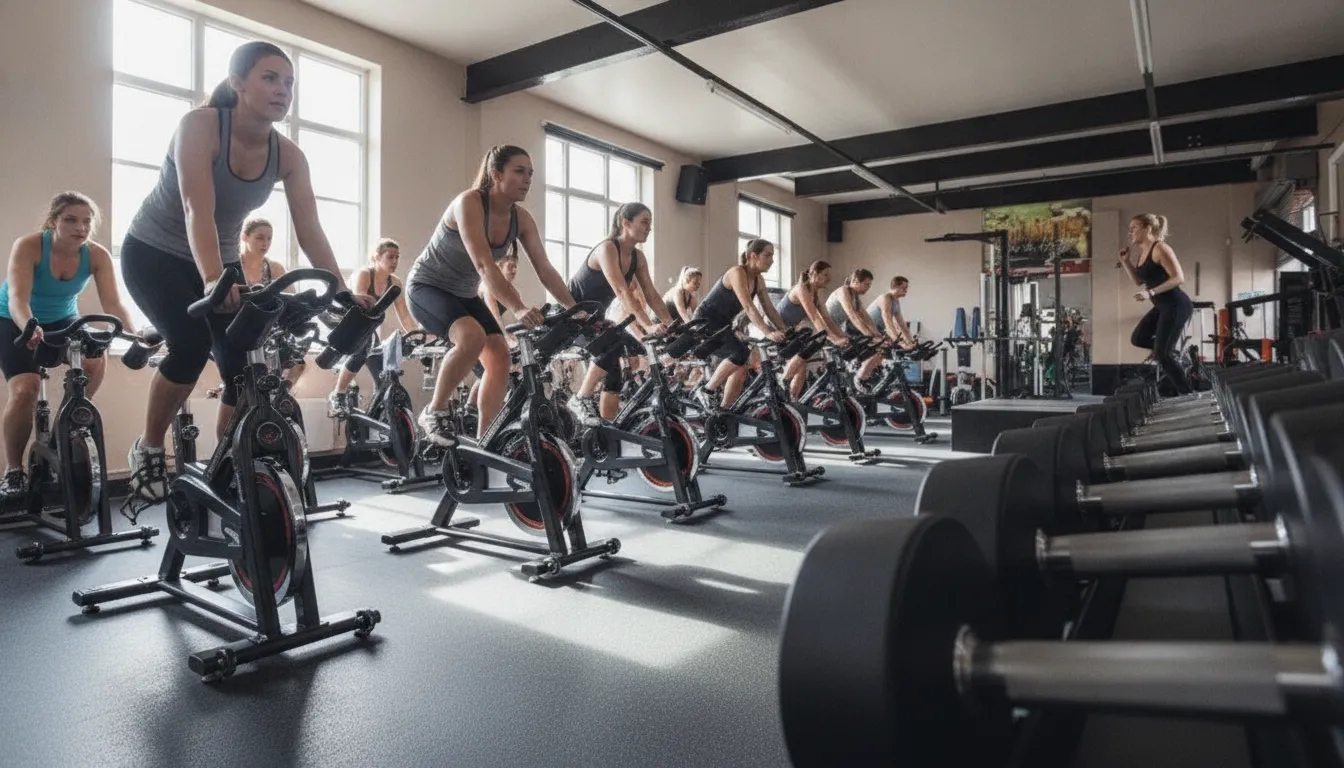
  • Indoor cycling bikes in a modern Flatiron fitness studio with riders in motion
    Indoor Cycling at Grind House Flatiron: a focused, instructor-led ride at 47 W 17th Street.

    Flatiron has no shortage of ways to train, but indoor cycling earns its place by making a focused cardiovascular workout fit the pace of Manhattan. A well-led session can combine speed, resistance, music, and a shared rhythm without asking for a long commute.

    Book a cycling class at Grind House

    For people comparing cycling classes flatiron, Grind House brings instructor-led Cycling to 47 W 17th Street in the Flatiron district. The program pairs a no-nonsense community with access to a broader mix of classes. It is built for different levels, from a first ride to a serious conditioning session.

    That variety matters. Indoor cycling can build lower-body strength while supporting cardiovascular fitness, and its low-impact format may suit people who want demanding training with less stress on the joints. The setting, programming, and feel of the room all shape whether a class becomes a routine, so the details at Grind House deserve a closer look.

    Why Choose Grind House for Cycling Classes in Flatiron?

    Grind House brings a direct, community-centered approach to indoor fitness at 47 W 17th Street in Flatiron. The Manhattan studio is built for people who want a serious workout without the performance of a scene built around status. Cycling has its own energy, but it is part of a broader training environment rather than an isolated, one-format experience.

    A Real Studio, Not a Spin Franchise

    That difference shows up in the range of options available. Alongside Cycling, Grind House offers Boxing, HIIT, Yoga, Kettlebell, Turf & Tread, Pilates & Barre Fusion, and Cardio Dance. A member can push through a demanding ride one day, then choose a different class when the body or schedule calls for another kind of challenge. Browse the Cycling classes and full class schedule to see how the program fits together.

    The result is more useful than a studio routine that asks members to commit to one narrow identity. Cycling can deliver focused cardiovascular work and strengthen the lower body, while the wider schedule creates room for mobility, strength, conditioning, and recovery. The variety also helps keep a consistent workout schedule from becoming repetitive.

    Community Without the Boutique Fitness Baggage

    Grind House keeps the social side of group training grounded. Professional instructors lead the room, but the atmosphere is centered on shared effort, not intimidation or polished hype. New riders can build confidence alongside regulars, while experienced members still have room to work hard. That balance matters in Flatiron, where plenty of fitness options compete for attention but not every studio creates a genuine sense of belonging.

    Membership Value in the Heart of Flatiron

    Grind House membership is $149.99 per month, with a $35 initiation fee and a $50 annual fee. For members who want more than occasional cycling, access to multiple class styles makes the membership more flexible than paying for a single boutique format. The location at 47 W 17th Street also places the workout close to the daily rhythm of Flatiron, whether a class fits before work, during a midday break, or after the commute.

    How Intense Are Cycling Classes at Grind House?

    A strong Cycling class does not mean riding at maximum effort from the first minute. The most useful sessions give riders room to build intensity, settle into a sustainable pace, and push hard when the workout calls for it. At Grind House, that makes the bike accessible to someone returning to fitness and challenging for a regular who wants a serious conditioning session.

    How a Cycling Class Is Structured

    Instructor-led indoor cycling commonly alternates speed work with recovery. You might pedal quickly for a brief interval, then ease back long enough to control your breathing before the next effort. Other sections increase resistance to create a heavier, hill-like push. This combination keeps the class from becoming one flat effort and gives the instructor clear opportunities to raise or lower the demand.

    That structure is supported by the way indoor cycling sessions are typically coached. Harvard Health describes classes as instructor-led workouts that use speed work and increased resistance to create different challenges throughout the ride. The instructor’s cues help turn a sequence of efforts into a purposeful workout rather than an unstructured race against the rider beside you. Riders can review the current Cycling classes and schedule at Grind House Manhattan before choosing a time.

    Finding the Right Intensity Zone

    Intensity can range from easy recovery riding to an all-out sprint. Easy effort may feel like a warm-up or a reset between harder intervals. Moderate effort should feel purposeful but repeatable. A hard climb or fast interval demands focus, while an all-out sprint is brief and reserved for moments when the instructor asks for a final surge.

    The right zone depends on the rider, not on a label. New riders can keep resistance lighter, shorten their sprint, or use recovery periods to regain control. Experienced riders can add resistance or sustain a higher cadence without sacrificing form. The goal is to respond to the cue with an effort that is challenging and technically sound.

    Some Flatiron studios organize rides through named formats such as CycleBar’s Xpress, Connect, Classic, Strength, Empower, and Define classes. That can help customers compare schedules, but a class title is not a substitute for listening to the instructor. Grind House Cycling provides the essential range within a coached session: steady work, resistance, recovery, and moments that ask for everything available.

    Indoor Cycling and a Balanced Fitness Routine

    A strong weekly workout plan does not ask one class to do everything. Cycling can provide the cardiovascular and lower-body work that anchors a routine, while other Grind House classes add strength, mobility, coordination, or a different kind of conditioning. That mix helps keep training purposeful without making every session an all-out effort.

    Indoor cycling is especially useful as either steady-state cardio or interval work. Research summarized by Harvard Health Publishing describes spinning as a cardiovascular workout that can build lower-body muscle strength. The same source reports that, after six weeks, a spinning group showed greater improvements in fitness, leg strength, blood pressure, total cholesterol, and fat mass than the comparison group. Those findings support using Cycling consistently, while still leaving room for resistance and recovery-focused sessions.

    How Grind House classes can fit into a balanced weekly routine.
    Class type.Primary benefit.Typical intensity.Recovery fit.
    Cycling.Cardiovascular conditioning and lower-body strength.Moderate to high, with steady or interval efforts.Pair with a rest day or upper-body-focused session.
    HIIT.Full-body conditioning and work-capacity development.High, with repeated demanding efforts.Follow with lower-intensity movement or rest.
    Boxing or Kettlebell.Strength, power, coordination, and muscular endurance.Moderate to high, depending on the workout.Alternate with Cycling to vary the main demand.
    Yoga.Mobility, breathing, balance, and controlled movement.Low to moderate.Useful after harder sessions or on an active recovery day.
    Pilates & Barre Fusion.Core control, posture, stability, and muscular endurance.Moderate, with focused muscular work.Complements cardio without repeating its movement pattern.

    At Grind House Manhattan in Flatiron, the broader class menu includes Cycling, Boxing, HIIT, Yoga, Kettlebell, Pilates & Barre Fusion, Turf & Tread, and Cardio Dance. That variety makes it practical to build a routine around your actual schedule and recovery needs. A sample week might combine Cycling with Boxing or Kettlebell, then use Yoga or Pilates & Barre Fusion to support mobility and control. Browse the Grind House classes available at 47 W 17th Street and choose the combination that keeps your training consistent.

    See the Grind House class schedule and book your ride

    Who Are Indoor Cycling Classes in Flatiron For?

    Indoor Cycling can fit a wide range of New York schedules and starting points. A first-time rider can focus on learning the bike and following the instructor’s cues, while a former athlete can use speed and resistance work to rebuild conditioning. The format also suits busy professionals who want an efficient, instructor-led workout without spending hours moving between machines. Grind House’s Flatiron location is at 47 W 17th Street, making it a practical option for people working or living near the district.

    It can also be a smart choice for people who want challenging cardio with less joint impact than running or jumping. Harvard Health describes spinning as low-impact and notes that it places less stress on the joints. Making it suitable for people with knee or hip issues or those recovering from orthopedic injuries. That does not replace medical guidance, especially during recovery, but it gives riders another way to train while respecting their current limits. Adjusting resistance, staying seated when needed, and building intensity gradually can help beginners and returning athletes find an appropriate effort.

    The appeal is not limited to physical conditioning. Group classes create a shared rhythm that can make a regular workout feel less isolated. Harvard Health also connects the socialization available in group indoor exercise classes with maintaining cognitive health and potentially lowering dementia risk. For a newcomer, that community can make showing up easier. For a regular, familiar faces and a common effort can add accountability without turning the class into a competition.

    Grind House offers Cycling alongside Boxing, HIIT, Yoga, Kettlebell, Turf & Tread, Pilates & Barre Fusion, and Cardio Dance. That variety makes it easier to use the bike as one part of a balanced routine rather than the only workout in the week. Professionals looking for efficient workouts for busy professionals can build around a focused Cycling session, then choose complementary training as their schedule and goals change.

    How to Start Cycling in Flatiron Today

    Starting a Cycling routine in Flatiron does not require a complicated plan or a full drawer of specialized gear. The goal is to get into the room, set up comfortably, and leave with enough energy to come back. Use these steps to make your first Grind House Manhattan class straightforward.

    1. Book the class that fits your day. Check the Grind House Manhattan class schedule and choose a time you can realistically repeat. The studio is at 47 W 17th Street in Flatiron, New York, NY 10011. If membership is the right fit, the current rate is $149.99 per month, plus a $35 initiation fee and a $50 annual fee.
    2. Arrive early for bike setup. Give yourself enough time to find the room, choose a bike, and adjust the seat and handlebars. A proper setup keeps the ride more comfortable and lets you focus on the instructor instead of making adjustments after the class begins. Tell the instructor it is your first ride so the setup can be checked.
    3. Choose clips or cages. Grind House bikes use clip-in pedals that accept common cycling shoes, and cages accommodate standard sneakers. If you are new to cycling, sneakers are a perfectly practical place to start. The priority is a secure foot position, not looking like a racer on day one.
    4. Begin at a moderate intensity. Follow the instructor’s speed and resistance cues, but treat the first class as a baseline. Keep enough control to maintain smooth pedal strokes and good posture. You can increase resistance later; there is no prize for turning the first few minutes into a sprint.
    5. Build a weekly habit. Pick one or two repeatable class times before adding more. Consistency matters more than an ambitious schedule that disappears after a week. For a practical way to combine Cycling with other Grind House formats, use this guide to build a weekly workout schedule. Add volume gradually and let recovery guide the next step.

    That is the Grind House approach: book the ride, show up prepared, work at the right effort, and repeat it often enough to make progress feel routine.

    Join a cycling class in Flatiron at Grind House

    Frequently Asked Questions

    What should I expect in an indoor Cycling class?

    Expect an instructor-led workout built around changes in speed and resistance. A typical session may include short bursts of faster pedaling followed by recovery, along with heavier resistance that simulates climbing. Grind House keeps the focus on conditioning, rhythm, and steady effort.

    Are Cycling classes in Flatiron suitable for beginners?

    Yes. Beginners can adjust resistance and pace to match their current fitness level while more experienced riders push the intensity. Arrive a few minutes early so the instructor can help set up the bike and explain the controls before class begins.

    How often should you take an indoor cycling class?

    That depends on your schedule, recovery, and other training. Two or three Cycling workouts per week can fit well into a broader routine, especially when balanced with strength, mobility, or lower-intensity sessions. Increase frequency gradually rather than stacking hard classes on consecutive days.

    Is indoor Cycling a low-impact workout?

    It is generally considered low impact because the bike reduces stress on the joints. Harvard Health notes that spinning may suit people with knee or hip concerns. Anyone managing an injury or medical condition should ask a qualified clinician first. Harvard Health explains the low-impact benefits.

    Where can I take Cycling classes in Flatiron?

    Grind House Manhattan is at 47 W 17th Street, New York, NY 10011, in Flatiron. Check the Grind House classes page for current Cycling availability and other class options, including Boxing, HIIT, Yoga, and Turf & Tread.

    Ready to Try Cycling in Flatiron?

    A cycling class is a practical way to experience Grind House’s pace, coaching, and community firsthand. When you are ready to get started, view the Cycling classes at Grind House Flatiron and choose a session that fits your schedule.

  • A diverse group working out together in a sunlit Williamsburg boutique gym

    A gym habit is easier to keep when the place feels connected to your actual neighborhood, not interchangeable with any chain across town. In Williamsburg, that can mean seeing familiar faces, recognizing the effort in the room, and choosing a class because the experience gives your week some structure.

    Start with a 3-day trial and feel the difference a real gym community makes. Book your 3-day trial at Grind House or browse the class schedule in Williamsburg.

    A williamsburg gym community can make workout consistency more realistic by pairing boutique-quality programming with social accountability, shared goals, and the neighborhood familiarity that helps members return. Research links belonging to an exercise group with stronger exercise identity and increased physical activity. While Grind House brings that community-driven approach to 203 Berry Street in Williamsburg, Brooklyn: https://www.grindhousebk.com/.

    The difference is not about adding pressure or posturing to fitness. It is about creating an environment where professional instruction, varied classes, and collective effort support a routine that can hold up beyond the first burst of motivation.

    What Makes the Williamsburg Gym Community Different

    In short: Grind House at 203 Berry Street pairs the range and finish of boutique fitness with the familiarity of a real neighborhood gym. The result is a place where Williamsburg professionals, creatives, and athletes can pursue demanding workouts, recognize familiar faces, and find community without the usual luxury-gym performance.

    Grind House Brooklyn is the original location, rooted at 203 Berry Street in Williamsburg. Its appeal is not a polished lobby or a status signal. It is the combination of serious programming, professional instructors, and a room that feels connected to the neighborhood. Cycling, Boxing, HIIT, Yoga, Kettlebell, Turf & Tread, Pilates & Barre Fusion, and Cardio Dance give members meaningful choices without reducing the gym to a single training identity.

    That balance matters to the people Grind House attracts. The Urban Grinder profile is roughly 28 to 38: urban professionals and creatives who want a demanding workout but reject gym pretension. This audience prioritizes community over isolation and real-world results over social status. A good class should feel challenging and well-run, not staged as a lifestyle showcase.

    The culture is visible in small, practical ways. Members begin to recognize the people who take the same early class, share the same corner of the floor, or keep showing up after a difficult week. The setting supports effort without making anyone perform enthusiasm for an audience. Newcomers can enter through a class, learn the rhythm of the space, and become part of the room at their own pace.

    Community is therefore a selection factor, not a decorative extra. Grind House describes its Williamsburg facility as an authentic alternative to commercial chains, combining diverse boutique programming with the comprehensive feel of a neighborhood gym. That positioning reflects what local members are looking for: quality instruction and enough variety to keep a workout sustainable, alongside a culture that feels human and unforced. Learn more about Grind House Brooklyn.

    The difference is substance. Grind House does not need luxury language to make the experience valuable. The programming, the instructors, the location, and the people who return consistently do that work. In Williamsburg, a gym can be polished enough to deliver a high-quality session while still feeling like a place where neighbors actually train together.

    How the Williamsburg Gym Community Builds Consistent Workout Habits

    A Williamsburg gym community can make consistency feel less like a private test of willpower and more like a shared local habit. Exercise-group membership is significantly associated with physical activity, while shared identity, peer support, and a sense of commitment help turn occasional attendance into sustained participation.

    Motivation is useful, but it is unreliable when it has to carry the entire plan. Community adds structure around the workout. People notice familiar faces, recognize the effort involved, and create a reason to return that goes beyond checking a box on a calendar. At Grind House, that neighborhood familiarity fits the reality of Williamsburg: a workout is part of the rhythm of the week, not an isolated task completed alone.

    Exercise identity makes attendance automatic

    The most durable habit is connected to identity. Instead of thinking, “I need to start exercising again,” a person begins to see themselves as someone who trains regularly. Research published in this study of exercise-group membership found a significant association between exercise identity and weekly physical activity, measured in MET-minutes per week.

    That identity does not require a dramatic transformation or a perfect streak. It can develop through repeated, ordinary actions: showing up for a scheduled class. Learning the flow of a familiar format, and becoming part of a room where effort is expected. Group membership also offers several kinds of support, including emotional, validation, informational, instrumental, and companionship support. Those forms of support make it easier to keep going when energy or confidence dips.

    Peer expectation beats willpower

    Social expectation is not pressure to perform for strangers. It is the quiet accountability that comes from belonging somewhere. When attendance is connected to peers, commitment becomes visible. Missing a workout may mean missing the people, pace, and shared effort that make the session worthwhile, not simply skipping another anonymous hour at a large facility.

    This is where consistency becomes practical. A supportive group can reinforce the decision to return, provide information when a member has questions, and validate progress that might be easy to overlook alone. The research links this kind of support with a stronger exercise identity and greater physical activity. Shared identity can then sustain participation over time.

    The result is straightforward: the Williamsburg gym community helps build a workout habit by giving attendance meaning. Professional instructors guide the session, while familiar members provide a reason to keep the appointment. The goal is not perfection. It is making the next workout easier to choose because it is already part of who you are and where you belong.

    Members training together in a Williamsburg gym community class

    The Science of Group Workouts: Why Training Together Sticks

    In short: Group workouts work because shared movement creates social bonds, while a clear sense of belonging improves the fitness experience. Research links synchronized exercise with stronger connection and better performance, helping a Williamsburg gym community feel motivating without turning the workout into a popularity contest.

    Synchronized effort builds social bonds

    There is a reason a room can feel different when everyone is moving through the same sequence. Cycling to a shared beat, working through a Boxing combination, or completing a HIIT interval at the same time creates a small experience of coordination. Participants are not merely exercising beside one another. They are responding to the same rhythm, challenge, and finish line.

    That shared effort matters psychologically. Experimental research found that certain forms of group movement and exercise can lead to social bonding, and that bonding can support enhanced exercise performance. The effect is not dependent on becoming best friends with everyone in the room. A nod from a familiar face, encouragement during a difficult interval. Or the simple knowledge that others are putting in the same effort can make the session feel more connected and easier to return to.

    For a neighborhood facility such as Grind House, this is where community becomes tangible. The setting supports interaction without requiring forced socializing. The workout remains the focus, but the people around it give the effort context.

    Read the research on synchronized movement, social bonding, and exercise performance.

    Group classes create measurable performance gains

    Connection also changes how people experience the session itself. Research on fitness classes found that perceptions of “groupness,” or feeling like part of a real group, positively affect the fitness experience. That does not mean every class needs a chant, matching uniforms, or a competitive leaderboard. It means the class needs enough shared purpose for participants to feel that they belong in the room.

    That feeling can make a demanding workout more engaging. A professional instructor sets the structure, the group supplies visible momentum, and each person still controls their own pace and intensity. The result is a useful balance: individual effort with collective energy. You can focus on your form and limits while drawing motivation from the room around you.

    In practice, the strongest group class is not the loudest one. It is the one where shared effort feels natural, the instruction is clear, and returning next week feels like rejoining a familiar part of the neighborhood. That is the science behind training together sticking.

    See how perceived groupness influences the fitness-class experience.

    Grind House Williamsburg boutique gym group workout

    Boutique Gym vs Big-Box Membership: What Community Actually Gets You

    A boutique gym gives the workout a social structure: smaller classes, recognizable faces, professional instructors, and a shared reason to show up. A big-box membership may offer more equipment and flexible access, but community-focused training can make attendance feel connected to real people rather than another item on a calendar.

    Boutique community gym compared with a big-box membership
    What you getBoutique community gymBig-box membership
    Class settingSmaller, shared sessions where the format creates a common pace and purpose. Boutique gyms are often associated with more support through a shared environment and smaller class sizes.Larger facility with more open-ended equipment access and less dependence on a single class group.
    AccountabilityRegular faces, scheduled sessions, and familiar instructors can make it easier to notice when a workout routine starts slipping.More privacy and flexibility, but attendance depends largely on personal planning and follow-through.
    Coaching knowledgeInstructor-led sessions provide direction throughout the workout, with professional instructors helping members understand the format and effort required.Staff support may be available, but the member typically chooses the workout and manages its progression independently.
    Community feelIndividualization can exist inside group motivation. You can work at an appropriate level while still sharing the room, effort, and momentum with other members.A broad membership base can be useful for anonymity, but member connections are less built into the workout experience.
    Commute and accessA nearby location can remove friction from the routine. Grind House Brooklyn is at 203 Berry Street in Williamsburg, a short walk from the Bedford L stop.A convenient location can also work well, especially when extended hours or multiple locations matter more than a consistent neighborhood class.

    The better choice depends on what keeps a workout realistic. If you prefer complete independence, a big-box gym may fit. If structure, coaching, and familiar people help you return consistently, a boutique community gym offers support that equipment alone cannot provide. At Grind House, Cycling, Boxing, HIIT, Yoga, and other instructor-led formats give that community a practical place to form.

    The Grinder Identity: Anti-Pretension Fitness in Williamsburg

    Grind House gives Williamsburg fitness a clear identity: show up, put in the effort, and leave with a workout that felt worthwhile. The Grinder is not a luxury-gym persona built around status or appearances. It is a member who values substance, professional instruction, and real progress alongside people who take the work seriously without taking themselves too seriously.

    That distinction matters in a neighborhood filled with ambitious young professionals, creatives, and athletes. A polished room and premium equipment can be useful, but they do not automatically create a reason to return. The stronger draw is a place where people recognize one another. Share the pace of a demanding class, and feel part of something more grounded than an anonymous membership.

    What the Grinder identity leaves behind

    Anti-pretension does not mean low standards. It means the standards are visible in the workout itself, not in posturing around it. At Grind House, effort counts more than the right outfit, the loudest introduction, or an image of effortless fitness. The focus stays on moving well, learning from professional instructors, and completing the session in front of you.

    That approach reflects what the Williamsburg audience is looking for: authenticity and real-world results over luxury theater. The culture is direct because the goal is direct. Come ready to work, respect the room, and let consistency build the result.

    Boutique programming, neighborhood-gym culture

    Grind House combines the range associated with a high-end boutique studio with the familiarity of an authentic neighborhood gym at 203 Berry Street. Cycling, Boxing, HIIT, Yoga, Kettlebell, Turf & Tread, Pilates & Barre Fusion, and Cardio Dance give different kinds of athletes a way into the same community. The programming is varied, but the culture remains shared.

    That combination is the point. A member can pursue a challenging class without entering a scene built on isolation or exclusivity. The Grinder identity makes room for different goals and fitness backgrounds while keeping the expectation consistent: bring effort. Stay engaged, and contribute to an environment where other people can do the same. No equipment? No problem. The neighborhood community and the session are enough to get started.

    How to Find Your Place in the Williamsburg Gym Community

    A strong local community is not built by choosing the trendiest room or signing up for every class at once. It starts with finding a workout environment that fits your schedule, interests, and actual personality. Local fitness groups can strengthen social bonding and motivation, while community over isolation makes it easier to keep showing up.

    Use a simple process to find the right fit at Grind House, then give yourself enough time to become familiar with the people, pace, and programming.

    1. Define the workout you actually enjoy. Start with the type of movement you would choose on an ordinary week, not the class that sounds most impressive. Cycling, Boxing, HIIT, Yoga, Kettlebell, Turf & Tread, Pilates & Barre Fusion, and Cardio Dance each create a different experience. If you enjoy the session, attendance becomes a realistic habit instead of another obligation. Consider whether you prefer a high-energy class, focused instruction, or a mix that keeps your week varied.
    2. Visit at class time and feel the energy. A gym community is easiest to understand when people are arriving, setting up, and finishing a session. Notice whether the room feels focused without being intimidating. Pay attention to how professional instructors explain the workout, whether members encourage one another, and whether the environment feels welcoming to someone new. Grind House is located at 203 Berry Street, making the Williamsburg neighborhood feel like part of the routine rather than a distant destination.
    3. Try an intro session and ask practical questions. Use a first visit to learn how the class is structured, how modifications are handled, and how programming can meet different starting points. Effective training should account for progression, overload, specificity, and individualization, not simply push everyone through the same routine. Someone seeking more tailored guidance can also explore personal training in Williamsburg. The goal is to find support that helps you train with purpose while still feeling part of a group.
    4. Commit to a consistent rhythm. Choose two or three realistic workout times and keep them for several weeks before judging the community. Familiarity grows through repeated attendance. You learn names, recognize regulars, and understand which classes match your energy that day. That shared identity matters: research links belonging to an exercise group with stronger exercise identity and more physical activity. Check the class schedule, choose a starting point, and let consistency do the rest.

    You do not need to arrive with a perfect plan or an established fitness identity. Choose movement you can enjoy, observe the room, ask for useful guidance, and return on a schedule you can maintain. Over time, a gym becomes less solitary because the people and structure give each workout a place in your week.

    Ready to train with a community that shows up? Start your 3-day trial at Grind House Williamsburg and find your place in the room.

    Frequently Asked Questions

    Why is gym community culture important for workout consistency?

    A connected gym community adds a social expectation to the workout. When people recognize your face, share the effort, and notice when you return, attendance becomes part of a routine rather than a decision made from scratch each day. That accountability can make it easier to keep showing up through busy weeks.

    What makes a boutique gym in Williamsburg different from a commercial gym?

    A boutique gym typically offers a more focused setting, instructor-led sessions, and a stronger sense of recognition among members. In Williamsburg, location matters too. A gym near home, work, or the Bedford L can fit more naturally into a neighborhood routine. The difference is not simply the size of the facility. It is how easily the programming, people, and schedule support regular attendance.

    Are boutique fitness classes in Williamsburg worth the cost?

    That depends on what helps you follow through. Boutique classes may be worthwhile if professional instruction, varied programming, and a social environment give your workout more structure than an open gym does. Compare the class schedule, membership terms, commute, and level of support with how you actually prefer to train. A convenient class you attend consistently can offer more practical value than a cheaper membership you rarely use.

    How do you find the best gym community in Williamsburg for your goals?

    Start by identifying the workout formats you will realistically enjoy, such as Cycling, Boxing, HIIT, Yoga, or Kettlebell. Then visit the facility, ask how classes are structured, and notice whether the atmosphere feels welcoming rather than performative. Check the schedule and transportation before committing. The right community should match your goals, pace, and preferred way of training.

    Ready to find your Williamsburg gym community?

    A consistent workout habit is easier to build when the room feels familiar and the effort is shared. Book a class at Grind House Brooklyn to experience the neighborhood gym community and see which format fits your routine. Book a class at Grind House Brooklyn and take your next step with a group that shows up.

  • Person resting in a warm wooden sauna after a workout at a New York City boutique gym

    Hard training is only half of the equation. If HIIT, Boxing, Cycling, or Kettlebell sessions fill your week. The way you recover between them affects whether you feel ready for the next workout or simply accumulate fatigue. Recovery is not a luxury add-on or a day spent doing nothing. It is a practical process that includes sleep, nutrition, mobility, rest, and the right amount of lower-intensity movement.

    Recovery starts with the right routine. Explore Grind House membership or view our Yoga class schedule to build a balanced weekly plan in Williamsburg.

    Gym recovery NYC members can use starts with a consistent plan: match demanding workouts with rest or Yoga, refuel and hydrate after training. Use mobility work for stiff areas, and treat heat-based recovery such as a sauna as one tool rather than a cure-all. The best approach depends on your training load and how your body responds.

    Grind House builds that mindset into the member experience, with Yoga and personal saunas in the locker rooms at the Williamsburg location. Used thoughtfully after a demanding session, heat can help you shift out of training mode and make recovery feel like part of the routine. Here is how to use it well.

    The Role of Saunas in Post-Workout Recovery

    Saunas can support post-workout recovery by using heat to encourage circulation, ease the feeling of tight, sore muscles, and create a clear transition from intense training to rest. At Grind House, personal saunas in the locker rooms make recovery convenient after a demanding class or gym session.

    Hard training asks a lot from the body. After a high-output HIIT class, a heavy Kettlebell session, or a long round of Boxing. The next useful step is not always another aggressive stretch or an immediate rush out the door. A few quiet minutes in a sauna can help the body shift toward recovery.

    Heat raises skin and muscle temperature and increases blood flow near the surface of the body. That circulation may help you feel less stiff as your muscles cool down, while the warmth gives tense areas a chance to relax. A sauna is not a substitute for sleep, hydration, adequate food, or medical care, but it can be a practical part of a broader recovery routine. Recovery itself is both physiological and psychological, and research describes it as a process shaped by training load and each person’s response to stress. Research on post-exercise recovery also supports treating heating and cooling as deliberate, periodized tools rather than using the same approach after every session.

    Why the locker-room sauna matters

    Grind House keeps personal saunas in the locker rooms, so members can use a recovery amenity without adding a separate stop to an already busy Williamsburg schedule. That detail matters. The best recovery plan is one that fits into real life and is easy to repeat. Not one that depends on a complicated spa appointment or a long trip across New York.

    Use the sauna as a calm finish to a workout. Give your breathing time to settle, keep the session comfortable, and leave if you feel lightheaded or unwell. The goal is to finish feeling more settled, not to prove how long you can tolerate the heat.

    Where contrast therapy fits

    Contrast therapy alternates heat, such as a dry sauna, with cold exposure, such as an ice bath. NYC recovery facilities commonly present the two together, and the approach is recognized as a way to cycle between heating and cooling. One NYC recovery provider describes contrast therapy as dry sauna and ice bath. It is not necessary to force a cold plunge into every recovery session. If you are experimenting with contrast work, keep the changes gradual and consider individual tolerance, training intensity, and professional guidance.

    For a simpler option, finish your Grind House workout, rehydrate, and spend a short, comfortable period in the personal sauna. Then let the rest of your recovery plan do its work. Explore Grind House membership details, or read more about recovery and wellness as part of consistent progress.

    Yoga as Active Recovery in NYC Boutique Gyms

    Answer: Vinyasa flow yoga can serve as active recovery between demanding gym days by combining gentle movement, controlled stretching, breath work, and mindfulness. Rather than adding another maximal-effort session, it keeps the body moving while helping ease post-workout stiffness, support flexibility, and give the nervous system a more deliberate reset.

    Complete rest has a place in a training week, especially when soreness is sharp, fatigue is persistent, or sleep and energy are both poor. Active recovery is different. It uses low-to-moderate movement to maintain circulation and range of motion without imposing the same load as HIIT, Boxing, Cycling, or heavy strength work. Recovery is not simply doing nothing; it is a regeneration process shaped by both physical and psychological demands. 1

    Why Vinyasa works between harder workouts

    A Vinyasa class links postures through continuous, intentional movement. The stretching component can gradually address tight hips, shoulders, hamstrings, and calves after repeated training. Better mobility does not erase delayed-onset muscle soreness, or DOMS, but gentle movement may make stiffness feel less restrictive while helping you return to normal movement patterns. The goal is not to force a deep stretch over irritated tissue. It is to move within a manageable range and leave feeling better than when you arrived.

    Breath work adds another useful layer. Slower, more deliberate breathing encourages you to reduce unnecessary tension and notice how your body is responding. Mindfulness makes the class a practical check-in: you can distinguish ordinary post-workout soreness from pain that calls for a full rest day or professional guidance. That awareness matters because recovery responses differ from person to person.

    Build recovery into the Grind House routine

    Grind House offers Vinyasa flow Yoga classes included in membership, giving members a way to balance intense training with purposeful movement. Check the Yoga class schedule when planning a week in Flatiron, or use the 6 aspects of fitness guide to think beyond intensity alone. A Vinyasa session after a hard day can be the bridge between pushing forward and recovering well, not another box to check.

    Why Rest Days Matter for Gym Recovery

    Answer: Rest days give the body time to repair muscle tissue, restore the nervous system, and regulate the stress response created by hard training. They are not wasted days or a sign of low effort. In a smart importance of rest days plan, regeneration supports safer, more consistent progress.

    Training creates a useful stress, but the adaptation happens afterward. During recovery, the body repairs the small amounts of muscle damage produced by demanding workouts and replenishes the energy needed for the next session. The nervous system also needs a reset. If every day brings another high-intensity effort, coordination, focus, and output can decline before the muscles feel fully tired.

    Recovery also helps the body settle after repeated training stress. Sleep, adequate food, hydration, lighter movement, and time away from intense exercise all contribute. The right balance depends on the person, the workout load, sleep quality, work stress, and other demands. Research describes recovery as a multifaceted process shaped by both external load and individual responses to stress, rather than a fixed number of hours for everyone. The research on recovery and overreaching provides useful context.

    What happens when recovery falls behind?

    One missed rest day is rarely the issue. The problem is chronic under-recovery: repeatedly training hard while ignoring persistent soreness, unusual fatigue, irritability, poor sleep, or a drop in performance. Inadequate recovery can contribute to fatigue, underperformance, and a higher risk of injury or illness. Continuing to add intensity can turn a productive training block into a stretch of stalled progress. Evidence on insufficient recovery time links incomplete regeneration with those risks.

    Make rest an active process

    An effective rest day can include an easy walk, gentle mobility, breathing work, or a relaxed Yoga session, provided it leaves you feeling better rather than more depleted. It can also mean genuinely stopping, eating well, and prioritizing sleep. The goal is regeneration, not another opportunity to prove toughness. Watch how your body responds, then adjust the next workout accordingly. That is disciplined training, not backing off.

    Foam Rolling, Mobility, and Self-Myofascial Release for Recovery

    Foam rolling, mobility drills, and self-myofascial release give you practical ways to support recovery between workouts. They require little equipment, can be adjusted to your training load, and fit easily into a home routine or a short cooldown at the gym. In-studio recovery tools are also available daily at many NYC boutique gyms, giving members more options when simple stretching is not enough.

    Use foam rolling to prepare tissue for movement

    Foam rolling applies pressure to areas that feel tight or overworked, such as the calves, quadriceps, glutes, upper back, and lats. Move slowly and pause on tender areas without forcing through sharp pain. The goal is not to punish a sore muscle. It is to help you move with less restriction before mobility work or your next workout.

    Follow rolling with controlled movements that use the range you want to improve. Ankle rocks, hip rotations, thoracic extensions, and shoulder circles can help you access positions that strength training alone may not address. Better mobility makes it easier to use sound technique, which can reduce compensations that contribute to avoidable injury. It can also improve range of motion, provided the movement is consistent and appropriate for your body.

    Self-myofascial release belongs in a larger recovery plan

    Self-myofascial release is one tool, not a replacement for sleep, rest days, hydration, or a well-managed training schedule. Recovery responds to the individual and to the demands of the activity. So the right approach after a high-volume Boxing session may differ from the right approach after Yoga or a lighter day.

    Keep the routine simple: five to ten minutes of rolling, several controlled mobility drills, then an honest check of how the area feels. If pain persists, worsens, or changes your movement, stop experimenting and consult a qualified healthcare professional.

    When compression therapy makes sense

    Some NYC gyms and boutique recovery studios offer compression therapy, including Normatec-style systems and related tools from brands such as Hyperice. Compression garments have been studied as a post-exercise recovery aid and may reduce markers associated with exercise-induced muscle damage, although they are not a substitute for individualized care. Research summaries and in-studio offerings provide useful context: review the evidence on compression garments and compare the recovery tools available at studios before booking.

    Think of these options as support for a consistent recovery habit. Choose the method that matches your training, your symptoms, and the time you can realistically maintain.

    Nutrition Strategies That Support Gym Recovery

    Answer capsule: Nutrition supports gym recovery by giving the body protein for muscle repair, fluids for rehydration, and nutrient-dense foods that support normal inflammatory processes. A practical approach is to eat a protein-containing meal after training, hydrate consistently, and adjust portions and timing to your workout demands, schedule, and individual response.

    Recovery should be intentional, and food is one of the most reliable ways to make it part of the plan. Proper nutrition is a foundational component of post-workout recovery, although the right approach varies by person and training load. Research describes recovery as a process shaped by both external demands and individual responses to stress. So a strategy that works after a moderate Yoga class may not be enough after a hard HIIT or Boxing session. Learn more about the individual factors that influence recovery.

    Start with protein after a workout

    Include a convenient protein source in the meal or snack you have after training. Greek yogurt, eggs, tofu, fish, chicken, beans, or a smoothie can all fit, depending on your preferences and dietary needs. Eating soon after a workout is a useful habit, but consistency across the day matters more than chasing a perfect minute-by-minute window. Pair protein with carbohydrates when the session was demanding or another workout is coming soon, since carbohydrates help replenish the energy used during training.

    Hydrate before thirst becomes the plan

    Water is a simple starting point. Drink regularly throughout the day, and take fluids with you when heading to the studio. Sweaty sessions, hot weather, and back-to-back classes can increase fluid needs. If you train for a long period or sweat heavily, an electrolyte drink may be useful, but it is not automatically necessary for every workout. Pay attention to thirst, sweat, energy, and how you feel during the next session.

    Choose foods that support the bigger picture

    Build meals around colorful, minimally processed foods. Tart cherry juice is commonly used as a recovery-focused option, while omega-3-rich foods such as salmon, sardines, walnuts, and chia seeds can add beneficial fats. Leafy greens, berries, beans, and other fruits and vegetables provide vitamins, minerals, and fiber. These foods are supportive choices, not magic fixes. Sleep, rest days, and sensible training volume still matter.

    For members who want their nutrition habits to match a specific goal, personalized training and recovery can help connect workout demands with realistic meals, hydration, and progression.

    How to Structure Recovery Into Your Weekly Training Plan

    Answer: Build recovery into the week by alternating demanding classes with lower-intensity movement and complete rest. A practical split can pair HIIT, Cycling, Boxing, and Turf & Tread with Yoga, a sauna session, and one full rest day. Adjust the order and frequency to match your training history, sleep, stress, and how your body responds.

    Recovery works best as a planned part of training, not something added only when soreness becomes inconvenient. That matters in a boutique fitness setting, where several high-intensity classes can create a demanding weekly load. Industry recovery guidance similarly frames recovery as intentional rather than optional, while research notes that training stress and recovery needs vary by individual. See this guide to weekly recovery planning for a broader approach to organizing your schedule.

    A sample seven-day split

    This example gives hard sessions room to work while keeping you active across the week:

    • Monday: HIIT. Start with a challenging class when energy and focus are high.
    • Tuesday: Cycling. Keep the effort controlled if Monday left you feeling depleted.
    • Wednesday: Yoga. Use Yoga as active recovery, with an emphasis on breathing, mobility, and deliberate movement.
    • Thursday: Boxing. Return to a demanding session after a lower-intensity day.
    • Friday: Rest. Take a true day off from structured training. Walking and ordinary daily movement are enough.
    • Saturday: Turf & Tread. Train hard if you feel recovered, or scale the pace and volume if fatigue is still present.
    • Sunday: Yoga or sauna. Choose Yoga for gentle movement, or use the personal sauna in the locker room as a quiet recovery option.
    • Choosing the right recovery method for each situation

      Recovery MethodBest ForWhen to Use
      Personal sauna.Muscle relaxation, circulation, mental cooldown.After demanding HIIT, Boxing, or Turf & Tread sessions.
      Yoga (Vinyasa flow).Active recovery, flexibility, nervous system reset.Day after a hard session or before a rest day.
      Complete rest day.Full tissue repair, hormone regulation, fatigue management.When soreness is sharp, sleep is poor, or performance drops.
      Foam rolling / mobility.Localized tightness, range of motion, pre-workout prep.Daily or after any workout as a 5-10 minute routine.
      Nutrition and hydration.Muscle protein synthesis, glycogen replenishment.Within 1-2 hours after every training session.

      Make the plan responsive, not rigid

      The split is a starting point, not a test of discipline. If sleep has been poor, legs feel unusually heavy, or performance drops across multiple sessions, replace a hard class with Yoga or rest. If recovery is strong, keep the schedule and progress gradually rather than stacking extra intensity on every available day.

      Grind House makes this approach practical because one membership gives members access to a broad class schedule, including HIIT, Cycling, Boxing, Turf & Tread, and Yoga. That variety lets a Williamsburg or Flatiron member change the training stimulus without abandoning the weekly rhythm. The goal is consistent attendance, useful effort, and enough recovery to return ready for the next workout.

      Frequently Asked Questions

      What is best for recovery after a gym workout?

      Start with the basics: hydrate, eat a balanced meal with protein, and give your body enough time to settle before adding recovery work. Gentle mobility, a short walk, Yoga, foam rolling, or a sauna can fit after training, depending on how demanding the session was. Recovery should match the workout, not follow a fixed trend.

      How long does it take to fully recover from the gym?

      There is no universal recovery clock. A light session may leave you ready the next day, while a hard HIIT, Boxing, or strength workout can require more time. Sleep quality, stress, nutrition, training history, and workout intensity all matter. Persistent soreness, unusual fatigue, declining performance, or pain are signs to reduce intensity and seek professional guidance.

      Is active recovery better than complete rest?

      Neither is automatically better. Active recovery, such as easy walking, gentle Yoga, or mobility work, can keep you moving without adding significant training stress. Complete rest is more appropriate when you feel sick, unusually depleted, or painful. Recovery is an individualized process shaped by training load and your response to stress, according to research published in Sports Medicine.[1]

      Are saunas recommended for post-workout recovery in NYC?

      A sauna can be a useful relaxation option after a workout, especially when paired with hydration and a gradual cool-down. Grind House members can use the personal saunas in the locker rooms at the Williamsburg and Flatiron locations. Avoid sauna use when ill or dehydrated, and ask a healthcare professional if you have a condition that makes heat exposure unsafe.

      How should beginners add recovery to a weekly gym routine?

      Begin with one intentional recovery block each week, then adjust based on how your body responds. Pair demanding classes with easier movement or a rest day, keep mobility brief and consistent, and avoid stacking intense sessions when fatigue is building. A professional instructor or qualified trainer can help tailor the plan to your schedule and training experience.

      Ready to Make Recovery Part of Your Routine?

      Consistent recovery can help you approach each workout with more focus and balance. Visit Grind House to experience recovery-focused fitness, including personal saunas, Yoga, and more at the Williamsburg location. Explore membership options and find a plan that fits your training routine.

  • Busy professional entering a boutique fitness studio in Williamsburg Brooklyn with natural light and workout equipment

    A demanding NYC career can make fitness feel like another appointment competing for space on an already full calendar. Long commutes, late meetings, and low energy often push a workout to tomorrow, even when a nearby, structured option could make consistency far easier.

    For fitness for busy professionals nyc, the most practical approach is a convenient facility with structured classes, flexible hours, and a community that makes showing up easier. Short, consistent activity can support energy, mood, sleep, and long-term health without requiring a perfect schedule, as Mayo Clinic explains.

    The goal is not to force an unrealistic routine into your workweek. It is to build a dependable place for movement that fits the way you already live. Whether that means a class before work, between commitments, or after the train ride home. At Grind House, the Williamsburg and Flatiron locations give NYC professionals a more focused alternative to anonymous, all-purpose facilities. Before choosing a membership, consider what skipping fitness is costing your energy, focus, and recovery.

    The Real Cost of Skipping Fitness in a Demanding NYC Career

    For NYC professionals, skipping exercise can cost more than a missed class. Long workdays, crowded commutes, late meetings, and depleted energy can gradually push movement out of the week. The result is not simply less time in the gym. It can mean higher stress, poorer sleep, lower daily energy, and fewer opportunities to protect long-term health.

    That pattern is familiar in both Williamsburg and Flatiron. A demanding career can make a full workout feel unrealistic, especially after a commute or an evening spent answering messages. Yet waiting for a perfectly open hour often turns one missed session into an inactive week. The practical answer is not guilt or an extreme schedule. It is a repeatable plan that fits the actual shape of the workday.

    The Mayo Clinic reports that physical activity can improve mood and reduce stress by stimulating brain chemicals associated with feeling happier, more relaxed, and less anxious. Exercise also sends oxygen and nutrients to tissues, helping the cardiovascular system work more efficiently and supporting energy levels. For someone moving between meetings, trains, and deadlines, that benefit can make a workout feel like a reset rather than another demand. Mayo Clinic guidance on exercise benefits provides the supporting detail.

    What gets lost when movement keeps getting postponed?

    Sleep is another part of the equation. Regular physical activity can help people fall asleep faster, sleep better, and deepen their sleep. That matters when the next day starts early and the nervous system has not fully come down from work. Over time, regular exercise may also help prevent or manage serious concerns such as heart disease, stroke, type 2 diabetes, and depression.

    Short workouts still move the needle

    A packed calendar does not require an all-or-nothing response. Mayo Clinic guidance is clear that any amount of activity is better than none, and consistency matters more than finding one large block of time every day. A short, structured class or a brisk walk repeated across the week is more useful than an ambitious plan that disappears after one exhausting session. The goal is a routine that can survive a real NYC schedule.

    When progress eventually feels stalled, a practical review of breaking through a fitness plateau can help identify what needs to change without abandoning consistency.

    Why Boutique Fitness Works for NYC Professionals

    For busy NYC professionals, boutique fitness makes a consistent workout easier by combining convenient locations, efficient 45-minute classes, structured programming, and a real sense of community. The format reduces the time and planning burden of a traditional gym visit without turning fitness into another anonymous stop on an already crowded schedule.

    Convenience that fits the commute

    Location matters when a workout has to fit between a subway ride, meetings, and dinner. A studio near home or the office removes friction from the decision to attend. Grind House has two neighborhood locations: Williamsburg Brooklyn at 203 Berry Street and Flatiron Manhattan at 47 W 17th Street. Both give NYC professionals a practical place to train without building an entire day around the gym.

    A complete workout in less time

    A 45-minute class creates a clear start and finish. Instead of spending time deciding which machines to use, how to organize sets, or whether the session is balanced, members can arrive ready to follow a planned format. Short, structured workouts are often more sustainable for busy urban schedules, while consistency matters more than occasional long sessions. Mayo Clinic notes that any amount of activity is better than none and that regular activity supports benefits such as improved energy and lower stress.

    Grind House supports that variety through eight class modalities: Cycling, Boxing, HIIT, Yoga, Kettlebell, Turf & Tread, Pilates & Barre Fusion, and Cardio Dance. That range makes it easier to choose a class that matches the day’s energy. Training goal, or available time rather than abandoning the routine when one format no longer works.

    Structure and community without the performance

    Group programming removes much of the planning burden, but the value is not only logistical. A community-driven atmosphere gives members familiar faces, professional instructors, and a reason to keep showing up. Boutique facilities can blend high-quality programming with a more personal environment. Avoiding both the anonymity of a large-scale gym and the extreme cost or pretentiousness associated with some luxury studios. For a professional whose calendar changes constantly, that balance can make fitness feel manageable and social instead of isolating.

    For practical ways to place classes around meetings, commutes, and recovery, see the guide to building a weekly workout schedule.

    Finding Fitness for Busy Professionals in NYC: What to Look For

    Quick answer: The best fitness for busy professionals in NYC makes attendance easy: a location near transit, early and evening class options. Efficient formats, varied programming, and a membership that does not lock you into a long-term contract. A welcoming community also makes a practical workout easier to maintain through demanding workweeks.

    Convenience is not a minor benefit when your calendar is shaped by meetings, commutes, and changing deadlines. It is one of the main criteria for choosing a gym, alongside location and workout efficiency. Before joining, check whether the class schedule gives you realistic options before work, after work, and on the days when your schedule shifts.

    Choose a location that removes friction

    A gym can be appealing on paper and still be too inconvenient for a consistent routine. Grind House Brooklyn is in Williamsburg at 203 Berry Street, a five-minute walk from the Bedford L train, in an area with a Transit Score of 100. Grind House Manhattan is in Flatiron at 47 W 17th Street, a walkable location for professionals working or commuting through that neighborhood. A shorter trip means fewer excuses between the office, home, and a workout.

    Look for efficient classes with enough variety

    High-intensity, short-duration workouts are popular with busy professionals because they make limited gym time more purposeful. However, efficiency should not mean doing the same class every day. Look for a schedule that lets you choose the format that fits your energy and goals. From Cycling and Boxing to HIIT, Yoga, Kettlebell, Turf & Tread, Pilates & Barre Fusion, and Cardio Dance. Structured classes also remove much of the planning involved in creating a workout alone.

    Review the membership terms and atmosphere

    Price matters, but value depends on what makes attendance sustainable. Grind House membership is $149.99 per month and includes eight class types, giving members room to vary a weekly schedule without paying separately for every format. A no-long-term-contract option can also make a membership more practical for professionals whose work or housing plans may change. Confirm the current terms before joining.

    Finally, pay attention to the room itself. A boutique facility should feel focused and community-driven rather than anonymous or overly formal. Grind House combines professional instructors, structured programming, and a social atmosphere without the extreme cost or pretension associated with some luxury studios. That balance matters: when people recognize the space and feel comfortable returning, consistency becomes easier.

    For professionals based downtown, the Flatiron NYC gym membership guide offers a useful next step for evaluating the Manhattan location, membership fit, and commute.

    How to Build a Workout Routine That Actually Survives Your Workweek

    For NYC professionals, the most sustainable routine is the one built around the workday rather than postponed until an imaginary free evening. Choose a repeatable class time, book it in advance through EZFacility, and treat a 45-minute session as a practical appointment. Consistency matters more than occasional, oversized workouts, and any activity is better than none.

    Morning vs. evening workouts for a demanding NYC schedule
    Workout timingAdvantagesPotential drawbacksBest way to make it stick
    MorningCompletes the workout before meetings, commute delays, and late-day fatigue can interfere. It can also create a clear start to the workday.An early alarm, a long commute, or poor sleep can make the first few sessions difficult to maintain.Pack clothes the night before, select a class near home or transit, and book the same morning slot for several weeks.
    EveningFits naturally after work and can provide a clean transition out of office mode. A 45-minute class leaves room for dinner and the rest of the night.Late meetings, overtime, and depleted energy can turn a planned workout into another cancellation.Book before the calendar fills, choose a class near the office or home, and use a backup time instead of abandoning the day.

    Use scheduling to remove decisions

    Group classes reduce the planning burden because the format, start time, and session structure are already set. EZFacility booking makes it easier to reserve a spot ahead of time, whether the goal is a lunchtime reset or an after-work session. Grind House classes can fit a 45-minute window, which is long enough to create momentum without demanding an entire afternoon.

    A no-commitment membership can further reduce friction for professionals whose calendars change from week to week. The point is not to promise a perfect schedule. It is to make the next workout obvious and convenient. For a more individualized plan around a changing workload, see Personal Training for Weight Loss NYC.

    Build around consistency, not intensity

    Consistency is the useful measure. Mayo Clinic notes that any amount of activity is better than none, while regular activity supports better sleep and helps people fall asleep faster and sleep more deeply: Mayo Clinic guidance on exercise benefits. A missed class does not erase the routine. Reschedule the next available session, keep the commitment small, and let repeated attendance do the heavy lifting.

    Frequently Asked Questions

    Busy NYC professionals can build a sustainable workout routine by choosing convenient locations, structured classes, and a schedule that fits real workdays. Grind House supports that approach with locations in Williamsburg, Brooklyn, and Flatiron, Manhattan, plus multiple class formats and professional instructors.

    What is the best gym routine for a busy professional in NYC?

    The best routine is one you can repeat consistently. Start with two or three scheduled classes each week, choose times that work with your commute, and use short sessions rather than waiting for an open afternoon. A structured class also removes much of the planning required before a workout.

    How do busy professionals in NYC stay fit with a demanding work schedule?

    They treat workouts like fixed appointments. Book a morning, midday, or after-work class near home or the office, keep a backup time available, and prepare clothing and essentials in advance. Small, regular sessions are more practical than relying on occasional long workouts.

    Are there fitness programs specifically designed for busy professionals in NYC?

    Many boutique fitness programs are built around efficient, structured classes and convenient locations. Grind House offers Cycling, Boxing, HIIT, Turf & Tread, Yoga, Kettlebell, Pilates & Barre Fusion. And Cardio Dance, giving members options that can match different energy levels and time constraints.

    What are the benefits of personal training for busy professionals in NYC?

    Personal training can reduce decision-making by providing a planned session tailored to your goals, experience, and available time. It can also add accountability when work demands make consistency difficult. Ask about session length, scheduling flexibility, and whether the trainer can adapt the workout when your calendar changes.

    How can I find a gym in NYC that fits a busy professional’s schedule?

    Compare location, class times, format variety, membership terms, and the time required to get in and out. Grind House has a Williamsburg location at 203 Berry Street and a Flatiron location at 47 W 17th Street, so proximity can be evaluated against your regular route. The Brooklyn monthly membership is $149.99, with current details available on the membership page.

    Ready to Start Your Fitness Journey at Grind House?

    A consistent workout becomes easier to maintain when the gym fits the rhythm of your NYC schedule. Grind House offers a focused setting for professionals who want structured classes and a welcoming place to train. Start your fitness journey at Grind House today: get started with a membership.

  • Choosing a personal trainer is less about finding the flashiest studio and more about finding a setting that makes focused, consistent workouts practical. In Williamsburg, that can mean training close to home with professional guidance, while still having access to a broader fitness community when your routine calls for variety.

    Personal training williamsburg gives New York clients a structured way to work toward specific fitness goals with individualized coaching and accountability. Grind House supports that approach at its original Williamsburg, Brooklyn location. With a second boutique fitness facility in Flatiron, Manhattan, for members who need a convenient option in either neighborhood.

    Ready to train with a plan? Explore personal training in Williamsburg and see how the right environment can shape your next workout. The choice starts with understanding what boutique training actually changes about the experience.

    Personal Training Williamsburg: Why Choose a Boutique Gym for Personal Training in Williamsburg?

    Williamsburg residents often choose boutique personal training for focused coaching, direct accountability, and a neighborhood fitness community. One-on-one instruction can support motivation and physical activity, while a smaller setting keeps attention on the client’s goals. Compared with a large multi-floor club, boutique training prioritizes the coaching relationship and a deliberate workout experience.

    For Williamsburg residents, a boutique gym can make one-on-one training feel focused, accountable, and connected to a real fitness community. Instead of navigating a large facility alone, clients work directly with a professional instructor who can adjust exercises. Discuss barriers, and keep each session tied to a practical goal.

    A boutique setting is a strong fit for people who want personal attention without giving up the energy of a neighborhood gym. Grind House is a premier fitness facility with two New York locations, including its original Williamsburg location at 203 Berry Street. Its personal training in Williamsburg gives clients a dedicated option alongside specialized group workouts.

    More accountability than an independent workout

    One-on-one training is not only about learning exercises. A PubMed study found that personal training can change attitudes toward exercise and increase physical activity. The program included structured conversations about goals, obstacles, support systems, and relapse prevention, which reflects the value of having someone help turn good intentions into a workable routine. Read the PubMed study.

    That accountability matters in Williamsburg, where a busy schedule can make consistency difficult. A trainer can help identify what is getting in the way, select movements that match a client’s current ability, and adjust the plan as progress develops. The result is a more deliberate workout than simply moving from machine to machine without feedback.

    Professional guidance in a focused environment

    The Mayo Clinic explains that personal trainers combine fitness expertise with interpersonal and motivational skills to guide clients safely toward maintaining physical fitness. That combination helps explain why interest in personal trainer expertise has grown, as noted in research published through PubMed. Clients are looking for more than access to equipment. They want clear instruction, useful feedback, and a plan they can sustain.

    Brooklyn Athletic Club offers a different model: a four-floor training facility with month-to-month memberships and no joining, cancellation, or annual fees. It also lists one-to-one training, semi-private training, and group fitness. That scale and membership flexibility may suit someone who wants extensive facility access. A boutique gym may be preferable when the priority is a more concentrated relationship with a trainer and a setting where specialized classes and personal training are part of the same experience.

    For Williamsburg clients, the choice comes down to how they want to use the gym. If independent access and a large facility are the main priorities, a multi-floor club can make sense. If consistent coaching, personal accountability, and a neighborhood-focused training environment matter more, boutique personal training offers a practical alternative.

    Personal training in Williamsburg pairs individualized coaching with the energy of a boutique fitness community. Research links one-on-one training with improved motivation and physical activity, while Mayo Clinic guidance emphasizes safe instruction and interpersonal support. For clients choosing between a large multi-floor club and a focused gym, the right option depends on whether access or coaching is the priority.

    What Happens During a Personal Training Session at a Boutique Gym?

    A personal training session at a Williamsburg boutique gym typically begins with an assessment and clear goals, then moves through coached exercises, weekly problem-solving, and progress checks. A professional trainer adjusts the plan as your experience, schedule, barriers, and motivation change, making each session practical, safe, and focused.

    1. Start with an assessment and goal setting

      The first conversation establishes where you are starting and what you want your training to support. That may mean improving general fitness, building consistency, preparing for a specific activity, or learning how to use unfamiliar equipment. The trainer can then choose exercises that fit your current ability instead of treating every client like the same program.

      This opening also sets expectations for the session. Personal trainers combine fitness knowledge with interpersonal and motivational skills to guide clients through exercises safely and help them maintain physical fitness, according to Mayo Clinic.

    2. Work through coached exercises each week

      During weekly sessions, the trainer demonstrates movements, watches your form, and adjusts the exercise when something is too easy, too difficult, or technically unclear. The goal is not to rush through a preset circuit. It is to understand how your body responds and build a workout you can perform with control.

      That close instruction is especially useful when you are learning new techniques or returning to a regular fitness routine. It keeps the session active while giving you immediate feedback on pacing, range of motion, and safe execution.

    3. Use weekly discussions to solve real barriers

      Progress is not only a matter of what happens inside the gym. In a study of one-on-one personal training, weekly discussions addressed the benefits of physical activity, barriers to exercise, support systems, goal setting, and relapse prevention. These conversations help turn a vague intention into a plan for handling a busy schedule, low energy, or missed sessions. Read the study on PubMed.

    4. Reassess progress and motivation

      As the program continues, the trainer checks more than weights or repetitions. The client can reassess motivation, consistency, confidence, and the practical fit of the plan. In the cited study, motivational readiness was reassessed after a 10-week program, with significant upward movement in exercise-adoption stages. That supports a responsive approach: keep what is working, address what is not, and set the next useful target.

    Personal Training vs. Group Fitness Classes: Which Is Right for You?

    Quick answer: Personal training fits a specific goal, a need for close coaching, or a return to exercise. Group fitness works well when you want structure, energy, and variety without a fully individualized plan. Grind House offers both, so the better choice depends on how much customization and accountability your workout needs.

    Personal training and group fitness compared
    ConsiderationPersonal trainingGroup fitness classes
    Focus and customizationOne trainer can adapt exercise selection, pacing, technique feedback, and progression to your current ability and health goals.A professional instructor leads a shared plan. You can adjust intensity, but the workout is designed for the room rather than one person.
    CostOne-to-one coaching generally costs more per session because the instruction is dedicated to you. Semi-private training can offer a middle ground.A membership or class-based option can make regular coached workouts more predictable. Check the current plan and class terms before joining.
    AccountabilityDirect scheduling and feedback create a clear point of responsibility. Research found one-on-one personal training can improve attitudes toward physical activity and increase activity levels according to a PubMed study.The fixed start time, instructor, and familiar faces provide useful structure without a private appointment.
    Class varietyThe session can stay tightly focused on your priorities, with variety introduced by the trainer when it supports the plan.Grind House offers Cycling, Boxing, HIIT, Turf & Tread, Yoga, Kettlebell, Pilates & Barre Fusion, and Cardio Dance. See the classes at Grind House Manhattan.
    Best forPeople starting or improving health and fitness goals, learning technique, managing a specific limitation, or needing a more individualized path. Mayo Clinic recommends seeking a personal trainer for those goals in its guidance.People who stay motivated in a group, enjoy changing formats, and want a coached workout that is social and efficient.

    What do boutique gyms offer beyond the basic choice?

    Local models show that there is more than one way to combine coaching and community. Brooklyn Athletic Club lists 1-to-1, semi-private, and group fitness options. Session NYC uses a six-station circuit, with participants moving through stations in a timed format. Those examples can help you identify whether you prefer individual attention, a small training group, or a larger class environment.

    For someone searching for personal training Williamsburg, the practical answer may be a combination: use personal training to establish technique and direction, then build consistency through classes. Grind House’s Williamsburg location supports that broader approach with personal training and a varied class schedule in the same boutique-gym ecosystem.

    How Much Does Personal Training Cost in Williamsburg?

    Personal training in Williamsburg can range from a recurring gym membership to separate per-session coaching fees. At Grind House, the published membership price is $149.99 per month, with a $35 initiation fee and a $50 annual fee. Classes auto-renew at $35 per month. Personal training sessions may be an additional cost, so confirm the current session rate and package structure before booking.

    That distinction matters when comparing boutique gyms. A monthly membership usually covers access to the facility or group programming, while one-on-one coaching is often priced separately. Ask whether a quoted price includes gym access, how long each session lasts, whether sessions expire, and whether semi-private training is available. Those details can change the real monthly cost more than the headline number.

    How Williamsburg gyms structure personal training prices

    The Workout Plant lists private sessions at $95 with a trainer and $170 with the head coach. Its published pricing also lists group sessions at $70. These rates show the spread that can exist between standard one-on-one training, senior-coach access, and shared sessions. See the current details at The Workout Plant.

    Other gyms use a membership-first model. Brooklyn Athletic Club offers month-to-month membership without joining, cancellation, or annual fees, according to its published positioning. Absolute Power is described in the research as charging approximately $300 per month. Neither comparison is a direct substitute for a personal training quote, but both illustrate why you should compare total commitment, not just a session price.

    What should you budget for personal training?

    Start with the base membership, then add the coaching format that matches your schedule. At Grind House, the $149.99 monthly membership provides access to a broad class schedule, including Cycling, Boxing, HIIT, Yoga, and other specialized formats. If individual coaching is the priority, ask Grind House for the current personal training rate, package options, and any member-specific terms. The membership information page provides the published fees and policy details.

    A clear quote should separate initiation, annual, membership, class, and training charges. That makes it easier to compare a Williamsburg boutique gym honestly and choose a plan that fits both your training goals and your budget.

    What to Look for in a Professional Personal Trainer

    When comparing a personal trainer, look for recognized certifications, relevant specialization, clear communication, and a coaching style that fits your goals. A strong trainer should explain exercise techniques, adapt sessions to your experience and limitations, and help you build fitness habits safely rather than chase a short-term result.

    A personal trainer typically works in a gym or fitness center, where the setting supports structured, supervised exercise. Mayo Clinic notes that personal trainers combine fitness knowledge with interpersonal and motivational skills. That combination matters: technical instruction is important, but so is the ability to listen, explain. And adjust the plan when a client has a demanding schedule, prior injury, or changing goals.

    Check certifications and practical experience

    Ask which nationally recognized certification a trainer holds, when it was earned, and whether it is current. You can also ask about CPR and first-aid training, experience with beginners, and work with clients whose goals resemble yours. Certifications do not tell you everything, but they establish a baseline for education and professional responsibility.

    Specialization should match the work you want to do. A trainer who regularly coaches strength development may be a good fit for one client. While another may need support with mobility, conditioning, or returning to exercise after time away. The right conversation is specific: What will the first few sessions involve? How will progress be measured? How will exercises be modified if something feels wrong?

    Look for a communication style that works for you

    Personality fit is not a soft extra. A trainer should give direct cues without making the session uncomfortable, explain why an exercise is included, and welcome questions. Good communication also includes honest boundaries. A professional should not promise instant results or prescribe a one-size-fits-all workout without learning about your needs.

    Safety is part of the service. Personal trainers help clients navigate diverse exercise techniques safely, and they should demonstrate movements, watch form, manage intensity, and offer a sensible progression. Their role is to guide clients toward achieving and maintaining physical fitness, not simply to make every session exhausting.

    Grind House describes its coaches as professional instructors with diverse expertise. In Williamsburg, you can review our team of trainers in Brooklyn and consider which background, communication style, and training focus best fit the kind of personal training Williamsburg experience you want.

    Personal Training at Grind House: Williamsburg and Flatiron

    Grind House offers personal training across two New York locations: the original Williamsburg facility at 203 Berry Street in Brooklyn and the Flatiron facility at 47 W 17th Street in Manhattan. With 11 specialized trainers, a complimentary initial assessment, and a full schedule of specialized classes, Grind House gives members a focused boutique experience without losing variety.

    For anyone comparing options for boutique gym personal training, location is only the starting point. The experience should also fit the way you train, the time you have, and the kind of guidance you want between sessions. Grind House pairs customized training programs with professional instruction, creating a setting where a trainer can pay attention to movement. Priorities, and progress rather than treating every member like a number.

    Williamsburg personal training at the original Grind House

    The Williamsburg location is the original Grind House facility, positioned at 203 Berry Street in Brooklyn. It is the natural choice for members who live or work around Williamsburg and want personal training alongside a broad boutique class schedule. Cycling, Boxing, HIIT, Turf & Tread, Yoga, Kettlebell, Pilates & Barre Fusion, and Cardio Dance are all part of the training environment. That range makes it easier to build a week around individual sessions while still choosing group workouts that match your energy and goals.

    The setting also supports a practical kind of consistency. A trainer can help structure the work, while the broader facility gives members options for days when a class fits better than a one-on-one appointment. Grind House describes the Williamsburg location as its original facility, making it an established anchor for personal training in the neighborhood. Qualities of an expert personal trainer matter here, but so does having a training environment you will actually use.

    Personal training in Flatiron, Manhattan

    Members based in Manhattan can train at the newer Grind House location at 47 W 17th Street in Flatiron. This is a Flatiron fitness destination, not a Hell’s Kitchen location, and that distinction matters when a short commute is part of a sustainable routine. The same boutique approach brings specialized training and diverse class options into a more convenient setting for professionals and residents in the area.

    Together. The two locations give Grind House a clear advantage for New York members who move between Brooklyn and Manhattan or need a facility aligned with where they spend most of the week. The goal is not to offer a generic gym experience. It is to provide access to personal training, professional instructors, and varied workouts in two specific neighborhoods, with an initial assessment to help clarify the right starting point.

    Frequently Asked Questions

    What is included in personal training at a boutique gym in Williamsburg?

    A personal training program should begin with a conversation about your goals, current activity, schedule, and any relevant limitations. Sessions then use a customized training plan, direct instruction, and accountability. At Grind House, personal training sits alongside specialized options such as Boxing, HIIT, Yoga, Kettlebell, and Cycling, so your plan can complement the classes you enjoy.

    Do I need a long-term membership contract for personal training?

    That depends on the facility and the service you select. Ask specifically about membership length, initiation fees, annual fees, session packages, cancellation terms, and whether training is billed separately. Grind House lists a $149.99 monthly membership, a $35 initiation fee, and a $50 annual fee on its membership page: review the current membership options before booking.

    Is semi-private personal training a good option?

    Semi-private training can work well if you want professional instruction and a shared session rather than fully one-on-one attention. It may also suit friends or training partners with similar goals. Confirm the group size, how the program is individualized, and whether the schedule allows enough coaching for your technique and progression.

    Which Grind House location offers personal training?

    Grind House offers personal training at its original Williamsburg, Brooklyn location at 203 Berry Street and its Flatiron, Manhattan location at 47 W 17th Street. Choose the location that fits your commute, then ask about trainer availability, assessment details, and the best session format for your goals.

    Ready to Book Personal Training at Grind House?

    A focused session can help you choose an approach that fits your goals, schedule, and preferred training style. Grind House offers a clear next step for people looking for individualized guidance in Williamsburg or Flatiron. Book a personal training session at Grind House to connect with the right location and learn what to expect before your first workout.

  • Ready to try Boxing in NYC? Call Grind House at 718-866-6292 or browse the class schedule to find a beginner-friendly Boxing session near you in Williamsburg. First-timers are welcome, and the professional instructors can help you get started at the right pace.

    Boxing can look intimidating when the gloves, combinations, and fast pace are unfamiliar. In a beginner-friendly boutique gym, though, the goal is not to arrive knowing how to fight. It is to learn useful movement, build conditioning, and find a sustainable workout in a welcoming room. Non-contact boxing classes let NYC beginners train at high intensity without sparring, while professional instructors can scale drills to different fitness levels.

    For boxing for beginners nyc, start with a non-contact class that teaches fundamental punches, footwork, and interval conditioning. Boxing can support weight-loss goals because it combines demanding cardio with full-body movement, but consistent attendance, recovery, and nutrition matter more than chasing a single hard session.

    At Grind House in Williamsburg, Boxing is built around shared effort rather than posturing. Once the basic rhythm is clear, the class becomes more than arm work: every punch connects to the legs, core, shoulders, and cardiovascular system.

    Boxing For Beginners Nyc: Why Boxing Is One of the Best Full-Body Workouts for Beginners

    Boxing gives beginners more than an arm workout. Every combination asks the legs, hips, core, shoulders, and arms to work together while the heart responds to repeated bursts of effort. That combination makes a boxing class approachable for someone starting from zero, yet challenging enough to keep building fitness as technique improves.

    One class trains the whole body

    A punch starts from the floor, not just the shoulder. You learn to stabilize through the feet, rotate through the hips and torso, brace the abdominals, and finish with controlled movement through the arms and shoulders. The result is coordinated full-body engagement rather than isolated repetitions on a single machine.

    Rotational punches also give the core a meaningful role. The abdominals and lower back help transfer force and keep the body balanced as you move. For a beginner, learning that connection can improve body awareness while developing strength that supports everyday movement.

    Boxing raises the intensity without requiring experience

    Most fitness boxing is built around intervals: a focused burst of punches or footwork, followed by a short recovery period. That structure resembles high-intensity interval training, which research associates with improvements in fat loss and cardiometabolic health compared with moderate-intensity continuous training. Read the review in PubMed Central for the broader evidence on HIIT.

    You do not need to arrive already fit to benefit. A professional instructor can adjust pace, round length, movement, and recovery so the workout matches your current ability. Beginners can concentrate on clean technique first, then add speed or intensity as confidence grows. No equipment? No problem. The class structure provides a clear place to start.

    A practical option for boxing for weight loss and overall fitness

    Noncontact boxing can also deliver substantial energy expenditure. One study measured approximately 2,519 to 3,079 kilojoules during a 60-minute boxing session, a level comparable to recreational running. The study is available through PubMed. Actual results vary with pace, body size, conditioning, and recovery. But the finding explains why boxing can fit a goal of boxing for weight loss without making the workout repetitive.

    High-intensity boxing has also been linked with improvements in cardiovascular endurance and metabolic health. A recent study reported benefits after six weeks of boxing training, including improved vascular function and blood pressure measures. See the PubMed study for its specific population and methods. For someone seeking a varied, energetic entry point into fitness, boxing connects skill-building with measurable physical work.

    What to Expect in Your First Boxing Class at a Boutique Gym

    Feeling nervous before a first Boxing class is normal. You do not need prior ring experience, perfect coordination, or a certain fitness level to begin. A well-run boutique gym keeps the session structured, demonstrates each movement, and gives you room to learn at your own pace. Here is how a typical class unfolds.

    1. Warm up and get moving.

      The class usually opens with light cardio, mobility work, and simple bodyweight movements. This raises your heart rate gradually and prepares your shoulders, hips, ankles, and core for the work ahead. The goal is not to exhaust you before technique begins. It is to help you feel ready to move safely and confidently.

    2. Learn the foundational stance and punches.

      Your instructor will introduce the basic position, guard, and movement patterns before adding combinations. Beginners commonly learn the jab, cross, hook, and uppercut first. These foundational movements matter more than throwing punches as hard or as quickly as possible. Correct form helps protect your hands and wrists while making each movement more effective.

    3. Practice footwork, coordination, and balance.

      Boxing is not an arms-only workout. You will practice stepping, pivoting, and staying grounded while coordinating your feet with your punches. Footwork drills develop agility and lower-body stability, while the combination of rhythm, movement, and instructions challenges coordination, balance, and spatial awareness. It is normal for these patterns to feel unfamiliar at first.

    4. Put the technique into bag or mitt work.

      Once the movements are clear, you may work through combinations on a heavy bag or with focus mitts. The equipment gives you a practical target and helps you connect technique with timing. Your professional instructor can watch your form, make adjustments, and simplify a sequence when needed. No equipment? No problem. The class is designed to teach the process.

    5. Build intensity with conditioning intervals.

      The conditioning portion may alternate short rounds of boxing with movements such as squats, core exercises, or other cardio drills. Intensity can be scaled to fit your fitness level. You can slow the pace, reduce power, or take a brief recovery period without falling behind. A first class is about learning how to train, not proving how much discomfort you can tolerate.

    6. Cool down and leave with a clear next step.

      The session typically ends with slower movement, breathing, and stretching. You may feel challenged, but you should also leave knowing what to practice next. If a combination felt confusing or your balance was inconsistent, that is useful information, not a failure. Every experienced boxer once had a first class, and steady repetition makes the unfamiliar feel natural.

    For beginners exploring group fitness classes in Williamsburg, the most important first step is simply showing up ready to listen, move, and learn.

    Essential Gear for Beginner Boxing: What You Need to Get Started

    Getting started does not require a locker full of specialized equipment. For a first Boxing class, bring a few basics that keep the workout comfortable, support good technique, and make it easier to focus on the instruction.

      Boxing gloves and hand wraps on a gym bench
      Essential boxing gear for beginners: wraps and gloves are the foundation of a safe, effective workout.
    • Hand wraps: Wraps add support around the hands and wrists and help protect the small bones in the hands when you punch. Proper hand protection is a basic part of safe boxing technique. Learn more about proper punching form and hand protection.
    • Boxing gloves: Beginners generally do well with 12- to 14-ounce gloves. The right fit matters more than choosing the most expensive pair, so look for secure wrist support and enough room for wrapped hands. Grind House members should bring their own wraps and gloves to Boxing class.
    • Comfortable workout clothes: Choose clothing that lets your shoulders, hips, and legs move freely. Boxing drills can involve repeated punches, footwork, and fast changes of pace, so restrictive layers quickly become distracting.
    • Athletic shoes: Wear clean training shoes with a stable sole. You need enough traction for footwork without a bulky tread that makes it harder to pivot and stay balanced.
    • Water bottle: Bring water and take regular sips throughout class, especially during higher-intensity intervals.

    What the gym provides

    Many gyms, including Grind House, provide shared training equipment such as bag gloves and heavy bags. That means your personal kit can stay fairly simple, while the facility supplies the larger equipment used for drills. Still, confirm the equipment policy before your first visit, since personal wraps and gloves are required at Grind House. View membership options and pricing for full class access.

    Grind House Boxing is designed for beginners as well as experienced members. Boutique gyms commonly offer non-contact fitness training that welcomes people who are new to boxing, so you do not need prior ring experience to participate. In class, speed and power exercises alternate to challenge the heart, lungs, shoulders, and legs without making sparring the entry point. Start with the gear that fits, listen to the professional instructors, and build from there.

    Boxing for Weight Loss: How Many Calories Can You Burn?

    Boxing can support weight loss because it combines sustained cardiovascular effort with strength-demanding movement. Rounds of punches, footwork, defensive drills, and conditioning intervals raise your heart rate, while your legs, core, shoulders, and arms work together to control each movement. The result is a demanding workout that can feel more purposeful than repeating the same machine-based exercise.

    How many calories does a boxing workout burn?

    There is no single calorie number for every person or class. Body size, pace, rest intervals, technique, and whether the session includes bag work or conditioning all affect energy expenditure. In a study of noncontact boxing training, a 60-minute session used an average of 2,821 kilojoules, with results ranging from 2,519 to 3,079 kilojoules. That is approximately 675 calories on average, although individual results will vary. The researchers found the energy demand comparable to running, making boxing a credible cardio option rather than a light technique class. Read the PubMed study on noncontact boxing energy expenditure.

    Why boxing intervals can help with fat loss

    Many boxing classes use an interval structure: short, hard efforts followed by active recovery or a brief rest. That format resembles high-intensity interval training, or HIIT. A review in PubMed Central reports that HIIT can be more beneficial for fat loss and cardiometabolic health than moderate-intensity continuous training. The same review notes an advantage for reducing abdominal obesity. This does not make boxing a shortcut, and it does not guarantee a specific change in one body area. It means the training format can be an efficient part of a broader plan that includes adequate food, recovery, and regular attendance.

    For a realistic starting point, aim for Boxing two or three times per week and increase intensity gradually. A heart-rate monitor can help you see whether your effort is reaching the training zone you are targeting. But it should support how the session feels, not replace attention to technique. Consistency matters more than chasing the highest calorie number. If you are ready to commit, browse all group fitness classes at Grind House to find boxing sessions that fit your weekly schedule. With professional instructors, controlled intervals, and full-body movement, boxing can build a sustainable routine for people pursuing better conditioning and gradual weight loss.

    How to Choose the Right Boxing Gym in NYC

    For beginners, the best boxing gym is not necessarily the most intense or the most famous. Look for a place that teaches fundamentals, makes it easy to scale the workout, and fits your schedule and budget. NYC boutique boxing gyms often cater to beginners through non-contact fitness classes, so you can learn the basics without needing prior ring experience.

    Boxing gym options for beginners in NYC
    CriteriaBoutique gymTraditional boxing gymFitness chain
    Class varietyBoxing may sit alongside HIIT, strength, or other group fitness formats, creating options when you want to vary your workout.Usually centered on boxing and related combat sports, with a clearer path toward technical development or sparring.Often offers a standardized boxing-inspired format alongside a broad menu of general fitness classes.
    Equipment qualityLook for well-maintained heavy bags, gloves, and mitts, with enough space for instruction and movement.May provide a more traditional training setup, including equipment intended for technical practice.Equipment and layouts tend to follow a consistent brand standard across locations.
    Beginner supportOften offers scaled intensity, inclusive classes, intro sessions, or beginner workshops. Ask how professional instructors correct form.Can provide highly focused coaching, but confirm whether the schedule includes a true beginner track.Usually provides a predictable class structure, although individual coaching time may vary by location.
    Membership valueCompare class access, schedule flexibility, trial periods, and what equipment you must bring before choosing a membership. Grind House lists its membership details online.Compare coaching access, open-gym time, and whether sparring or specialty training costs extra.Consider multi-location access, app booking, contract terms, and whether you will actually use the wider network.
    Community atmosphereGroup classes can create a welcoming, motivating rhythm where beginners train alongside regulars.May feel more sport-focused, with a community built around long-term boxing practice.Can be energetic and social, though the experience may feel less personal when classes rotate between instructors.

    Before committing, take a trial class or intro session when available and ask whether the gym offers beginner workshops. Pay attention to how the instructor explains stance, punches, and intensity adjustments. Grind House’s Boxing class is one example of a boutique gym option for a beginner who wants structured instruction, a group atmosphere, and a fitness-first format.

    Mental Health Benefits of Boxing Training

    Boxing can give a crowded mind somewhere useful to go. The rhythm of stance, footwork, breathing, and controlled punches creates a clear task in the present moment. Many participants describe that physical release as an effective way to let go of built-up tension, although boxing is not a substitute for professional mental health care.

    Stress relief through focused movement

    A boxing class asks for enough attention that work emails, errands, and subway delays have less room to compete for your focus. Punching a heavy bag or working through non-contact drills can turn stress into purposeful movement rather than unchecked frustration. The goal is not to hit harder every round. It is to move with control, reset between combinations, and leave feeling more settled than when you arrived.

    Combinations train attention, too

    Learning a jab-cross-hook sequence is physical, but it also requires listening, remembering, and responding to a cue. As combinations become more complex, the brain has to track order, timing, foot position, and breathing at once. That practice can support cognitive agility and mental focus, especially for beginners who enjoy a workout with a problem-solving element. It also makes each class feel like a skill-building session instead of a repetitive cardio block.

    High intensity without contact

    Non-contact Boxing offers the exertion of a demanding workout without sparring or deliberate blows to the head. Research on noncontact boxing training reports meaningful energy expenditure while removing the head-injury exposure associated with traditional sparring: PubMed research on noncontact boxing. Participants should still learn proper form, scale intensity, and tell a professional instructor about injuries or health concerns before class.

    Over time, the benefits can extend beyond the studio. A review of boxing-based exercise found positive effects on functional ability and quality of life, though individual results depend on consistency, health status, and the type of program: review of boxing exercise and quality of life. The group atmosphere matters here. At a boutique gym such as Grind House, shared effort, coaching, and familiar faces can make showing up feel less like a solo obligation and more like belonging. For more individualized support, personal training in Manhattan can provide a different starting point.

    Frequently Asked Questions

    How should a beginner start boxing?

    Start with a beginner-friendly, non-contact class that teaches stance, footwork, and the jab, cross, hook, and uppercut before moving into longer combinations. Choose a gym where professional instructors can adjust intensity and correct punching form. No equipment? No problem. Grind House members should bring their own hand wraps and gloves for Boxing classes.

    Where can beginners learn boxing in NYC?

    NYC beginners can choose between traditional boxing gyms and boutique fitness studios in neighborhoods such as Williamsburg and Flatiron. Look for a class that welcomes all fitness levels, uses clear instruction, and focuses on drills, conditioning, and technique rather than requiring sparring. Grind House offers Boxing in Williamsburg at 203 Berry Street. Contact Grind House with any questions before your first visit. Contact Grind House with any questions before your first visit.

    What gear do I need for a beginner boxing class?

    Bring hand wraps and boxing gloves, along with comfortable workout clothes and water. Proper wraps support the bones and tendons in your hands during bag work, while gloves cushion your hands when you punch. Ask the gym whether it has preferred wrap or glove sizes before your first class.

    How often should a beginner train boxing for fitness?

    Two to three Boxing sessions per week provide a practical starting rhythm for building conditioning and technique. Leave room for recovery, hydrate, and adjust intensity if your body is not ready for another hard session. Consistency matters more than starting with an aggressive schedule.

    Can boxing help with weight loss?

    Boxing can support weight loss as part of a consistent training and nutrition plan. Non-contact boxing can provide substantial energy expenditure; one study measured 2,519 to 3,079 kJ during a 60-minute session, comparable to running. Research published in PubMed also describes boxing as a high-intensity workout with cardiovascular benefits.

    Ready to Start Boxing in NYC?

    If you want a structured, welcoming way to build boxing skills into your fitness routine, Grind House can help you take the next step. Call Grind House at 718-866-6292 to ask about joining a beginner-friendly Boxing class in Williamsburg. No equipment? No problem. Grind House can help you understand what to bring and how to get started with a professional instructor.

  • Personal training in a bright modern boutique gym in Williamsburg, Brooklyn

    Personal Training Williamsburg: Find the Right Trainer

    Choosing a personal trainer is less about finding the loudest coach in the room and more about finding someone who understands your goals, experience, and schedule. In Williamsburg, that decision also means choosing the right training environment. A corporate gym can offer scale, while a boutique facility can make coaching feel more personal and connected to the neighborhood.

    The right personal training williamsburg program should match your goals with individualized programming, clear progress tracking, and a trainer whose experience fits the way you want to workout. At Grind House, one-on-one training covers strength, endurance, agility, mobility, Boxing, Kettlebells, and functional movement at 203 Berry Street in Brooklyn.

    That combination of focused coaching and a community-driven setting gives you more to evaluate than credentials alone. Before comparing programs, consider how consistent guidance can affect motivation, confidence, and your ability to stay engaged with training over time.

    Contact Grind House in Brooklyn to schedule a personal training conversation today.

    Why Work With a Personal Trainer in Williamsburg?

    A personal trainer can make a workout plan easier to follow by giving it structure, feedback, and a human connection. Individualized coaching may also strengthen confidence and autonomous motivation, helping you build habits that support better self-reported health, physical function, and energy over time.

    One-on-one coaching is useful when good intentions keep losing to a crowded schedule. A professional instructor can turn a broad goal into a clear session plan, then adjust the work as your strength, mobility, or conditioning changes. You are not left guessing which exercise comes next or whether your technique matches the goal. That clarity makes it easier to show up and stay engaged with an exercise program.

    There is also a behavioral benefit to having a coach who knows your goals. Research on individualized training found that a sense of social belonging, alongside motivation and confidence, can support adherence to an exercise program. In practice, that can mean a workout feels less like another obligation and more like a consistent appointment in your Williamsburg routine. The research is available through PubMed.

    Confidence makes consistency more realistic

    Self-efficacy is the belief that you can perform a task successfully. It matters when a movement feels unfamiliar, a session gets difficult, or progress seems slower than expected. Individualized training supports basic psychological needs, including self-efficacy, and those needs are associated with greater autonomous exercise motivation and life satisfaction. That is different from relying only on outside pressure. You begin to understand what you are doing and why, which can make independent training feel more manageable.

    More energy for the rest of your week

    The same research linked autonomous exercise motivation with exercise self-efficacy and greater self-reported health and energy. That does not promise an overnight transformation, but it points to a more durable outcome than simply completing a few hard sessions. A thoughtful program can help you build capacity while keeping the work appropriate to your experience and current condition.

    For people balancing work, errands, and life around Brooklyn, the value is practical: less wasted time. Clearer direction, and a better reason to keep the next workout on the calendar. Grind House offers a local setting for that approach at 203 Berry Street. If you want more context on fitting coaching into a demanding schedule, read about personal training.

    Boutique Studio vs. Corporate Gym for Personal Training

    A boutique studio offers a more focused alternative to the typical corporate gym experience. Instead of navigating a crowded floor with generic programming, members can work with professional instructors across strength, mobility, flexibility, Kettlebells, Boxing, functional movement, and conditioning. The result is a training environment built around attention, variety, and community.

    The difference is not about whether a corporate gym has enough equipment. It is about what happens between arriving and leaving. In a large, membership-driven facility, personal training can feel like an add-on to an otherwise independent workout. A boutique studio makes coaching, conversation, and accountability part of the environment. The room is smaller, the interaction is more direct, and the plan has a clearer connection to the person doing it.

    A personal trainer coaching a member through a kettlebell exercise in a bright boutique Williamsburg fitness studio.
    One-on-one coaching at a boutique studio keeps the workout built around your movement and goals.
    AspectBoutique StudioCorporate Gym
    CoachingProfessional instructors who learn how you move.Add-on sessions beside an independent workout.
    EnvironmentSmaller, community-driven room.Large floor with more anonymity.
    Training rangeStrength, mobility, flexibility, Kettlebells, Boxing, and more.Varies by location, often generic.
    AccountabilityRegular feedback from a coach who knows your goals.Mostly self-directed unless booked.

    More than one training lane

    Grind House has a deep field of professional instructors with experience across different areas of fitness. That matters when your goals do not fit neatly into one category. A program may need strength work alongside mobility and flexibility, or conditioning alongside functional movement. It may also use Kettlebells, Boxing, and Olympic weightlifting to develop different qualities without turning every session into the same workout. Grind House personal training covers these modalities and more.

    This range gives members room to progress without being boxed into a single method. Someone rebuilding movement quality may need a different starting point than someone pursuing strength or conditioning. Someone who wants a more demanding workout may benefit from Boxing or Kettlebells, while another member may need mobility and flexibility work to move well between harder sessions. The point is not novelty. It is choosing the right tool for the goal.

    Attention without the corporate-gym shuffle

    A boutique setting also supports a stronger sense of familiarity. Professional instructors can learn how a member moves, what tends to break down, and where a useful push is needed. Other members are not anonymous bodies passing through the weight room. That community can make training feel more consistent and less transactional, while still leaving room for individualized coaching.

    When you join a boutique personal training program, the experience tends to center on things that matter week to week:

    • A coach who knows your goals, not a rotating floor staff.
    • Programming that adapts to your movement and experience.
    • Feedback on technique during each session.
    • A community that keeps showing up with you.

    Grind House takes that no-nonsense approach at its Williamsburg location, where the personal training offering is designed around custom programs for strength, endurance, and agility. For someone comparing personal training options, the practical question is simple: do you want access to a generic floor. Or a training community with enough expertise to shape the workout around you?

    How to Find the Right Personal Training in Williamsburg for Your Goals

    The right personal training fit starts with a plan built around your goals, current experience, schedule, and movement needs. Look for a trainer who can explain relevant experience and credentials, track meaningful progress. And adjust the workout as you become stronger, more confident, or ready for a new challenge.

    Start with the plan, not the personality. A good trainer should ask what you want to improve and turn that answer into a practical training process. That might mean building strength, improving endurance, developing agility, or moving with better control. The plan should feel specific to you rather than like a standard circuit handed to everyone in the room. Grind House describes its personal training approach as custom programming designed around an individual’s goals, with a no-nonsense focus on strength, endurance, and agility. See how Grind House personal trainers approach individualized programs.

    Look for relevant experience and credentials

    Ask how the trainer’s background connects to your needs. Someone seeking better movement may need a different coaching background than someone preparing for a demanding sport or returning to a regular workout after time away. Ask about certifications, experience with similar clients, and the methods they use to coach technique. The goal is not to collect impressive labels. It is to find professional guidance that makes each exercise understandable, appropriate, and useful.

    Range matters, too. Grind House lists experience across strength, mobility, flexibility, functional movement, Kettlebells, Boxing, conditioning, and Olympic weightlifting. That breadth can help a trainer choose the right tools instead of forcing every goal into the same workout format. The facility also describes a deep field of experienced trainers with expertise across fitness areas. Sources: Grind House personal training.

    Ask how progress will be tracked

    Progress tracking should be concrete enough to guide decisions. Depending on your goal, that could include changes in strength, range of motion, conditioning, technique, consistency, or how confidently you handle a movement. Ask what the trainer will measure, how often you will review it, and what happens if the plan is not producing the expected result. Grind House positions its trainers around helping members pursue strength, endurance, and agility goals, so the best plan should connect sessions to observable improvements rather than vague promises.

    Choose someone who can adapt

    A useful trainer can meet you where you are and adjust as you change. Research on individualized training has examined participants with different ages, exercise experiences, and goals, underscoring why a flexible approach matters. Your trainer should be able to scale a movement, change the session when recovery is limited, and progress the challenge when the current plan becomes easy. In Williamsburg, that kind of conversation should happen face to face, in a setting where the coach can see how you move and respond in real time.

    How Grind House Structures Its Personal Training

    Grind House personal training starts with a clear goal and builds a practical program around it. Trainers create no-nonsense plans for strength, endurance, and agility, then draw from disciplines such as mobility, flexibility, Kettlebells, Boxing, functional movement, and conditioning. Sessions take place at 203 Berry Street in Williamsburg, Brooklyn.

    There is no single Grind House workout template to force onto every member. The starting point is the goal: build strength, improve endurance, move with more control, develop agility, or combine several priorities into one sustainable plan. From there, a professional instructor can select the training methods that make sense for the person in front of them.

    A personal trainer spotting a member through a barbell press in a compact boutique Brooklyn training space.
    Grind House builds each program around your goal, drawing on strength, conditioning, and movement work.

    That may mean using strength work as the foundation, adding mobility and flexibility where movement is limited. Or bringing in conditioning to challenge how the body performs under fatigue. Kettlebells, Boxing, functional movement, and other training disciplines give the program range without turning it into a random circuit. The point is not to collect exercises. It is to build a workout with a reason behind each part.

    A program built around real training goals

    Grind House describes its approach as a no-nonsense program for strength, endurance, and agility. That directness matters. A useful plan should make it clear what the member is practicing, what the trainer is looking for, and how the work connects to the larger goal. The structure can evolve as the member develops, rather than staying fixed because a preset class format says so.

    Members also get access to a deep field of experienced and motivated professional instructors, with expertise across fitness disciplines. That gives Grind House more ways to match the coaching approach to the member’s needs, whether the priority is foundational strength, movement quality, Boxing technique, or conditioning.

    Local coaching at 203 Berry Street

    The Brooklyn personal training program is based at 203 Berry Street in Williamsburg. For nearby residents, that location makes consistent coaching part of the neighborhood routine instead of another trip across New York. Grind House trainers bring experience and a personalized push to the process, helping members stay accountable while they work toward their own definition of progress.

    Explore personal training in Williamsburg and Manhattan to compare the available training options and find the right starting point.

    What Should Personal Training in Williamsburg Cost?

    Personal training in Williamsburg does not have one standard price. Rates vary by trainer, session format, frequency, and the amount of individual attention included. A useful comparison is not simply the number on the invoice. Consider whether the plan addresses your goals, whether coaching is consistent, and whether the format helps you follow through.

    For context, the Grind House membership is $149.99 per month. That membership provides access to the broader Grind House experience, while personal training is a more focused coaching option. The two are not interchangeable, and the right choice depends on how much structure and direct feedback your workout requires.

    What are you paying for?

    Individualized attention is the central value of personal training. A session may begin with a shared warm-up, followed by focused one-on-one coaching that applies the workout to your movement, experience, and goals. Research on individualized training describes approximately 50 minutes of personalized work within a typical session format, although the exact structure and duration depend on the program. See the source details at PubMed.

    That time can be more useful than simply adding another class to your week. A professional instructor can adjust technique, select an appropriate challenge, and keep the session moving when you would otherwise lose direction. If your goal is strength, conditioning, mobility, or better movement, those adjustments are part of what you are paying for.

    How does one-on-one coaching compare with group sessions?

    Group training can be an efficient and motivating way to exercise. It offers a set schedule, shared energy, and a lower-commitment way to experience different formats. Personal training generally trades some of that group dynamic for more direct coaching and a plan built around you. Neither is automatically better. Someone who needs accountability, technique correction, or a progression that changes week to week may find the added attention worthwhile.

    Ask for the current personal-training options before committing. Pricing can vary, so Grind House should confirm session rates, package terms, and scheduling directly. Contact the Williamsburg location through the Grind House contact page and compare the full program, not just the headline cost.

    Talk to the Grind House team about a personal training plan built around your goals.

    Frequently Asked Questions

    How much does personal training in Williamsburg cost?

    The cost depends on the trainer, session format, frequency, and whether you choose one-on-one or small-group coaching. Grind House lists a $149.99 monthly membership, while personal training is arranged around your goals and program. Contact Grind House directly for current personal training options and pricing: visit the contact page.

    What is the best personal training in Williamsburg?

    The best option is the one that matches your goals, schedule, experience, and preferred training style. Look for a program with individualized planning, clear coaching, and access to relevant disciplines. Grind House offers personal training across strength, mobility, flexibility, functional movement, Kettlebells, Boxing, conditioning, and Olympic weightlifting. Review the available personal training programs.

    How do I choose the right personal trainer in Williamsburg?

    Start by naming the outcome you want, such as building strength, improving mobility, developing endurance, or learning better technique. Then ask how the trainer assesses your starting point, tracks progress, adapts the workout, and communicates between sessions. A good match should make the plan feel specific, practical, and sustainable rather than generic.

    Are there affordable personal training options in Williamsburg?

    Ask about small-group personal training if one-on-one sessions do not fit your budget. This format can preserve individualized coaching while sharing part of the session with other members. A research study describes participants receiving individualized training in sessions with one to five other adults, demonstrating how coaching can be personalized within a shared setting (PubMed).

    Is female personal training available in Williamsburg?

    Availability depends on the current trainer roster and scheduling, so ask Grind House about matching with a female trainer. Share your goals, preferred coaching style, and experience level when you inquire. That information helps the team recommend a professional instructor who fits the way you want to approach your workout.

    Ready to Schedule Personal Training in Williamsburg?

    The right one-on-one program can give your workouts more structure and keep the plan aligned with your goals, experience, and schedule. Grind House can help you take the next step with a focused personal training conversation at its Williamsburg location. Reach the Brooklyn team by phone at (718) 963-0835, or contact Grind House to schedule your personal training in Williamsburg.

  • Yoga class at a boutique fitness studio in Williamsburg Brooklyn with exposed brick and natural light

    A yoga class should give you more than a quiet hour on a mat. In Williamsburg, the right room can help you move with control, build useful strength, and leave feeling ready for the rest of the day. At 203 Berry Street, Grind House brings that practical mindset to a boutique fitness setting built around consistent effort and community.

    Schedule a Yoga class in Williamsburg today. Contact Grind House to book your visit.

    For yoga williamsburg, Grind House offers Vinyasa flow built around seamless movement between postures and deliberate breath. Bring your own mat and expect a class that supports strength, mobility, and tranquility without separating yoga from the rest of your fitness routine.

    The format is approachable for members who want a grounded practice, while the broader class mix makes it easy to balance Yoga with higher-intensity training. That combination is what gives the Williamsburg program its character: focused instruction, honest work, and a place where your goals can shape how you train.

    Why Williamsburg Yoga at Grind House Stands Out

    Yoga at Grind House is built for people who want a focused class without the ceremony or anonymity that can come with larger fitness chains. The Williamsburg, Brooklyn facility at 203 Berry Street keeps the experience direct: a vinyasa flow that links each posture through seamless movement, with deliberate breathing guiding the pace. The result is a class that can build strength, create space to move, and settle the mind without turning the session into a performance.

    That balance is part of what makes yoga Williamsburg members can return to feel different here. Grind House offers a boutique setting, but not a precious one. There are no spa vibes or unnecessary distractions, just a professional instructor, a room full of people putting in honest effort. And a format that respects both the physical and mental sides of the practice.

    Location matters too. The studio sits at 203 Berry Street in the heart of Williamsburg. An easy walk from the L train at Bedford Avenue and transit-friendly for anyone moving through Brooklyn or Manhattan. That convenience means a yoga class can fit into a busy day without a long detour. For Williamsburg residents, it turns a good habit into one that is genuinely practical to keep. And for members who occasionally train near Flatiron, the same Grind House programming is available at the facility on 17th Street in Manhattan.

    A sweat that fits your pace

    Vinyasa gives the class a clear rhythm, while breath helps you stay connected to the movement. You can work with the pace of the room and focus on steady transitions rather than chasing the most advanced shape. That makes Yoga a useful option whether you are building a consistent routine or adding a lower-impact modality to a week that already includes harder training.

    It also sits inside a broader fitness plan. Grind House includes eight group modalities under one unlimited membership:

    • Cycling
    • Boxing
    • HIIT
    • Turf & Tread
    • Yoga
    • Kettlebell
    • Pilates & Barre Fusion
    • Cardio Dance

    You do not have to choose between a yoga studio and a place to train strength or conditioning. The same facility lets you follow the work your body needs that day.

    More than a mat: the Grind House community

    A dedicated studio can be the right fit for someone seeking a narrowly defined yoga experience. Grind House takes a wider view. Yoga is one part of a community-driven, mid-market boutique facility that rejects both luxury-gym pretension and budget-gym anonymity. The emphasis is on showing up, learning the movement, and sharing the room with members who take their workouts seriously without needing to make them a lifestyle display.

    Bring your own mat, arrive ready to move, and expect the class to feel connected to the rest of the Grind House schedule. Explore the Grind House class schedule to see how Yoga can fit alongside the facility’s other training options.

    Yoga vinyasa flow class in a Williamsburg Brooklyn boutique fitness studio

    What Are the Benefits of Regular Yoga Practice?

    Regular Yoga can give a Williamsburg workout routine something many high-intensity sessions cannot: a deliberate pause that still builds useful physical capacity. Breath-guided movement helps connect attention to the body, making the practice feel less like checking out and more like resetting with purpose. Mayo Clinic describes yoga as a practice that may support relaxation, stress management, and peacefulness of body and mind.

    Calm the nervous system

    Stress does not stay in the mind. It can show up as shallow breathing, a racing heart, restless sleep, and muscles that never quite release. Yoga’s combination of controlled breathing, steady transitions, and focused attention can help reduce the body’s fight-or-flight response while supporting its rest-and-digest response. That shift matters after a packed day in Williamsburg, especially when the goal is to leave a workout feeling restored rather than wired.

    With consistent practice, yoga may also help lower stress, blood pressure, and heart rate. Mayo Clinic also notes potential benefits related to inflammation, digestion, sleep quality, and immune system strength. These are health-supporting effects, not promises of a cure, but they explain why a calm, repeatable practice can have value beyond the mat. Read the Mayo Clinic overview of yoga benefits for the medical context behind these findings.

    Move better, every day

    Yoga develops movement quality you can use outside class. A consistent practice supports:

    • Improved joint range of motion
    • Greater flexibility in the hips and spine
    • Dynamic balance for everyday movement
    • Controlled breathing for recovery

    Its sequences also explore the spine through flexion, extension, rotation, and side-bending. That variety is useful for Williamsburg residents who spend long hours at a desk, commute on foot or by train, or alternate between sitting and demanding workouts.

    At Grind House, Yoga is taught as vinyasa flow, with seamless movement between postures and deliberate breath guiding the pace. The result is a physical practice that can build strength and mobility while leaving room for focus and tranquility. Bring a mat, follow the guidance of professional instructors, and give your body a consistent way to recover. Move with more control, and stay ready for the rest of your week.

    How Yoga Complements Your Other Workouts

    High-intensity training asks your body to produce force, speed, and endurance. Yoga gives it a different kind of work: controlled movement, deliberate breathing, and space to restore range of motion. That makes it a useful recovery and balance practice alongside HIIT, Boxing, Cycling, and Turf & Tread, not a replacement for them.

    Yoga can improve joint range of motion and dynamic balance, two benefits that may not receive the same attention in a conventional gym routine. It also moves the spine through flexion, extension, rotation, and side-bending. Those motions matter after repeated sprinting, cycling, lifting, or punching, when the body can start to feel strong but restricted. Mayo Clinic explains yoga’s effects on mobility and balance.

    WorkoutMain DemandHow Yoga Complements It
    HIITShort bursts of max effortSlower pace, breath control, and recovery for the nervous system
    BoxingForce, speed, and shoulder outputThoracic mobility and range of motion around the shoulders and spine
    CyclingRepeated lower-body pedalingOpening the hips and restoring flexibility through the legs
    Turf & TreadHybrid cardio and strength workDynamic balance and joint range that support varied movement

    Open the thoracic spine and reset from desk work

    Training is only part of the physical picture. Hours spent sitting can contribute to neck and back discomfort, along with limited thoracic spine range of motion. Yoga poses that extend through the rib cage can help improve thoracic mobility, while balance work challenges the body in ways a seated workday does not. The goal is not to force a deep pose. It is to restore comfortable, controlled movement that supports your next workout and your daily life.

    Build recovery into a balanced week

    After a demanding Boxing or HIIT session, a breath-guided Yoga class can provide an intentional change of pace. The practice supports muscle recovery by combining mobility, light strength, and relaxed focus. The slower pace can help you shift out of the constant push of high-intensity training. Members who spend much of the week on the bike or Turf &. Tread can use Yoga to keep movement varied instead of repeating the same demands every day.

    At Grind House, Yoga sits alongside strength-focused training, boxing classes in NYC, HIIT, Cycling, and Turf & Tread under one membership. That makes a balanced schedule practical: hard training when you want the challenge. Yoga when your body needs mobility and recovery, and guidance from professional instructors throughout the week. Members seeking more individualized structure can also explore personal training in Williamsburg to coordinate strength, conditioning, and recovery around specific goals.

    What Should You Know Before Your First Williamsburg Yoga Class?

    Your first Yoga class at Grind House starts with a simple plan: bring a mat, wear comfortable athletic clothing, and give yourself enough time to arrive without rushing. The Williamsburg studio is at 203 Berry Street, so check the Grind House class schedule before leaving and build in a few extra minutes for your trip.

    Grind House Yoga is a breath-led Vinyasa flow. Poses move together in a deliberate sequence rather than feeling like a series of unrelated stretches. Professional instructors coordinate movement with the breath, helping the class develop a steady rhythm while you build strength, mobility, and a greater sense of calm.

    Instructor guiding a vinyasa flow sequence at Grind House Williamsburg

    What should you bring and wear?

    Keep your first class simple and comfortable:

    • Yoga mat: bring your own mat for hygiene and comfort.
    • Clothing: wear athletic wear that allows standing poses, transitions, and floor work without adjustments.
    • Water: hydrate before class, especially if Yoga is part of a larger workout day.

    There is no need to arrive with specialized gear or a complicated setup. Show up hydrated and unhurried, and you will be ready to move.

    What happens if you are new to Yoga?

    No prior experience is needed. All levels can participate, and the goal is not to force a pose or match the person next to you. Pay attention to the instructor’s cues, keep your breathing steady, and use a modification when one is offered. A first class should feel like an introduction to the movement and pace, not a test of flexibility.

    Arriving a few minutes early gives you time to check in, set up your mat, and settle into the room before the breath-led sequence begins. If you want to understand the format before booking, read about vinyasa flow classes in Williamsburg. Then use the schedule to choose a time that fits your week and approach your first class ready to move at a sustainable pace.

    Ready to try it? Contact Grind House to check availability.

    Frequently Asked Questions

    Are there yoga classes in Williamsburg for beginners?

    Yes. A beginner can start with a group Yoga class at Grind House in Williamsburg, Brooklyn, and build familiarity with breath-guided movement at a manageable pace. Bring a personal mat, wear comfortable clothing, and tell the professional instructor that you are new so modifications can be explained clearly.

    What is the difference between hot yoga and vinyasa yoga?

    Hot yoga takes place in a deliberately heated room, while vinyasa yoga links postures through continuous movement coordinated with breath. Grind House Yoga follows a vinyasa flow format, so the focus is seamless transitions, strength, mobility, and tranquility rather than a heated-room experience.

    How often should someone attend a Yoga class?

    The right frequency depends on your schedule, experience, and recovery needs. One consistent class each week can establish a routine, while additional sessions may fit members who want more mobility or a lower-intensity complement to Boxing, HIIT, or Cycling. Pay attention to how your body responds and increase gradually.

    What should I bring to a Williamsburg Yoga class?

    Bring your own Yoga mat, water, and clothing that allows unrestricted movement. Arrive a few minutes early at Grind House, 203 Berry Street, so you can settle in and ask any first-class questions before the vinyasa flow begins. Visit the Grind House class schedule for current offerings.

    Ready to Try a Yoga Class in Williamsburg?

    A Yoga class at Grind House offers a focused way to move, breathe, and build a balanced workout into your week. If vinyasa flow fits what you are looking for, schedule your visit and see how the Williamsburg space feels in person. Contact Grind House to try a Yoga class in Williamsburg and take the next step toward a practice that fits your routine.

  • Boxing athlete wrapping hand wraps inside a Brooklyn boutique fitness studio
    Prepare for your first Boxing class at Grind House: instructor-led technique, focused combinations, and real conditioning in a community-driven Williamsburg boutique gym.

    A first Boxing class should give you more than a fast pulse and a room full of unfamiliar equipment. At a boutique training center, you can expect professional instruction, focused combinations, conditioning rounds, and a welcoming group that takes the work seriously without taking itself too seriously.

    Book your first Boxing class at Grind House

    Looking for a boxing gym Williamsburg locals recommend? At Grind House, expect technique, power, and practical conditioning, with the added benefit of a community-driven setting. The original location at 203 Berry Street is a short walk from the Bedford L train, making it easy to fit a demanding workout into a Brooklyn routine.

    That mix of accessible coaching and real training changes how the class feels from the moment you walk in. It also explains why the details of a boutique facility matter, from the atmosphere around the bags to the way each session supports confidence and resilience. Here is what separates the right space from a standard commercial gym.

    What Sets a Boutique Boxing Gym in Williamsburg Apart

    A good boxing program gives you more than a place to burn through a cardio session. It gives the workout a clear purpose: learn how to move, build power with control, and stay engaged from the first round to the last. At Grind House in Williamsburg, that focus lives inside a community-driven training center rather than an anonymous room of machines.

    Coaching attention that keeps technique in the picture

    Boxing rewards attention to detail. Stance, guard position, footwork, rotation, and breath all affect how efficiently you move. Professional instructors can help you understand those pieces while you build conditioning, so the class feels like training instead of a string of disconnected exercises. You do not need to arrive with a boxing background. You need enough curiosity to learn and enough consistency to keep refining the basics.

    That distinction matters for anyone searching for a boutique boxing gym in Williamsburg. The goal is not to perform a character or prove that you belong in a ring. It is to develop useful skills in a room where beginners and experienced members can take the work seriously without turning every round into a competition.

    A focused space without the commercial-gym disconnect

    Large commercial gyms can make training feel isolating, especially when the main experience is moving between equipment on your own. Research from Barnard’s Ringside Athena project describes boxing spaces as an alternative to fitness environments that feel exclusive, individualistic, or overly competitive. A boutique setting can create more room for shared effort, encouragement, and a sense that the people around you are part of the workout.

    That does not mean the atmosphere is soft. Boxing still asks you to concentrate, work through demanding rounds, and accept that technique takes repetition. The difference is that the challenge has context. You are learning alongside other people, with instruction that connects physical effort to confidence and resilience in everyday life. Barnard’s research identifies those outcomes alongside technique and power. That is one reason boxing remains meaningful after class: the work is physical, but the gains are not limited to appearance.

    Grind House’s original Williamsburg facility is at 203 Berry Street, a short walk from the Bedford L train. The neighborhood setting, structured Boxing sessions, and community-first approach make the experience feel rooted in Williamsburg rather than copied from a generic fitness chain.

    What Can You Expect from the Boxing Program at Grind House?

    Grind House keeps Boxing practical, structured, and connected to the rest of the training floor. The goal is not to stage a fight or turn every session into a cardio performance. Professional instructors use boxing fundamentals, focused combinations, and real conditioning to help members build skill, power, confidence, and resilience. You can train hard without needing to arrive as an experienced boxer. The class description on the Grind House classes page frames the format directly: a series of boxing drills and moves for a total-body strengthening and conditioning experience that alternates between speed and power. That rhythm shapes every round, from the first combination to the final conditioning interval.

    What a Boxing class feels like

    A class typically moves through a clear progression. You begin by getting settled, preparing your hands, and reviewing the movement or combination for the session. Hand wraps give your wrists and knuckles support before you put on gloves, while the instructor explains how to stand, move, punch, and return to position. The early technical work matters. It gives you something specific to focus on before the pace increases.

    From there, the workout builds through combinations, conditioning intervals, and repeated rounds. You may work on stance, footwork, straight punches, hooks, or defensive movement, then apply those skills at a higher intensity. The emphasis stays on clean mechanics and purposeful effort, not on throwing punches as fast as possible. Expect to sweat, reset, and keep learning as the class develops. The conditioning demand is real. Research from the University of New Mexico measured oxygen consumption, ventilation, heart rate, and perceived exertion across repeated boxing work-bouts. Intensity climbs steadily with tempo, which is why a structured class stays challenging even for experienced members.

    Equipment and professional instruction

    You do not need to arrive with a full kit. Hand wraps and boxing gloves are the key pieces to understand, and the professional instructors can help you get oriented with the setup and safe technique. No equipment? No problem. Ask what is available before your first class and bring comfortable workout clothes, water, and a willingness to listen.

    Instruction is direct and approachable. Corrections are part of the class, whether that means adjusting your stance, keeping your guard up, rotating through a punch, or managing your breathing during a conditioning round. That attention separates a skills-based Boxing program from a generic class that only borrows boxing movements for extra intensity.

    Boxing student wrapping hand wraps before class at a Williamsburg boutique boxing gym

    Boxing is part of a broader training community

    Boxing is one part of Grind House’s Williamsburg schedule. Members can also choose Cycling, HIIT, Turf & Tread, Yoga, Kettlebell, Pilates & Barre Fusion, and Cardio Dance. That mix makes it easier to build a consistent routine around your goals without treating every workout the same way. One day may sharpen technique and conditioning; another may focus on mobility, strength, or a different kind of effort.

    At the original Grind House location on Berry Street, the atmosphere is community-driven rather than intimidating. You can take the technical side seriously while still training alongside people with different experience levels and reasons for being there. The result is a Boxing program built around real instruction, real conditioning, and a place to keep showing up.

    Boutique Boxing vs. a Traditional Boxing Gym

    The right training environment depends on what you want from boxing. Some people arrive to develop ring skills, while others want a demanding workout, stronger conditioning, or a more focused path toward personal wellness. Research from a historic Brooklyn boxing program notes that many members are motivated by fitness and aesthetic goals as much as by learning to fight. Boxing gyms serve more than one kind of athlete, and the differences below can help you choose the setting that fits.

    Boutique boxing and traditional boxing gym differences
    CategoryBoutique boxing facilityTraditional or commercial boxing gym
    Class formatStructured, coach-led sessions that combine boxing technique, conditioning, and a clear workout arc.Training may be more open-ended, with members choosing drills, rounds, or equipment around their own schedule.
    InstructionProfessional instructors guide the group through combinations, movement, and physical intensity at an approachable pace.Instruction can center more heavily on sparring, competition preparation, or independent repetition, depending on the facility.
    Atmosphere and communityThe shared class creates structure and connection. The goal is a challenging room where people can train together without an isolating, overly competitive feel.The larger floor can offer a strong fight-culture identity, but the experience may be less social for members who train independently.
    EquipmentEquipment supports a specific class experience, with the coach directing how it is used during the session.A broader equipment floor may suit members who want to build their own boxing, strength, or conditioning routine.
    Who it servesPeople seeking technique, fitness, confidence, and community in one consistent program, including first-time boxers.Boxers who prefer independent training, specialized fight preparation, or a less programmed approach.

    These categories are not rigid. A well-run boutique program can take technical training seriously while still welcoming members who are there for fitness rather than competition. One Williamsburg boxing initiative described by Barnard similarly connected boxing instruction with wellness, personal development, and community. That blend of training and connection is the practical advantage of a focused class environment: you get a reason to show up. Professional guidance once you arrive, and people around you who are putting in the same work.

    Your First Boutique Boxing Class: A Step-by-Step Walkthrough

    Your first session should feel structured, welcoming, and purposeful. At Grind House, the workout moves from preparation to technique to conditioning. With professional instruction and a community that helps new members settle in without pretending everyone arrived as a fighter.

    1. Arrive at the Williamsburg location. Grind House Brooklyn is at 203 Berry Street, Brooklyn, NY 11211, about a five-minute walk from the Bedford L train. Give yourself enough time to check in, put your belongings away, and meet the instructor before class begins. That small margin makes the first few minutes calmer and gives you room to ask questions.
    2. Wrap up and get geared up. The instructor can explain the hand-wrapping process and help you understand how the gloves and other equipment should fit. New to boxing? No equipment? No problem. Start with what the facility provides, follow the setup guidance, and focus on learning rather than arriving with a full kit.
    3. Move through the warm-up. The opening work raises your temperature and prepares your shoulders, hips, feet, and core for boxing patterns. Expect controlled movement, light conditioning, and basic coordination rather than an immediate sprint. Use this time to learn the instructor’s cues and find a pace you can maintain.
    4. Build the technique. You may work through stance, guard, footwork, punches, and defensive movement before the intensity rises. Technique comes first because clean positioning makes the rest of the session more effective. Ask for a correction when you need one. A first class is the right place to learn the details, not hide that you are learning.
    5. Take on the bag rounds. Once the fundamentals are in place, combinations and timed rounds bring the workout together. The bag work challenges conditioning, rhythm, accuracy, and power while the instructor keeps the room moving. Work hard, but leave enough control to maintain your form through the final round.
    6. Group boxing class on heavy bags in a boutique gym in Brooklyn
    7. Finish with the group. The closing portion may bring the intensity down through conditioning, mobility, or a focused cooldown. Take a breath, remove your gear, and notice what felt unfamiliar. Boxing classes combine physical training with community, so the conversation after class can be part of finding your place in the room. You can decide what you want to practice next right there.

    Who Is a Boutique Boxing Gym in Williamsburg For?

    A Williamsburg boutique boxing facility can work for far more than aspiring fighters. It is a strong fit for anyone who wants structured training, real conditioning. In a place where the people around them take the workout seriously without taking themselves too seriously.

    Beginners are welcome. You do not need a boxing background to start learning the fundamentals. Professional instructors can help new members build coordination, rhythm, and confidence at a manageable pace. If you want a little more individual guidance, personal training in Williamsburg offers a more focused way to work on technique, conditioning, or a specific goal. The Grind House personal training team in Brooklyn can build the same structure around your schedule.

    Professionals and creatives often need a workout that clears their head as much as it challenges their body. A demanding Boxing session gives the day a defined start or finish, while the community helps the facility feel less like another anonymous commercial gym. For people fitting training around a busy Brooklyn schedule, Grind House is at 203 Berry Street, a short walk from the Bedford L train.

    Former athletes may appreciate the combination of skill, pace, and measurable effort. You can return to disciplined training without pretending that every session has to be a competition. The goal is consistent progress, better conditioning, and a workout that feels connected to something real.

    It is also a fit for people who have felt out of place in appearance-driven fitness spaces. Research on inclusive boxing programming describes body-neutral environments that encourage wellness, friendship, and community rather than requiring participants to perform a particular look. That approach matters because boxing can build confidence and resilience for everyday life, not just technique and power. Read more about boxing, confidence, and community.

    At $149.99 per month, the membership is best viewed in the context of access to a broader training environment, not just one class format. Alongside Boxing, Grind House offers options such as HIIT, Cycling, Yoga, and personal training, giving members room to build a sustainable routine. The right question is not whether you already look like a boxer. It is whether you want real training in an authentic Williamsburg community.

    Join Grind House and start Boxing today

    Frequently Asked Questions

    What should a beginner look for in a Williamsburg boxing program?

    Look for professional instructors, clear technique coaching, and conditioning that meets you at your current level. A strong program should feel challenging without making first-time participants prove they already know how to box. Community matters, too. The right training center helps you build skill, confidence, and consistency without turning every session into a competition.

    Are Grind House Boxing classes suitable for all skill levels?

    Yes. Grind House welcomes people who are new to Boxing as well as members with prior training. You can focus on learning stance, movement, punches, and conditioning at an appropriate pace, then build from there. No equipment? No problem. The goal is a productive workout with instruction you can apply, not a test of how much experience you bring through the door.

    What can I expect from a first class at Grind House?

    Expect a focused, energetic session built around Boxing technique and real conditioning rather than generic cardio. You will train in the original Grind House facility at 203 Berry Street, a short walk from the Bedford L train. The broader schedule also includes HIIT, Cycling, Yoga, and other formats, so you can build a routine around the kind of training you enjoy.

    How much does a Grind House membership cost?

    The current monthly membership is $149.99, with a $35 initiation fee and a $50 annual fee. Review the membership details for the current terms, trial information, class policies, and cancellation policy before joining.

    Ready to Try Boxing in Williamsburg?

    A first class is a practical way to experience the coaching, conditioning, and community at Grind House for yourself. When you are ready to get started, book a Boxing class at the Williamsburg location. Have questions first? Call Grind House at (718) 963-0835 and the team will walk you through your first session.

  • Athletes performing high-intensity interval training in a sunlit Brooklyn boutique gym
    HIIT training at Grind House: a focused, instructor-led high-intensity interval workout for busy Brooklyn athletes.

    A good HIIT class should leave you challenged, not confused or anonymous in a crowded room. In Brooklyn, the difference between a useful interval workout and a generic gym circuit often comes down to coaching. Structure, and whether the room feels built for real people with real schedules.

    Contact Grind House Brooklyn to book your first HIIT class

    The best hiit classes brooklyn options combine short, demanding work intervals with purposeful recovery, clear demonstrations, and professional instructors who can adjust movements without diluting the challenge. Look for a boutique studio that delivers focused coaching and a consistent community, not just a timer and a room full of equipment.

    That standard makes it easier to compare studios beyond price or class length. Start by looking at what happens between the intervals: how the workout is explained, how progress is supported, and whether the experience feels personal from the first round.

    What Makes the Best HIIT Classes in Brooklyn?

    The best HIIT classes in Brooklyn combine clear coaching, purposeful intervals, and the energy of a group that notices when you show up. Look for a class that challenges different fitness levels without turning every round into chaos. At Grind House, HIIT is built into a broader training environment that is accessible yet demanding for busy urban professionals.

    Quick answer: A quality Brooklyn HIIT class has professional instructors who explain the work before the timer starts. A structured format that balances effort and recovery, and a small-group atmosphere that keeps the room engaged. The result feels organized and personal, not like being left alone on a gym floor.

    Coaching quality matters more than a loud playlist

    Intensity is not a substitute for instruction. Professional instructors should demonstrate movements, explain the purpose of each interval, and offer practical modifications when a jump. Sprint, or loaded exercise is not the right choice for you that day. They should also watch the room closely enough to correct form and keep the pace honest.

    That balance makes HIIT more useful for a mixed group. A newer member can learn the movement and build confidence. While a more experienced athlete can increase pace, range of motion, or resistance without requiring a completely different class. The coach creates a shared standard while leaving room for individual effort.

    Class size and community shape the experience

    A strong class has enough people to create momentum, but not so many that personal feedback disappears. Boutique facilities can offer personalized instruction and community that large, impersonal gyms often lack, a distinction Grind House emphasizes in its Brooklyn training environment (Grind House Brooklyn).

    That community is practical, not performative. Familiar faces make it easier to stay consistent, and a supportive room can help you finish a difficult interval without turning the workout into a competition. The right class leaves you knowing what you did, why you did it, and how to return ready for the next session.

    Why HIIT Is the Most Time-Efficient Workout

    HIIT is a time-efficient workout because it alternates brief, near-maximal effort intervals with rest or low-intensity recovery. This structure lets busy Brooklyn professionals train aerobic capacity, anaerobic capacity, and metabolic health without committing to the larger total exercise volume often associated with moderate-intensity continuous training. An expert review of high-intensity interval training describes the format and its adaptations in detail.

    What HIIT actually involves

    HIIT is not simply a fast class or a workout that leaves you tired. The defining feature is the interval design: repeated short bursts of intense activity performed at near-maximal or all-out effort, followed by rest or easier movement. The review notes that high-intensity intervals may correspond to at least 90% of maximal oxygen uptake or more than 75% of maximal power. Although the exact prescription varies by person and protocol.

    In practical terms, that may mean working hard through a short circuit, then taking enough recovery to perform the next interval with purpose. The work periods do not need to be long to be demanding. A professional instructor can adjust movement, resistance, pace, and recovery so the structure remains challenging without turning every round into a careless sprint.

    Why the format fits a full Brooklyn schedule

    Lack of time is a major barrier to exercise. The same expert review reports that interval training can produce adaptations similar to, or greater than, moderate-intensity continuous training despite a lower total exercise volume. That distinction matters when your workday, commute, and evening plans leave little room for a long gym session.

    HIIT also gives a workout a clear beginning, middle, and end. You arrive with a plan, complete purposeful intervals, and leave without spending extra time wandering between machines. Research summarized in the review links HIIT with improvements in maximal oxygen uptake, aerobic endurance, anaerobic capacity, and metabolic health among both healthy and clinical populations. The result is an efficient training option, not a shortcut that eliminates the need for consistency.

    For busy professionals, the best approach is a class that respects both intensity and recovery. A well-coached session makes each minute count while keeping the work understandable, scalable, and repeatable.

    Boutique HIIT vs. Big-Box Gym Classes

    In Brooklyn, boutique HIIT offers a more coached, connected alternative to a big-box gym class. The difference is not simply the size of the room. It is whether the session feels designed around the people in it, with professional instruction. A clear plan, and enough accountability to keep you engaged from the warm-up through the final interval.

    Boutique HIIT and big-box gym classes compared
    What to compareBoutique HIIT studioBig-box gym class
    CoachingProfessional instructors can watch form, explain the work, and make practical adjustments as the class moves.Instruction may need to serve a larger, more varied room, leaving less time for individual feedback.
    Class structureA focused session with intentional intervals, transitions, and progressions rather than a loose collection of exercises.Programming can feel more generalized, with the same format expected to suit a wide membership base.
    CommunityA consistent group creates familiarity, energy, and a reason to show up beyond the equipment itself.The open-gym environment can make it easier to attend anonymously and leave without building connections.
    AccountabilityCoaches and regular classmates notice your effort, which makes consistency more visible and easier to maintain.Attendance and effort are often more self-directed, especially when the class is part of a much larger facility.

    Grind House treats HIIT as a core part of accessible-yet-challenging programming for busy urban professionals, not as a generic add-on to a larger gym floor. That approach gives the session a sharper purpose while leaving room for modifications when a movement or intensity level needs to change. The result is a workout that feels demanding without becoming impersonal.

    For people comparing HIIT classes in Brooklyn, the practical question is simple: will the setting help you train with intention and return consistently? A boutique format at Grind House gives you the coaching and community to make that answer yes.

    What a Quality HIIT Class Actually Looks Like

    A quality HIIT class has a clear plan, not a random sequence of exhausting exercises. Expect a coached warm-up, focused work intervals, purposeful recovery, and enough instruction to keep form sharp. In a boutique Brooklyn studio, the goal is a demanding workout that feels organized from the first minute to the last.

    In practice, a quality HIIT class usually runs about 50 minutes and combines a progressive warm-up with repeated high-effort intervals. Controlled rest, and practical equipment such as mats, weights, or cardio tools. A Brooklyn drop-in often costs around $25, although pricing varies by studio and package.

    The class starts with preparation, not punishment

    The opening minutes should raise your heart rate gradually and prepare the joints and muscles for the movements ahead. A professional instructor may use mobility drills, bodyweight patterns, and a short demonstration of the day’s exercises. This is where participants learn what good form looks like before the pace increases.

    That preparation matters because HIIT is not simply nonstop speed. It is built around short bursts of intense activity followed by rest or lower-intensity movement, a structure described in published research on high-intensity interval training. The work should feel challenging, but the instructions should make the standard clear.

    Intervals have a purpose

    Once the class begins, the instructor should explain the work-to-rest pattern and how to modify each movement. One interval might combine fast footwork with a strength exercise, followed by enough recovery to reset your breathing and technique. The next round can build on that pattern rather than introducing unrelated exercises every few minutes.

    Expect equipment that supports the workout rather than turning the room into a storage closet. Depending on the programming, that may include kettlebells, dumbbells, resistance tools, a mat, or open floor space for bodyweight work. The best setup leaves room to move and makes transitions easy.

    What the time and price usually include

    Most boutique HIIT classes are designed to fit into a roughly 50-minute appointment, including the warm-up and final cooldown. A single Brooklyn drop-in often lands near $25, based on listings across the local market, while memberships and class packages may change the effective price. The right comparison is not just cost. Look at coaching, class size, structure, and whether the room feels attentive rather than anonymous.

    How to Get Started With HIIT in Brooklyn

    Starting a new HIIT class does not require an advanced fitness background. The right class gives you a clear structure, room to modify movements, and professional instructors who can help you understand the pace. Use these steps to make your first session at Grind House focused, manageable, and worth repeating.

    A practical first-class plan

    1. Find a beginner-friendly class. Look for programming that explains the work and recovery intervals, welcomes modifications, and offers coaching throughout the session. You can view HIIT classes to compare the available class options, then choose a time that fits your actual schedule rather than an idealized routine.
    2. Show up early. Arriving 10 to 15 minutes ahead gives you time to check in, meet the instructor, ask about modifications, and get familiar with the room. It also lets you start the warm-up calmly instead of rushing in after the first interval has begun.
    3. Pace yourself. HIIT includes demanding work periods, but your first workout should not be a test of how close you can get to exhaustion. Begin with controlled effort, use the prescribed recovery periods, and choose a lower-impact variation when your form starts to break down. A sustainable pace is more useful than an aggressive first impression.
    4. Listen to the professional instructors. Follow the movement demonstrations and ask questions when a cue is unclear. Instructors can help you adjust range of motion, resistance, or speed without losing the purpose of the interval. Good coaching makes a challenging class more approachable.
    5. Stay consistent. Give yourself a few sessions to learn the format and notice how your body responds. Consistency matters more than attending one exceptionally hard class. Review the Grind House membership options if regular attendance makes sense for your routine.

    Bring water, wear comfortable training clothes, and treat modifications as part of the workout, not a sign that you are falling behind. The goal is to build a repeatable HIIT habit in Brooklyn that leaves you ready to return.

    Why Grind House Delivers HIIT Done Right

    Grind House brings the focus of a boutique studio to HIIT in Williamsburg, without the anonymity or one-size-fits-all feel of a big-box gym. The setting is built around real instruction, a consistent community, and a workout that meets people where they are while still asking them to work with purpose. Boutique facilities can offer the personalized instruction and community that larger gyms often lack, and that difference matters when intensity is part of the format. Grind House Brooklyn makes that approach central to its training experience.

    HIIT is a core part of Grind House’s broader class programming, designed to be accessible yet challenging for busy urban professionals. That means the goal is not to make every participant perform the same movement at the same pace. Professional instructors can help members understand the movement, adjust the challenge, and stay engaged through each interval. The result is a demanding workout that still feels coached rather than chaotic.

    Training that feels specific to Williamsburg

    At 203 Berry Street, Grind House gives Williamsburg members a place to train with familiar faces and a clear sense of purpose. The schedule also includes complementary formats such as Boxing, Cycling, Kettlebell, and Turf & Tread. Those options make it easier to build variety into a weekly routine without leaving the same local fitness community. Someone who wants a high-output interval session can choose HIIT, then use another class to develop strength, conditioning, or movement skill.

    Professional coaching, not random intensity

    Good HIIT is not simply a room full of people moving fast. It requires structure, attention to form, and enough coaching to make the work productive. Grind House’s approach pairs an energetic class environment with instruction that helps participants scale the challenge appropriately. Members seeking more individualized support can also explore personal training in Williamsburg.

    Ready to experience HIIT in Williamsburg? Contact Grind House Brooklyn to ask about the next class and find the right place to start.

    Frequently Asked Questions

    Can beginners take HIIT classes?

    Yes. Beginners can start with a class that offers clear movement instruction, scalable intensity, and professional coaching. Tell the instructor that you are new, choose the lower-impact option when available, and focus on controlled form rather than matching someone else’s pace. Grind House designs HIIT to be accessible while still challenging.

    Are HIIT classes effective for weight loss?

    HIIT can support weight-management goals by combining demanding work intervals with recovery periods, but results depend on your overall activity, nutrition, sleep, and consistency. Research also links HIIT with improvements in aerobic capacity, anaerobic capacity, and metabolic health across healthy and clinical populations. Review the research on HIIT adaptations.

    How do HIIT classes in Brooklyn compare to big-box gym classes?

    The main difference is the training environment. A boutique class typically gives you more direct instruction, a defined group format, and a stronger sense of community than an open gym floor. At Grind House, professional instructors guide the session so you can spend less time figuring out what to do and more time executing the workout.

    What does a HIIT class usually cost in Brooklyn?

    Prices vary by studio, package, and membership. Single-class drop-in rates in Brooklyn are often around $25, according to ClassPass listings, while memberships and class packs may reduce the per-class cost. Check the current Grind House membership options before booking.

    How long is a typical HIIT class?

    Many boutique HIIT sessions are designed to fit a busy schedule and run for about 50 minutes. The exact structure may include a warm-up, technique instruction, work intervals, recovery periods, and a cooldown. Review the schedule and class details before reserving your spot.

    Ready to Book Your First HIIT Class?

    Grind House makes it easier to take the next step with a focused HIIT class in Williamsburg and professional instruction in a boutique studio setting. If you want a clear introduction before your first class, schedule your visit with Grind House Brooklyn. Grind House can help you get started with a HIIT workout that fits your goals and experience level.

  • Indoor cycling bikes in a modern Flatiron fitness studio with riders in motion
    Indoor Cycling at Grind House Flatiron: a focused, instructor-led ride at 47 W 17th Street.

    Flatiron has no shortage of ways to train, but indoor cycling earns its place by making a focused cardiovascular workout fit the pace of Manhattan. A well-led session can combine speed, resistance, music, and a shared rhythm without asking for a long commute.

    Book a cycling class at Grind House

    For people comparing cycling classes flatiron, Grind House brings instructor-led Cycling to 47 W 17th Street in the Flatiron district. The program pairs a no-nonsense community with access to a broader mix of classes. It is built for different levels, from a first ride to a serious conditioning session.

    That variety matters. Indoor cycling can build lower-body strength while supporting cardiovascular fitness, and its low-impact format may suit people who want demanding training with less stress on the joints. The setting, programming, and feel of the room all shape whether a class becomes a routine, so the details at Grind House deserve a closer look.

    Why Choose Grind House for Cycling Classes in Flatiron?

    Grind House brings a direct, community-centered approach to indoor fitness at 47 W 17th Street in Flatiron. The Manhattan studio is built for people who want a serious workout without the performance of a scene built around status. Cycling has its own energy, but it is part of a broader training environment rather than an isolated, one-format experience.

    A Real Studio, Not a Spin Franchise

    That difference shows up in the range of options available. Alongside Cycling, Grind House offers Boxing, HIIT, Yoga, Kettlebell, Turf & Tread, Pilates & Barre Fusion, and Cardio Dance. A member can push through a demanding ride one day, then choose a different class when the body or schedule calls for another kind of challenge. Browse the Cycling classes and full class schedule to see how the program fits together.

    The result is more useful than a studio routine that asks members to commit to one narrow identity. Cycling can deliver focused cardiovascular work and strengthen the lower body, while the wider schedule creates room for mobility, strength, conditioning, and recovery. The variety also helps keep a consistent workout schedule from becoming repetitive.

    Community Without the Boutique Fitness Baggage

    Grind House keeps the social side of group training grounded. Professional instructors lead the room, but the atmosphere is centered on shared effort, not intimidation or polished hype. New riders can build confidence alongside regulars, while experienced members still have room to work hard. That balance matters in Flatiron, where plenty of fitness options compete for attention but not every studio creates a genuine sense of belonging.

    Membership Value in the Heart of Flatiron

    Grind House membership is $149.99 per month, with a $35 initiation fee and a $50 annual fee. For members who want more than occasional cycling, access to multiple class styles makes the membership more flexible than paying for a single boutique format. The location at 47 W 17th Street also places the workout close to the daily rhythm of Flatiron, whether a class fits before work, during a midday break, or after the commute.

    How Intense Are Cycling Classes at Grind House?

    A strong Cycling class does not mean riding at maximum effort from the first minute. The most useful sessions give riders room to build intensity, settle into a sustainable pace, and push hard when the workout calls for it. At Grind House, that makes the bike accessible to someone returning to fitness and challenging for a regular who wants a serious conditioning session.

    How a Cycling Class Is Structured

    Instructor-led indoor cycling commonly alternates speed work with recovery. You might pedal quickly for a brief interval, then ease back long enough to control your breathing before the next effort. Other sections increase resistance to create a heavier, hill-like push. This combination keeps the class from becoming one flat effort and gives the instructor clear opportunities to raise or lower the demand.

    That structure is supported by the way indoor cycling sessions are typically coached. Harvard Health describes classes as instructor-led workouts that use speed work and increased resistance to create different challenges throughout the ride. The instructor’s cues help turn a sequence of efforts into a purposeful workout rather than an unstructured race against the rider beside you. Riders can review the current Cycling classes and schedule at Grind House Manhattan before choosing a time.

    Finding the Right Intensity Zone

    Intensity can range from easy recovery riding to an all-out sprint. Easy effort may feel like a warm-up or a reset between harder intervals. Moderate effort should feel purposeful but repeatable. A hard climb or fast interval demands focus, while an all-out sprint is brief and reserved for moments when the instructor asks for a final surge.

    The right zone depends on the rider, not on a label. New riders can keep resistance lighter, shorten their sprint, or use recovery periods to regain control. Experienced riders can add resistance or sustain a higher cadence without sacrificing form. The goal is to respond to the cue with an effort that is challenging and technically sound.

    Some Flatiron studios organize rides through named formats such as CycleBar’s Xpress, Connect, Classic, Strength, Empower, and Define classes. That can help customers compare schedules, but a class title is not a substitute for listening to the instructor. Grind House Cycling provides the essential range within a coached session: steady work, resistance, recovery, and moments that ask for everything available.

    Indoor Cycling and a Balanced Fitness Routine

    A strong weekly workout plan does not ask one class to do everything. Cycling can provide the cardiovascular and lower-body work that anchors a routine, while other Grind House classes add strength, mobility, coordination, or a different kind of conditioning. That mix helps keep training purposeful without making every session an all-out effort.

    Indoor cycling is especially useful as either steady-state cardio or interval work. Research summarized by Harvard Health Publishing describes spinning as a cardiovascular workout that can build lower-body muscle strength. The same source reports that, after six weeks, a spinning group showed greater improvements in fitness, leg strength, blood pressure, total cholesterol, and fat mass than the comparison group. Those findings support using Cycling consistently, while still leaving room for resistance and recovery-focused sessions.

    How Grind House classes can fit into a balanced weekly routine.
    Class type.Primary benefit.Typical intensity.Recovery fit.
    Cycling.Cardiovascular conditioning and lower-body strength.Moderate to high, with steady or interval efforts.Pair with a rest day or upper-body-focused session.
    HIIT.Full-body conditioning and work-capacity development.High, with repeated demanding efforts.Follow with lower-intensity movement or rest.
    Boxing or Kettlebell.Strength, power, coordination, and muscular endurance.Moderate to high, depending on the workout.Alternate with Cycling to vary the main demand.
    Yoga.Mobility, breathing, balance, and controlled movement.Low to moderate.Useful after harder sessions or on an active recovery day.
    Pilates & Barre Fusion.Core control, posture, stability, and muscular endurance.Moderate, with focused muscular work.Complements cardio without repeating its movement pattern.

    At Grind House Manhattan in Flatiron, the broader class menu includes Cycling, Boxing, HIIT, Yoga, Kettlebell, Pilates & Barre Fusion, Turf & Tread, and Cardio Dance. That variety makes it practical to build a routine around your actual schedule and recovery needs. A sample week might combine Cycling with Boxing or Kettlebell, then use Yoga or Pilates & Barre Fusion to support mobility and control. Browse the Grind House classes available at 47 W 17th Street and choose the combination that keeps your training consistent.

    See the Grind House class schedule and book your ride

    Who Are Indoor Cycling Classes in Flatiron For?

    Indoor Cycling can fit a wide range of New York schedules and starting points. A first-time rider can focus on learning the bike and following the instructor’s cues, while a former athlete can use speed and resistance work to rebuild conditioning. The format also suits busy professionals who want an efficient, instructor-led workout without spending hours moving between machines. Grind House’s Flatiron location is at 47 W 17th Street, making it a practical option for people working or living near the district.

    It can also be a smart choice for people who want challenging cardio with less joint impact than running or jumping. Harvard Health describes spinning as low-impact and notes that it places less stress on the joints. Making it suitable for people with knee or hip issues or those recovering from orthopedic injuries. That does not replace medical guidance, especially during recovery, but it gives riders another way to train while respecting their current limits. Adjusting resistance, staying seated when needed, and building intensity gradually can help beginners and returning athletes find an appropriate effort.

    The appeal is not limited to physical conditioning. Group classes create a shared rhythm that can make a regular workout feel less isolated. Harvard Health also connects the socialization available in group indoor exercise classes with maintaining cognitive health and potentially lowering dementia risk. For a newcomer, that community can make showing up easier. For a regular, familiar faces and a common effort can add accountability without turning the class into a competition.

    Grind House offers Cycling alongside Boxing, HIIT, Yoga, Kettlebell, Turf & Tread, Pilates & Barre Fusion, and Cardio Dance. That variety makes it easier to use the bike as one part of a balanced routine rather than the only workout in the week. Professionals looking for efficient workouts for busy professionals can build around a focused Cycling session, then choose complementary training as their schedule and goals change.

    How to Start Cycling in Flatiron Today

    Starting a Cycling routine in Flatiron does not require a complicated plan or a full drawer of specialized gear. The goal is to get into the room, set up comfortably, and leave with enough energy to come back. Use these steps to make your first Grind House Manhattan class straightforward.

    1. Book the class that fits your day. Check the Grind House Manhattan class schedule and choose a time you can realistically repeat. The studio is at 47 W 17th Street in Flatiron, New York, NY 10011. If membership is the right fit, the current rate is $149.99 per month, plus a $35 initiation fee and a $50 annual fee.
    2. Arrive early for bike setup. Give yourself enough time to find the room, choose a bike, and adjust the seat and handlebars. A proper setup keeps the ride more comfortable and lets you focus on the instructor instead of making adjustments after the class begins. Tell the instructor it is your first ride so the setup can be checked.
    3. Choose clips or cages. Grind House bikes use clip-in pedals that accept common cycling shoes, and cages accommodate standard sneakers. If you are new to cycling, sneakers are a perfectly practical place to start. The priority is a secure foot position, not looking like a racer on day one.
    4. Begin at a moderate intensity. Follow the instructor’s speed and resistance cues, but treat the first class as a baseline. Keep enough control to maintain smooth pedal strokes and good posture. You can increase resistance later; there is no prize for turning the first few minutes into a sprint.
    5. Build a weekly habit. Pick one or two repeatable class times before adding more. Consistency matters more than an ambitious schedule that disappears after a week. For a practical way to combine Cycling with other Grind House formats, use this guide to build a weekly workout schedule. Add volume gradually and let recovery guide the next step.

    That is the Grind House approach: book the ride, show up prepared, work at the right effort, and repeat it often enough to make progress feel routine.

    Join a cycling class in Flatiron at Grind House

    Frequently Asked Questions

    What should I expect in an indoor Cycling class?

    Expect an instructor-led workout built around changes in speed and resistance. A typical session may include short bursts of faster pedaling followed by recovery, along with heavier resistance that simulates climbing. Grind House keeps the focus on conditioning, rhythm, and steady effort.

    Are Cycling classes in Flatiron suitable for beginners?

    Yes. Beginners can adjust resistance and pace to match their current fitness level while more experienced riders push the intensity. Arrive a few minutes early so the instructor can help set up the bike and explain the controls before class begins.

    How often should you take an indoor cycling class?

    That depends on your schedule, recovery, and other training. Two or three Cycling workouts per week can fit well into a broader routine, especially when balanced with strength, mobility, or lower-intensity sessions. Increase frequency gradually rather than stacking hard classes on consecutive days.

    Is indoor Cycling a low-impact workout?

    It is generally considered low impact because the bike reduces stress on the joints. Harvard Health notes that spinning may suit people with knee or hip concerns. Anyone managing an injury or medical condition should ask a qualified clinician first. Harvard Health explains the low-impact benefits.

    Where can I take Cycling classes in Flatiron?

    Grind House Manhattan is at 47 W 17th Street, New York, NY 10011, in Flatiron. Check the Grind House classes page for current Cycling availability and other class options, including Boxing, HIIT, Yoga, and Turf & Tread.

    Ready to Try Cycling in Flatiron?

    A cycling class is a practical way to experience Grind House’s pace, coaching, and community firsthand. When you are ready to get started, view the Cycling classes at Grind House Flatiron and choose a session that fits your schedule.

  • A diverse group working out together in a sunlit Williamsburg boutique gym

    A gym habit is easier to keep when the place feels connected to your actual neighborhood, not interchangeable with any chain across town. In Williamsburg, that can mean seeing familiar faces, recognizing the effort in the room, and choosing a class because the experience gives your week some structure.

    Start with a 3-day trial and feel the difference a real gym community makes. Book your 3-day trial at Grind House or browse the class schedule in Williamsburg.

    A williamsburg gym community can make workout consistency more realistic by pairing boutique-quality programming with social accountability, shared goals, and the neighborhood familiarity that helps members return. Research links belonging to an exercise group with stronger exercise identity and increased physical activity. While Grind House brings that community-driven approach to 203 Berry Street in Williamsburg, Brooklyn: https://www.grindhousebk.com/.

    The difference is not about adding pressure or posturing to fitness. It is about creating an environment where professional instruction, varied classes, and collective effort support a routine that can hold up beyond the first burst of motivation.

    What Makes the Williamsburg Gym Community Different

    In short: Grind House at 203 Berry Street pairs the range and finish of boutique fitness with the familiarity of a real neighborhood gym. The result is a place where Williamsburg professionals, creatives, and athletes can pursue demanding workouts, recognize familiar faces, and find community without the usual luxury-gym performance.

    Grind House Brooklyn is the original location, rooted at 203 Berry Street in Williamsburg. Its appeal is not a polished lobby or a status signal. It is the combination of serious programming, professional instructors, and a room that feels connected to the neighborhood. Cycling, Boxing, HIIT, Yoga, Kettlebell, Turf & Tread, Pilates & Barre Fusion, and Cardio Dance give members meaningful choices without reducing the gym to a single training identity.

    That balance matters to the people Grind House attracts. The Urban Grinder profile is roughly 28 to 38: urban professionals and creatives who want a demanding workout but reject gym pretension. This audience prioritizes community over isolation and real-world results over social status. A good class should feel challenging and well-run, not staged as a lifestyle showcase.

    The culture is visible in small, practical ways. Members begin to recognize the people who take the same early class, share the same corner of the floor, or keep showing up after a difficult week. The setting supports effort without making anyone perform enthusiasm for an audience. Newcomers can enter through a class, learn the rhythm of the space, and become part of the room at their own pace.

    Community is therefore a selection factor, not a decorative extra. Grind House describes its Williamsburg facility as an authentic alternative to commercial chains, combining diverse boutique programming with the comprehensive feel of a neighborhood gym. That positioning reflects what local members are looking for: quality instruction and enough variety to keep a workout sustainable, alongside a culture that feels human and unforced. Learn more about Grind House Brooklyn.

    The difference is substance. Grind House does not need luxury language to make the experience valuable. The programming, the instructors, the location, and the people who return consistently do that work. In Williamsburg, a gym can be polished enough to deliver a high-quality session while still feeling like a place where neighbors actually train together.

    How the Williamsburg Gym Community Builds Consistent Workout Habits

    A Williamsburg gym community can make consistency feel less like a private test of willpower and more like a shared local habit. Exercise-group membership is significantly associated with physical activity, while shared identity, peer support, and a sense of commitment help turn occasional attendance into sustained participation.

    Motivation is useful, but it is unreliable when it has to carry the entire plan. Community adds structure around the workout. People notice familiar faces, recognize the effort involved, and create a reason to return that goes beyond checking a box on a calendar. At Grind House, that neighborhood familiarity fits the reality of Williamsburg: a workout is part of the rhythm of the week, not an isolated task completed alone.

    Exercise identity makes attendance automatic

    The most durable habit is connected to identity. Instead of thinking, “I need to start exercising again,” a person begins to see themselves as someone who trains regularly. Research published in this study of exercise-group membership found a significant association between exercise identity and weekly physical activity, measured in MET-minutes per week.

    That identity does not require a dramatic transformation or a perfect streak. It can develop through repeated, ordinary actions: showing up for a scheduled class. Learning the flow of a familiar format, and becoming part of a room where effort is expected. Group membership also offers several kinds of support, including emotional, validation, informational, instrumental, and companionship support. Those forms of support make it easier to keep going when energy or confidence dips.

    Peer expectation beats willpower

    Social expectation is not pressure to perform for strangers. It is the quiet accountability that comes from belonging somewhere. When attendance is connected to peers, commitment becomes visible. Missing a workout may mean missing the people, pace, and shared effort that make the session worthwhile, not simply skipping another anonymous hour at a large facility.

    This is where consistency becomes practical. A supportive group can reinforce the decision to return, provide information when a member has questions, and validate progress that might be easy to overlook alone. The research links this kind of support with a stronger exercise identity and greater physical activity. Shared identity can then sustain participation over time.

    The result is straightforward: the Williamsburg gym community helps build a workout habit by giving attendance meaning. Professional instructors guide the session, while familiar members provide a reason to keep the appointment. The goal is not perfection. It is making the next workout easier to choose because it is already part of who you are and where you belong.

    Members training together in a Williamsburg gym community class

    The Science of Group Workouts: Why Training Together Sticks

    In short: Group workouts work because shared movement creates social bonds, while a clear sense of belonging improves the fitness experience. Research links synchronized exercise with stronger connection and better performance, helping a Williamsburg gym community feel motivating without turning the workout into a popularity contest.

    Synchronized effort builds social bonds

    There is a reason a room can feel different when everyone is moving through the same sequence. Cycling to a shared beat, working through a Boxing combination, or completing a HIIT interval at the same time creates a small experience of coordination. Participants are not merely exercising beside one another. They are responding to the same rhythm, challenge, and finish line.

    That shared effort matters psychologically. Experimental research found that certain forms of group movement and exercise can lead to social bonding, and that bonding can support enhanced exercise performance. The effect is not dependent on becoming best friends with everyone in the room. A nod from a familiar face, encouragement during a difficult interval. Or the simple knowledge that others are putting in the same effort can make the session feel more connected and easier to return to.

    For a neighborhood facility such as Grind House, this is where community becomes tangible. The setting supports interaction without requiring forced socializing. The workout remains the focus, but the people around it give the effort context.

    Read the research on synchronized movement, social bonding, and exercise performance.

    Group classes create measurable performance gains

    Connection also changes how people experience the session itself. Research on fitness classes found that perceptions of “groupness,” or feeling like part of a real group, positively affect the fitness experience. That does not mean every class needs a chant, matching uniforms, or a competitive leaderboard. It means the class needs enough shared purpose for participants to feel that they belong in the room.

    That feeling can make a demanding workout more engaging. A professional instructor sets the structure, the group supplies visible momentum, and each person still controls their own pace and intensity. The result is a useful balance: individual effort with collective energy. You can focus on your form and limits while drawing motivation from the room around you.

    In practice, the strongest group class is not the loudest one. It is the one where shared effort feels natural, the instruction is clear, and returning next week feels like rejoining a familiar part of the neighborhood. That is the science behind training together sticking.

    See how perceived groupness influences the fitness-class experience.

    Grind House Williamsburg boutique gym group workout

    Boutique Gym vs Big-Box Membership: What Community Actually Gets You

    A boutique gym gives the workout a social structure: smaller classes, recognizable faces, professional instructors, and a shared reason to show up. A big-box membership may offer more equipment and flexible access, but community-focused training can make attendance feel connected to real people rather than another item on a calendar.

    Boutique community gym compared with a big-box membership
    What you getBoutique community gymBig-box membership
    Class settingSmaller, shared sessions where the format creates a common pace and purpose. Boutique gyms are often associated with more support through a shared environment and smaller class sizes.Larger facility with more open-ended equipment access and less dependence on a single class group.
    AccountabilityRegular faces, scheduled sessions, and familiar instructors can make it easier to notice when a workout routine starts slipping.More privacy and flexibility, but attendance depends largely on personal planning and follow-through.
    Coaching knowledgeInstructor-led sessions provide direction throughout the workout, with professional instructors helping members understand the format and effort required.Staff support may be available, but the member typically chooses the workout and manages its progression independently.
    Community feelIndividualization can exist inside group motivation. You can work at an appropriate level while still sharing the room, effort, and momentum with other members.A broad membership base can be useful for anonymity, but member connections are less built into the workout experience.
    Commute and accessA nearby location can remove friction from the routine. Grind House Brooklyn is at 203 Berry Street in Williamsburg, a short walk from the Bedford L stop.A convenient location can also work well, especially when extended hours or multiple locations matter more than a consistent neighborhood class.

    The better choice depends on what keeps a workout realistic. If you prefer complete independence, a big-box gym may fit. If structure, coaching, and familiar people help you return consistently, a boutique community gym offers support that equipment alone cannot provide. At Grind House, Cycling, Boxing, HIIT, Yoga, and other instructor-led formats give that community a practical place to form.

    The Grinder Identity: Anti-Pretension Fitness in Williamsburg

    Grind House gives Williamsburg fitness a clear identity: show up, put in the effort, and leave with a workout that felt worthwhile. The Grinder is not a luxury-gym persona built around status or appearances. It is a member who values substance, professional instruction, and real progress alongside people who take the work seriously without taking themselves too seriously.

    That distinction matters in a neighborhood filled with ambitious young professionals, creatives, and athletes. A polished room and premium equipment can be useful, but they do not automatically create a reason to return. The stronger draw is a place where people recognize one another. Share the pace of a demanding class, and feel part of something more grounded than an anonymous membership.

    What the Grinder identity leaves behind

    Anti-pretension does not mean low standards. It means the standards are visible in the workout itself, not in posturing around it. At Grind House, effort counts more than the right outfit, the loudest introduction, or an image of effortless fitness. The focus stays on moving well, learning from professional instructors, and completing the session in front of you.

    That approach reflects what the Williamsburg audience is looking for: authenticity and real-world results over luxury theater. The culture is direct because the goal is direct. Come ready to work, respect the room, and let consistency build the result.

    Boutique programming, neighborhood-gym culture

    Grind House combines the range associated with a high-end boutique studio with the familiarity of an authentic neighborhood gym at 203 Berry Street. Cycling, Boxing, HIIT, Yoga, Kettlebell, Turf & Tread, Pilates & Barre Fusion, and Cardio Dance give different kinds of athletes a way into the same community. The programming is varied, but the culture remains shared.

    That combination is the point. A member can pursue a challenging class without entering a scene built on isolation or exclusivity. The Grinder identity makes room for different goals and fitness backgrounds while keeping the expectation consistent: bring effort. Stay engaged, and contribute to an environment where other people can do the same. No equipment? No problem. The neighborhood community and the session are enough to get started.

    How to Find Your Place in the Williamsburg Gym Community

    A strong local community is not built by choosing the trendiest room or signing up for every class at once. It starts with finding a workout environment that fits your schedule, interests, and actual personality. Local fitness groups can strengthen social bonding and motivation, while community over isolation makes it easier to keep showing up.

    Use a simple process to find the right fit at Grind House, then give yourself enough time to become familiar with the people, pace, and programming.

    1. Define the workout you actually enjoy. Start with the type of movement you would choose on an ordinary week, not the class that sounds most impressive. Cycling, Boxing, HIIT, Yoga, Kettlebell, Turf & Tread, Pilates & Barre Fusion, and Cardio Dance each create a different experience. If you enjoy the session, attendance becomes a realistic habit instead of another obligation. Consider whether you prefer a high-energy class, focused instruction, or a mix that keeps your week varied.
    2. Visit at class time and feel the energy. A gym community is easiest to understand when people are arriving, setting up, and finishing a session. Notice whether the room feels focused without being intimidating. Pay attention to how professional instructors explain the workout, whether members encourage one another, and whether the environment feels welcoming to someone new. Grind House is located at 203 Berry Street, making the Williamsburg neighborhood feel like part of the routine rather than a distant destination.
    3. Try an intro session and ask practical questions. Use a first visit to learn how the class is structured, how modifications are handled, and how programming can meet different starting points. Effective training should account for progression, overload, specificity, and individualization, not simply push everyone through the same routine. Someone seeking more tailored guidance can also explore personal training in Williamsburg. The goal is to find support that helps you train with purpose while still feeling part of a group.
    4. Commit to a consistent rhythm. Choose two or three realistic workout times and keep them for several weeks before judging the community. Familiarity grows through repeated attendance. You learn names, recognize regulars, and understand which classes match your energy that day. That shared identity matters: research links belonging to an exercise group with stronger exercise identity and more physical activity. Check the class schedule, choose a starting point, and let consistency do the rest.

    You do not need to arrive with a perfect plan or an established fitness identity. Choose movement you can enjoy, observe the room, ask for useful guidance, and return on a schedule you can maintain. Over time, a gym becomes less solitary because the people and structure give each workout a place in your week.

    Ready to train with a community that shows up? Start your 3-day trial at Grind House Williamsburg and find your place in the room.

    Frequently Asked Questions

    Why is gym community culture important for workout consistency?

    A connected gym community adds a social expectation to the workout. When people recognize your face, share the effort, and notice when you return, attendance becomes part of a routine rather than a decision made from scratch each day. That accountability can make it easier to keep showing up through busy weeks.

    What makes a boutique gym in Williamsburg different from a commercial gym?

    A boutique gym typically offers a more focused setting, instructor-led sessions, and a stronger sense of recognition among members. In Williamsburg, location matters too. A gym near home, work, or the Bedford L can fit more naturally into a neighborhood routine. The difference is not simply the size of the facility. It is how easily the programming, people, and schedule support regular attendance.

    Are boutique fitness classes in Williamsburg worth the cost?

    That depends on what helps you follow through. Boutique classes may be worthwhile if professional instruction, varied programming, and a social environment give your workout more structure than an open gym does. Compare the class schedule, membership terms, commute, and level of support with how you actually prefer to train. A convenient class you attend consistently can offer more practical value than a cheaper membership you rarely use.

    How do you find the best gym community in Williamsburg for your goals?

    Start by identifying the workout formats you will realistically enjoy, such as Cycling, Boxing, HIIT, Yoga, or Kettlebell. Then visit the facility, ask how classes are structured, and notice whether the atmosphere feels welcoming rather than performative. Check the schedule and transportation before committing. The right community should match your goals, pace, and preferred way of training.

    Ready to find your Williamsburg gym community?

    A consistent workout habit is easier to build when the room feels familiar and the effort is shared. Book a class at Grind House Brooklyn to experience the neighborhood gym community and see which format fits your routine. Book a class at Grind House Brooklyn and take your next step with a group that shows up.

  • Person resting in a warm wooden sauna after a workout at a New York City boutique gym

    Hard training is only half of the equation. If HIIT, Boxing, Cycling, or Kettlebell sessions fill your week. The way you recover between them affects whether you feel ready for the next workout or simply accumulate fatigue. Recovery is not a luxury add-on or a day spent doing nothing. It is a practical process that includes sleep, nutrition, mobility, rest, and the right amount of lower-intensity movement.

    Recovery starts with the right routine. Explore Grind House membership or view our Yoga class schedule to build a balanced weekly plan in Williamsburg.

    Gym recovery NYC members can use starts with a consistent plan: match demanding workouts with rest or Yoga, refuel and hydrate after training. Use mobility work for stiff areas, and treat heat-based recovery such as a sauna as one tool rather than a cure-all. The best approach depends on your training load and how your body responds.

    Grind House builds that mindset into the member experience, with Yoga and personal saunas in the locker rooms at the Williamsburg location. Used thoughtfully after a demanding session, heat can help you shift out of training mode and make recovery feel like part of the routine. Here is how to use it well.

    The Role of Saunas in Post-Workout Recovery

    Saunas can support post-workout recovery by using heat to encourage circulation, ease the feeling of tight, sore muscles, and create a clear transition from intense training to rest. At Grind House, personal saunas in the locker rooms make recovery convenient after a demanding class or gym session.

    Hard training asks a lot from the body. After a high-output HIIT class, a heavy Kettlebell session, or a long round of Boxing. The next useful step is not always another aggressive stretch or an immediate rush out the door. A few quiet minutes in a sauna can help the body shift toward recovery.

    Heat raises skin and muscle temperature and increases blood flow near the surface of the body. That circulation may help you feel less stiff as your muscles cool down, while the warmth gives tense areas a chance to relax. A sauna is not a substitute for sleep, hydration, adequate food, or medical care, but it can be a practical part of a broader recovery routine. Recovery itself is both physiological and psychological, and research describes it as a process shaped by training load and each person’s response to stress. Research on post-exercise recovery also supports treating heating and cooling as deliberate, periodized tools rather than using the same approach after every session.

    Why the locker-room sauna matters

    Grind House keeps personal saunas in the locker rooms, so members can use a recovery amenity without adding a separate stop to an already busy Williamsburg schedule. That detail matters. The best recovery plan is one that fits into real life and is easy to repeat. Not one that depends on a complicated spa appointment or a long trip across New York.

    Use the sauna as a calm finish to a workout. Give your breathing time to settle, keep the session comfortable, and leave if you feel lightheaded or unwell. The goal is to finish feeling more settled, not to prove how long you can tolerate the heat.

    Where contrast therapy fits

    Contrast therapy alternates heat, such as a dry sauna, with cold exposure, such as an ice bath. NYC recovery facilities commonly present the two together, and the approach is recognized as a way to cycle between heating and cooling. One NYC recovery provider describes contrast therapy as dry sauna and ice bath. It is not necessary to force a cold plunge into every recovery session. If you are experimenting with contrast work, keep the changes gradual and consider individual tolerance, training intensity, and professional guidance.

    For a simpler option, finish your Grind House workout, rehydrate, and spend a short, comfortable period in the personal sauna. Then let the rest of your recovery plan do its work. Explore Grind House membership details, or read more about recovery and wellness as part of consistent progress.

    Yoga as Active Recovery in NYC Boutique Gyms

    Answer: Vinyasa flow yoga can serve as active recovery between demanding gym days by combining gentle movement, controlled stretching, breath work, and mindfulness. Rather than adding another maximal-effort session, it keeps the body moving while helping ease post-workout stiffness, support flexibility, and give the nervous system a more deliberate reset.

    Complete rest has a place in a training week, especially when soreness is sharp, fatigue is persistent, or sleep and energy are both poor. Active recovery is different. It uses low-to-moderate movement to maintain circulation and range of motion without imposing the same load as HIIT, Boxing, Cycling, or heavy strength work. Recovery is not simply doing nothing; it is a regeneration process shaped by both physical and psychological demands. 1

    Why Vinyasa works between harder workouts

    A Vinyasa class links postures through continuous, intentional movement. The stretching component can gradually address tight hips, shoulders, hamstrings, and calves after repeated training. Better mobility does not erase delayed-onset muscle soreness, or DOMS, but gentle movement may make stiffness feel less restrictive while helping you return to normal movement patterns. The goal is not to force a deep stretch over irritated tissue. It is to move within a manageable range and leave feeling better than when you arrived.

    Breath work adds another useful layer. Slower, more deliberate breathing encourages you to reduce unnecessary tension and notice how your body is responding. Mindfulness makes the class a practical check-in: you can distinguish ordinary post-workout soreness from pain that calls for a full rest day or professional guidance. That awareness matters because recovery responses differ from person to person.

    Build recovery into the Grind House routine

    Grind House offers Vinyasa flow Yoga classes included in membership, giving members a way to balance intense training with purposeful movement. Check the Yoga class schedule when planning a week in Flatiron, or use the 6 aspects of fitness guide to think beyond intensity alone. A Vinyasa session after a hard day can be the bridge between pushing forward and recovering well, not another box to check.

    Why Rest Days Matter for Gym Recovery

    Answer: Rest days give the body time to repair muscle tissue, restore the nervous system, and regulate the stress response created by hard training. They are not wasted days or a sign of low effort. In a smart importance of rest days plan, regeneration supports safer, more consistent progress.

    Training creates a useful stress, but the adaptation happens afterward. During recovery, the body repairs the small amounts of muscle damage produced by demanding workouts and replenishes the energy needed for the next session. The nervous system also needs a reset. If every day brings another high-intensity effort, coordination, focus, and output can decline before the muscles feel fully tired.

    Recovery also helps the body settle after repeated training stress. Sleep, adequate food, hydration, lighter movement, and time away from intense exercise all contribute. The right balance depends on the person, the workout load, sleep quality, work stress, and other demands. Research describes recovery as a multifaceted process shaped by both external load and individual responses to stress, rather than a fixed number of hours for everyone. The research on recovery and overreaching provides useful context.

    What happens when recovery falls behind?

    One missed rest day is rarely the issue. The problem is chronic under-recovery: repeatedly training hard while ignoring persistent soreness, unusual fatigue, irritability, poor sleep, or a drop in performance. Inadequate recovery can contribute to fatigue, underperformance, and a higher risk of injury or illness. Continuing to add intensity can turn a productive training block into a stretch of stalled progress. Evidence on insufficient recovery time links incomplete regeneration with those risks.

    Make rest an active process

    An effective rest day can include an easy walk, gentle mobility, breathing work, or a relaxed Yoga session, provided it leaves you feeling better rather than more depleted. It can also mean genuinely stopping, eating well, and prioritizing sleep. The goal is regeneration, not another opportunity to prove toughness. Watch how your body responds, then adjust the next workout accordingly. That is disciplined training, not backing off.

    Foam Rolling, Mobility, and Self-Myofascial Release for Recovery

    Foam rolling, mobility drills, and self-myofascial release give you practical ways to support recovery between workouts. They require little equipment, can be adjusted to your training load, and fit easily into a home routine or a short cooldown at the gym. In-studio recovery tools are also available daily at many NYC boutique gyms, giving members more options when simple stretching is not enough.

    Use foam rolling to prepare tissue for movement

    Foam rolling applies pressure to areas that feel tight or overworked, such as the calves, quadriceps, glutes, upper back, and lats. Move slowly and pause on tender areas without forcing through sharp pain. The goal is not to punish a sore muscle. It is to help you move with less restriction before mobility work or your next workout.

    Follow rolling with controlled movements that use the range you want to improve. Ankle rocks, hip rotations, thoracic extensions, and shoulder circles can help you access positions that strength training alone may not address. Better mobility makes it easier to use sound technique, which can reduce compensations that contribute to avoidable injury. It can also improve range of motion, provided the movement is consistent and appropriate for your body.

    Self-myofascial release belongs in a larger recovery plan

    Self-myofascial release is one tool, not a replacement for sleep, rest days, hydration, or a well-managed training schedule. Recovery responds to the individual and to the demands of the activity. So the right approach after a high-volume Boxing session may differ from the right approach after Yoga or a lighter day.

    Keep the routine simple: five to ten minutes of rolling, several controlled mobility drills, then an honest check of how the area feels. If pain persists, worsens, or changes your movement, stop experimenting and consult a qualified healthcare professional.

    When compression therapy makes sense

    Some NYC gyms and boutique recovery studios offer compression therapy, including Normatec-style systems and related tools from brands such as Hyperice. Compression garments have been studied as a post-exercise recovery aid and may reduce markers associated with exercise-induced muscle damage, although they are not a substitute for individualized care. Research summaries and in-studio offerings provide useful context: review the evidence on compression garments and compare the recovery tools available at studios before booking.

    Think of these options as support for a consistent recovery habit. Choose the method that matches your training, your symptoms, and the time you can realistically maintain.

    Nutrition Strategies That Support Gym Recovery

    Answer capsule: Nutrition supports gym recovery by giving the body protein for muscle repair, fluids for rehydration, and nutrient-dense foods that support normal inflammatory processes. A practical approach is to eat a protein-containing meal after training, hydrate consistently, and adjust portions and timing to your workout demands, schedule, and individual response.

    Recovery should be intentional, and food is one of the most reliable ways to make it part of the plan. Proper nutrition is a foundational component of post-workout recovery, although the right approach varies by person and training load. Research describes recovery as a process shaped by both external demands and individual responses to stress. So a strategy that works after a moderate Yoga class may not be enough after a hard HIIT or Boxing session. Learn more about the individual factors that influence recovery.

    Start with protein after a workout

    Include a convenient protein source in the meal or snack you have after training. Greek yogurt, eggs, tofu, fish, chicken, beans, or a smoothie can all fit, depending on your preferences and dietary needs. Eating soon after a workout is a useful habit, but consistency across the day matters more than chasing a perfect minute-by-minute window. Pair protein with carbohydrates when the session was demanding or another workout is coming soon, since carbohydrates help replenish the energy used during training.

    Hydrate before thirst becomes the plan

    Water is a simple starting point. Drink regularly throughout the day, and take fluids with you when heading to the studio. Sweaty sessions, hot weather, and back-to-back classes can increase fluid needs. If you train for a long period or sweat heavily, an electrolyte drink may be useful, but it is not automatically necessary for every workout. Pay attention to thirst, sweat, energy, and how you feel during the next session.

    Choose foods that support the bigger picture

    Build meals around colorful, minimally processed foods. Tart cherry juice is commonly used as a recovery-focused option, while omega-3-rich foods such as salmon, sardines, walnuts, and chia seeds can add beneficial fats. Leafy greens, berries, beans, and other fruits and vegetables provide vitamins, minerals, and fiber. These foods are supportive choices, not magic fixes. Sleep, rest days, and sensible training volume still matter.

    For members who want their nutrition habits to match a specific goal, personalized training and recovery can help connect workout demands with realistic meals, hydration, and progression.

    How to Structure Recovery Into Your Weekly Training Plan

    Answer: Build recovery into the week by alternating demanding classes with lower-intensity movement and complete rest. A practical split can pair HIIT, Cycling, Boxing, and Turf & Tread with Yoga, a sauna session, and one full rest day. Adjust the order and frequency to match your training history, sleep, stress, and how your body responds.

    Recovery works best as a planned part of training, not something added only when soreness becomes inconvenient. That matters in a boutique fitness setting, where several high-intensity classes can create a demanding weekly load. Industry recovery guidance similarly frames recovery as intentional rather than optional, while research notes that training stress and recovery needs vary by individual. See this guide to weekly recovery planning for a broader approach to organizing your schedule.

    A sample seven-day split

    This example gives hard sessions room to work while keeping you active across the week:

    • Monday: HIIT. Start with a challenging class when energy and focus are high.
    • Tuesday: Cycling. Keep the effort controlled if Monday left you feeling depleted.
    • Wednesday: Yoga. Use Yoga as active recovery, with an emphasis on breathing, mobility, and deliberate movement.
    • Thursday: Boxing. Return to a demanding session after a lower-intensity day.
    • Friday: Rest. Take a true day off from structured training. Walking and ordinary daily movement are enough.
    • Saturday: Turf & Tread. Train hard if you feel recovered, or scale the pace and volume if fatigue is still present.
    • Sunday: Yoga or sauna. Choose Yoga for gentle movement, or use the personal sauna in the locker room as a quiet recovery option.
    • Choosing the right recovery method for each situation

      Recovery MethodBest ForWhen to Use
      Personal sauna.Muscle relaxation, circulation, mental cooldown.After demanding HIIT, Boxing, or Turf & Tread sessions.
      Yoga (Vinyasa flow).Active recovery, flexibility, nervous system reset.Day after a hard session or before a rest day.
      Complete rest day.Full tissue repair, hormone regulation, fatigue management.When soreness is sharp, sleep is poor, or performance drops.
      Foam rolling / mobility.Localized tightness, range of motion, pre-workout prep.Daily or after any workout as a 5-10 minute routine.
      Nutrition and hydration.Muscle protein synthesis, glycogen replenishment.Within 1-2 hours after every training session.

      Make the plan responsive, not rigid

      The split is a starting point, not a test of discipline. If sleep has been poor, legs feel unusually heavy, or performance drops across multiple sessions, replace a hard class with Yoga or rest. If recovery is strong, keep the schedule and progress gradually rather than stacking extra intensity on every available day.

      Grind House makes this approach practical because one membership gives members access to a broad class schedule, including HIIT, Cycling, Boxing, Turf & Tread, and Yoga. That variety lets a Williamsburg or Flatiron member change the training stimulus without abandoning the weekly rhythm. The goal is consistent attendance, useful effort, and enough recovery to return ready for the next workout.

      Frequently Asked Questions

      What is best for recovery after a gym workout?

      Start with the basics: hydrate, eat a balanced meal with protein, and give your body enough time to settle before adding recovery work. Gentle mobility, a short walk, Yoga, foam rolling, or a sauna can fit after training, depending on how demanding the session was. Recovery should match the workout, not follow a fixed trend.

      How long does it take to fully recover from the gym?

      There is no universal recovery clock. A light session may leave you ready the next day, while a hard HIIT, Boxing, or strength workout can require more time. Sleep quality, stress, nutrition, training history, and workout intensity all matter. Persistent soreness, unusual fatigue, declining performance, or pain are signs to reduce intensity and seek professional guidance.

      Is active recovery better than complete rest?

      Neither is automatically better. Active recovery, such as easy walking, gentle Yoga, or mobility work, can keep you moving without adding significant training stress. Complete rest is more appropriate when you feel sick, unusually depleted, or painful. Recovery is an individualized process shaped by training load and your response to stress, according to research published in Sports Medicine.[1]

      Are saunas recommended for post-workout recovery in NYC?

      A sauna can be a useful relaxation option after a workout, especially when paired with hydration and a gradual cool-down. Grind House members can use the personal saunas in the locker rooms at the Williamsburg and Flatiron locations. Avoid sauna use when ill or dehydrated, and ask a healthcare professional if you have a condition that makes heat exposure unsafe.

      How should beginners add recovery to a weekly gym routine?

      Begin with one intentional recovery block each week, then adjust based on how your body responds. Pair demanding classes with easier movement or a rest day, keep mobility brief and consistent, and avoid stacking intense sessions when fatigue is building. A professional instructor or qualified trainer can help tailor the plan to your schedule and training experience.

      Ready to Make Recovery Part of Your Routine?

      Consistent recovery can help you approach each workout with more focus and balance. Visit Grind House to experience recovery-focused fitness, including personal saunas, Yoga, and more at the Williamsburg location. Explore membership options and find a plan that fits your training routine.

  • Busy professional entering a boutique fitness studio in Williamsburg Brooklyn with natural light and workout equipment

    A demanding NYC career can make fitness feel like another appointment competing for space on an already full calendar. Long commutes, late meetings, and low energy often push a workout to tomorrow, even when a nearby, structured option could make consistency far easier.

    For fitness for busy professionals nyc, the most practical approach is a convenient facility with structured classes, flexible hours, and a community that makes showing up easier. Short, consistent activity can support energy, mood, sleep, and long-term health without requiring a perfect schedule, as Mayo Clinic explains.

    The goal is not to force an unrealistic routine into your workweek. It is to build a dependable place for movement that fits the way you already live. Whether that means a class before work, between commitments, or after the train ride home. At Grind House, the Williamsburg and Flatiron locations give NYC professionals a more focused alternative to anonymous, all-purpose facilities. Before choosing a membership, consider what skipping fitness is costing your energy, focus, and recovery.

    The Real Cost of Skipping Fitness in a Demanding NYC Career

    For NYC professionals, skipping exercise can cost more than a missed class. Long workdays, crowded commutes, late meetings, and depleted energy can gradually push movement out of the week. The result is not simply less time in the gym. It can mean higher stress, poorer sleep, lower daily energy, and fewer opportunities to protect long-term health.

    That pattern is familiar in both Williamsburg and Flatiron. A demanding career can make a full workout feel unrealistic, especially after a commute or an evening spent answering messages. Yet waiting for a perfectly open hour often turns one missed session into an inactive week. The practical answer is not guilt or an extreme schedule. It is a repeatable plan that fits the actual shape of the workday.

    The Mayo Clinic reports that physical activity can improve mood and reduce stress by stimulating brain chemicals associated with feeling happier, more relaxed, and less anxious. Exercise also sends oxygen and nutrients to tissues, helping the cardiovascular system work more efficiently and supporting energy levels. For someone moving between meetings, trains, and deadlines, that benefit can make a workout feel like a reset rather than another demand. Mayo Clinic guidance on exercise benefits provides the supporting detail.

    What gets lost when movement keeps getting postponed?

    Sleep is another part of the equation. Regular physical activity can help people fall asleep faster, sleep better, and deepen their sleep. That matters when the next day starts early and the nervous system has not fully come down from work. Over time, regular exercise may also help prevent or manage serious concerns such as heart disease, stroke, type 2 diabetes, and depression.

    Short workouts still move the needle

    A packed calendar does not require an all-or-nothing response. Mayo Clinic guidance is clear that any amount of activity is better than none, and consistency matters more than finding one large block of time every day. A short, structured class or a brisk walk repeated across the week is more useful than an ambitious plan that disappears after one exhausting session. The goal is a routine that can survive a real NYC schedule.

    When progress eventually feels stalled, a practical review of breaking through a fitness plateau can help identify what needs to change without abandoning consistency.

    Why Boutique Fitness Works for NYC Professionals

    For busy NYC professionals, boutique fitness makes a consistent workout easier by combining convenient locations, efficient 45-minute classes, structured programming, and a real sense of community. The format reduces the time and planning burden of a traditional gym visit without turning fitness into another anonymous stop on an already crowded schedule.

    Convenience that fits the commute

    Location matters when a workout has to fit between a subway ride, meetings, and dinner. A studio near home or the office removes friction from the decision to attend. Grind House has two neighborhood locations: Williamsburg Brooklyn at 203 Berry Street and Flatiron Manhattan at 47 W 17th Street. Both give NYC professionals a practical place to train without building an entire day around the gym.

    A complete workout in less time

    A 45-minute class creates a clear start and finish. Instead of spending time deciding which machines to use, how to organize sets, or whether the session is balanced, members can arrive ready to follow a planned format. Short, structured workouts are often more sustainable for busy urban schedules, while consistency matters more than occasional long sessions. Mayo Clinic notes that any amount of activity is better than none and that regular activity supports benefits such as improved energy and lower stress.

    Grind House supports that variety through eight class modalities: Cycling, Boxing, HIIT, Yoga, Kettlebell, Turf & Tread, Pilates & Barre Fusion, and Cardio Dance. That range makes it easier to choose a class that matches the day’s energy. Training goal, or available time rather than abandoning the routine when one format no longer works.

    Structure and community without the performance

    Group programming removes much of the planning burden, but the value is not only logistical. A community-driven atmosphere gives members familiar faces, professional instructors, and a reason to keep showing up. Boutique facilities can blend high-quality programming with a more personal environment. Avoiding both the anonymity of a large-scale gym and the extreme cost or pretentiousness associated with some luxury studios. For a professional whose calendar changes constantly, that balance can make fitness feel manageable and social instead of isolating.

    For practical ways to place classes around meetings, commutes, and recovery, see the guide to building a weekly workout schedule.

    Finding Fitness for Busy Professionals in NYC: What to Look For

    Quick answer: The best fitness for busy professionals in NYC makes attendance easy: a location near transit, early and evening class options. Efficient formats, varied programming, and a membership that does not lock you into a long-term contract. A welcoming community also makes a practical workout easier to maintain through demanding workweeks.

    Convenience is not a minor benefit when your calendar is shaped by meetings, commutes, and changing deadlines. It is one of the main criteria for choosing a gym, alongside location and workout efficiency. Before joining, check whether the class schedule gives you realistic options before work, after work, and on the days when your schedule shifts.

    Choose a location that removes friction

    A gym can be appealing on paper and still be too inconvenient for a consistent routine. Grind House Brooklyn is in Williamsburg at 203 Berry Street, a five-minute walk from the Bedford L train, in an area with a Transit Score of 100. Grind House Manhattan is in Flatiron at 47 W 17th Street, a walkable location for professionals working or commuting through that neighborhood. A shorter trip means fewer excuses between the office, home, and a workout.

    Look for efficient classes with enough variety

    High-intensity, short-duration workouts are popular with busy professionals because they make limited gym time more purposeful. However, efficiency should not mean doing the same class every day. Look for a schedule that lets you choose the format that fits your energy and goals. From Cycling and Boxing to HIIT, Yoga, Kettlebell, Turf & Tread, Pilates & Barre Fusion, and Cardio Dance. Structured classes also remove much of the planning involved in creating a workout alone.

    Review the membership terms and atmosphere

    Price matters, but value depends on what makes attendance sustainable. Grind House membership is $149.99 per month and includes eight class types, giving members room to vary a weekly schedule without paying separately for every format. A no-long-term-contract option can also make a membership more practical for professionals whose work or housing plans may change. Confirm the current terms before joining.

    Finally, pay attention to the room itself. A boutique facility should feel focused and community-driven rather than anonymous or overly formal. Grind House combines professional instructors, structured programming, and a social atmosphere without the extreme cost or pretension associated with some luxury studios. That balance matters: when people recognize the space and feel comfortable returning, consistency becomes easier.

    For professionals based downtown, the Flatiron NYC gym membership guide offers a useful next step for evaluating the Manhattan location, membership fit, and commute.

    How to Build a Workout Routine That Actually Survives Your Workweek

    For NYC professionals, the most sustainable routine is the one built around the workday rather than postponed until an imaginary free evening. Choose a repeatable class time, book it in advance through EZFacility, and treat a 45-minute session as a practical appointment. Consistency matters more than occasional, oversized workouts, and any activity is better than none.

    Morning vs. evening workouts for a demanding NYC schedule
    Workout timingAdvantagesPotential drawbacksBest way to make it stick
    MorningCompletes the workout before meetings, commute delays, and late-day fatigue can interfere. It can also create a clear start to the workday.An early alarm, a long commute, or poor sleep can make the first few sessions difficult to maintain.Pack clothes the night before, select a class near home or transit, and book the same morning slot for several weeks.
    EveningFits naturally after work and can provide a clean transition out of office mode. A 45-minute class leaves room for dinner and the rest of the night.Late meetings, overtime, and depleted energy can turn a planned workout into another cancellation.Book before the calendar fills, choose a class near the office or home, and use a backup time instead of abandoning the day.

    Use scheduling to remove decisions

    Group classes reduce the planning burden because the format, start time, and session structure are already set. EZFacility booking makes it easier to reserve a spot ahead of time, whether the goal is a lunchtime reset or an after-work session. Grind House classes can fit a 45-minute window, which is long enough to create momentum without demanding an entire afternoon.

    A no-commitment membership can further reduce friction for professionals whose calendars change from week to week. The point is not to promise a perfect schedule. It is to make the next workout obvious and convenient. For a more individualized plan around a changing workload, see Personal Training for Weight Loss NYC.

    Build around consistency, not intensity

    Consistency is the useful measure. Mayo Clinic notes that any amount of activity is better than none, while regular activity supports better sleep and helps people fall asleep faster and sleep more deeply: Mayo Clinic guidance on exercise benefits. A missed class does not erase the routine. Reschedule the next available session, keep the commitment small, and let repeated attendance do the heavy lifting.

    Frequently Asked Questions

    Busy NYC professionals can build a sustainable workout routine by choosing convenient locations, structured classes, and a schedule that fits real workdays. Grind House supports that approach with locations in Williamsburg, Brooklyn, and Flatiron, Manhattan, plus multiple class formats and professional instructors.

    What is the best gym routine for a busy professional in NYC?

    The best routine is one you can repeat consistently. Start with two or three scheduled classes each week, choose times that work with your commute, and use short sessions rather than waiting for an open afternoon. A structured class also removes much of the planning required before a workout.

    How do busy professionals in NYC stay fit with a demanding work schedule?

    They treat workouts like fixed appointments. Book a morning, midday, or after-work class near home or the office, keep a backup time available, and prepare clothing and essentials in advance. Small, regular sessions are more practical than relying on occasional long workouts.

    Are there fitness programs specifically designed for busy professionals in NYC?

    Many boutique fitness programs are built around efficient, structured classes and convenient locations. Grind House offers Cycling, Boxing, HIIT, Turf & Tread, Yoga, Kettlebell, Pilates & Barre Fusion. And Cardio Dance, giving members options that can match different energy levels and time constraints.

    What are the benefits of personal training for busy professionals in NYC?

    Personal training can reduce decision-making by providing a planned session tailored to your goals, experience, and available time. It can also add accountability when work demands make consistency difficult. Ask about session length, scheduling flexibility, and whether the trainer can adapt the workout when your calendar changes.

    How can I find a gym in NYC that fits a busy professional’s schedule?

    Compare location, class times, format variety, membership terms, and the time required to get in and out. Grind House has a Williamsburg location at 203 Berry Street and a Flatiron location at 47 W 17th Street, so proximity can be evaluated against your regular route. The Brooklyn monthly membership is $149.99, with current details available on the membership page.

    Ready to Start Your Fitness Journey at Grind House?

    A consistent workout becomes easier to maintain when the gym fits the rhythm of your NYC schedule. Grind House offers a focused setting for professionals who want structured classes and a welcoming place to train. Start your fitness journey at Grind House today: get started with a membership.

  • Choosing a personal trainer is less about finding the flashiest studio and more about finding a setting that makes focused, consistent workouts practical. In Williamsburg, that can mean training close to home with professional guidance, while still having access to a broader fitness community when your routine calls for variety.

    Personal training williamsburg gives New York clients a structured way to work toward specific fitness goals with individualized coaching and accountability. Grind House supports that approach at its original Williamsburg, Brooklyn location. With a second boutique fitness facility in Flatiron, Manhattan, for members who need a convenient option in either neighborhood.

    Ready to train with a plan? Explore personal training in Williamsburg and see how the right environment can shape your next workout. The choice starts with understanding what boutique training actually changes about the experience.

    Personal Training Williamsburg: Why Choose a Boutique Gym for Personal Training in Williamsburg?

    Williamsburg residents often choose boutique personal training for focused coaching, direct accountability, and a neighborhood fitness community. One-on-one instruction can support motivation and physical activity, while a smaller setting keeps attention on the client’s goals. Compared with a large multi-floor club, boutique training prioritizes the coaching relationship and a deliberate workout experience.

    For Williamsburg residents, a boutique gym can make one-on-one training feel focused, accountable, and connected to a real fitness community. Instead of navigating a large facility alone, clients work directly with a professional instructor who can adjust exercises. Discuss barriers, and keep each session tied to a practical goal.

    A boutique setting is a strong fit for people who want personal attention without giving up the energy of a neighborhood gym. Grind House is a premier fitness facility with two New York locations, including its original Williamsburg location at 203 Berry Street. Its personal training in Williamsburg gives clients a dedicated option alongside specialized group workouts.

    More accountability than an independent workout

    One-on-one training is not only about learning exercises. A PubMed study found that personal training can change attitudes toward exercise and increase physical activity. The program included structured conversations about goals, obstacles, support systems, and relapse prevention, which reflects the value of having someone help turn good intentions into a workable routine. Read the PubMed study.

    That accountability matters in Williamsburg, where a busy schedule can make consistency difficult. A trainer can help identify what is getting in the way, select movements that match a client’s current ability, and adjust the plan as progress develops. The result is a more deliberate workout than simply moving from machine to machine without feedback.

    Professional guidance in a focused environment

    The Mayo Clinic explains that personal trainers combine fitness expertise with interpersonal and motivational skills to guide clients safely toward maintaining physical fitness. That combination helps explain why interest in personal trainer expertise has grown, as noted in research published through PubMed. Clients are looking for more than access to equipment. They want clear instruction, useful feedback, and a plan they can sustain.

    Brooklyn Athletic Club offers a different model: a four-floor training facility with month-to-month memberships and no joining, cancellation, or annual fees. It also lists one-to-one training, semi-private training, and group fitness. That scale and membership flexibility may suit someone who wants extensive facility access. A boutique gym may be preferable when the priority is a more concentrated relationship with a trainer and a setting where specialized classes and personal training are part of the same experience.

    For Williamsburg clients, the choice comes down to how they want to use the gym. If independent access and a large facility are the main priorities, a multi-floor club can make sense. If consistent coaching, personal accountability, and a neighborhood-focused training environment matter more, boutique personal training offers a practical alternative.

    Personal training in Williamsburg pairs individualized coaching with the energy of a boutique fitness community. Research links one-on-one training with improved motivation and physical activity, while Mayo Clinic guidance emphasizes safe instruction and interpersonal support. For clients choosing between a large multi-floor club and a focused gym, the right option depends on whether access or coaching is the priority.

    What Happens During a Personal Training Session at a Boutique Gym?

    A personal training session at a Williamsburg boutique gym typically begins with an assessment and clear goals, then moves through coached exercises, weekly problem-solving, and progress checks. A professional trainer adjusts the plan as your experience, schedule, barriers, and motivation change, making each session practical, safe, and focused.

    1. Start with an assessment and goal setting

      The first conversation establishes where you are starting and what you want your training to support. That may mean improving general fitness, building consistency, preparing for a specific activity, or learning how to use unfamiliar equipment. The trainer can then choose exercises that fit your current ability instead of treating every client like the same program.

      This opening also sets expectations for the session. Personal trainers combine fitness knowledge with interpersonal and motivational skills to guide clients through exercises safely and help them maintain physical fitness, according to Mayo Clinic.

    2. Work through coached exercises each week

      During weekly sessions, the trainer demonstrates movements, watches your form, and adjusts the exercise when something is too easy, too difficult, or technically unclear. The goal is not to rush through a preset circuit. It is to understand how your body responds and build a workout you can perform with control.

      That close instruction is especially useful when you are learning new techniques or returning to a regular fitness routine. It keeps the session active while giving you immediate feedback on pacing, range of motion, and safe execution.

    3. Use weekly discussions to solve real barriers

      Progress is not only a matter of what happens inside the gym. In a study of one-on-one personal training, weekly discussions addressed the benefits of physical activity, barriers to exercise, support systems, goal setting, and relapse prevention. These conversations help turn a vague intention into a plan for handling a busy schedule, low energy, or missed sessions. Read the study on PubMed.

    4. Reassess progress and motivation

      As the program continues, the trainer checks more than weights or repetitions. The client can reassess motivation, consistency, confidence, and the practical fit of the plan. In the cited study, motivational readiness was reassessed after a 10-week program, with significant upward movement in exercise-adoption stages. That supports a responsive approach: keep what is working, address what is not, and set the next useful target.

    Personal Training vs. Group Fitness Classes: Which Is Right for You?

    Quick answer: Personal training fits a specific goal, a need for close coaching, or a return to exercise. Group fitness works well when you want structure, energy, and variety without a fully individualized plan. Grind House offers both, so the better choice depends on how much customization and accountability your workout needs.

    Personal training and group fitness compared
    ConsiderationPersonal trainingGroup fitness classes
    Focus and customizationOne trainer can adapt exercise selection, pacing, technique feedback, and progression to your current ability and health goals.A professional instructor leads a shared plan. You can adjust intensity, but the workout is designed for the room rather than one person.
    CostOne-to-one coaching generally costs more per session because the instruction is dedicated to you. Semi-private training can offer a middle ground.A membership or class-based option can make regular coached workouts more predictable. Check the current plan and class terms before joining.
    AccountabilityDirect scheduling and feedback create a clear point of responsibility. Research found one-on-one personal training can improve attitudes toward physical activity and increase activity levels according to a PubMed study.The fixed start time, instructor, and familiar faces provide useful structure without a private appointment.
    Class varietyThe session can stay tightly focused on your priorities, with variety introduced by the trainer when it supports the plan.Grind House offers Cycling, Boxing, HIIT, Turf & Tread, Yoga, Kettlebell, Pilates & Barre Fusion, and Cardio Dance. See the classes at Grind House Manhattan.
    Best forPeople starting or improving health and fitness goals, learning technique, managing a specific limitation, or needing a more individualized path. Mayo Clinic recommends seeking a personal trainer for those goals in its guidance.People who stay motivated in a group, enjoy changing formats, and want a coached workout that is social and efficient.

    What do boutique gyms offer beyond the basic choice?

    Local models show that there is more than one way to combine coaching and community. Brooklyn Athletic Club lists 1-to-1, semi-private, and group fitness options. Session NYC uses a six-station circuit, with participants moving through stations in a timed format. Those examples can help you identify whether you prefer individual attention, a small training group, or a larger class environment.

    For someone searching for personal training Williamsburg, the practical answer may be a combination: use personal training to establish technique and direction, then build consistency through classes. Grind House’s Williamsburg location supports that broader approach with personal training and a varied class schedule in the same boutique-gym ecosystem.

    How Much Does Personal Training Cost in Williamsburg?

    Personal training in Williamsburg can range from a recurring gym membership to separate per-session coaching fees. At Grind House, the published membership price is $149.99 per month, with a $35 initiation fee and a $50 annual fee. Classes auto-renew at $35 per month. Personal training sessions may be an additional cost, so confirm the current session rate and package structure before booking.

    That distinction matters when comparing boutique gyms. A monthly membership usually covers access to the facility or group programming, while one-on-one coaching is often priced separately. Ask whether a quoted price includes gym access, how long each session lasts, whether sessions expire, and whether semi-private training is available. Those details can change the real monthly cost more than the headline number.

    How Williamsburg gyms structure personal training prices

    The Workout Plant lists private sessions at $95 with a trainer and $170 with the head coach. Its published pricing also lists group sessions at $70. These rates show the spread that can exist between standard one-on-one training, senior-coach access, and shared sessions. See the current details at The Workout Plant.

    Other gyms use a membership-first model. Brooklyn Athletic Club offers month-to-month membership without joining, cancellation, or annual fees, according to its published positioning. Absolute Power is described in the research as charging approximately $300 per month. Neither comparison is a direct substitute for a personal training quote, but both illustrate why you should compare total commitment, not just a session price.

    What should you budget for personal training?

    Start with the base membership, then add the coaching format that matches your schedule. At Grind House, the $149.99 monthly membership provides access to a broad class schedule, including Cycling, Boxing, HIIT, Yoga, and other specialized formats. If individual coaching is the priority, ask Grind House for the current personal training rate, package options, and any member-specific terms. The membership information page provides the published fees and policy details.

    A clear quote should separate initiation, annual, membership, class, and training charges. That makes it easier to compare a Williamsburg boutique gym honestly and choose a plan that fits both your training goals and your budget.

    What to Look for in a Professional Personal Trainer

    When comparing a personal trainer, look for recognized certifications, relevant specialization, clear communication, and a coaching style that fits your goals. A strong trainer should explain exercise techniques, adapt sessions to your experience and limitations, and help you build fitness habits safely rather than chase a short-term result.

    A personal trainer typically works in a gym or fitness center, where the setting supports structured, supervised exercise. Mayo Clinic notes that personal trainers combine fitness knowledge with interpersonal and motivational skills. That combination matters: technical instruction is important, but so is the ability to listen, explain. And adjust the plan when a client has a demanding schedule, prior injury, or changing goals.

    Check certifications and practical experience

    Ask which nationally recognized certification a trainer holds, when it was earned, and whether it is current. You can also ask about CPR and first-aid training, experience with beginners, and work with clients whose goals resemble yours. Certifications do not tell you everything, but they establish a baseline for education and professional responsibility.

    Specialization should match the work you want to do. A trainer who regularly coaches strength development may be a good fit for one client. While another may need support with mobility, conditioning, or returning to exercise after time away. The right conversation is specific: What will the first few sessions involve? How will progress be measured? How will exercises be modified if something feels wrong?

    Look for a communication style that works for you

    Personality fit is not a soft extra. A trainer should give direct cues without making the session uncomfortable, explain why an exercise is included, and welcome questions. Good communication also includes honest boundaries. A professional should not promise instant results or prescribe a one-size-fits-all workout without learning about your needs.

    Safety is part of the service. Personal trainers help clients navigate diverse exercise techniques safely, and they should demonstrate movements, watch form, manage intensity, and offer a sensible progression. Their role is to guide clients toward achieving and maintaining physical fitness, not simply to make every session exhausting.

    Grind House describes its coaches as professional instructors with diverse expertise. In Williamsburg, you can review our team of trainers in Brooklyn and consider which background, communication style, and training focus best fit the kind of personal training Williamsburg experience you want.

    Personal Training at Grind House: Williamsburg and Flatiron

    Grind House offers personal training across two New York locations: the original Williamsburg facility at 203 Berry Street in Brooklyn and the Flatiron facility at 47 W 17th Street in Manhattan. With 11 specialized trainers, a complimentary initial assessment, and a full schedule of specialized classes, Grind House gives members a focused boutique experience without losing variety.

    For anyone comparing options for boutique gym personal training, location is only the starting point. The experience should also fit the way you train, the time you have, and the kind of guidance you want between sessions. Grind House pairs customized training programs with professional instruction, creating a setting where a trainer can pay attention to movement. Priorities, and progress rather than treating every member like a number.

    Williamsburg personal training at the original Grind House

    The Williamsburg location is the original Grind House facility, positioned at 203 Berry Street in Brooklyn. It is the natural choice for members who live or work around Williamsburg and want personal training alongside a broad boutique class schedule. Cycling, Boxing, HIIT, Turf & Tread, Yoga, Kettlebell, Pilates & Barre Fusion, and Cardio Dance are all part of the training environment. That range makes it easier to build a week around individual sessions while still choosing group workouts that match your energy and goals.

    The setting also supports a practical kind of consistency. A trainer can help structure the work, while the broader facility gives members options for days when a class fits better than a one-on-one appointment. Grind House describes the Williamsburg location as its original facility, making it an established anchor for personal training in the neighborhood. Qualities of an expert personal trainer matter here, but so does having a training environment you will actually use.

    Personal training in Flatiron, Manhattan

    Members based in Manhattan can train at the newer Grind House location at 47 W 17th Street in Flatiron. This is a Flatiron fitness destination, not a Hell’s Kitchen location, and that distinction matters when a short commute is part of a sustainable routine. The same boutique approach brings specialized training and diverse class options into a more convenient setting for professionals and residents in the area.

    Together. The two locations give Grind House a clear advantage for New York members who move between Brooklyn and Manhattan or need a facility aligned with where they spend most of the week. The goal is not to offer a generic gym experience. It is to provide access to personal training, professional instructors, and varied workouts in two specific neighborhoods, with an initial assessment to help clarify the right starting point.

    Frequently Asked Questions

    What is included in personal training at a boutique gym in Williamsburg?

    A personal training program should begin with a conversation about your goals, current activity, schedule, and any relevant limitations. Sessions then use a customized training plan, direct instruction, and accountability. At Grind House, personal training sits alongside specialized options such as Boxing, HIIT, Yoga, Kettlebell, and Cycling, so your plan can complement the classes you enjoy.

    Do I need a long-term membership contract for personal training?

    That depends on the facility and the service you select. Ask specifically about membership length, initiation fees, annual fees, session packages, cancellation terms, and whether training is billed separately. Grind House lists a $149.99 monthly membership, a $35 initiation fee, and a $50 annual fee on its membership page: review the current membership options before booking.

    Is semi-private personal training a good option?

    Semi-private training can work well if you want professional instruction and a shared session rather than fully one-on-one attention. It may also suit friends or training partners with similar goals. Confirm the group size, how the program is individualized, and whether the schedule allows enough coaching for your technique and progression.

    Which Grind House location offers personal training?

    Grind House offers personal training at its original Williamsburg, Brooklyn location at 203 Berry Street and its Flatiron, Manhattan location at 47 W 17th Street. Choose the location that fits your commute, then ask about trainer availability, assessment details, and the best session format for your goals.

    Ready to Book Personal Training at Grind House?

    A focused session can help you choose an approach that fits your goals, schedule, and preferred training style. Grind House offers a clear next step for people looking for individualized guidance in Williamsburg or Flatiron. Book a personal training session at Grind House to connect with the right location and learn what to expect before your first workout.

  • Ready to try Boxing in NYC? Call Grind House at 718-866-6292 or browse the class schedule to find a beginner-friendly Boxing session near you in Williamsburg. First-timers are welcome, and the professional instructors can help you get started at the right pace.

    Boxing can look intimidating when the gloves, combinations, and fast pace are unfamiliar. In a beginner-friendly boutique gym, though, the goal is not to arrive knowing how to fight. It is to learn useful movement, build conditioning, and find a sustainable workout in a welcoming room. Non-contact boxing classes let NYC beginners train at high intensity without sparring, while professional instructors can scale drills to different fitness levels.

    For boxing for beginners nyc, start with a non-contact class that teaches fundamental punches, footwork, and interval conditioning. Boxing can support weight-loss goals because it combines demanding cardio with full-body movement, but consistent attendance, recovery, and nutrition matter more than chasing a single hard session.

    At Grind House in Williamsburg, Boxing is built around shared effort rather than posturing. Once the basic rhythm is clear, the class becomes more than arm work: every punch connects to the legs, core, shoulders, and cardiovascular system.

    Boxing For Beginners Nyc: Why Boxing Is One of the Best Full-Body Workouts for Beginners

    Boxing gives beginners more than an arm workout. Every combination asks the legs, hips, core, shoulders, and arms to work together while the heart responds to repeated bursts of effort. That combination makes a boxing class approachable for someone starting from zero, yet challenging enough to keep building fitness as technique improves.

    One class trains the whole body

    A punch starts from the floor, not just the shoulder. You learn to stabilize through the feet, rotate through the hips and torso, brace the abdominals, and finish with controlled movement through the arms and shoulders. The result is coordinated full-body engagement rather than isolated repetitions on a single machine.

    Rotational punches also give the core a meaningful role. The abdominals and lower back help transfer force and keep the body balanced as you move. For a beginner, learning that connection can improve body awareness while developing strength that supports everyday movement.

    Boxing raises the intensity without requiring experience

    Most fitness boxing is built around intervals: a focused burst of punches or footwork, followed by a short recovery period. That structure resembles high-intensity interval training, which research associates with improvements in fat loss and cardiometabolic health compared with moderate-intensity continuous training. Read the review in PubMed Central for the broader evidence on HIIT.

    You do not need to arrive already fit to benefit. A professional instructor can adjust pace, round length, movement, and recovery so the workout matches your current ability. Beginners can concentrate on clean technique first, then add speed or intensity as confidence grows. No equipment? No problem. The class structure provides a clear place to start.

    A practical option for boxing for weight loss and overall fitness

    Noncontact boxing can also deliver substantial energy expenditure. One study measured approximately 2,519 to 3,079 kilojoules during a 60-minute boxing session, a level comparable to recreational running. The study is available through PubMed. Actual results vary with pace, body size, conditioning, and recovery. But the finding explains why boxing can fit a goal of boxing for weight loss without making the workout repetitive.

    High-intensity boxing has also been linked with improvements in cardiovascular endurance and metabolic health. A recent study reported benefits after six weeks of boxing training, including improved vascular function and blood pressure measures. See the PubMed study for its specific population and methods. For someone seeking a varied, energetic entry point into fitness, boxing connects skill-building with measurable physical work.

    What to Expect in Your First Boxing Class at a Boutique Gym

    Feeling nervous before a first Boxing class is normal. You do not need prior ring experience, perfect coordination, or a certain fitness level to begin. A well-run boutique gym keeps the session structured, demonstrates each movement, and gives you room to learn at your own pace. Here is how a typical class unfolds.

    1. Warm up and get moving.

      The class usually opens with light cardio, mobility work, and simple bodyweight movements. This raises your heart rate gradually and prepares your shoulders, hips, ankles, and core for the work ahead. The goal is not to exhaust you before technique begins. It is to help you feel ready to move safely and confidently.

    2. Learn the foundational stance and punches.

      Your instructor will introduce the basic position, guard, and movement patterns before adding combinations. Beginners commonly learn the jab, cross, hook, and uppercut first. These foundational movements matter more than throwing punches as hard or as quickly as possible. Correct form helps protect your hands and wrists while making each movement more effective.

    3. Practice footwork, coordination, and balance.

      Boxing is not an arms-only workout. You will practice stepping, pivoting, and staying grounded while coordinating your feet with your punches. Footwork drills develop agility and lower-body stability, while the combination of rhythm, movement, and instructions challenges coordination, balance, and spatial awareness. It is normal for these patterns to feel unfamiliar at first.

    4. Put the technique into bag or mitt work.

      Once the movements are clear, you may work through combinations on a heavy bag or with focus mitts. The equipment gives you a practical target and helps you connect technique with timing. Your professional instructor can watch your form, make adjustments, and simplify a sequence when needed. No equipment? No problem. The class is designed to teach the process.

    5. Build intensity with conditioning intervals.

      The conditioning portion may alternate short rounds of boxing with movements such as squats, core exercises, or other cardio drills. Intensity can be scaled to fit your fitness level. You can slow the pace, reduce power, or take a brief recovery period without falling behind. A first class is about learning how to train, not proving how much discomfort you can tolerate.

    6. Cool down and leave with a clear next step.

      The session typically ends with slower movement, breathing, and stretching. You may feel challenged, but you should also leave knowing what to practice next. If a combination felt confusing or your balance was inconsistent, that is useful information, not a failure. Every experienced boxer once had a first class, and steady repetition makes the unfamiliar feel natural.

    For beginners exploring group fitness classes in Williamsburg, the most important first step is simply showing up ready to listen, move, and learn.

    Essential Gear for Beginner Boxing: What You Need to Get Started

    Getting started does not require a locker full of specialized equipment. For a first Boxing class, bring a few basics that keep the workout comfortable, support good technique, and make it easier to focus on the instruction.

      Boxing gloves and hand wraps on a gym bench
      Essential boxing gear for beginners: wraps and gloves are the foundation of a safe, effective workout.
    • Hand wraps: Wraps add support around the hands and wrists and help protect the small bones in the hands when you punch. Proper hand protection is a basic part of safe boxing technique. Learn more about proper punching form and hand protection.
    • Boxing gloves: Beginners generally do well with 12- to 14-ounce gloves. The right fit matters more than choosing the most expensive pair, so look for secure wrist support and enough room for wrapped hands. Grind House members should bring their own wraps and gloves to Boxing class.
    • Comfortable workout clothes: Choose clothing that lets your shoulders, hips, and legs move freely. Boxing drills can involve repeated punches, footwork, and fast changes of pace, so restrictive layers quickly become distracting.
    • Athletic shoes: Wear clean training shoes with a stable sole. You need enough traction for footwork without a bulky tread that makes it harder to pivot and stay balanced.
    • Water bottle: Bring water and take regular sips throughout class, especially during higher-intensity intervals.

    What the gym provides

    Many gyms, including Grind House, provide shared training equipment such as bag gloves and heavy bags. That means your personal kit can stay fairly simple, while the facility supplies the larger equipment used for drills. Still, confirm the equipment policy before your first visit, since personal wraps and gloves are required at Grind House. View membership options and pricing for full class access.

    Grind House Boxing is designed for beginners as well as experienced members. Boutique gyms commonly offer non-contact fitness training that welcomes people who are new to boxing, so you do not need prior ring experience to participate. In class, speed and power exercises alternate to challenge the heart, lungs, shoulders, and legs without making sparring the entry point. Start with the gear that fits, listen to the professional instructors, and build from there.

    Boxing for Weight Loss: How Many Calories Can You Burn?

    Boxing can support weight loss because it combines sustained cardiovascular effort with strength-demanding movement. Rounds of punches, footwork, defensive drills, and conditioning intervals raise your heart rate, while your legs, core, shoulders, and arms work together to control each movement. The result is a demanding workout that can feel more purposeful than repeating the same machine-based exercise.

    How many calories does a boxing workout burn?

    There is no single calorie number for every person or class. Body size, pace, rest intervals, technique, and whether the session includes bag work or conditioning all affect energy expenditure. In a study of noncontact boxing training, a 60-minute session used an average of 2,821 kilojoules, with results ranging from 2,519 to 3,079 kilojoules. That is approximately 675 calories on average, although individual results will vary. The researchers found the energy demand comparable to running, making boxing a credible cardio option rather than a light technique class. Read the PubMed study on noncontact boxing energy expenditure.

    Why boxing intervals can help with fat loss

    Many boxing classes use an interval structure: short, hard efforts followed by active recovery or a brief rest. That format resembles high-intensity interval training, or HIIT. A review in PubMed Central reports that HIIT can be more beneficial for fat loss and cardiometabolic health than moderate-intensity continuous training. The same review notes an advantage for reducing abdominal obesity. This does not make boxing a shortcut, and it does not guarantee a specific change in one body area. It means the training format can be an efficient part of a broader plan that includes adequate food, recovery, and regular attendance.

    For a realistic starting point, aim for Boxing two or three times per week and increase intensity gradually. A heart-rate monitor can help you see whether your effort is reaching the training zone you are targeting. But it should support how the session feels, not replace attention to technique. Consistency matters more than chasing the highest calorie number. If you are ready to commit, browse all group fitness classes at Grind House to find boxing sessions that fit your weekly schedule. With professional instructors, controlled intervals, and full-body movement, boxing can build a sustainable routine for people pursuing better conditioning and gradual weight loss.

    How to Choose the Right Boxing Gym in NYC

    For beginners, the best boxing gym is not necessarily the most intense or the most famous. Look for a place that teaches fundamentals, makes it easy to scale the workout, and fits your schedule and budget. NYC boutique boxing gyms often cater to beginners through non-contact fitness classes, so you can learn the basics without needing prior ring experience.

    Boxing gym options for beginners in NYC
    CriteriaBoutique gymTraditional boxing gymFitness chain
    Class varietyBoxing may sit alongside HIIT, strength, or other group fitness formats, creating options when you want to vary your workout.Usually centered on boxing and related combat sports, with a clearer path toward technical development or sparring.Often offers a standardized boxing-inspired format alongside a broad menu of general fitness classes.
    Equipment qualityLook for well-maintained heavy bags, gloves, and mitts, with enough space for instruction and movement.May provide a more traditional training setup, including equipment intended for technical practice.Equipment and layouts tend to follow a consistent brand standard across locations.
    Beginner supportOften offers scaled intensity, inclusive classes, intro sessions, or beginner workshops. Ask how professional instructors correct form.Can provide highly focused coaching, but confirm whether the schedule includes a true beginner track.Usually provides a predictable class structure, although individual coaching time may vary by location.
    Membership valueCompare class access, schedule flexibility, trial periods, and what equipment you must bring before choosing a membership. Grind House lists its membership details online.Compare coaching access, open-gym time, and whether sparring or specialty training costs extra.Consider multi-location access, app booking, contract terms, and whether you will actually use the wider network.
    Community atmosphereGroup classes can create a welcoming, motivating rhythm where beginners train alongside regulars.May feel more sport-focused, with a community built around long-term boxing practice.Can be energetic and social, though the experience may feel less personal when classes rotate between instructors.

    Before committing, take a trial class or intro session when available and ask whether the gym offers beginner workshops. Pay attention to how the instructor explains stance, punches, and intensity adjustments. Grind House’s Boxing class is one example of a boutique gym option for a beginner who wants structured instruction, a group atmosphere, and a fitness-first format.

    Mental Health Benefits of Boxing Training

    Boxing can give a crowded mind somewhere useful to go. The rhythm of stance, footwork, breathing, and controlled punches creates a clear task in the present moment. Many participants describe that physical release as an effective way to let go of built-up tension, although boxing is not a substitute for professional mental health care.

    Stress relief through focused movement

    A boxing class asks for enough attention that work emails, errands, and subway delays have less room to compete for your focus. Punching a heavy bag or working through non-contact drills can turn stress into purposeful movement rather than unchecked frustration. The goal is not to hit harder every round. It is to move with control, reset between combinations, and leave feeling more settled than when you arrived.

    Combinations train attention, too

    Learning a jab-cross-hook sequence is physical, but it also requires listening, remembering, and responding to a cue. As combinations become more complex, the brain has to track order, timing, foot position, and breathing at once. That practice can support cognitive agility and mental focus, especially for beginners who enjoy a workout with a problem-solving element. It also makes each class feel like a skill-building session instead of a repetitive cardio block.

    High intensity without contact

    Non-contact Boxing offers the exertion of a demanding workout without sparring or deliberate blows to the head. Research on noncontact boxing training reports meaningful energy expenditure while removing the head-injury exposure associated with traditional sparring: PubMed research on noncontact boxing. Participants should still learn proper form, scale intensity, and tell a professional instructor about injuries or health concerns before class.

    Over time, the benefits can extend beyond the studio. A review of boxing-based exercise found positive effects on functional ability and quality of life, though individual results depend on consistency, health status, and the type of program: review of boxing exercise and quality of life. The group atmosphere matters here. At a boutique gym such as Grind House, shared effort, coaching, and familiar faces can make showing up feel less like a solo obligation and more like belonging. For more individualized support, personal training in Manhattan can provide a different starting point.

    Frequently Asked Questions

    How should a beginner start boxing?

    Start with a beginner-friendly, non-contact class that teaches stance, footwork, and the jab, cross, hook, and uppercut before moving into longer combinations. Choose a gym where professional instructors can adjust intensity and correct punching form. No equipment? No problem. Grind House members should bring their own hand wraps and gloves for Boxing classes.

    Where can beginners learn boxing in NYC?

    NYC beginners can choose between traditional boxing gyms and boutique fitness studios in neighborhoods such as Williamsburg and Flatiron. Look for a class that welcomes all fitness levels, uses clear instruction, and focuses on drills, conditioning, and technique rather than requiring sparring. Grind House offers Boxing in Williamsburg at 203 Berry Street. Contact Grind House with any questions before your first visit. Contact Grind House with any questions before your first visit.

    What gear do I need for a beginner boxing class?

    Bring hand wraps and boxing gloves, along with comfortable workout clothes and water. Proper wraps support the bones and tendons in your hands during bag work, while gloves cushion your hands when you punch. Ask the gym whether it has preferred wrap or glove sizes before your first class.

    How often should a beginner train boxing for fitness?

    Two to three Boxing sessions per week provide a practical starting rhythm for building conditioning and technique. Leave room for recovery, hydrate, and adjust intensity if your body is not ready for another hard session. Consistency matters more than starting with an aggressive schedule.

    Can boxing help with weight loss?

    Boxing can support weight loss as part of a consistent training and nutrition plan. Non-contact boxing can provide substantial energy expenditure; one study measured 2,519 to 3,079 kJ during a 60-minute session, comparable to running. Research published in PubMed also describes boxing as a high-intensity workout with cardiovascular benefits.

    Ready to Start Boxing in NYC?

    If you want a structured, welcoming way to build boxing skills into your fitness routine, Grind House can help you take the next step. Call Grind House at 718-866-6292 to ask about joining a beginner-friendly Boxing class in Williamsburg. No equipment? No problem. Grind House can help you understand what to bring and how to get started with a professional instructor.

Start My 3 Day Trial